Why Installing Steering Wheel Covers Can Be Quite Challenging
Installing steering wheel covers can be more challenging than many realize. If you’ve ever tried, you know it’s easy to end up with wrinkles, bubbles, or seams that don’t quite line up.
Many people struggle with getting that perfect fit, and it can be frustrating. It’s not just about the fit — proper technique and patience are key. Different materials and sizes can make installation even trickier.
Using the right tools and following clear instructions can really make a difference.
Keep going to discover tips that will make your installation smoother and help your cover last longer. You’re not alone in finding this tricky, but with a few tricks, you’ll be able to do it like a pro.
Key Takeaways
- Achieving a proper fit can be tricky because wheel sizes vary and cover materials have different levels of flexibility.
- Installing covers evenly without wrinkles or bubbles takes patience and careful tensioning and smoothing techniques.
- Aligning seams and textured areas can be challenging, which might affect how it looks and feels.
- Stiff or thick materials often need specific methods and tools to get them on properly.
- Rushing through the process or skipping instructions can cause the cover to slip, feel uncomfortable, or fit poorly.
Why Installing a Steering Wheel Cover Can Be Challenging
Installing a steering wheel cover can be more challenging than it seems, especially if you’re new to the process. The key is to find the right fit for your steering wheel, which varies depending on its size and shape.
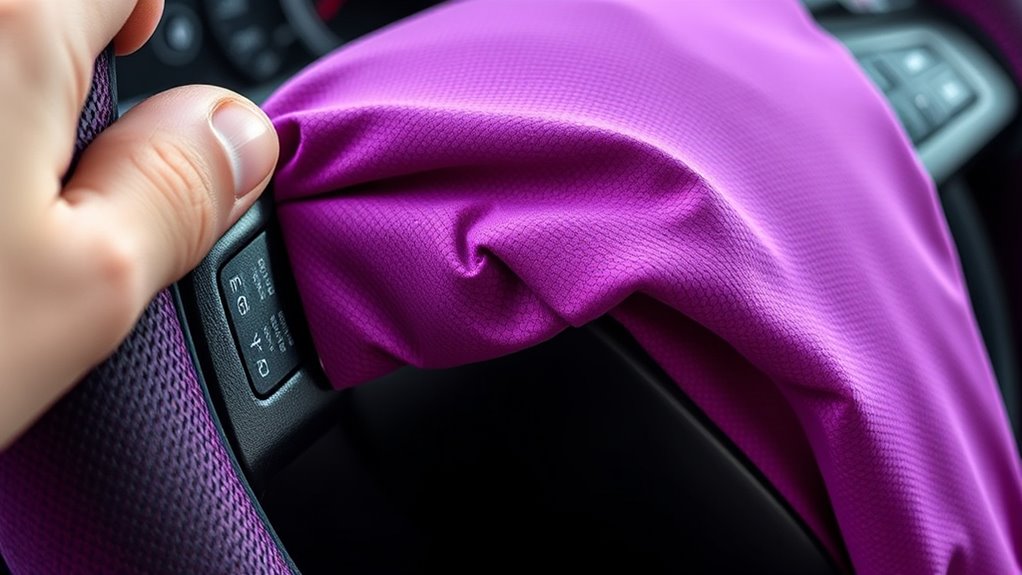
The cover design plays a big role, too. Some covers are stretchy and easy to slide on, while others require more effort. You might struggle with getting the cover evenly aligned, especially around the seams or textured areas.
Stretchy covers are easier to install, but textured or seam areas can be tricky to align properly.
If the cover is too tight or too loose, it won’t sit properly, which affects both how it looks and your grip. Some covers have specific installation instructions, like needing to be warmed up or stretched beforehand, making things more complicated.
You’ll need patience and a steady hand to ensure the cover fits snugly without bunching or slipping. Overall, choosing the right design and understanding how it fits can help you avoid common frustrations during installation.
Common Challenges When Installing a Steering Wheel Cover
One of the most common challenges when putting on a steering wheel cover is getting it to fit snugly without bunching or slipping. If it’s too tight, it can be tough to install, and if it’s too loose, it won’t give you the benefits you want.
To fix this, try warming the cover slightly to make it more flexible. Using a lubricant like soapy water can help slide it on more easily.
Work slowly and apply even tension as you stretch it over the wheel. Double-check that the cover is aligned correctly before you finish.
Most issues come from improper placement or not preparing properly, so patience is key.
Getting a snug fit improves grip and comfort. With these simple tips, you’ll avoid common pitfalls and enjoy a smoother, more secure fit for your steering wheel cover.
Why Achieving a Perfect Fit Is Harder Than It Looks
Achieving a perfect fit for your steering wheel cover is often more challenging than it looks because even small variations in wheel size or cover material can make a big difference. The key is proper fit adjustment, which can be tricky without the right techniques.
Different installation methods require different approaches; some covers need stretching, while others need slipping over the wheel carefully. If you don’t adjust the fit correctly, wrinkles, slack, or an uneven appearance can happen.
Different methods need specific adjustments to avoid wrinkles, slack, or uneven looks. Proper fit is essential for a professional finish.
It’s essential to follow the manufacturer’s instructions closely and use appropriate tools, like a lubricant or a fit aid, to make installation easier. Remember, a tight fit isn’t always better—it can make removal difficult and damage the cover or steering wheel.
Achieving a snug, smooth fit takes patience and attention to detail, especially when dealing with materials that stretch or shrink. Mastering these adjustments is what makes the difference between a professional look and a frustrating install.
How Wrinkles and Bubbles Form During Installation (And How to Prevent Them)
Wrinkles and bubbles often appear during installation when the cover isn’t pulled tight and smooth across the steering wheel surface. To prevent this, start by cleaning the wheel thoroughly to remove dust and grease, ensuring better adhesion. As you stretch the cover, work slowly, smoothing it out with your hands or a soft cloth to help prevent wrinkles.
Use a flat tool or squeegee to press out air pockets and eliminate bubbles during installation. Gradually pull the cover tight, starting from the top and working downward. Adjust and reposition the cover as needed before securing it completely to avoid bunching or creases.
Pay close attention to the edges, making sure they sit flush without bunching. For bubble removal, gently press from the center outward, pushing trapped air toward the edges until the bubble flattens. Proper technique is essential for a smooth, professional finish.
How Material Types Affect Ease of Cover Installation
Different material types can really affect how easy or hard it is to install a steering wheel cover. For example, leather and synthetic materials tend to be more durable, which makes them harder to stretch into place without some effort.
Their toughness means they resist tearing but often require more force during installation. Conversely, softer fabrics or neoprene covers are more flexible and forgiving, making for a smoother fit with less struggle.
The texture also matters: rougher surfaces provide a better grip, helping you secure the cover more easily. Smoother surfaces can be slippery, which makes installation trickier.
Some materials, especially if they’re thick or stiff, might need specific techniques or tools to get the job done right. Knowing these differences helps you pick the right cover and method, reducing frustration and ensuring a snug fit.
Preparing Your Steering Wheel for a Smooth Cover Fit
Before fitting a steering wheel cover, it’s important to prepare the surface properly to ensure a snug and smooth fit. Proper preparation helps the cover stay secure and reduces wrinkles or slack.
Start by cleaning the wheel thoroughly. Use a mild cleaner to remove dust, grease, and grime. Make sure to dry the surface completely so it doesn’t slip during installation.
If your wheel has rough spots or damage, smooth them out with fine sandpaper. This will help the cover fit better and look more even.
Consider these steps:
- Wipe down the wheel with a damp cloth, then dry thoroughly
- Remove any loose dirt or debris
- Smooth out rough patches for a more even surface
- Check for any damage that might make installation harder
Essential Tools and Techniques for Easier Installation
Using the right tools can make installing a steering wheel cover much easier and more efficient. Start with basic tips: spray some soapy water or a leather conditioner to lubricate the cover, which makes stretching easier.
Recommended tools include a plastic trim removal tool or a flat-head screwdriver wrapped in a cloth. This helps you grip and stretch the cover without damaging it or the steering wheel.
A hairdryer or heat gun can also be handy for warming the material, making it more flexible during installation. Remember, patience is key—don’t force the cover into place.
Work gradually around the wheel, smoothing out wrinkles as you go. Proper tools and techniques reduce frustration and help you get a snug, professional fit.
Keep your workspace clean and dry, and always handle the cover gently to avoid stretching or tearing.
Troubleshooting Common Problems During Cover Installation
Even with the right tools and techniques, you might run into common issues during steering wheel cover installation. One frequent problem is fitting the cover snugly, especially with covers made of leather or neoprene. To troubleshoot, start by checking your installation tips and make sure you’ve stretched the cover properly before fitting.
Ensure proper stretching and alignment for a snug, professional steering wheel cover fit.
If the cover feels too tight or loose, try adjusting your stretching technique or consider choosing a different cover type that fits your wheel better. For uneven fit or slipping, try warming the cover slightly with a hairdryer to make it more flexible.
When the cover bunches or wrinkles, double-check that you’re aligning it properly and evenly distributing the tension. If your tools slip, switch to a rubber mallet or wear gloves to get a better grip.
These tips can help you overcome common problems and make the installation smoother, no matter the cover type. Proper preparation and making small adjustments are key to achieving a secure, professional-looking fit.
Common Reasons Why Cover Placement Fails
Sometimes, steering wheel covers just don’t stay put, and a lot of times it’s because the fit isn’t quite right. If you don’t stretch the cover evenly or secure those edges properly, it’s easy for it to slip off or shift around while you’re driving.
Another thing to keep in mind is the material. Using a cover made from the wrong type of fabric or material can make things worse—either causing it to slide around or making it really hard to put on in the first place.
Improper Fitment Techniques
A common reason why steering wheel covers fail to stay in place is improper fitment techniques during installation. Poor fitment causes slip-offs and discomfort, often because of installation mistakes. To avoid these issues, pay attention to:
- Not stretching the cover enough before fitting it onto the wheel
- Failing to align the seams properly during placement
- Ignoring the size recommendations for your steering wheel
- Rushing the installation, which can lead to uneven tension and a loose fit
These fitment issues usually happen when you rush or skip instructions, making the cover less secure. Ensuring proper fitment techniques helps prevent slippage and makes your cover last longer. Take your time, follow the instructions carefully, and double-check the alignment to avoid common installation mistakes.
Material Compatibility Issues
Choosing the right material for your steering wheel cover is key to getting a secure fit and lasting comfort. Durability is important—if the material isn’t tough enough, it can tear or wear out quickly, causing the cover to slip.
Surface texture also matters because it affects grip and how easy it is to install. A smooth or slippery surface makes it hard for the cover to stay put, especially when you’re driving.
On the other hand, a textured surface can improve grip but might make installation trickier if it’s too rough or uneven.
Making sure the cover’s material works well with your steering wheel’s surface helps prevent slipping or shifting.
Tips to Make Your Steering Wheel Cover Last and Look Great
Want your steering wheel cover to stay looking good and last a long time? First off, make sure you install it properly so it fits snugly right from the start. That way, it won’t slip around or wear out unevenly.
Don’t forget about regular cleaning and maintenance. A quick wipe down keeps dirt and grime at bay, helping prevent unnecessary wear and tear. And when you’re picking out a cover, go for high-quality materials—they tend to be more durable and look better over time.
Keeping these simple tips in mind will help your steering wheel cover stay in great shape, mile after mile.
Proper Installation Techniques
Proper installation is key to making sure your steering wheel cover stays secure and looks good over time. To get the most benefits and avoid slipping, follow these tips:
Warm the cover slightly, using a hairdryer if needed, to make it more flexible. Turn the cover inside out and carefully fit it over the wheel, starting at the top. Use a flat tool or your hands to smooth out wrinkles and get an even fit.
Secure the edges by pulling firmly, but be careful not to stretch too much and tear the cover. Taking your time during installation helps prevent damage and keeps the cover tight.
A secure fit not only looks better but also improves grip and comfort. This way, the cover benefits last longer and you get a better driving experience.
Regular Maintenance Practices
Keeping your steering wheel cover in top shape requires regular maintenance to prevent wear and keep it looking fresh. Start with routine checks to spot any signs of damage or looseness early.
Clean your cover regularly using appropriate methods based on its material—like a gentle soap solution for leather or a mild detergent for fabric. Avoid harsh chemicals that can cause fading or deterioration.
Wipe down the cover with a soft cloth and let it air dry thoroughly before using it again. If you notice stubborn stains or grime, use a cleaner designed for your cover’s material.
Consistent upkeep prevents dirt buildup, keeps it looking good, and extends its lifespan. This way, your steering wheel stays comfortable and attractive for the long haul.
Choosing Quality Materials
Choosing high-quality materials for your steering wheel cover is key if you want it to last and look great over time. Good materials resist wear, offer comfort, and enhance your vehicle’s interior.
When selecting, think about leather options for durability and a luxurious feel, or explore fabric choices for breathability and a variety of designs. Look for covers made from genuine or high-quality synthetic leather, which age well and resist cracking.
For fabric options, pick those with reinforced stitching and moisture-wicking properties. Also, check for UV-resistant finishes to prevent fading.
Choose materials that match your driving habits and style preferences. A well-chosen cover not only boosts comfort but also keeps its appearance longer, saving you money and effort down the road.
Frequently Asked Questions
Can Steering Wheel Covers Be Installed on All Vehicle Types?
Steering wheel covers can be installed on most vehicle types thanks to universal fit designs.
However, installation techniques can vary; some covers need stretching or heating to fit snugly, especially on larger or smaller steering wheels.
It’s important to check the cover’s size and compatibility before buying.
Proper installation ensures safety and comfort, so be sure to follow the manufacturer’s instructions carefully.
If your steering wheel’s size is unusual, you might need custom options for a perfect fit.
How Long Does a Typical Steering Wheel Cover Installation Take?
A typical steering wheel cover installation takes about 10 to 20 minutes, depending on your experience and the cover materials.
You’ll use different techniques, like stretching or slipping the cover over the wheel, to get a snug fit.
Thinner, flexible materials like leather or silicone are easier to install, while thicker or textured covers might take a bit more effort.
Be patient and follow the instructions carefully to get the best results.
Are There Specific Brands Recommended for Easier Installation?
While some brands prioritize ease of installation, others focus on brand compatibility and durability, making your choice important.
Look for covers with flexible materials and clear installation steps, like slip-on or stretch-fit options, to make the process smoother.
Brands like Coverking or FH Group are often recommended because they combine user-friendly installation with reliable compatibility.
Choosing the right brand can make installing your steering wheel cover easier and less frustrating, leading to a more satisfying experience.
What Safety Precautions Should I Take During Installation?
When installing a steering wheel cover, safety should be your top priority. Wear gloves to protect your hands from any potential injuries.
Make sure to follow the installation steps carefully. Check that the cover is aligned properly before stretching it over the wheel.
Work slowly and avoid forcing the cover onto the wheel. Forcing it can cause slips or damage, which might make the installation unsafe.
Taking these precautions will help make the process safer and ensure the cover fits securely.
Can Steering Wheel Covers Be Removed and Reinstalled Easily?
Removing and re-installing steering wheel covers is like peeling off a sticker; it’s usually doable if you use gentle installation techniques. Material differences matter—vinyl covers slide on and off more easily than thick leather ones.
Keep in mind, some covers may stretch or loosen over time, making reinstallation trickier. With patience and proper technique, you can typically remove and reapply your cover without much hassle.
Conclusion
Installing a steering wheel cover might seem straightforward, but it’s actually quite tricky. Think of it like fitting a puzzle piece—you need the right tools, patience, and a bit of finesse.
A common myth is that covers will always fit perfectly on the first try. In reality, getting that smooth, wrinkle-free look takes practice.
With the right techniques and a bit of persistence, you’ll find it’s possible to give your steering wheel a clean, snug finish that lasts. Installing a steering wheel cover can be challenging, but it’s definitely doable with some effort.