When Change Spark Plugs: Key Signs and Mileage Guide
Are you tired of dealing with engine troubles, rough starts, or poor fuel economy? You’re not alone—many drivers struggle with knowing when to change their spark plugs.
Maintaining this small but vital part can feel overwhelming, but it’s key to keeping your car running smoothly.
You should consider changing your spark plugs every 30,000 to 100,000 miles, depending on your vehicle and spark plug type.
Keep an eye out for signs like rough idling, difficulty starting, decreased acceleration, and poor fuel efficiency—these indicate wear.
Regularly inspecting your spark plugs can catch issues early. Staying on top of your maintenance schedule helps prevent engine problems.
If you want to learn more about signs and best practices, stay tuned for helpful tips.
Key Takeaways
- Replace spark plugs every 30,000 to 100,000 miles depending on the type and your driving conditions.
- If your car is idling roughly, has trouble starting, or struggles to accelerate, these could be signs of worn spark plugs.
- During visual checks, look for electrode wear, carbon buildup, or cracks.
- Always follow your vehicle’s manufacturer guidelines for when to replace them and how to install them properly.
- Use high-quality spark plugs and make sure they are gapped correctly for the best engine performance.
When Should You Replace Your Spark Plugs Based on Mileage and Performance?
How often should you replace your spark plugs to keep your engine running smoothly? Generally, the lifespan of spark plugs ranges from 30,000 to 100,000 miles, depending on the type and driving conditions. Checking performance indicators can help you decide if your spark plugs need replacing sooner.
If your engine misfires, idles roughly, or shows decreased fuel efficiency, these are signs that your spark plugs might be worn out. Regular maintenance schedules recommend replacing plugs within the mileage window specified by your vehicle’s manufacturer.
Over time, spark plugs can become fouled or worn, which affects ignition performance. By staying aware of your vehicle’s mileage and watching for symptoms, you can help keep your engine running at its best.
Replacing your spark plugs at the right intervals prevents issues, prolongs engine life, and keeps your vehicle running smoothly on the road.
Signs That Your Spark Plugs Are Worn Out
Are you noticing any unusual changes in your vehicle’s performance? If so, your spark plugs might be nearing the end of their lifespan.
Worn-out spark plugs often cause rough idling, difficulty starting, or misfires, which can really affect your ignition system’s efficiency.
You might also experience a drop in acceleration or notice that your engine runs roughly at certain speeds.
These signs mean your spark plugs aren’t firing properly, which can mess with the whole ignition process.
Poor spark plug firing disrupts the entire ignition system and can impact your vehicle’s performance.
Keep in mind that spark plug lifespan varies based on driving habits and the type of plugs used.
But generally, they need replacing every 30,000 to 50,000 miles.
Ignoring these signs could lead to more serious engine problems down the road.
Regularly inspecting your spark plugs for wear helps keep your ignition system reliable and your vehicle running smoothly.
How Spark Plug Wear Affects Engine Performance and Fuel Efficiency
Worn spark plugs can really mess with how your engine runs. When they start to wear out, you might notice that your car doesn’t feel as powerful, and it might run a bit rough or shaky. It’s like the engine is struggling to keep up, which isn’t great for your overall driving experience.
Plus, if your spark plugs aren’t firing properly, your fuel efficiency can take a hit. That means you might find yourself visiting the pump more often than usual. Sometimes, you might even feel your car hesitate or stumble when you hit the gas—that’s a sign your spark plugs might need some attention.
The good news is, catching these issues early can make a big difference. Keeping your spark plugs in good shape helps your engine run smoothly, saves you money on fuel, and keeps everything running nicely on the road.
Reduced Combustion Efficiency
As spark plugs age and become worn, their ability to ignite the fuel-air mixture efficiently decreases, leading to reduced combustion efficiency. Different types like copper, platinum, or iridium wear at different rates, which affects how well they perform in the combustion chamber.
When spark plugs are worn, the spark can become weaker or inconsistent, causing incomplete combustion. This results in less engine power, sluggish acceleration, and rough idling.
Worn spark plugs also mean the fuel isn’t burned thoroughly, which can lead to unburned fuel passing through the system. Over time, this wear hampers your engine’s overall performance, making it less responsive and more prone to misfires.
Regular inspection and timely replacement help keep combustion and engine efficiency at their best.
Increased Fuel Consumption
When spark plugs lose their ability to ignite the fuel-air mixture efficiently, your engine has to work harder to produce the same power. This extra effort reduces fuel efficiency, making your car use more fuel than necessary.
Worn or fouled spark plugs, especially older types, can cause incomplete combustion. That leads to higher fuel consumption, and you might notice decreased miles per gallon, more frequent refueling, rough engine idling, or increased emissions.
These signs mean your spark plugs aren’t firing properly, so your engine burns more fuel to keep running smoothly. Keeping the right spark plug type and replacing worn ones on schedule helps ensure proper combustion, improves fuel efficiency, and saves you money at the pump.
Engine Misfires and Hesitation
Engine misfires and hesitation are clear signs that your spark plugs are struggling to ignite the fuel-air mixture properly. Worn or fouled spark plugs, whether they’re copper, platinum, or iridium, can cause inconsistent sparks that disrupt engine performance.
This misfiring puts extra strain on your ignition system, reducing efficiency and leading to rough idling or sluggish acceleration. When spark plugs don’t fire correctly, fuel isn’t burned fully, which impacts fuel economy and can damage other engine parts.
If you notice hesitation during acceleration or rough running, check your spark plugs first. Replacing worn spark plugs restores proper ignition, smooths engine operation, and improves fuel efficiency.
Regular maintenance helps ensure your ignition system works well and keeps your engine running smoothly.
How to Check Your Spark Plugs for Wear and Damage
To check your spark plugs for wear and damage, the first thing you want to do is give them a good visual inspection. Just take a close look at the electrode tips—you’re looking for any signs that they might be worn down or rounded off. Also, check for any heavy carbon buildup or deposits—that can indicate the spark plugs aren’t firing properly. And don’t forget to look for cracks or chips in the insulator; those could be a sign that the plug is damaged. Recognizing these signs early can help you decide if it’s time for a new set of spark plugs.
Visual Inspection Techniques
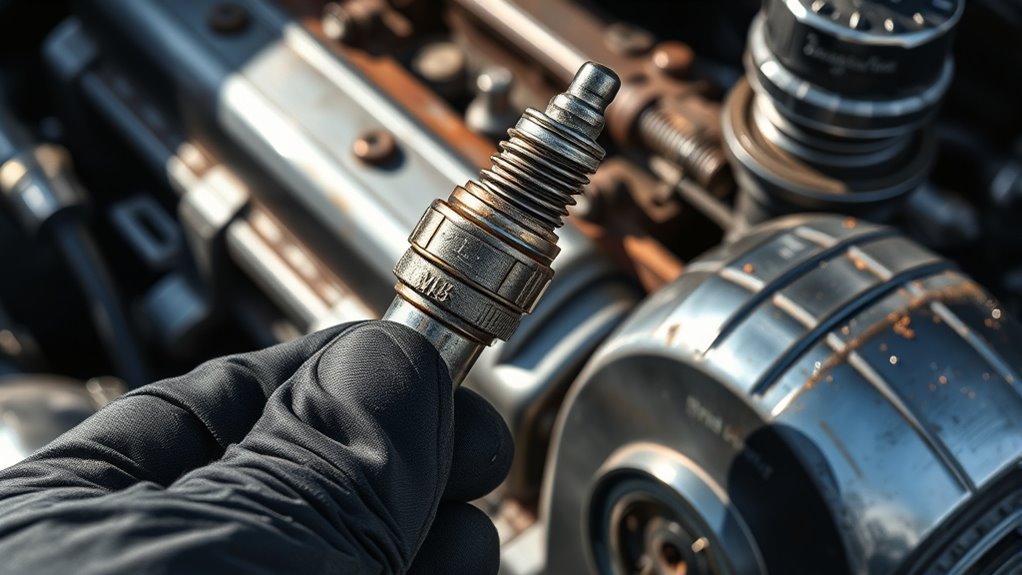
Start by removing the spark plug from your engine and examining it closely. During spark plug inspection, look for visual signs of wear or damage.
Check the electrode tip: a clean, light-colored tip indicates normal wear, while a sooty or oily deposit suggests fuel problems. Observe the insulator for cracks or chips, which mean it’s time to replace.
Examine the electrode gap—if it’s widened or uneven, it can affect performance. Also, look for corrosion or heavy carbon buildup, which signal issues.
To help visualize, consider these points:
- Deposits or carbon fouling on the electrode or insulator
- Cracks or chips in the ceramic insulator
- Worn or rounded electrode tip
- Excessive soot or oil residue
This visual inspection helps you spot early signs that your spark plug needs attention before performance drops.
Signs of Wear
When checking your spark plugs for wear and damage, pay close attention to their physical condition. Different types, like copper, platinum, or iridium, show wear in different ways. Look for signs such as excessive electrode erosion, rounded or worn electrodes, or deposits that can block proper ignition.
If the insulator is cracked or chipped, it’s a sign of damage that could affect your engine’s performance. Fouling from oil, carbon, or fuel deposits can also indicate issues that need attention.
Regular inspections help you catch early signs of wear before misfires or engine trouble happen. Remember, worn spark plugs can reduce your ignition system’s efficiency, leading to rough idling, poor fuel economy, or difficulty starting your vehicle.
Keeping up with proper maintenance ensures your engine runs smoothly and reliably.
Best Practices for Replacing Spark Plugs and Ensuring Longevity
Replacing spark plugs at the right intervals and following proper procedures can really help extend their lifespan and keep your engine running smoothly.
Start by choosing the right spark plug types for your vehicle, paying attention to factors like heat range and electrode design. When installing, make sure to use proper techniques: torque the spark plugs to your manufacturer’s specs, apply anti-seize compound if recommended, and check that the electrode gap is set correctly.
To help your spark plugs last longer, it’s a good idea to inspect them regularly for signs of wear or deposits. Use a torque wrench for precise installation, and if you’re replacing them, do all the spark plugs at the same time—especially if they’re in a set.
Always follow your vehicle manufacturer’s guidelines for replacement intervals to keep everything running smoothly.
How Driving Habits Impact Spark Plug Wear and Replacement Schedules
Your driving habits play a big role in how quickly your spark plugs wear out and when you need to replace them. Driving at high speeds or with aggressive acceleration puts more load on your engine, causing faster spark plug degradation.
Poor fuel quality can also lead to carbon buildup, which reduces spark efficiency and speeds up wear. If you ignore regular maintenance, deposits can build up and shorten the lifespan of your spark plugs.
Proper ignition timing ensures efficient combustion. But if it’s off, it can cause misfires and lead to accelerated wear. Weather conditions also matter—extreme cold or heat can affect engine performance and spark plug longevity.
Gentle driving, sticking to maintenance schedules, and using high-quality fuel can help extend your spark plugs’ life. Being aware of these factors helps you predict when replacements are due, saving you time and money and keeping your engine running smoothly.
Tips to Extend the Life of Your Spark Plugs
Regular maintenance checks are a great way to catch any issues early on and keep your spark plugs working smoothly. It’s like giving your car a little tune-up to prevent bigger problems down the road.
And hey, using high-quality spark plugs can really make a difference. They tend to last longer and perform better, so you won’t have to replace them as often.
Just staying on top of these simple practices can really extend the time between replacements and keep your engine running at its best.
Regular Maintenance Checks
Performing routine maintenance checks is key to extending the life of your spark plugs. Regular inspections help catch issues early and keep your engine running smoothly. During these checks, make sure to focus on oil changes because clean oil reduces engine stress and prevents deposits that can damage your spark plugs.
Also, consider tuning your engine to improve performance and fuel efficiency. This puts less strain on your spark plugs and helps them last longer.
To keep your spark plugs in top shape, watch out for worn or corroded spark plug wires, excessive carbon buildup on the plugs, unusual engine misfires, and decreased fuel efficiency.
Use Quality Spark Plugs
Choosing high-quality spark plugs is one of the best ways to extend their lifespan and keep your engine running reliably. Not all spark plug types are the same, so picking the right ones for your vehicle’s ignition system is key.
Premium spark plugs are built to handle higher temperatures and conduct electricity better. This reduces wear and helps prevent misfires, ensuring smooth engine performance.
When you use good spark plugs, you also lower the chances of fouling and improve fuel efficiency. Make sure the spark plugs match your engine’s specs, since incompatible ones can cause performance issues and wear out faster.
Investing in quality spark plugs means fewer replacements and better overall reliability. Regularly inspecting and replacing them will keep your ignition system in top shape and extend their lifespan.
Following Your Vehicle’s Spark Plug Maintenance Schedule
Sticking to your vehicle’s spark plug maintenance schedule is key for top engine performance and good fuel economy. Knowing the types of spark plugs and how often to check them helps you avoid misfires, rough idling, or lower mileage.
Regular checks ensure you replace worn plugs before problems happen. Keep track of when you last inspected or replaced them to stay on schedule.
Regularly inspect and replace spark plugs to prevent engine issues and maintain optimal performance.
Identify your spark plug type—copper, platinum, or iridium—to follow the recommended maintenance intervals. Usually, this is every 30,000 to 100,000 miles, depending on your vehicle.
Adjust your schedule based on your driving habits. If you do a lot of short trips or carry heavy loads, you might need to replace your plugs more often.
Troubleshooting: What to Do if Your Engine Runs Rough Despite New Spark Plugs
Even with new spark plugs, your engine can still run rough if other issues are at play. Start with a thorough engine diagnostics check to identify potential causes like vacuum leaks, fuel system problems, or ignition coil faults. It’s important to verify that you’ve used the correct spark plug types for your vehicle, as incompatible plugs can cause misfires despite being new.
Check if the spark plugs are properly gapped and installed. If the engine continues to run unevenly, consider inspecting other components such as the spark plug wires, ignition system, or air filters. Sometimes, a rough idle or hesitation isn’t due to the spark plugs themselves but to related parts that need attention.
Using diagnostic tools can help pinpoint the root cause, saving you from unnecessary replacements and ensuring your engine runs smoothly. Always refer to your vehicle’s manual for specific spark plug types and maintenance procedures.
Common Mistakes to Avoid When Replacing Spark Plugs
Replacing spark plugs might seem straightforward, but many people make common mistakes that can cause engine problems or shorten the life of the new plugs. One mistake is believing in spark plug myths, like thinking they last forever or don’t need regular replacement.
Another mistake is rushing the installation, which can lead to errors like cross-threading or over-tightening. These mistakes can damage the cylinder head and cause bigger issues down the line.
Not paying attention to the correct gap setting can also hurt engine performance and fuel efficiency. Plus, neglecting to inspect or replace ignition wires and coils during spark plug changes can lead to misfires and reduced engine efficiency.
To avoid these issues, follow the manufacturer’s recommendations and ignore common myths. Always double-check the plug gap before installing.
Use the right tools and torque settings, and don’t forget to inspect related parts like ignition wires and coils.
Being mindful of these points will help ensure your spark plug replacement goes smoothly and keeps your engine running well.
Frequently Asked Questions
Can Using Different Brands of Spark Plugs Affect Engine Performance?
Using different brands of spark plugs can impact engine performance if they aren’t compatible with your vehicle’s specifications. It’s important to choose plugs that match your car’s requirements for optimal results.
Spark plug compatibility is key for peak performance. Mismatched plugs can lead to misfires, poor fuel efficiency, or rough idling. So, sticking to recommended brands and types is a good idea.
Switching brands without checking compatibility might hurt your engine’s smoothness and lifespan. Always go for quality plugs that are suited to your car’s needs to keep things running smoothly.
Do Spark Plug Types Vary for Different Vehicle Models?
You might worry about choosing the right spark plug, but don’t stress—your vehicle’s model determines the type. Different models require specific spark plug materials and heat ranges to perform effectively.
Using the wrong type can cause misfires or poor acceleration. Always check your owner’s manual or ask a mechanic to make sure you pick the right spark plug.
Matching the correct spark plug to your vehicle’s needs helps ensure smooth, reliable engine performance.
How Do Weather Conditions Influence Spark Plug Wear?
Weather conditions greatly influence spark plug wear. High humidity levels can cause moisture buildup, leading to corrosion and quicker degradation.
Temperature extremes, like very hot or cold weather, affect the spark plug’s performance and lifespan. Heat can cause electrode wear, while cold can impact ignition efficiency.
You should monitor your spark plugs more frequently in such conditions and replace them as needed to guarantee peak engine performance.
Is It Necessary to Replace Spark Plug Wires When Changing Plugs?
Absolutely, you should replace spark plug wires when changing your spark plugs—they’re like the secret handshake of your ignition system! Worn wires can cause misfires, rough idling, and poor fuel economy, making your engine feel like it’s running on fumes.
During spark plug maintenance, swapping out old wires guarantees your ignition system fires perfectly every time. Think of it as giving your car a fresh start for smoother, more reliable performance.
What Are the Environmental Impacts of Worn-Out Spark Plugs?
Worn-out spark plugs can negatively impact the environment by reducing spark plug efficiency, leading to incomplete combustion.
This incomplete burn causes more emissions to be released into the air, increasing pollution.
As a result, your vehicle becomes less eco-friendly and contributes to air pollution.
To keep things in check, regularly check and replace spark plugs when needed.
This helps ensure your engine runs smoothly and reduces harmful emissions.
Conclusion
Remember, keeping your spark plugs in top shape is key to smooth engine performance and fuel efficiency.
Don’t wait for trouble to strike. Regular checks and timely replacements can save you money and headaches down the road.
As the saying goes, “An ounce of prevention is worth a pound of cure.” Stay proactive with your maintenance.
Your car will thank you with reliable rides and fewer surprises when you pay attention to spark plug health.