How to Get Grease Out of Car Seat: Easy and Effective Tips
Dealing with grease stains on your car seat can be frustrating—many people struggle with this pesky problem.
You’re not alone in wanting quick, effective solutions to keep your car looking clean and fresh. Luckily, removing grease from your car seat doesn’t have to be a hassle.
To quickly remove grease from your car seat, start by scraping off excess grease and blotting the area with a clean cloth.
Apply a small amount of dish soap or a grease-fighting stain remover, then gently scrub with an old toothbrush or sponge.
Rinse with warm water and repeat if necessary.
To prevent future stains, use seat covers or quick cleanup tips.
Keep going to uncover more effective methods and prevent stubborn stains!
Key Takeaways
- Act quickly by blotting excess grease with a clean cloth to prevent it from setting.
- Apply a little mild dish soap directly onto the stain, then gently scrub with a soft brush or sponge.
- Use baking soda or cornstarch to soak up any leftover grease before vacuuming or brushing it away.
- Rinse the area with a spray of warm water and blot dry to get rid of soap and loosened grease.
- For tough stains, it’s best to consider professional cleaning to avoid damaging your upholstery.
What Causes Grease Stains on Car Seats?
Grease stains on car seats often come from everyday activities where oily stuff touches the upholstery. Common sources include food spills, handprints, or transferring oil from your clothes, especially if you handle greasy items or work around oily equipment.
When you sit down with these substances on your clothes, they can easily transfer onto the seat fabric. Touching your face or hair with oily hands can also leave behind unwanted marks.
Poor stain prevention habits, like not cleaning spills right away or skipping regular cleaning, make grease build-up more likely. Knowing these sources helps you take simple steps, like using seat covers or avoiding eating in the car, to prevent stains.
Recognizing what causes grease marks lets you act quickly and stop stubborn stains from setting in. This keeps your car seats cleaner and looking better longer.
What Supplies Do You Need to Remove Grease From Car Seats?
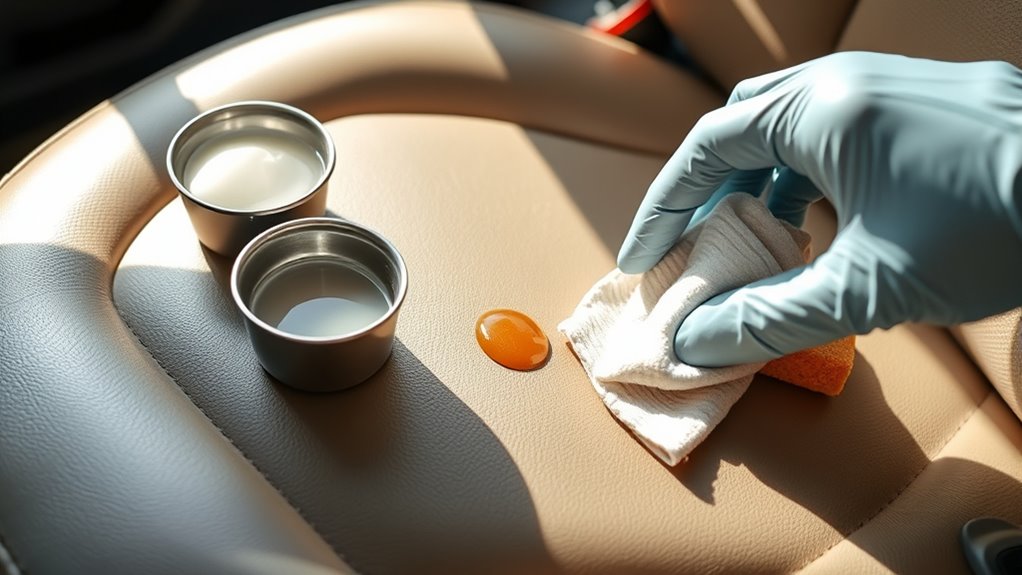
To effectively remove grease from your car seats, gather a few basic supplies that are easy to find around your home or garage. Start with some mild dish soap, which is great for stain removal and breaking down grease.
Gather simple supplies like dish soap and a microfiber cloth to effortlessly remove grease from your car seats.
You’ll also need a clean microfiber cloth or sponge for applying cleaning supplies and blotting the stain. An old toothbrush can help scrub stubborn spots gently.
Keep a spray bottle filled with warm water to rinse the area afterward. For tougher stains, consider having a commercial upholstery cleaner on hand, specifically designed for car seats.
Baking soda can also help absorb grease and odors when sprinkled onto the stain. Finally, have some paper towels or clean cloths ready to blot excess moisture and lift residue.
With these supplies, you’re prepared to tackle grease stains efficiently using effective stain removal techniques.
How to Pre-Treat Grease Stains Effectively
Before applying any cleaning solutions, it’s important to pre-treat the stain promptly to prevent it from setting deeper into the fabric. Start with pre-treatment techniques that target grease effectively.
First, gently scrape off any excess grease with a dull knife or spoon, using stain removal tools to avoid spreading the stain. Next, blot the area with a clean cloth to absorb as much oil as possible.
Apply a small amount of dish soap or a grease-fighting stain remover directly onto the stain, working it in with your fingers or a soft brush. Let it sit for 10-15 minutes to break down the grease.
Using stain removal tools like a soft-bristled brush or an old toothbrush can help work the solution into the fabric fibers. This pre-treatment step is vital for loosening the grease and making subsequent cleaning more effective.
Proper pre-treatment guarantees you’re setting a solid foundation for complete stain removal.
Household Cleaners That Work on Car Seat Grease
When tackling car seat grease stains, household cleaners can be surprisingly effective if you choose the right ones. A vinegar solution is a simple yet powerful option; mix equal parts white vinegar and water to break down grease without damaging fabric or leather.
Spray it onto the stain, let it sit for a few minutes, then blot with a clean cloth. For tougher stains, an enzyme cleaner works wonders by breaking down grease molecules at a microscopic level.
Apply the enzyme cleaner following the product instructions, allowing it to dwell for the recommended time before blotting or wiping away. Both options are accessible and safe for most car seat materials.
Remember to test any cleaner on an inconspicuous area first to avoid discoloration. While household cleaners are effective, always ensure proper ventilation during use to prevent inhaling fumes.
These solutions can help you remove grease stains efficiently, restoring your car seat’s appearance.
Natural Ways to Remove Grease Stains From Upholstery
You’d be surprised how many everyday household items can help you tackle grease stains on your upholstery. For example, baking soda is great because it absorbs the oil really well. Just sprinkle it over the stain and let it sit for a bit before vacuuming it up.
Another handy trick is dish soap. It’s designed to break down grease, so applying a small amount to the stain and gently blotting can do wonders. Just make sure to test it on a hidden area first to be safe.
And don’t forget about cornstarch! It’s another excellent option for drawing out stubborn stains. Sprinkle it on the stain, let it sit for a while, then brush it off. These methods are gentle on your furniture but super effective at getting rid of those greasy marks.
Baking Soda Absorbs Grease
Baking soda is a versatile and effective natural remedy for grease stains on upholstery. Its baking benefits come from its ability to absorb grease and odors, making it great for grease removal.
To use, sprinkle a generous layer of baking soda directly onto the stain. Let it sit for 15 to 30 minutes so it can absorb the grease effectively. Afterward, vacuum up the baking soda thoroughly.
This simple step helps lift the grease from the fabric without damaging the material. Baking soda’s absorbent properties make it a safe, chemical-free option for tackling stubborn grease spots.
For the best results, combine this method with other cleaning techniques, but always start with baking soda to naturally maximize grease removal.
Dish Soap Breaks Down Oil
Dish soap is a powerful, natural solution for breaking down grease and oil stains on upholstery. Its effectiveness comes from its ability to cut through grease molecules, making oil breakdown much easier.
When you apply a few drops of dish soap directly to the stain, it penetrates the fabric fibers and loosens the oil particles. Gently work the soap into the stain with a soft brush or cloth, and let it sit for a few minutes.
This process helps lift the grease without damaging the fabric. Rinse with clean water and blot dry to remove any remaining soap residue.
Dish soap’s natural ability to target oil makes it an effective, affordable option for tackling stubborn grease stains on your car seat or upholstery.
Cornstarch Draws Out Stains
When dish soap alone isn’t enough to fully lift grease stains, an all-natural alternative like cornstarch can be really effective.
Just sprinkle a generous amount of cornstarch directly onto the grease stain, making sure it covers the entire area.
Let it sit for 15-20 minutes so the cornstarch can absorb the oil. Then, gently brush off the powder with a soft brush or cloth.
This method helps improve stain removal by drawing out grease from the upholstery fibers naturally.
Cornstarch works as a powerful absorbent, pulling grease away without harsh chemicals.
For the best results, repeat the process if needed.
With consistent application, you’ll see a big reduction in the stain, making your car seat look cleaner and fresher naturally.
How to Clean Car Seat Upholstery Safely Without Damage
Cleaning your car seat upholstery safely without causing damage requires a careful approach. First, identify your upholstery materials—whether it’s fabric, leather, or vinyl—as each needs different cleaning methods. Use the appropriate cleaning tools, like soft brushes for fabric or microfiber cloths for leather, to prevent scratches or tears.
Before applying any cleaning solution, do a patch test on a hidden area to make sure it won’t discolor or damage the material. For fabric seats, vacuum thoroughly to remove loose dirt and dust. For leather or vinyl, dampen a soft cloth with a mild soap solution or specialized cleaner.
Gently wipe the surface without applying too much pressure. Avoid harsh chemicals or abrasive tools that can cause cracking or fading. Taking these precautions helps keep your upholstery in good shape while effectively removing grease and stains.
Tips to Prevent Grease Stains on Your Car Seats
To keep grease stains from setting into your car seats, taking preventative steps is key. Regular maintenance helps you catch spills early and avoid permanent damage.
One effective method is using seat covers, especially during meals or when working on greasy tasks. Seat covers act as a barrier, protecting your upholstery from direct contact with grease and dirt.
Choose washable, durable covers that can be easily removed and cleaned. Keep a small stain remover or damp cloth handy to address any spills immediately.
Avoid sitting on greasy surfaces or placing oily items directly on your seats. Maintaining a clean, clutter-free interior also reduces the chance of accidental stains.
When Should You Consider Professional Car Interior Cleaning?
If you’ve tried cleaning your car interior and those stubborn stains or lingering odors just won’t go away, it might be time to call in the pros. Sometimes, those messes need a bit more elbow grease—or specialized equipment—that only professional cleaners can provide.
And if your car’s interior has suffered some pretty serious damage, like deep stains, tears, or water damage, it’s definitely worth getting expert help. They know how to restore your car’s interior so it looks almost new again.
Plus, if you’re busy and don’t have the time to do a thorough clean yourself, hiring professionals is a super convenient option. They can handle everything quickly and efficiently, saving you the hassle.
Persistent Stains or Odors
Persistent stains or lingering odors that refuse to improve despite your efforts often signal that professional cleaning might be necessary.
If your attempts at stain removal don’t fully eliminate grease or stubborn spots, it’s time to consider expert help.
Professionals have specialized tools and treatments that can effectively break down tough grease and deeply embedded dirt.
Likewise, if odors persist despite cleaning, it shows that odor elimination requires more than just surface cleaning.
It might involve deep cleaning methods that target the source of the smell.
Don’t ignore these signs, as they can affect your comfort and the car’s overall condition.
When stains or odors become resistant to your cleaning efforts, professional car interior cleaning can make your seats look and smell fresh again.
Extensive Interior Damage
When stains or odors resist your cleaning efforts and keep affecting your car’s interior, it’s usually a sign that the damage is deeper than just the surface. If grease or stains have soaked into the upholstery, simple cleaning methods won’t cut it.
This is when you should think about professional car interior cleaning, especially for extensive interior damage. Experts have special equipment and cleaning agents that can really restore your interior and make sure everything gets thoroughly cleaned.
Ignoring serious damage can lead to lingering smells, fabric deterioration, or even mold growth. If you notice stubborn stains, strong odors, or widespread discoloration despite your efforts, it’s time to call in the pros.
Getting professional upholstery care will protect your investment and bring your car’s interior back to a cleaner, healthier state.
Time Constraints and Convenience
Sometimes, your busy schedule simply doesn’t allow for the time-consuming process of deep cleaning your car’s interior. When you’re pressed for time, professional car interior cleaning can be a smart choice. It offers quick, efficient cleaning without sacrificing quality.
If grease stains are stubborn or extensive, DIY solutions might take longer than expected and still not give you the results you want. Professionals have specialized tools and products that quickly remove grease and dirt, saving you effort and frustration.
Consider professional cleaning if you need fast, effective results or if your schedule doesn’t allow for a detailed DIY approach. Investing in expert services guarantees your car’s interior gets thoroughly cleaned, so you can focus on other priorities without worrying about cleanliness.
Common Mistakes to Avoid When Removing Grease From Car Seats
Attempting to remove grease from your car seat without knowing the common pitfalls can make the task harder than it needs to be. Mistakes in applying grease removal techniques can worsen the stain or damage your upholstery.
Avoid rushing the process, as improper cleaning can spread grease further or cause discoloration. Using harsh chemicals might seem effective but can harm your car’s fabric and reduce its lifespan.
Neglecting to test cleaning solutions on a small, hidden area could lead to unexpected damage. Keep these tips in mind:
- Don’t oversaturate the fabric with cleaning agents; use only a small amount to prevent soaking.
- Avoid scrubbing aggressively, which can damage fibers and spread grease.
- Skipping the patch test can result in irreversible discoloration.
- Relying solely on household items without understanding proper grease removal techniques may worsen the stain.
Follow upholstery care tips and proper grease removal techniques for the best results.
How to Maintain Your Car Seats for Long-Term Cleanliness
Maintaining your car seats for long-term cleanliness requires consistent effort and mindful habits. To keep your seats looking their best, focus on seat material care by using the right cleaning products for your seat type.
Regular cleaning is essential; wipe down seats weekly to prevent dirt and grease buildup. For fabric seats, vacuum thoroughly to remove dust and debris, then spot clean stains promptly.
Leather seats benefit from gentle cleaning with a damp cloth and occasional conditioning to prevent cracking. Avoid harsh chemicals that could damage the material.
Protect your seats from spills and grease by using seat covers or quick-clean wipes after eating or working on greasy tasks. Furthermore, always follow the manufacturer’s care instructions to prevent accidental damage.
Frequently Asked Questions
Can Grease Stains Be Permanently Removed From Car Seats?
Grease stains can often be permanently removed from car seats if you act quickly. Proper stain removal and upholstery care are key to preventing lasting marks.
Use a degreasing agent or a mix of dish soap and water to break down the grease, then blot gently. Avoid rubbing, which can push the stain deeper.
With prompt and careful stain removal, you have a good chance of restoring your car seat’s original look.
How Long Does It Take for Grease Stains to Set In?
Grease stains can set in surprisingly quickly, sometimes within just a few hours if you don’t act fast. The key to successful upholstery care is catching the stain early, because the longer it sits, the more stubborn it becomes.
Typically, the duration of a grease stain depends on the fabric type and temperature, but cleaning promptly helps prevent it from becoming a permanent mark.
Are There Specific Cleaning Products for Different Types of Car Seat Fabrics?
Yes, there are specific cleaning products for different fabric types. For fabric seats like cloth, use a gentle upholstery cleaner or mild soap with water.
For leather seats, opt for leather-specific cleaning products to avoid damage. Always check your car’s manual for recommended cleaning methods, and test products on a small area first.
Tailoring your cleaning approach to your fabric type guarantees effective stain removal without harming your car seats.
Is It Safe to Use Commercial Degreasers on Car Upholstery?
Did you know that over 60% of car owners prefer natural cleaning options?
Commercial degreasers can be harsh and may damage your upholstery if not used properly. It’s safer to opt for natural alternatives like mild dish soap or vinegar solutions.
Always test a small area first, and avoid aggressive chemicals. This way, your car seats stay clean without risking fabric damage or safety hazards.
How Often Should I Clean My Car Seats to Prevent Grease Buildup?
You should clean your car seats at least once a month as part of your preventive maintenance routine. Regular cleaning helps prevent grease buildup and keeps your upholstery looking fresh.
If you notice spills or stains, clean them immediately to stop stains from setting. Establishing a consistent cleaning schedule, including vacuuming and spot cleaning, helps prevent grease and dirt from accumulating over time.
Staying proactive keeps your car seats clean and helps extend their lifespan. A little regular care goes a long way in maintaining your car’s interior.
Conclusion
Think of your car seats as a delicate canvas waiting for your touch. With the right tools and gentle care, you can erase grease stains like an artist restoring a masterpiece.
Regular upkeep is your brushstroke, helping to preserve their beauty over time. When stains threaten to mar the view, remember you have the tools to keep your car’s interior vibrant and clean.
By taking quick action, you can turn each drive into a smooth, spotless journey, free from grease stains on your car seats.