Top Power Steering Issues Symptoms: Spotting Problems and Ensuring Safe Driving
Dealing with power steering issues can be really frustrating, especially when you’re trying to navigate your day smoothly. Many drivers struggle with steering problems that suddenly pop up, making driving feel unpredictable and unsafe.
You’re not alone—these problems can happen to anyone, and catching them early is key.
If you notice stiff steering, unusual noises like whining or groaning, or your wheel feels heavy and unresponsive, these are signs of power steering problems.
Leaking fluid, difficulty turning at low speeds, or pulling to one side also point to issues.
Catching these symptoms early can prevent costly repairs and guarantee your safety.
Keep an eye out for these signs—staying alert can help you protect your vehicle and passengers.
Key Takeaways
- Recognize early signs like stiff steering, unusual noises, or fluid leaks to prevent major damage. Catching these early can save you time and money.
- Listen for whining or groaning sounds during turns, which might mean there’s a problem with the pump or fluid. Pay attention to these signs.
- Keep an eye on your power steering fluid levels and check for leaks regularly. Staying on top of this helps your steering stay responsive and safe.
- If you notice a sudden loss of steering control or increased effort, address it right away. It’s crucial to avoid accidents and keep driving safely.
- Regular maintenance and inspections are key. They help you spot problems early and keep your vehicle running smoothly and safely.
What Are the Most Common Power Steering Symptoms?
One of the most noticeable signs of power steering problems is difficulty turning the steering wheel. You might find it harder to steer, especially at low speeds or when parking. This reduced responsiveness can make driving feel sluggish and less controlled.
Often, the issue comes from low or dirty power steering fluid, which is crucial for smooth operation. When the fluid level drops or gets contaminated, it hampers the system’s ability to assist with steering.
Low or dirty power steering fluid can impair steering assistance and cause handling issues.
You might also hear a whining or groaning noise when turning. That’s usually a sign the power steering pump is struggling. If your steering feels stiff or heavy, it’s a clear indication something isn’t right.
These symptoms together point to potential power steering issues that need attention. Recognizing them early can help prevent further damage and keep your vehicle safe and easy to control on the road.
How Do You Detect Early Power Steering Problems?
Want to catch power steering issues early? Just pay attention to how your steering feels. If it starts to feel harder to turn or if you notice any odd noises when you’re steering, that could be a sign something’s going on.
Also, keep an eye out for any fluid leaks underneath your car. Seeing fluid on the ground isn’t normal and might mean there’s a leak somewhere in the system.
Getting these signs early can really save you from bigger, more expensive repairs later on. So, stay alert and don’t ignore those little warning signs!
Unusual Steering Feel
Early signs of power steering issues often show up as an unusual steering feel that grabs your attention while you’re driving normally. You might notice changes in how the steering responds or how the car handles, making things feel different than usual.
This could mean stiffness, looseness, or unexpected resistance when turning the wheel. Pay close attention to these sensations—they’re often early warning signs before things get worse.
Here’s a quick comparison to help you spot the problem:
| Symptom | Possible Cause |
|---|---|
| Tight steering | Low power steering fluid or pump issues |
| Loose or wandering wheel | Alignment or steering rack problems |
| Heavy steering at low speeds | Pump or belt failure |
Being aware of these subtle changes can help you catch problems early, keeping your driving safer and smoother.
Fluid Leak Signs
Detecting a power steering fluid leak early can save you from costly repairs and unsafe driving conditions. Leak detection starts with noticing fluid spots beneath your vehicle, especially near the front tires.
Check for puddles that are reddish or amber in color, which might indicate a leak. The fluid color can help you figure out the issue—bright red or pink usually signals power steering fluid, while darker or dirty-looking fluid suggests contamination.
Pay attention to a sudden loss of steering responsiveness or if turning feels more difficult than usual. If you notice any of these signs, check the fluid level under the hood.
Consistently low fluid levels or visible leaks are clear signs you need to act fast to prevent further damage.
Why Does My Steering Make Unusual Noises?
If your steering is making weird noises, it’s usually a sign that something’s not right. You might hear squealing or grinding sounds, and these often point to problems with the power steering belt or the fluid. It’s good to pay attention to these noises because catching the issue early can save you from bigger repairs down the line.
Common Noises Indicating Issues
| Noise Type | Possible Cause |
|---|---|
| Steering whine | Low fluid level or pump failure. This noise often indicates the power steering fluid needs checking or the pump isn’t working properly. |
| Pump noise | Worn pump or loose belt. If you hear a constant whine, it might be time to inspect the pump or tighten the belt. |
| Squealing sounds | Belt slipping or tension issues. A high-pitched squeal usually means the belt isn’t gripping well or needs adjustment. |
| Groaning during turns | Air in the power steering system. If your steering makes a groaning sound when turning, it could be due to air trapped in the system. |
Pay attention to these noises because ignoring them can lead to steering failure or more costly repairs.
Causes of Steering Sounds
Unusual noises from your power steering often point to specific issues that disrupt smooth operation. Common steering sounds, like squeals or whining, usually have clear causes.
For example, a high-pitched squeal often means low power steering fluid or a worn-out pump. Whining when turning might be caused by a loose or damaged belt. Groaning sounds can signal air in the system or a failing pump.
Noises that get louder at parking speeds could be due to a damaged steering rack or worn components. Recognizing these sound clues helps you figure out whether you need a fluid refill, belt adjustment, or professional repair.
Dealing with steering noises early can prevent more damage and keep your drive safe and quiet.
What Causes Difficulty Steering or Increased Effort?
Difficulty steering or increased effort often results from issues within the power steering system, which relies on proper fluid levels, a functioning pump, and smooth-moving components. When any of these elements falter, steering becomes harder, especially at low speeds or during tight turns.
A key cause is poor steering alignment, which can create extra resistance. Misaligned wheels increase resistance and make turning more difficult. Insufficient hydraulic pressure, often due to a failing pump or blocked hoses, also makes steering more challenging.
Other factors include worn-out steering components or low power steering fluid, which hampers smooth operation. When the system isn’t working correctly, you’ll notice increased effort to turn the wheel, making driving tiring and less responsive.
To diagnose, check for uneven tire wear, stiff steering, or a whining noise from the pump. Addressing these issues promptly keeps your steering responsive and safe.
How Can I Spot Power Steering Fluid Leaks?
Want to know how to spot a power steering fluid leak? Well, one of the first things to look for is any visible fluid pooling underneath your car or around the steering parts. If you notice a reddish or brownish fluid gathering, that’s a good sign something’s leaking.
Also, pay attention to how your steering feels. If it suddenly gets harder to turn or you notice it slipping or feeling less responsive, it could be caused by low power steering fluid. Catching these signs early can help you avoid bigger steering issues down the road. Just keep an eye out and stay alert!
Visible Fluid Leaks
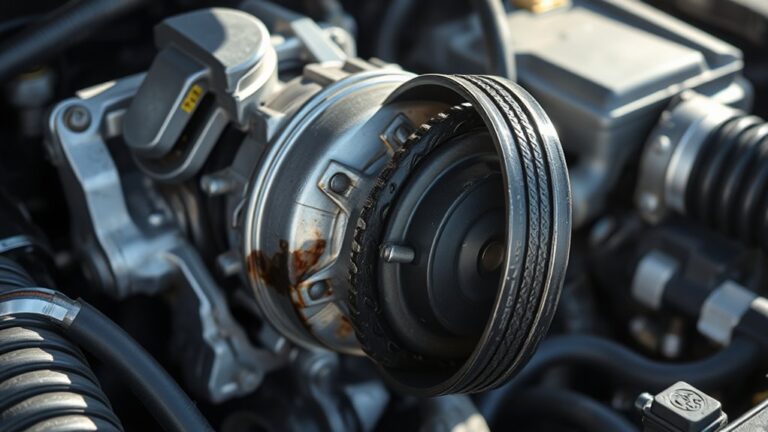
Power steering fluid leaks often show up as wet spots or stains under your vehicle, especially near the front wheels or the system components. These leaks can be caused by fluid contamination or hose deterioration that weakens the seals.
To spot a leak, look for pooled fluid on the ground, which is usually reddish or brownish. You might also notice damp spots around the power steering pump or hoses.
Cracked or swollen hoses are signs of deterioration, and discolored or oily residue on the components can also indicate a leak.
Persistent leaks mean fluid isn’t circulating properly, which can lead to steering problems. Regularly checking for these signs helps catch leaks early.
This way, you can prevent further damage and keep your steering system in good shape.
Unusual Steering Feel
Unusual steering feel is a common sign that something’s wrong with your power steering system, often indicating a fluid leak. When your steering becomes heavy or sluggish, it reduces responsiveness, making it harder to control your vehicle smoothly.
You might notice your car pulling to one side or needing more effort to turn the wheel, which affects handling stability. These symptoms suggest low power steering fluid levels, probably caused by leaks.
Pay close attention to how your steering responds during your drives. Any stiffness or delay could be a sign of trouble. Addressing fluid leaks quickly can restore proper steering feel, improve responsiveness, and keep your handling safe.
Don’t ignore these signs; catching problems early can prevent further damage to your power steering system.
Why Do I Feel Vibrations or Oscillations in the Steering Wheel?
Vibrations or oscillations in the steering wheel often signal underlying issues with your vehicle’s suspension, tires, or steering components. If you notice this, it’s likely due to problems like uneven tire wear or misalignment. These issues make your steering feel unstable and uncomfortable, especially at higher speeds.
Common causes include poor steering alignment that leads to uneven tire contact, unbalanced tires causing vibrations during driving, worn suspension parts that can’t dampen oscillations, and damaged or bent steering components affecting stability.
Addressing these problems promptly is crucial for safe driving. Proper steering alignment and tire balancing are key to smooth handling and reducing vibrations. If you ignore them, these issues can get worse, leading to costly repairs and compromised safety.
Regular maintenance checks can help catch these problems early, keeping your steering responsive and your ride comfortable.
How Do Power Steering Issues Impact Vehicle Safety?
Since steering is crucial for keeping control of your vehicle, problems with power steering can seriously impact safety. When your power steering isn’t functioning properly, you’ll notice less responsiveness, making it harder to turn smoothly or react quickly to road hazards.
This can cause delayed or stiff responses, which increases the risk of accidents, especially in emergency situations. As a driver, your confidence in handling the vehicle drops, possibly leading to hesitation or abrupt maneuvers that compromise safety.
Difficulty controlling the vehicle can result in drifting, poor lane positioning, or inability to make precise turns. Ignoring these issues over time can lead to more serious mechanical failures, putting you and others in danger.
Ensuring your power steering works correctly is key for safe driving. It maintains good steering response and boosts your confidence, helping you navigate confidently and react swiftly when needed.
When Should I Consult a Professional About Power Steering?
Recognizing when to seek professional help for power steering issues can prevent minor problems from turning into costly repairs or safety hazards. If you notice persistent difficulty turning the wheel, strange noises, or fluid leaks, it’s time for a professional consultation. Ignoring these signs can lead to more severe damage and compromise your safety.
Seek professional help early to avoid costly repairs and ensure safe driving.
You should consult a professional about your power steering if:
- The steering feels heavy or unresponsive
- You hear whining or squealing noises when turning
- The power steering fluid reservoir is consistently low
- You notice fluid leaks under your vehicle
Addressing these symptoms promptly guarantees your vehicle remains safe and reliable. A professional mechanic can diagnose and fix the issue early, preventing further damage. Trust your instincts—when you suspect power steering problems, don’t delay seeking expert advice to keep your driving smooth and safe.
Maintenance Tips to Prevent Power Steering Problems
Regular maintenance is key to preventing power steering problems before they start. Make sure to check the fluid levels regularly and top off with the correct power steering fluid to keep things running smoothly.
Keep an eye on the steering alignment because misalignment can cause uneven wear and make turning more difficult. It’s also a good idea to inspect the pump for leaks or strange noises, which might mean it needs some attention.
Don’t forget to examine the hoses for cracks or leaks so they stay in good shape. Keeping the reservoir clean is important too—debris can clog the system if it gets in.
Lastly, check the belt condition. If the belt is loose or frayed, it can affect the components driven by the belt, impacting overall steering performance.
How Regular Inspections Keep Your Power Steering in Top Shape
Frequent inspections are key to keeping your power steering system running smoothly. Regular maintenance helps catch problems early, saving you money on repairs and avoiding unsafe driving situations.
Regular power steering checks prevent costly repairs and ensure safe, smooth driving experiences.
By sticking to the recommended inspection schedule, you ensure your steering fluid, hoses, and belts stay in good shape. This proactive approach reduces the risk of leaks, noise, or hard steering.
During inspections, you might notice things like low or dirty power steering fluid, loose or cracked hoses, or strange whining sounds. You could also feel extra effort or stiffness when turning.
Spotting these issues early means you can fix small problems before they get worse. Regular check-ups keep your steering responsive and safe, giving you confidence on the road.
Frequently Asked Questions
Can Power Steering Issues Affect Other Vehicle Systems?
Yes, power steering issues can affect other vehicle systems. When steering fluid leaks or gets low, it can make steering harder, which might lead to alignment problems over time.
These issues can put extra stress on the suspension and tires, causing uneven wear and affecting how the vehicle handles.
Fixing power steering problems early helps prevent more damage and keeps your car running smoothly and safely.
How Long Can I Drive With Steering Problems Before Repairs Are Urgent?
Driving with steering problems is like walking a tightrope; it’s best not to push your luck. If you notice steering noise or handling difficulty, don’t delay repairs.
You shouldn’t drive long before addressing these issues, as they can worsen quickly, risking safety. Even a short drive can become hazardous, so prioritize prompt repairs.
Your safety depends on maintaining ideal steering performance, so get it checked as soon as possible.
Are There DIY Fixes for Minor Power Steering Issues?
Yes, you can try simple DIY fixes for minor power steering issues. Check for fluid leaks and top off the power steering fluid if it’s low. This can improve steering feel and reduce noise.
Also, inspect the pulley and belt for wear or looseness. Cleaning or tightening these parts might help temporarily. But if the problem keeps happening, it’s best to see a mechanic to avoid causing more damage.
What Are the Signs of a Failing Power Steering Pump?
You’ll notice a failing power steering pump if you hear unusual pump noise or squealing when turning the wheel.
Fluid leaks around the pump or under your car are also signs of trouble.
If steering feels stiff or heavy, that usually means the pump isn’t providing enough pressure.
Address these issues promptly to avoid further damage and ensure safe, smooth driving.
How Does Temperature Impact Power Steering Performance?
Did you know that temperature fluctuations can affect your power steering performance quite a bit? When it’s cold, the fluid gets thicker, making steering stiff and harder to turn.
On the other hand, high temperatures make the fluid thinner, which can lead to leaks and less lubrication. These changes can cause your steering to feel sluggish or make noise, especially in extreme weather.
To stay safe, it’s a good idea to check your power steering fluid regularly. Consider using a fluid that’s designed to handle different temperatures for better performance.
Conclusion
Think of your power steering as the heartbeat of your car’s handling. When it’s strong, driving feels effortless; when it falters, every turn becomes a struggle. Regular checks and prompt repairs are your best defenses against surprises on the road.
Like tending a delicate garden, nurturing your steering system guarantees smooth, safe rides. Don’t wait until problems grow like weeds—stay vigilant. Addressing power steering issues early keeps your vehicle steering reliably for miles to come.