Do You Have to Gap Spark Plugs? What You Need to Know
Struggling with engine performance or fuel efficiency? You’re not alone—many car owners find themselves unsure about the small but important details that keep their engines running smoothly.
One often overlooked factor is spark plug gapping, which can make a big difference in how your vehicle runs.
Yes, you need to gap your spark plugs to guarantee peak engine performance, fuel efficiency, and longevity. Gapping involves adjusting the distance between the center and ground electrodes to match your vehicle’s specifications.
Incorrect gaps can cause misfires, rough idling, or poor power. It’s important to check and adjust the gap properly before installation.
Keep going to uncover how to check, adjust, and maintain your spark plugs for the best results.
Key Takeaways
- Yes, gapping spark plugs is important to make sure your engine fires properly and runs smoothly.
- You can find pre-gapped plugs, but it’s a good idea to check the gap against what your vehicle’s manufacturer recommends.
- If the gap is off, it can lead to misfires, rough idling, lower fuel efficiency, and even damage your engine.
- Use a feeler gauge or a gap tool to check and adjust the gap for the best performance.
- Regularly inspecting and maintaining your spark plug gaps can help them last longer and keep your engine running efficiently.
Why Is Gapping Your Spark Plugs Important?
Gapping your spark plugs correctly is crucial because it directly affects how well your engine runs. Proper gap size guarantees peak spark plug performance, which influences ignition timing and engine efficiency.
Different spark plug materials like copper, platinum, or iridium react differently to gap adjustments. This impacts their durability and spark quality. If the gap is too narrow, the spark may be weak, leading to misfires and rough idling.
On the other hand, a gap that’s too wide can cause delayed ignition, reducing power and fuel economy. Accurate gapping helps keep ignition timing consistent, so your engine fires at the right moment for smooth operation.
When you set the correct gap, you maximize the spark’s ability to ignite the fuel-air mixture efficiently. This not only improves engine performance but also helps extend your spark plugs’ lifespan.
To sum it up, correctly gapped spark plugs are key for reliable ignition timing and overall engine health.
Can You Install Spark Plugs Without Gapping Them?
You can technically install spark plugs without gapping them first, but it’s not really recommended. Different types, like copper, platinum, or iridium, often come pre-gapped, which makes installation easier.
Installing spark plugs without gapping is possible but not advisable; always double-check for proper engine performance.
Still, it’s crucial to check that the gap matches your vehicle’s specs. Skipping this step can cause misfires, poor engine performance, or lower fuel efficiency.
Proper installation means making sure the spark plug sits correctly in the cylinder head without cross-threading or over-tightening. If you ignore gapping, you might not see problems right away, but engine issues could develop over time.
Always double-check the gap, especially if you’re using aftermarket plugs or they arrive un-gapped. Gapping is a small step but can really improve how well your engine runs and help your spark plugs last longer.
Even if it feels like a hassle, taking the time to gap your spark plugs is definitely worth it.
How to Check Your Spark Plug Gap Correctly?
Wondering how to guarantee your spark plug gap is correct? To check it accurately, you’ll need a feeler gauge suited for your spark plug’s gap specifications.
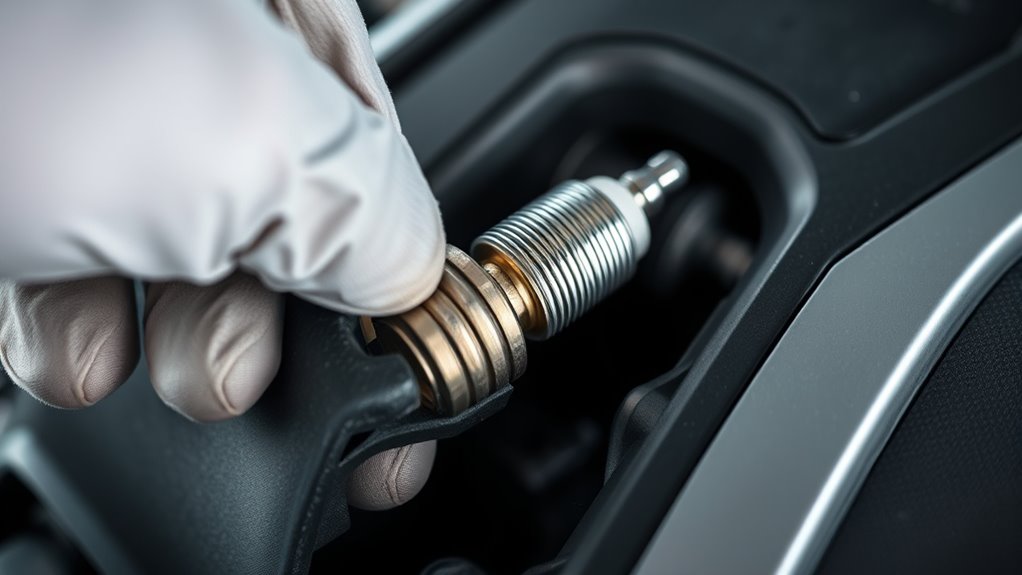
First, remove the spark plug from your engine. Then, slide the feeler gauge between the electrode and the ground strap. Gently move it back and forth; if it slides smoothly with resistance, your gap is correct.
If it’s too tight or loose, adjust accordingly. Remember, spark plug materials like copper, platinum, or iridium may influence gap stability, and gap variations can occur over time due to wear or thermal expansion.
Use the table below to understand typical gap ranges for different materials:
| Spark Plug Material | Typical Gap Range |
|---|---|
| Copper | 0.028–0.035 in |
| Platinum | 0.035–0.043 in |
| Iridium | 0.035–0.044 in |
Always double-check your vehicle’s manufacturer specs to verify accuracy.
When Should You Gap Your Spark Plugs? Signs to Watch For
If your engine’s misfiring, running rough, or having a hard time starting up, it could be a sign that your spark plugs need some attention. You might also notice your fuel efficiency taking a hit—that’s another good indicator they’re not firing the way they should. Keep an eye out for these signs so you know when it’s time to gap your spark plugs and keep your engine running smoothly.
Engine Misfires or Rough Running
Engine misfires or rough running are clear signs that your spark plugs may need attention, often indicating they’re not firing properly. When your engine performance feels uneven, it’s likely due to spark plug wear or improper gaps affecting ignition.
You might notice hesitation during acceleration, engine stumbling, or inconsistent idling. These issues come from compromised spark plug efficiency, which prevents the engine from firing smoothly.
As spark plugs wear out, their ability to produce a strong, consistent spark diminishes, leading to misfires and rough operation. Addressing these signs early by checking and gapping your spark plugs can restore peak engine performance.
It can also help prevent further damage. Don’t ignore rough running — it’s a clear signal that your spark plugs could be due for maintenance.
Decreased Fuel Efficiency
When spark plugs aren’t firing properly, it can lead to more than just rough running. Fuel efficiency often takes a hit as well. Poorly gapped or worn spark plugs cause incomplete combustion, which means your vehicle uses more fuel.
Watch for these signs:
- Decreased miles per gallon—you notice you’re filling up more often.
- Engine hesitation—the car sputters or struggles to accelerate.
- Spark plug wear—visible signs like fouling or eroded electrodes, indicating it’s time to gap or replace them.
Fixing worn spark plugs and making sure they’re properly gapped helps optimize combustion. This saves you money on fuel. Ignoring these signs can lead to excessive fuel consumption and bigger engine problems over time.
Difficulty Starting the Vehicle
Are you having trouble starting your vehicle consistently? Cold weather can make ignition issues worse, making it harder to ignite the engine.
If your car cranks but doesn’t start, it might be time to check your spark plug gap. Misfitted gaps can weaken the spark, especially in cold temperatures.
Watch for signs like rough idling, misfires, or extended cranking times. These can indicate ignition problems that need attention.
| Issue | Possible Cause | Solution |
|---|---|---|
| Hard starting in cold weather | Incorrect spark plug gap | Re-gap or replace plugs |
| Engine stalls or misfires | Worn or fouled spark plugs | Replace spark plugs |
| Extended cranking time | Weak spark or ignition issues | Check and gap spark plugs |
Properly gapped spark plugs help improve ignition, especially when it’s cold outside.
How to Safely Adjust Your Spark Plug Gap
Adjusting your spark plug gap safely starts with having the right tools on hand, usually a spark plug gap gauge or a feeler gauge. These tools help you measure and adjust the gap accurately without damaging the electrode.
First, remove the spark plug from your engine and clean it if needed. Then, use the gauge to check the current gap against your vehicle’s specifications.
Gently bend the ground electrode using the tool or pliers to increase or decrease the gap, being careful not to use too much force. Always double-check the gap after making adjustments to ensure it’s precise.
Getting the gap right is key for your engine’s performance. Handle the spark plug carefully and avoid forcing the electrodes. Small adjustments can make a big difference.
What Is the Correct Spark Plug Gap Size for Your Vehicle?
Looking for the right spark plug gap size for your vehicle? The best place to start is by checking your vehicle manufacturer’s recommendations. These can vary quite a bit depending on the make and model, so it’s important to get the specifics for your car.
Once you know the recommended gap, you can measure your spark plugs to see if they match up. If they don’t, it’s a good idea to adjust them to the correct size. Doing this ensures your engine runs smoothly and efficiently, giving you better performance and potentially saving you some fuel.
Vehicle Manufacturer Recommendations
Your vehicle manufacturer provides specific spark plug gap recommendations to ensure your engine runs smoothly and efficiently. These specs are tailored to your car’s engine design and can vary based on the spark plug types used.
Always check your owner’s manual or manufacturer’s guidelines for the exact gap size. Different spark plug types, like platinum or iridium, might need slightly different gaps.
Using the recommended gap helps prevent misfires, boosts fuel economy, and extends your spark plug’s life. Ignoring these specs can lead to poor performance or even engine damage.
Stick to the manufacturer’s recommended gap size to keep your engine running at its best and avoid unnecessary problems.
Checking Spark Plug Gaps
Wondering how to check your spark plug gaps accurately? Start by gathering the right tools, like a feeler gauge or a spark plug gap tool. These help you measure the gap precisely.
First, remove the spark plug from your engine. Then, place the gauge between the center and ground electrode. Use gentle, consistent pressure to check the gap against your vehicle’s recommended size.
If the gap is too wide, carefully bend the ground electrode inward; if it’s too narrow, gently adjust it outward. Remember, proper gapping techniques are key for peak engine performance.
Always double-check your measurements before reinstalling the spark plug. Correctly gapped spark plugs ensure reliable starts, smooth running, and better fuel economy.
Adjusting for Performance
The correct spark plug gap size is key to boosting your engine’s performance. When tuning, adjusting the gap ensures your spark plugs ignite the fuel-air mixture efficiently.
Different spark plug types, like iridium or platinum, might have specific gap needs. Always check the manufacturer’s recommendations to get it right.
To fine-tune for top performance, match the gap to your vehicle’s specs for the best combustion. Keep in mind, some spark plug types may require a slightly different gap because of their design.
Use a feeler gauge to set the gap precisely before installing or re-gapping. Properly gapped spark plugs improve acceleration, fuel economy, and overall engine responsiveness.
This makes your performance tuning more effective and reliable.
What Happens If the Spark Plug Gap Is Too Wide or Too Narrow?
When the spark plug gap is too wide or too narrow, it can cause serious issues with your engine’s performance. A gap that’s too wide might produce weak sparks, which can lead to faster spark plug wear and misfires.
This can cause rough idling, lower fuel efficiency, and sluggish acceleration. On the other hand, a gap that’s too narrow can create a spark that’s too weak to properly ignite the fuel-air mixture, resulting in poor combustion and less power.
Both problems can mess with ignition timing, making your engine run unevenly and putting extra strain on other parts. Over time, improper gaps can speed up spark plug wear, meaning you’ll need to replace them more often.
Getting the gap right helps keep ignition timing on point, which keeps your engine running smoothly, improves fuel economy, and extends the life of your spark plugs. Properly gapped plugs are key for consistent performance and avoiding unnecessary engine troubles.
Should You Gape New Spark Plugs Before Installing?
Many mechanics suggest checking and adjusting the spark plug gap before installing to ensure your engine runs at its best. Whether your new spark plugs are platinum, iridium, or nickel, gapping still matters because different materials can affect how easily the gap is adjusted.
Before installing, use a reliable gapping tool to measure and set the correct gap specified by your vehicle’s manufacturer. It’s a simple step that can make a big difference.
Here’s what you should keep in mind:
- Check the gap: Always verify the gap with a feeler gauge or digital gapping tool before installing.
- Adjust carefully: If needed, gently bend the ground electrode to meet the specified gap, being careful not to damage the spark plug.
- Avoid over-gapping: Gaps that are too wide or narrow can cause misfires, so precision is key.
Gapping new spark plugs helps ensure they perform well and last longer. It’s a quick and important step before installation.
Troubleshooting Spark Plug Gaps: Common Problems and Fixes
If your engine isn’t running smoothly, one common culprit could be the spark plug gaps. It’s pretty important to check whether the gaps are too wide or too narrow because that can really mess with how your engine performs.
Once you figure out what’s going on with the gaps, you can go ahead and fix them. Getting this right means your spark plugs will fire properly, leading to better ignition and smoother engine performance overall.
Identifying Incorrect Gaps
Have you ever noticed your engine misfiring or running rough? That could be a sign of incorrect spark plug gaps. To check if your gaps are off, focus on these key points:
- Use reliable gap measurement tools like a spark plug gap tool or feeler gauge to get an accurate reading.
- Look closely at your spark plugs for signs of wear. A widened gap or damaged electrodes can cause poor performance.
- Compare your measurement with the manufacturer’s specifications. If the gap is too wide or narrow, it’s a clear sign of an incorrect gap.
Regularly checking these signs helps prevent misfires and keeps your engine running smoothly.
Correcting Gap Issues
When you notice misfires or rough engine performance, correcting spark plug gaps becomes essential. First, use spark plug tools designed for gap measurement to check if the gap is still within the manufacturer’s specifications.
If the gap is too wide or too narrow, carefully adjust it by gently bending the electrode with the appropriate tool. Always re-measure after making adjustments to guarantee accuracy. Avoid forcing the electrode, which can cause damage.
If the gap is considerably off or the spark plug shows signs of wear or damage, consider replacing it entirely. Proper gap correction improves ignition efficiency and engine performance.
Regularly checking and adjusting your spark plugs helps prevent future issues and keeps your engine running smoothly.
FAQs About Spark Plug Gapping and Maintenance
Are you unsure about the importance of gapping your spark plugs? Proper gapping can really impact your engine’s spark plug lifespan and help it perform at its best.
Here are some common questions to help you out:
- How often should I check the gap? It’s a good idea to inspect your spark plug gap regularly, especially if your engine is idling rough or your fuel economy drops.
- Can I gap my spark plugs myself? Absolutely! With a spark plug gap tool, you can easily adjust the gap to match your vehicle’s specifications.
- What happens if the gap is too wide or narrow? An incorrect gap can lead to misfires, less power, and faster wear on your spark plugs.
Keeping the right gap ensures your engine runs smoothly and your spark plugs last longer. Staying on top of gapping and maintenance means your vehicle will deliver peak performance every time you turn the key.
Frequently Asked Questions
Can Incorrect Spark Plug Gapping Affect Fuel Efficiency?
Incorrect spark plug gapping can definitely affect fuel efficiency by messing up the ideal fuel combustion. When the gap isn’t set right, your spark plugs might misfire or produce weak sparks, leading to incomplete combustion and lower engine performance.
This not only shortens the lifespan of your spark plugs but also causes your vehicle to burn more fuel than needed. To keep things running smoothly, make sure your spark plugs are gapped correctly and replaced when necessary.
How Often Should Spark Plugs Be Gapped During Regular Maintenance?
You should check and gap your spark plugs every 30,000 miles or during regular maintenance to keep your engine running smoothly. Over time, spark plug lifespan decreases, and gapping techniques can help maintain proper gap sizes. This improves fuel efficiency and makes your engine run more smoothly.
Regularly inspecting and adjusting the gap helps prevent misfires and engine issues. It can save you money in the long run and extend the life of your spark plugs. Keeping up with this simple maintenance step is key to keeping your engine in good shape.
Are There Specific Tools Recommended for Gapping Spark Plugs?
You should use spark plug gauges to accurately gap your spark plugs, ensuring proper engine performance. These gauges are designed specifically for gapping techniques, making it easier to make precise adjustments.
A feeler gauge is a common tool in this process, allowing you to measure the gap accurately. Always follow the manufacturer’s specifications when gapping.
Use these recommended tools to avoid damaging the spark plug or affecting your engine’s efficiency.
Does Spark Plug Gapping Vary Between Vehicle Models?
Yes, spark plug gapping varies between vehicle models because different engines have specific spark plug requirements.
You should check your vehicle’s owner’s manual or manufacturer’s guidelines to find the right gap size for your engine.
Ignoring these differences can cause poor engine performance or misfires.
Always verify you’re gapping your spark plugs according to your vehicle’s specific engine needs for the best results.
Can Gapping Spark Plugs Improve Engine Performance?
Sure, gapping spark plugs can magically boost your engine’s performance—well, if you ignore modern spark plug technology. Proper gapping improves ignition efficiency, ensuring a stronger spark and smoother operation.
While it might seem tiny, this tweak can optimize combustion, giving you better fuel economy and power. So, yes, taking the time to gap your spark plugs can make a noticeable difference, especially if your engine’s performance feels off.
Conclusion
Think of your spark plugs as the drumsticks in your car’s rhythm section. When they’re properly gapped, everything stays in sync, and your engine performs smoothly.
But if the gaps are off, it’s like trying to play a beat with warped sticks — the music, or your engine, suffers.
Regularly check and adjust your spark plug gaps to keep your vehicle humming perfectly.
This simple step helps ensure your driving experience remains a harmonious symphony and that your spark plugs are properly gapped.