How To Dispose Of Coolant Safely and Responsibly
Dealing with coolant disposal can be stressful, especially if you’re not sure about the safest way to handle it. You’re not alone—many people struggle with figuring out how to dispose of hazardous chemicals responsibly.
Ensuring you’re doing it correctly is crucial for your safety and the environment.
To dispose of coolant safely, first wear protective gear like gloves and goggles to prevent contact with harmful chemicals.
Store used coolant in clearly labeled, sealed containers and find a licensed recycling center or disposal facility nearby.
Never pour coolant down drains or into water sources, as it’s illegal and damaging to the environment.
Check local waste programs or collection events for proper disposal options.
Want expert tips to make the process safer and easier? Keep going to learn more.
Key Takeaways
- Always wear protective gear and work in well-ventilated areas to avoid coming into contact with harmful chemicals.
- Store used coolant in clearly labeled, sealed containers to prevent leaks or spills.
- Take used coolant to licensed recycling centers or hazardous waste collection events for proper disposal.
- Never dump coolant down drains, into water sources, or onto the ground to protect the environment.
- Follow local rules and keep records of how you dispose of coolant to stay compliant with the law.
Why Proper Coolant Disposal Matters
Proper coolant disposal is essential because these liquids contain harmful chemicals that can damage the environment and pose health risks if not handled correctly. If you don’t dispose of coolant properly, it can seep into soil and water sources, polluting ecosystems and harming wildlife.
Proper coolant disposal prevents environmental damage and protects your health from harmful chemical exposure.
The environmental impact of improper disposal can be long-lasting, affecting plants, animals, and even humans who rely on clean water. Coolant exposure can also pose serious health risks to you and others.
Contact with skin or ingestion can cause poisoning, nerve damage, and other health issues. By following proper disposal methods, you help prevent these dangers and protect your community.
Handling coolant responsibly also ensures you stay in line with environmental regulations and avoid potential fines. Remember, your actions directly influence the safety of your environment and personal well-being.
Proper disposal isn’t just a legal requirement; it’s a moral obligation that helps keep everyone safe.
When Is Coolant Ready to Be Disposed Of?
You know, it’s a good idea to think about disposing of your coolant when you notice it’s changed color from what it used to be. That change usually means it’s contaminated or has degraded over time. Also, don’t forget to check your vehicle’s maintenance schedule—if it says it’s time for a fluid replacement, that’s a clear sign you should get rid of the old coolant.
Coolant Color Changes
Coolant color is a quick visual indicator of its condition, helping you figure out when it’s time to dispose of it. Paying attention to color signs is key to understanding coolant health.
Fresh coolant usually has a bright, consistent hue—green, orange, pink, or blue—depending on the type. Over time, the color may fade, darken, or turn cloudy, which signals contamination or degradation.
If the coolant turns brown, rusty, or develops particles, it’s a clear sign it’s no longer effective and should be replaced. These color changes indicate chemical breakdown or debris presence, meaning it’s ready for disposal.
Regularly checking coolant color helps you avoid engine damage and ensures safe disposal practices. When in doubt, always consult your vehicle’s manual or a professional for proper coolant diagnostics.
Vehicle Maintenance Schedule
Knowing when to dispose of coolant depends on following your vehicle’s maintenance schedule, which outlines the recommended intervals for coolant changes. Regular vehicle upkeep guarantees your engine runs smoothly and helps prevent costly repairs.
Maintenance reminders, like your owner’s manual or service alerts, tell you when it’s time to replace the coolant. Typically, coolant should be changed every 30,000 to 50,000 miles or every 2 to 5 years, depending on your vehicle and the type of coolant you use.
Disposing of coolant when it’s overdue can pose environmental and health risks. Keep track of your maintenance schedule and watch for signs like overheating or changes in coolant color.
Proper timing ensures safe disposal and keeps your vehicle performing well.
Gather Safety Gear Before Handling Used Coolant
Before handling used coolant, it’s important to gather the right safety gear to protect yourself from potential hazards. Wearing gloves and safety goggles keeps your skin and eyes safe from harmful chemicals.
A long-sleeved shirt and pants give extra protection against spills or splashes. Using a respirator or mask can prevent you from inhaling toxic fumes, especially in areas with poor ventilation.
Handling coolant without proper gear increases your risk of skin irritation, chemical burns, or breathing problems. Safety gear also helps reduce environmental impact by preventing spills or leaks that could contaminate soil or water sources.
Always double-check that your protective equipment fits well and is in good condition before you begin. Taking these precautions keeps you safe and helps you handle coolant responsibly, minimizing health and environmental risks.
How to Recycle Coolant Responsibly
Recycling coolant responsibly is pretty straightforward if you know what to do. First off, make sure to store the coolant in sealed, clearly labeled containers. This helps prevent leaks or accidental spills, and it keeps everything organized and safe.
Next, look for recycling centers nearby that accept automotive fluids like coolant. These places know the proper way to handle and dispose of used coolant, so it’s best to follow their guidelines carefully.
And don’t forget, always handle coolant with care. Wear gloves and eye protection to keep yourself safe from spills or splashes. Taking these steps helps ensure you’re recycling coolant safely and responsibly.
Proper Storage Techniques
Proper storage of coolant is essential to confirm safety and environmental responsibility. Use safe containers specifically designed for coolant storage to prevent leaks and spills.
Verify containers are clearly labeled and sealed tightly after each use. Store coolant in a cool, dry place away from direct sunlight and heat sources to prevent degradation.
Keep containers upright to avoid leaks and accidental exposure. Regularly inspect storage areas for damage or leaks.
Avoid mixing different types of coolants, which can cause chemical reactions. Always keep coolant out of reach of children and pets.
Follow local regulations on coolant storage and disposal to stay compliant and protect the environment. Proper coolant storage minimizes hazards and confirms safe recycling later.
Find Recycling Centers
Finding a recycling center is an important step in disposing of coolant responsibly. Recycling helps protect the environment by reducing hazardous waste and conserving resources.
To find a good facility, check local community resources like municipal waste programs or environmental agency websites. Many recycling centers accept used coolant, making sure it gets processed safely and properly.
Some centers might even offer free or low-cost disposal services for automotive fluids. Before you go, it’s a good idea to call ahead and confirm what materials they accept and their hours of operation.
Proper disposal through recycling centers stops harmful chemicals from contaminating soil and water. Using these community resources not only helps the environment but also promotes sustainable waste management.
Be sure to follow their guidelines for coolant disposal to stay safe and compliant.
Safe Handling Practices
Handling coolant safely is really important to prevent health risks and environmental damage. Always wear protective gloves, goggles, and long sleeves to avoid skin and eye contact.
Make sure you’re working in well-ventilated areas so you don’t breathe in fumes. Never mix used coolant with other chemicals, and try to prevent spills by using proper containers.
Store coolant in clearly labeled, sealed containers away from children and animals. Dispose of or recycle coolant at authorized facilities quickly to stay safe.
Remember, improper handling can cause health hazards and harm the environment. Following these precautions helps protect both yourself and the planet.
Staying vigilant about coolant safety ensures responsible disposal and reduces risks for everyone involved.
Options for Disposing of Used Coolant
Disposing of used coolant responsibly is key to preventing environmental contamination and health risks. One good option is coolant recycling, where your used fluid is collected and processed to remove contaminants so it can be reused.
Recycling helps reduce waste and the environmental impact of improper disposal. Many auto shops and recycling centers accept used coolant, making it easy to do the right thing.
Recycling coolant minimizes waste and environmental harm; many centers accept used fluid for safe reuse.
If recycling isn’t available nearby, check local regulations for authorized disposal sites. Never pour coolant down the drain, onto the ground, or into storm drains, as it can seep into water supplies and harm wildlife.
Proper disposal helps protect ecosystems and public health. Remember, used coolant contains hazardous chemicals, so handling and disposing of it responsibly is a shared responsibility.
Transport Used Coolant Safely to Disposal Centers
When you’re hauling away used coolant, it’s really important to use a proper, leak-proof container. This helps prevent any spills along the way, which is better for everyone’s safety and the environment.
Make sure the container is secured tightly in your vehicle so it doesn’t shift or leak during transit. Using the right transportation methods isn’t just about following rules—it’s about keeping everyone safe and protecting our surroundings.
Proper Container Usage
Using the right container is essential for transporting used coolant safely. Choose containers made of durable, chemical-resistant materials like polyethylene or metal designed for hazardous waste. Make sure the container has a secure, leak-proof lid to prevent spills.
Follow labeling guidelines carefully—clearly mark the container as “Used Coolant” and include hazard symbols if needed. Here are some key points to keep in mind:
- Use approved, leak-proof containers
- Avoid containers not meant for hazardous waste
- Label containers with clear, easy-to-read text
- Keep containers upright during transport
- Check for cracks or damage before using
Proper container use helps minimize risks and ensures safe disposal. Always follow local rules and manufacturer instructions to protect yourself and the environment during transit.
Secure Transportation Methods
To guarantee your used coolant reaches the disposal center safely, it’s essential to choose the right transportation methods. Use secure containers designed for coolant transport to prevent leaks and spills. Make sure containers are clearly labeled and tightly sealed.
When transporting, avoid overfilling and keep containers upright. Use a sturdy vehicle with proper containment features to minimize risk. Here’s a quick reference:
| Container Type | Features | Best Use |
|---|---|---|
| Plastic drum | Leak-proof, durable | Large quantities, long-distance |
| Metal tank | Chemical-resistant, secure | Heavy-duty, industrial use |
| Sealed bottles | Portable, easy to handle | Small amounts, quick trips |
Following these guidelines helps you transport coolant safely and responsibly.
What Rules and Regulations Apply to Coolant Disposal?
Regulations surrounding coolant disposal are strict because improper handling can harm the environment and public health. You need to follow specific rules to avoid legal trouble and reduce environmental impact.
Federal and state laws regulate how you dispose of used coolant, often treating it as hazardous waste. You’re usually not allowed to pour coolant down drains, onto the ground, or into water sources.
Proper disposal involves using licensed facilities or collection events. Make sure to comply with EPA hazardous waste rules and use authorized disposal sites.
It’s important to keep records of how and when you dispose of coolant. Avoid illegal dumping at all costs, as it can lead to hefty fines and legal action.
Always follow local regulations and guidelines to stay compliant. These rules are in place to protect ecosystems and public health, so following them is essential.
Finding Local Disposal Facilities or Collection Events
Finding the right place to dispose of used coolant is an important step in handling it responsibly. Start by checking your city’s waste management website or calling your municipal office to find approved disposal facilities.
Community programs often host collection events where you can drop off coolant safely and free of charge. These events are convenient, eco-friendly, and ensure proper handling.
| Disposal Method | Location | Cost |
|---|---|---|
| Local Recycling Centers | City recycling facilities | Usually free |
| Community Collection Events | Scheduled local events | Free |
| Authorized Waste Facilities | Approved hazardous waste sites | Small fee or free |
Check your community’s website or call local agencies for updated info on collection events and disposal sites. Using these resources helps keep your environment safe and ensures you’re following regulations.
What If No Disposal Sites Are Available Near You?
If nearby disposal sites aren’t available, you’ll need to look for other ways to handle coolant safely. Start by exploring alternative disposal options that your local community or waste programs might accept. You can:
- Contact local recycling centers to see if they accept coolant.
- Reach out to municipal waste authorities for guidance on safe disposal options.
- Use hazardous waste collection events in your area.
- Consult with auto repair shops—they sometimes accept used coolant.
- Consider professional hazardous waste disposal services if other options aren’t available.
Always check that these methods follow local regulations to prevent environmental contamination. Remember, safe disposal is key to protecting the environment and public health. If you’re unsure, contact local officials or environmental agencies for clarity. Being proactive ensures you handle coolant responsibly, even when standard disposal sites aren’t nearby.
Tips to Prevent Spills and Contamination During Disposal
When disposing of coolant, it’s important to take precautions to prevent spills and contamination. This helps protect both the environment and your health.
Always use secure, labeled containers designed for hazardous liquids. Keep them upright and handle them carefully to avoid accidental leaks.
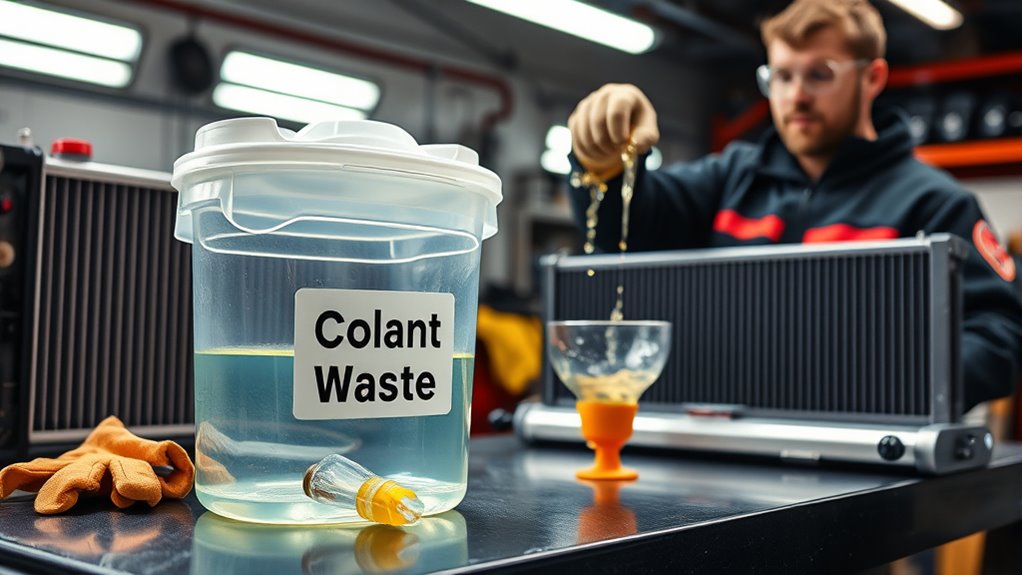
When transferring coolant, use funnels to reduce splashes and work over a stable surface. After use, cover or seal containers tightly to prevent leaks during transportation.
Contamination control is just as important. Avoid mixing used coolant with other chemicals or substances. Wear gloves and eye protection to prevent contact with hazardous fluids.
Dispose of coolant only at designated facilities or containers, following your local regulations. Immediately clean up any spills with absorbent materials and dispose of the residues properly.
These precautions help reduce risks, protect the environment, and ensure safe, responsible coolant disposal.
Frequently Asked Questions
Can Used Coolant Be Reused or Recycled at Home?
You can recycle your used coolant at home through coolant filtration, making DIY coolant reuse possible. First, strain the coolant to remove debris and contaminants.
Then, use a filtration system designed for this purpose to clean it further. Keep in mind, however, that recycled coolant may not perform as well as fresh, so check its condition regularly.
Always handle coolant carefully and follow safety guidelines during the process.
Are There Environmentally Friendly Alternatives to Traditional Coolant?
Yes, there are environmentally friendly alternatives to traditional coolant. You might find eco-friendly options like biodegradable coolants that break down naturally, reducing environmental impact.
These coolants often use plant-based ingredients and avoid harmful chemicals, making them safer for ecosystems. Switching to biodegradable coolants can be a smart choice for your vehicle and the planet.
They offer effective cooling without the ecological downside. Stay curious—you’ll find these greener options easier to use than you think.
What Are the Health Risks of Improper Coolant Disposal?
Improper coolant disposal can pose serious health risks because of coolant toxicity, which can harm your skin, eyes, and respiratory system.
If you ignore disposal regulations, you risk contaminating water supplies and endangering wildlife.
You should always follow local disposal regulations to prevent exposure and environmental damage.
Handling coolant safely minimizes health hazards and guarantees you’re not contributing to pollution or risking your well-being.
How Often Should Vehicle Coolant Be Replaced?
You should replace your vehicle coolant every 30,000 to 50,000 miles, or roughly every 2 to 5 years, depending on your car’s coolant lifespan and manufacturer recommendations. Regular replacement helps prevent engine overheating and corrosion.
Check your owner’s manual for specific replacement intervals, and consider more frequent changes if you drive in extreme conditions. Staying on schedule guarantees your cooling system functions efficiently and extends your vehicle’s lifespan.
Can Coolant Leaks Indicate Underlying Vehicle Issues?
You might notice coolant leaks and wonder if they hint at deeper issues—often, they do.
Coolant detection is essential for vehicle maintenance, as leaks can signal problems like worn hoses or a failing radiator. Ignoring these signs could lead to overheating or engine damage.
Stay vigilant, check for puddles under your vehicle, and address leaks promptly to keep your vehicle running smoothly and prevent costly repairs.
Conclusion
So, next time you’re tempted to toss that used coolant in the trash, remember it’s not just a harmless liquid.
Irony strikes when you realize that properly disposing of coolant actually protects your environment and saves you from costly fines.
Handling it responsibly might seem like a hassle, but ignoring those rules could cost you more in the long run.
Being eco-friendly isn’t just smart; it’s the responsible thing to do—even if it’s a bit inconvenient.
Always dispose of coolant safely to protect the environment and avoid penalties.