Can a Bad Alternator Cause a Misfire?
Are you tired of your engine misfiring unexpectedly? Many drivers struggle with rough idling, hesitation, or inconsistent performance, and figuring out the cause can be frustrating.
You’re not alone—these issues often point to underlying electrical problems that need attention.
Yes, a bad alternator can cause engine misfires because it disrupts the electrical system that powers your spark plugs and fuel injectors.
When the alternator isn’t working properly, it leads to voltage fluctuations, which can cause inconsistent engine performance, rough idling, or hesitation.
These issues often trigger misfires.
If you’re wondering how electrical problems affect your engine and want to know what signs to look for, keep exploring further details.
Key Takeaways
- A failing alternator can cause inconsistent electrical power, which affects engine control modules and can lead to misfires.
- Voltage fluctuations from a bad alternator disrupt fuel injection and ignition systems, causing the engine to misfire.
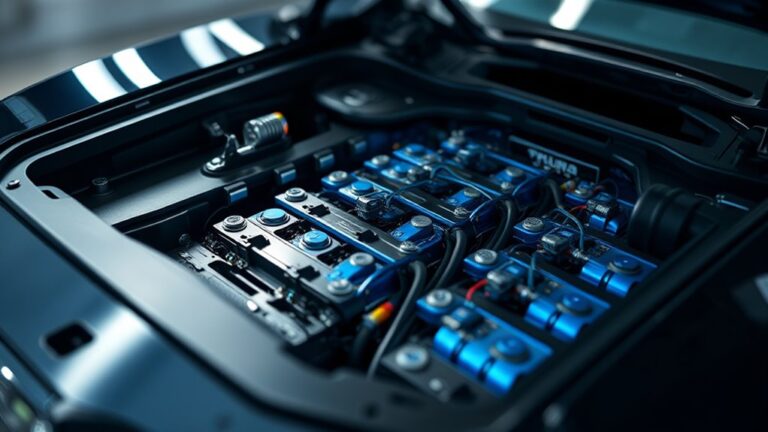
- Weak or fluctuating battery power due to alternator issues can impair spark delivery, resulting in misfires.
- Faulty electrical connections or belt slippage in the alternator can cause irregular engine performance and misfiring.
- Diagnosing and fixing alternator problems helps prevent misfires and keeps the engine running smoothly.
Can a Bad Alternator Cause Engine Misfires?
A bad alternator can indeed cause engine misfires, but it’s not always the direct cause. When your alternator isn’t working properly, it can lead to a weak or failing battery because it’s not recharging it correctly.
A bad battery then struggles to supply consistent power to your engine’s control modules and ignition system, which can cause misfires. Faulty electrical connections, like loose or corroded wires, can make things worse.
A failing battery and poor electrical connections can lead to engine misfires and performance issues.
If the alternator isn’t maintaining proper voltage, these connections may become unreliable, leading to inconsistent signals and misfiring cylinders. It’s important to check your battery and electrical connections if you think your alternator has an issue.
While a failing alternator might not directly cause misfires, it disrupts the electrical system’s stability. This can trigger engine performance problems. Proper diagnostics are key to figuring out if the alternator, battery, or electrical connections are to blame.
Signs Your Alternator Might Be Causing Engine Misfires
If your alternator isn’t working properly, you might start to notice your battery voltage acting a bit weird — maybe it’s fluctuating unexpectedly or just isn’t holding a steady charge. That’s often a sign that something’s off with the electrical system.
You might also experience your engine stalling or running roughly at idle. These are pretty common signs of electrical issues that could be linked to a failing alternator. Paying attention to these symptoms early on can really help you figure out if your alternator is the culprit behind your engine misfires.
Battery Voltage Fluctuations
When your alternator isn’t working right, it can cause your vehicle’s battery voltage to fluctuate unexpectedly. Poor voltage regulation leads to inconsistent power, which can harm your battery over time.
As the alternator struggles to keep a steady charge, you might notice sudden drops or surges in voltage. These fluctuations can cause your engine to misfire, especially if your spark plugs and fuel system depend on stable electrical input.
If your dashboard headlights are dim or your interior lights flicker, it’s a sign your alternator isn’t maintaining steady voltage. Consistent voltage levels are key for smooth engine operation.
When voltage regulation fails, your battery can become overworked or undercharged. This increases the chances of misfires and can lead to other engine performance issues.
Engine Stalling Symptoms
Engine stalling is often one of the clearest signs that your alternator may be causing misfires. When your alternator isn’t charging properly, your engine’s performance can suffer, leading to unexpected stalls.
You might notice your engine sputtering or shutting off suddenly, especially at idle or low speeds. These stalls can disrupt ignition timing, causing misfires and rough running.
If your vehicle stalls frequently or struggles to stay running, it’s a sign that your alternator might be impacting your ignition system’s consistency. Poor alternator performance can cause voltage drops that affect spark plugs and ignition coils, resulting in engine misfires and stalling.
Addressing the alternator issue promptly can restore proper engine performance and prevent further damage.
How Voltage Fluctuations From a Failing Alternator Affect Your Engine
When your alternator begins to fail, you might notice voltage fluctuations happening. These irregularities can cause your engine to lose power unexpectedly, which is pretty frustrating. It’s like your car’s way of telling you something’s not quite right.
Plus, those voltage changes can also mess with your sensors. They might send false data, which can lead to misfires and other engine troubles. So, all in all, your engine’s performance can become pretty unpredictable and less reliable when your alternator isn’t in top shape.
Engine Power Disruptions
A failing alternator can cause voltage fluctuations that directly disrupt your engine’s power. When electrical stability drops, your engine’s performance becomes inconsistent, leading to rough idling, hesitation, or stalling.
These fluctuations can cause the engine to receive uneven electrical signals, affecting essential components like fuel injectors and ignition systems. As a result, your engine struggles to maintain smooth operation, losing power unexpectedly.
You might notice a drop in acceleration or difficulty starting the vehicle. Without a steady electrical supply, your engine can’t perform effectively, making power disruptions happen more often.
Addressing alternator issues quickly restores electrical stability, ensuring your engine maintains proper power and runs smoothly. Ignoring these problems can lead to more damage and costly repairs down the line.
Sensor Malfunction Risks
Voltage fluctuations caused by a failing alternator can send false or inconsistent signals to your engine’s sensors, leading to misinterpretations of critical data. When this happens, sensor calibration becomes compromised, causing your vehicle’s computer to make incorrect adjustments.
Electrical interference from the bad alternator can disrupt signals from oxygen sensors, mass airflow sensors, and other essential components. This can result in poor engine performance or misfires, making the car run roughly or stall unexpectedly.
These erratic signals can confuse the engine control unit (ECU), making it believe parameters are outside normal ranges. Addressing the alternator issue quickly helps prevent sensor malfunctions and keeps your engine running smoothly and efficiently.
How Electrical Problems Disrupt Spark Plugs and Fuel Delivery
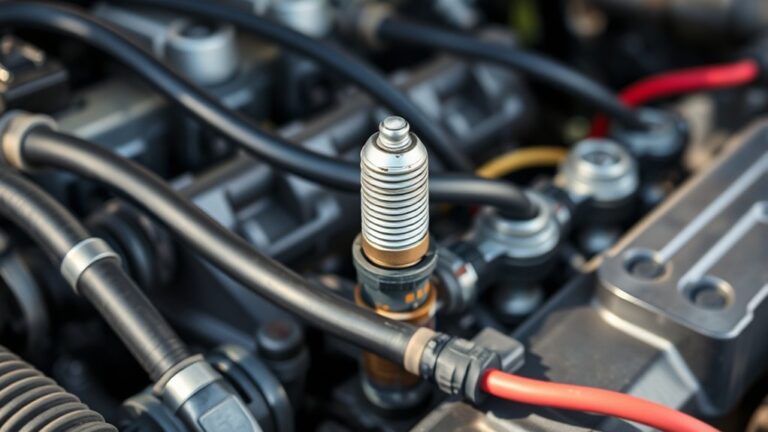
Electrical problems can directly interfere with your vehicle’s spark plugs and fuel delivery system, causing misfires and performance issues. When electrical issues happen, they can lead to weak or inconsistent sparks that prevent proper combustion.
Faulty wiring or sensors can also disrupt fuel delivery, meaning not enough fuel reaches the engine. This can cause rough idling, poor acceleration, or even stalling.
To understand how electrical problems impact your engine, consider these factors:
- Bad wiring connections can cause irregular spark plug firing, leading to misfires.
- Faulty fuel injectors or sensors may deliver inconsistent fuel amounts, affecting engine performance.
- A failing ECU or sensor malfunction can send wrong signals, disrupting both spark plug operation and fuel delivery.
Addressing these electrical issues quickly helps prevent further damage and keeps your engine running smoothly.
How Your Battery and Alternator Work Together to Keep Your Engine Running
Since your engine relies on a steady flow of power, your battery and alternator must work together seamlessly to keep everything running smoothly. The battery provides initial power to start your engine and supplies energy during low-demand periods.
Meanwhile, the alternator recharges the battery and powers electrical components while the engine runs. Proper battery maintenance guarantees it stays in top condition, preventing unexpected issues.
An alternator with a longer lifespan delivers consistent performance, reducing the risk of electrical problems that could lead to misfires.
| Function | Battery | Alternator |
|---|---|---|
| Power source | Provides initial energy | Recharges battery, powers electrical systems |
| Maintenance focus | Keep terminals clean, check charge | Guarantee belt tension, replace if worn |
| Lifespan | 3-5 years, depends on care | 7-10 years, depends on use and maintenance |
Common Causes of Alternator Failure That Lead to Engine Misfires
A failing alternator can cause your engine to misfire, often with little warning. When the alternator’s internal parts wear out or get damaged, it can’t keep the right voltage levels, leading to inconsistent power.
This fluctuation affects the engine’s spark plugs and fuel injectors, which can cause misfires. Common causes of alternator failure that lead to misfires include poor maintenance, worn-out brushes, and faulty voltage regulators.
Lack of proper alternator care, like dirt buildup, corrosion, or loose connections, can speed up wear and tear. Worn brushes don’t make good contact with the rotor, disrupting electrical flow and causing voltage instability.
A faulty voltage regulator can’t control the voltage properly, which often results in engine misfires and other electrical problems. Addressing these issues quickly helps prevent further damage and keeps your alternator working right to keep your engine running smoothly.
How to Test Your Alternator’s Impact on Engine Performance : Step-by-Step
To effectively figure out if your alternator is affecting your engine’s performance, start with a simple voltage test using a multimeter. Make sure the engine is running, then set your multimeter to DC voltage.
Place the positive lead on the battery’s positive terminal and the negative lead on the negative terminal. A healthy alternator should give you readings around 13.8 to 14.4 volts.
If the voltage is much lower, it might mean your alternator isn’t charging properly.
Next, check your engine’s performance. Look out for signs like dimming headlights or uneven engine idling. These can be clues that the alternator is acting up.
You should also inspect the belt tension and wiring connections of the alternator. Proper testing helps you see if the alternator is causing any engine issues, so you can decide if it needs fixing or replacing.
Why a Failing Alternator Can Lead to Engine Running Problems
When your alternator starts to go bad, it can cause the voltage in your car to drop. This means there might not be enough power for the essential systems to run smoothly. As a result, your battery might not get charged properly, leaving it weak or even dead over time.
And here’s the thing — the engine control module, or ECU, can get confused by the low voltage. It might think there’s a bigger problem, which can lead to engine running issues or even trigger error codes. So, a failing alternator can really cause a lot of headaches for your car’s performance.
Alternator’s Impact on Voltage
A failing alternator can’t reliably keep the vehicle’s electrical system running smoothly, which directly affects the voltage your engine depends on. When voltage regulation drops, your engine might act up, with misfires or rough idling becoming more common.
A weak alternator causes voltage levels to fluctuate, impacting electrical stability and how well components perform. This inconsistency can mess with sensors and ignition systems, making them malfunction.
Reduced voltage regulation can lead to sudden power drops or spikes. Unstable voltage affects sensitive engine sensors and control modules, causing further issues.
This inconsistent electrical supply can result in misfires and poor engine response. Maintaining steady voltage is key, and a failing alternator disrupts this, risking overall engine performance.
Battery Charging Issues
A failing alternator struggles to supply your battery with the necessary charge, which can cause your engine to run poorly or even stall. When the charging system isn’t working properly, your battery’s lifespan shortens because it’s constantly drained without being recharged.
As the alternator weakens, your vehicle may experience dimming lights, slow accessories, or electrical glitches. Over time, a faulty alternator can cause your battery to become overly discharged, leading to starting issues and rough engine performance.
The compromised charging system leaves your battery unable to maintain a stable voltage, which affects overall engine operation. Recognizing these signs early can help prevent more serious problems and keep your engine running smoothly.
Engine Control Module Errors
Because a failing alternator can’t reliably power your vehicle’s electrical systems, it often causes errors in the Engine Control Module (ECM). The ECM relies on stable voltage regulation to manage engine functions like fuel injection and ignition timing.
When the alternator’s voltage output drops, the ECM may register errors, leading to poor engine performance. During engine diagnostics, these errors can show up as misfires, rough idling, or stalling.
You might also notice warning lights on your dash. A failing alternator can cause voltage fluctuations that confuse the ECM, making it hard for the engine to run smoothly.
To prevent further damage, addressing alternator issues early can help maintain proper voltage regulation and keep your engine running efficiently.
Troubleshooting Electrical Issues Causing Engine Misfires Beyond the Alternator
Electrical issues beyond the alternator can still cause engine misfires, so it’s important to systematically check other components in the system. Start by inspecting the wiring harness for damaged or frayed wires, as faulty wiring can disrupt power flow and trigger misfires. Confirm all connections are secure and free of corrosion.
Next, examine the ground connection, as a poor or loose ground can cause inconsistent electrical signals affecting engine performance. Clean and tighten any corroded ground straps or terminals. Furthermore, verify the condition of the ignition coils and spark plug wires, as worn or damaged parts can lead to misfiring.
Use a multimeter to test for proper voltage and continuity across these components. Addressing issues in the wiring harness and ground connections often resolves electrical faults causing misfires, helping your engine run smoothly without unnecessary repairs.
When to Seek Professional Help for Alternator and Engine Problems
Ever wonder when it’s time to leave the troubleshooting to the pros? If your engine misfires or your alternator isn’t charging properly, professional diagnostics are crucial.
You should seek expert help if you notice persistent electrical issues like dim lights, dead batteries, or strange dashboard warnings, despite basic checks. When DIY efforts don’t resolve symptoms or if you’re unsure about performing electrical troubleshooting safely, it’s time to consult a mechanic.
Professionals have the tools and expertise to identify complex issues that might be causing your problems, such as faulty alternators or hidden wiring faults. Consider reaching out if you experience ongoing electrical problems even after initial troubleshooting.
Your vehicle shows irregular charging or frequent battery drain, or you want a thorough diagnosis to prevent further damage. Knowing when to get professional diagnostics guarantees your vehicle gets the right repairs promptly, saving you time and money in the long run.
Frequently Asked Questions
Can a Bad Alternator Cause Poor Fuel Economy?
A bad alternator can cause poor fuel economy because it struggles to keep your battery charged and your electrical systems running smoothly. When the alternator isn’t working right, your engine might have to work harder to make up for it.
This extra effort can lead to decreased fuel efficiency and even affect how well your engine performs. You might notice your vehicle uses more fuel, runs less smoothly, or has electrical issues.
All these signs suggest your alternator could be hurting your car’s overall performance. It’s a good idea to get it checked out if you notice these problems.
How Does a Failing Alternator Affect Your Car’s Headlights?
A failing alternator can cause your headlights to dim or flicker, which is a sign of an electrical drain. When your alternator struggles, it doesn’t supply enough power, making your headlights lose their brightness.
This ongoing dimming is a gentle warning of deeper electrical issues. Ignoring it might lead to sudden headlight failure, leaving you in the dark.
Regular checks can help catch this trouble early, keeping your lights shining brightly and your drive safe.
Can a Faulty Alternator Trigger a Check Engine Light?
Yes, a faulty alternator can trigger a check engine light. When your alternator has issues, it causes electrical system fluctuations, which can lead to various symptoms like dimming headlights or a weak battery.
These problems often show up during engine diagnostics, revealing electrical faults that set off the check engine light. Addressing alternator problems promptly helps prevent further engine issues and keeps your vehicle running smoothly.
Does Replacing the Alternator Resolve All Engine Misfire Issues?
Replacing the alternator can improve engine performance if it was causing electrical issues, but it might not fix all misfire problems.
Misfires can come from spark plug issues, fuel delivery problems, or sensor failures. If your misfire is due to electrical instability caused by a faulty alternator, replacing it could help.
However, if the misfire continues, you’ll need to look into other potential causes that affect your engine’s performance.
Can a Bad Alternator Damage Other Engine Components?
Yes, a bad alternator can damage other engine components. When it fails, you might notice signs like dimming headlights or a dead battery, which can cause poor engine performance.
If the alternator isn’t charging correctly, electrical systems and sensitive parts like your spark plugs can suffer. This can lead to misfires or even engine damage over time.
Getting your alternator checked and fixed quickly helps prevent more serious problems with your vehicle’s engine.
Conclusion
If your alternator isn’t working properly, it can definitely cause engine misfires by disrupting electrical systems like spark plugs and fuel delivery.
Studies show that up to 60% of engine stalls are linked to electrical issues, often caused by alternator failure.
So, if you’re experiencing misfires or erratic engine behavior, don’t ignore the signs.
Getting your alternator checked early can save you from costly repairs and keep your engine running smoothly.
A bad alternator can definitely cause a misfire, so it’s important to address electrical issues promptly.