Signs of a Faulty Coolant Temperature Sensor: Detect Early
Dealing with a faulty coolant temperature sensor can be really frustrating. Many drivers notice strange behaviors under the hood and worry about potential engine damage. You’re not alone—this is a common issue that can cause a lot of concern.
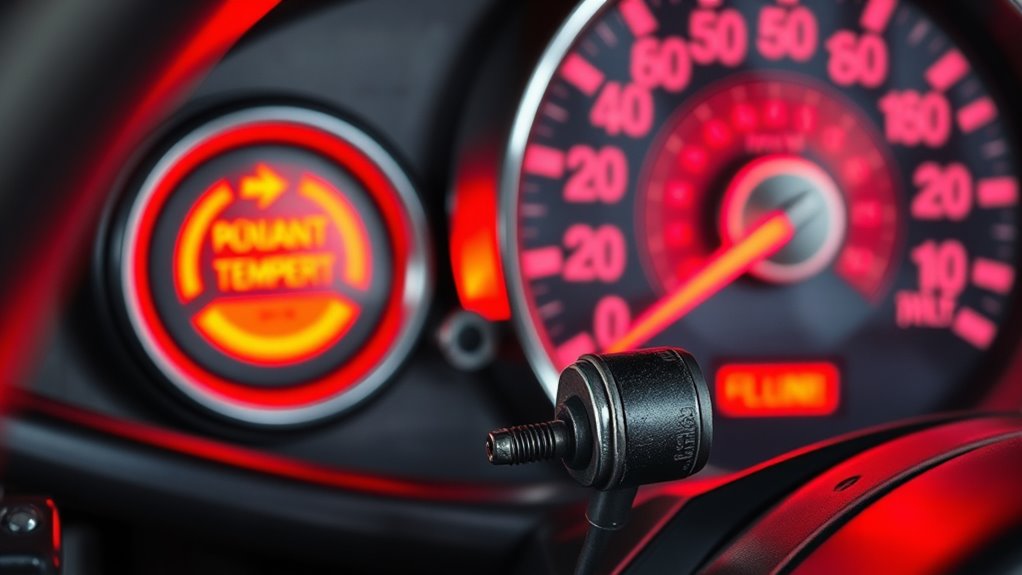
If your coolant temperature sensor is faulty, you might notice your temperature gauge bouncing, jumping to hot unexpectedly, or warning lights appearing on your dashboard.
You could also experience erratic engine behavior or overheating signs. Sometimes, the check engine light comes on with related error codes.
Catching these symptoms early can prevent serious engine damage. Keep exploring to learn more about how to identify and address sensor issues before they escalate.
Key Takeaways
- Erratic or bouncing temperature gauge readings can be a sign that your sensor isn’t working right.
- Dashboard warning lights, like the temperature or check engine light, might be indicating a sensor problem.
- If you notice sudden temperature jumps or warnings about overheating without any reason, it could mean the sensor is malfunctioning.
- When testing the sensor, inconsistent resistance or voltage readings often point to a faulty sensor.
- Persistent engine overheating or running too cold can actually be caused by a bad coolant temperature sensor.
What Is a Coolant Temperature Sensor and Why Does It Matter?
The coolant temperature sensor is a small but essential part of your vehicle’s engine management system. Its main job is to keep an eye on the engine’s coolant temperature and send that info to your car’s computer.
The coolant temperature sensor monitors engine temperature to help keep your vehicle running smoothly and efficiently.
This data helps control key engine functions like fuel injection and ignition timing, making sure everything runs smoothly. The coolant sensor is important because it prevents your engine from overheating or running too cold, which can cause damage or reduce efficiency.
If the sensor malfunctions, your car might give incorrect temperature readings or not run as well. That can lead to worse fuel economy, higher emissions, or even engine damage. Without a properly working sensor, your engine can’t adjust correctly for temperature changes, risking serious problems.
Keeping the coolant temperature sensor in good shape ensures your engine stays running smoothly, efficiently, and safely.
How to Recognize Unusual Temperature Gauge Readings
You might notice your temperature gauge acting a bit strange, like bouncing around unexpectedly or moving in a jerky way. Sometimes, it might jump suddenly to the hot zone without any real reason, which can be a sign that something’s up.
If you see those overheating warnings pop up out of nowhere, it’s definitely worth paying attention. These sudden readings could mean your engine is actually getting too hot, or it might just be a faulty sensor giving you the wrong information. Keep an eye on those gauge movements; they can be clues that your coolant temperature sensor isn’t working properly.
Fluctuating Temperature Levels
When a coolant temperature sensor starts to fail, you might notice the temperature gauge on your dashboard jumping unpredictably or staying stuck in an unusual position. These fluctuations often point to sensor issues that affect sensor stability. Sudden changes can be confusing and make it hard to trust your vehicle’s readings.
| Symptom | Effect |
|---|---|
| Gauge jumps unpredictably | Shows inconsistent sensor signals |
| Stuck at high or low reading | Indicates sensor failure or wiring problems |
| Fluctuations during drive | Suggests sensor instability affecting temperature readings |
If your gauge shows these signs, it’s a clear warning that the sensor might be faulty. Catching these fluctuations early can help prevent more serious engine problems.
Overheating Indicators Appear
Unusual temperature gauge readings often signal that your engine is overheating or approaching dangerous levels. If you notice the needle climbing into the red zone, it’s a clear sign of overheating causes at play, which can severely impact engine performance.
Such readings indicate your cooling system isn’t functioning properly, possibly due to a faulty coolant temperature sensor. When the engine overheats, it can lead to warped components, loss of power, or even engine failure if ignored.
Keep an eye on the gauge, and don’t dismiss sudden spikes or consistently high readings. Addressing these overheating indicators early can help prevent costly repairs and keep your engine running smoothly.
Recognizing these signs quickly is essential for maintaining peak engine performance and avoiding damage.
Inconsistent Gauge Movements
A sudden or erratic movement of the temperature gauge often signals that something’s off with your cooling system, potentially pointing to a faulty coolant temperature sensor. If you notice the gauge fluctuating unexpectedly—jumping between cold and hot or staying stuck—it could be due to sensor calibration issues affecting gauge accuracy.
These inconsistent movements often indicate the sensor is sending incorrect signals to your vehicle’s computer, leading to false temperature readings. Such discrepancies can cause unnecessary concern or missed overheating warnings.
Regularly monitor your gauge’s behavior, and if you see irregular shifts, consider having the sensor tested or replaced. Proper sensor calibration is essential for reliable gauge accuracy, ensuring you get truthful temperature readings and can respond appropriately to real engine issues.
Signs Your Coolant Temperature Sensor Might Be Faulty
If your vehicle’s temperature gauge fluctuates erratically or stays stuck in one spot, it might be a sign of a faulty coolant temperature sensor. You could notice inconsistent readings, which can mess with how your engine’s temperature is managed.
Faulty sensors can cause your engine to overheat or run too cold, affecting both performance and fuel economy. Look out for sudden temperature swings, warning lights, or weird gauge behavior.
Regular maintenance of the sensor helps keep readings accurate, but if problems keep happening, it might be time for a replacement. Damage or miscalibration can give you false readings, so proper calibration is really important.
A bad sensor may send false signals, leading to unnecessary repairs or even engine damage if you ignore it. Catching these signs early can save you money and prevent breakdowns.
Always check that the sensor is properly calibrated. If symptoms continue, replacing it can help your vehicle run smoothly again.
How Warning Lights Indicate Coolant Sensor Problems
Warning lights on your dashboard can be one of the clearest signs that your coolant temperature sensor isn’t working right. When the sensor fails, your vehicle’s warning lights usually turn on to get your attention.
These lights tell you to get the sensor checked out before it causes engine damage. Usually, the temperature warning light will show up, looking like a thermometer or a coolant symbol. Sometimes, the check engine light may also turn on, hinting at a sensor issue.
Ignoring these warning lights can lead to overheating or poor engine performance. So, it’s important to pay attention when they come on and get your vehicle diagnosed promptly.
Common Causes of Coolant Temperature Sensor Failures
Coolant temperature sensor failures often come from exposure to tough engine conditions or electrical problems that mess up its function. Over time, extreme heat, vibrations, and moisture can wear out the sensor and cause inaccurate readings.
Environmental stuff like road salt or dirt can also lead to corrosion or contamination, which affects how well the sensor works. Loose or damaged wires and poor electrical connections can cause signals to be inconsistent or give false readings.
Incorrect calibration during installation or repairs can also mess with the sensor’s accuracy. Knowing these common issues helps you understand why the sensor might fail early and what you can do to prevent it.
Easy Ways to Test Your Coolant Sensor at Home
Want to test your coolant sensor at home? It’s pretty straightforward. First, grab a few tools—mainly a multimeter and a pair of gloves to stay safe. Then, find the sensor itself; it’s usually tucked away near the radiator or tucked onto the engine block. Once you’ve got it located, you can do a quick voltage test with your multimeter to see if everything’s working as it should.
Gather Necessary Tools
Before you start testing your coolant temperature sensor at home, gather a few basic tools to make the process easier and more accurate. Having the right items on hand ensures proper sensor maintenance and reliable diagnostic results.
First, you’ll need a multimeter to measure resistance and voltage. A flashlight helps you see small components clearly. Keep a clean rag for wiping connections and sensors.
It’s also helpful to have a wiring diagram of your vehicle’s sensor circuit for troubleshooting. Finally, a pair of insulated gloves protects you during testing.
These tools allow you to perform basic tests safely and effectively. Being prepared saves time and prevents mistakes, giving you confidence in diagnosing potential sensor issues early.
Locate the Sensor Properly
Locating the coolant temperature sensor is an important step before testing it, and it’s often easier than you might think.
You’ll usually find the sensor near the thermostat housing or on the engine block, depending on your vehicle’s make and model. To locate it, check your vehicle’s repair manual or look for a small, threaded sensor with electrical wires attached.
When searching, keep in mind installation tips like checking around hoses, the radiator, or the water pump area. The sensor’s wiring connector is usually easy to spot, often secured with clips or fasteners.
Making sure you identify the right sensor is key for accurate testing. With a little patience and the right guidance, you’ll find it quickly and be ready for the next step.
Perform Voltage Test
Once you’ve identified the coolant temperature sensor, performing a voltage test is a simple way to check if it’s working properly. Connect a multimeter to the sensor’s signal wire and ground.
Start your engine and watch the voltage readings. Look for fluctuations as the engine warms up; steady or inconsistent readings can point to sensor problems.
Make sure the sensor is properly calibrated because incorrect calibration can give false signals. A good sensor’s voltage should change smoothly with temperature changes.
Here are some key points to remember:
- Consistent voltage fluctuation shows the sensor is responding correctly
- Sudden jumps in voltage suggest calibration issues
- Little or no voltage change indicates a faulty sensor
- Always compare your readings with manufacturer specs
- Regular testing can help catch issues early before overheating or misfires happen
How to Diagnose a Faulty Coolant Temperature Sensor
To diagnose a faulty coolant temperature sensor, start by observing your vehicle’s behavior and looking for common signs like erratic temperature readings or engine overheating. Use an OBD-II scanner to check for error codes related to sensor problems.
Knowing whether your sensor is a thermistor or thermocouple can help you choose the right testing method. Next, test the sensor’s resistance with a multimeter and compare your readings to the manufacturer’s specifications.
If the readings are inconsistent or outside the normal range, it’s a good idea to replace the sensor. Also, inspect the wiring and connectors for damage or corrosion, as these issues can cause false readings.
| Diagnostic Step | Purpose |
|---|---|
| Use an OBD-II scanner | Detect error codes related to sensor malfunction |
| Check resistance with multimeter | Verify sensor’s response against specs |
| Inspect wiring and connectors | Ensure proper electrical connections |
| Identify sensor type | Choose the correct testing procedures |
| Replace if faulty based on results | Fix sensor issues and restore accuracy |
When Should You Seek Professional Help?
While some coolant temperature sensor issues can be fixed with simple troubleshooting, there are times when it’s best to call in a professional. If your attempts at sensor maintenance or troubleshooting don’t work, it’s safest to see a mechanic.
You should seek expert help if you notice persistent or worsening symptoms like erratic temperature readings, engine overheating, or warning lights on your dashboard. If you’ve already replaced the sensor but problems stick around, getting a professional diagnosis ensures the right fix.
Don’t risk causing more damage by ignoring complex issues that need specialized tools and knowledge. Consider reaching out if you’re unsure about how to properly maintain the sensor, or if troubleshooting hasn’t solved the problem.
Also, get help if the wiring or connector looks damaged, or if your vehicle shows inconsistent temperature signals. Ongoing engine performance problems are another sign it’s time to see a professional.
Preventative Tips to Keep Your Coolant Sensor Working Properly
Regular maintenance and mindful driving habits can go a long way in preventing coolant sensor issues. Start by regularly checking your coolant levels and inspecting for leaks, since contaminated or low coolant can impair sensor performance.
Keep up with coolant maintenance schedules to ensure the fluid stays clean and at the right mixture. This helps protect the sensor from corrosion and buildup.
Stick to coolant maintenance schedules to prevent corrosion and buildup that can damage your sensor.
Avoid aggressive driving and excessive idling, as these can cause temperature fluctuations that strain the sensor. Also, replace the coolant according to your vehicle’s recommended intervals to prevent sediment and debris from building up, which can damage the sensor.
Properly functioning cooling system components support sensor longevity. Address radiator or thermostat issues promptly to keep everything running smoothly.
Frequently Asked Questions About Coolant Temperature Sensors
Have you ever wondered how a coolant temperature sensor works or why it’s so important for your vehicle? This sensor keeps an eye on engine temperature and helps control things like fuel injection, cooling fans, and the temperature gauge. When it malfunctions, you might see inaccurate readings or warning lights come on.
To keep it working properly, it’s a good idea to perform regular inspections and cleanings. Calibrating your temperature gauge ensures it shows the true engine conditions, helping you catch issues early.
Here are some common questions people ask:
- How do I know if my coolant temperature sensor is faulty?
- Can I test the sensor myself?
- How often should I replace it?
- Does a faulty sensor affect fuel efficiency?
- Are sensor issues linked to engine overheating?
Understanding these questions can help you spot problems early and avoid costly repairs. Proper maintenance and accurate calibration are key to keeping your vehicle running smoothly and preventing breakdowns.
Frequently Asked Questions
Can a Faulty Coolant Sensor Cause Engine Overheating?
Yes, a faulty coolant temperature sensor can cause engine overheating. When it malfunctions, it gives incorrect readings to your vehicle’s engine control unit.
This can lead to improper cooling fan operation or fuel mixture adjustments, which can make your engine overheat. Keep an eye on how your engine is performing and have the sensor checked quickly.
Doing so can help prevent costly damage down the road.
How Often Should I Replace My Coolant Temperature Sensor?
You should replace your coolant temperature sensor roughly every 60,000 to 100,000 miles. However, this can depend on your vehicle’s sensor lifespan and how you drive.
Keep an eye out for signs like inaccurate temperature readings or engine overheating. These usually mean it’s time to replace the sensor.
Following your manufacturer’s recommended maintenance schedule is a good idea. It helps ensure the sensor works well and prevents possible engine problems caused by a faulty sensor.
Are Coolant Temperature Sensors Universal or Specific to Vehicle Models?
Coolant temperature sensors are usually specific to vehicle models because of differences in compatibility. You can’t just swap one from another make or model without risking incorrect readings.
To make sure it works properly, it’s a good idea to test the sensor before replacing it. Checking compatibility and testing the sensor helps you avoid unnecessary repairs and keeps your cooling system running smoothly.
Always consult your vehicle’s manual or ask a professional mechanic for exact information. That way, you’re sure you’re getting the right part and maintaining your vehicle properly.
What Are the Risks of Ignoring Coolant Temperature Sensor Issues?
Ignoring coolant temperature sensor issues can lead to serious engine damage, almost like a ticking time bomb waiting to go off.
Warning signs like coolant leaks or overheating might show up, but you might ignore them until it’s too late.
If you don’t pay attention, your engine could suffer severe damage, which can cost thousands to repair.
Knowing where the sensor is helps, but ignoring these signs can turn your vehicle into a smoldering wreck.
Can a Bad Sensor Affect Fuel Efficiency?
A bad coolant temperature sensor can definitely hurt your fuel efficiency. When it malfunctions, it sends incorrect temperature data, causing your engine to run richer or leaner than necessary.
This inefficiency wastes fuel. To fix this, you should get a sensor replacement as soon as possible. Maintaining an accurate sensor guarantees your engine runs efficiently, saving you money on fuel and preventing further engine issues.
Conclusion
Keeping an eye on your coolant temperature sensor is like tending to a delicate plant—you want to catch any early signs of trouble before they turn into bigger issues. Regular checks and attentive driving habits help guarantee your engine stays happy and healthy.
Just remember, a little preventive care goes a long way. When in doubt, consulting a professional can help keep your vehicle running smoothly. Sometimes, a gentle nudge is all it takes to keep things humming along nicely.
Pay attention to signs of a faulty coolant temperature sensor early. This simple step can prevent costly repairs and keep your engine running at its best.