Why Your Car Stalls After Starting: Causes and Fixes
Are you frustrated with your car stalling right after you start it? You’re not alone—many drivers struggle with this annoying problem. It can be stressful and confusing, especially when you’re in a hurry or just want a smooth ride.
Understanding the common causes can help you get back on the road quickly.
If your car stalls right after starting, it could be due to issues like a dirty fuel filter, faulty idle control valve, or weak battery. Clogged filters restrict fuel flow, while a malfunctioning idle valve causes rough idling and stalls.
A failing battery or alternator can also prevent proper startup. Regular maintenance, checking for vacuum leaks, and inspecting these components can help.
Keep exploring to uncover full solutions and prevent future stalls.
Key Takeaways
- Incorrect engine timing or faulty parts can cause the engine to stall right after starting. It’s a common issue that needs checking.
- A clogged air or fuel filter blocks airflow or fuel flow. This can lead to stalls during startup because the engine isn’t getting what it needs to run smoothly.
- Malfunctioning idle control valves mess with the engine’s idle speed, making it stall shortly after ignition.
- A weak battery or a failing alternator can’t provide enough power. That’s often why your car stalls after starting because the electrical system isn’t supporting the engine properly.
- Not doing regular maintenance, like checking spark plugs or replacing air filters, increases the chance of engine stalls right after you start the car.
What Causes Your Car to Stall Right After Starting?
If your car stalls immediately after starting, several issues could be at fault. One common cause is incorrect engine timing, which disrupts the spark and fuel combustion process. When engine timing is off, your engine struggles to run smoothly right after startup, causing it to stall.
Another culprit is problems with the air intake system. If the air filter is clogged or the intake is blocked, your engine can’t get enough air, making it stall shortly after starting. You might also notice rough idling or difficulty accelerating.
Clogged air filters or blocked intakes can cause stalling, rough idling, and difficulty accelerating after startup.
These issues prevent the engine from maintaining a steady idle, especially when cold. Regular maintenance of the timing belt or chain and keeping the air intake system clean can prevent these problems.
If these parts are faulty or misaligned, your engine’s ability to run smoothly immediately after starting diminishes, leading to stalling. Addressing these areas can help keep your engine running reliably from the moment you turn the key.
Could a Dirty Fuel Filter Be Causing Your Car to Stall?
Have you noticed your car stalling unexpectedly, especially during acceleration or after it’s been running for a while? A dirty fuel filter might be the culprit. Over time, debris and rust can clog the filter, restricting fuel flow.
This can impair your engine’s ability to get the fuel it needs, leading to stalls or hesitation. Regular fuel filter maintenance is essential to prevent these fuel flow issues. If the filter is blocked, your engine may sputter or stall when under load or after idling for a while.
Replacing or cleaning the fuel filter can restore proper fuel flow and make your driving smoother. Don’t ignore signs like rough idling or reduced acceleration, as these often point to a clogged filter. Keeping your fuel filter clean helps fuel flow freely, reducing the risk of unexpected stalls and improving engine performance.
Is a Faulty Idle Control Valve Making Your Car Stall?
Could a faulty idle control valve be the reason your car stalls unexpectedly? This small component manages your engine’s idle speed by regulating air flow. When it malfunctions, you might notice specific valve symptoms like rough idling, stalling at stoplights, or inconsistent RPMs.
Think of the idle control as the gatekeeper of airflow:
| Idle Control Function | Valve Symptoms | Effects on Car |
|---|---|---|
| Regulates engine idle | Rough idling or stalls | Sudden engine stops |
| Maintains stable RPM | Fluctuating RPMs | Unpredictable engine behavior |
| Adjusts air intake | Idle surges | Poor acceleration |
| Responds to engine load | Hesitation during acceleration | Reduced drivability |
| Keeps engine smooth | Idle inconsistency | Increased wear on parts |
If you notice these symptoms, the idle control might be to blame. Fixing a faulty valve can restore smooth idling and prevent unexpected stalls.
Can a Weak Battery or Failing Alternator Lead to Starting Problems?
A weak battery or failing alternator can cause your car to struggle when starting, especially if the engine’s electrical system isn’t getting enough power. Poor battery health reduces the stored energy needed to turn the starter motor, making it harder to get your vehicle going.
Likewise, if the alternator isn’t working properly, it can’t recharge the battery or supply steady power to the electrical components. This can lead to a drained battery, which makes starting even more difficult.
Over time, a failing alternator might show warning signs like dimming headlights or flickering dashboard lights before it completely fails. To avoid starting problems, it’s a good idea to regularly check your battery’s health and make sure your alternator is working correctly.
Addressing these issues early can help prevent your car from stalling after startup, saving you from being stranded. Proper maintenance keeps both the battery and alternator in top shape, ensuring reliable starts every time.
How Do Vacuum Leaks Make Your Car Stall or Idle Rough?
Ever wonder why your car stalls or idles roughly? It usually comes down to vacuum leaks messing with your engine’s air intake.
Your engine relies on proper vacuum pressure to keep the air and fuel balanced for smooth running. When there’s a vacuum leak, unmetered air sneaks into the intake system and throws off this balance.
That extra air makes the engine run lean, which can cause it to stumble, stall, or idle roughly. You might hear a hissing sound or notice a change in engine RPMs.
Vacuum leaks can happen around cracked hoses, loose fittings, or damaged intake manifold gaskets. Because your engine’s sensors depend on stable vacuum pressure, any leak messes up the fuel mixture.
This often leads to rough idling or stalling after you start the engine. Fixing vacuum leaks restores proper air intake, helping your engine run smoothly and avoiding those frustrating stalls.
Are Sensor Problems Triggering Your Car’s Post-Start Stalls?
When your engine struggles to stay running after starting, sensor problems might be the culprit. Modern vehicles rely on sensors like the oxygen sensor, crankshaft position sensor, and mass airflow sensor to regulate fuel mixture and ignition timing.
Sensor issues can cause your engine to stall soon after starting. Proper calibration is essential.
If these sensors send incorrect signals, your engine may stall shortly after starting. Sometimes, sensors need calibration to provide accurate data; inaccurate readings can cause rough idling or stalls.
Using diagnostic tools like an OBD-II scanner can help you check for sensor-related fault codes. These tools can reveal if a sensor is malfunctioning or needs calibration.
Simply replacing a sensor without proper calibration might not fix the issue, so calibration is often necessary. Ensuring sensors are calibrated correctly can restore proper engine function and prevent stalls.
If you notice ongoing post-start stalls, consider having your sensors tested and calibrated with the right diagnostic tools to find the root cause.
How Can I Diagnose and Fix Fuel Delivery Issues?
Troubleshooting fuel delivery issues starts with figuring out if your engine is getting the right amount of fuel to run smoothly. First, listen for a humming noise from the fuel pump when you turn the key; a failing pump can cause not enough fuel flow.
Check the fuel pressure with a gauge to see if it matches your vehicle’s specs. If the pressure is low, the fuel pump might need replacing.
Next, inspect the fuel filter for clogs that can block flow. If your fuel pump seems fine but your engine still stalls, consider cleaning the injectors. Dirty injectors can mess up fuel delivery and cause rough starts or stalls.
You can use a fuel injector cleaner additive or have a professional do a thorough cleaning. Regular maintenance helps prevent these issues, but catching problems early means you can fix them before serious damage occurs.
What Maintenance Checks Help Prevent Your Car From Stalling?
Regularly scheduled maintenance checks are essential to prevent your car from stalling unexpectedly. Start by monitoring fluid levels—engine oil, coolant, and transmission fluid—to make sure they’re at the recommended levels. Low fluid levels can cause engine overheating or poor performance, which increases the risk of stalling.
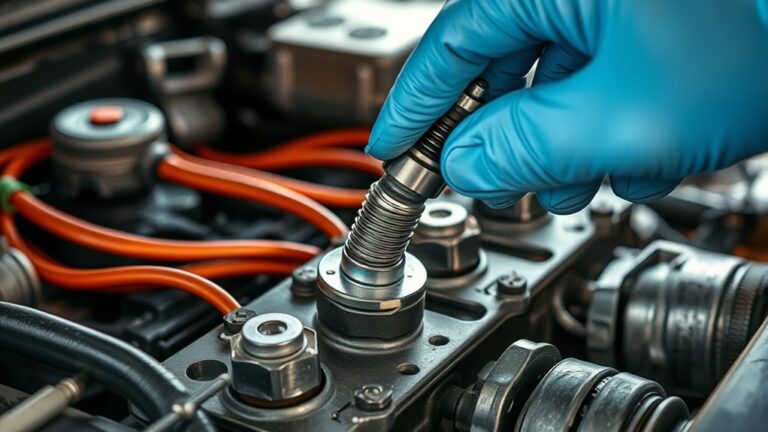
Next, inspect your spark plugs. Worn or dirty spark plugs can cause misfires, rough idling, and stalls. Replace them as recommended in your vehicle’s manual to keep your engine running smoothly.
Worn or dirty spark plugs can cause misfires, rough idling, and stalls—replace them as recommended for smooth engine performance.
Also, check your air filter regularly. A clogged air filter can let dirt clog the system and impair engine performance. Keeping these components in good shape helps maintain peak engine function and reduces the chances of stalling after startup.
Staying on top of routine maintenance not only boosts your vehicle’s reliability but also saves you money on costly repairs later on. Regular checks give you peace of mind knowing your car is ready to drive without unexpected stalls.
When Should You Call a Mechanic for Your Car Stalling?
While routine maintenance can catch many issues early, some signs mean it’s time to see a mechanic. If your engine keeps dying shortly after starting or stalls happen inconsistently, don’t ignore it. These are clear signals you need professional help.
Ignoring these signs can lead to bigger damage or breakdowns down the road. If your car stalls repeatedly, especially without warning or if warning lights or strange noises come on, it’s time to get it checked out. Sudden stalls or stalls that happen during acceleration or idling also need prompt attention.
Waiting too long can make the problem worse and lead to higher repair costs. Trust your instincts—if your car’s stalling feels abnormal or gets worse over time, it’s best to call a mechanic quickly. Getting it diagnosed early can save you money and prevent a bigger headache later.
Tips to Keep Your Car Starting Smoothly and Avoid Stalls
Want to keep your car starting smoothly and avoid those frustrating stalls? The key is to stay on top of regular engine maintenance. It’s a good idea to catch any issues early before they turn into bigger problems.
Also, don’t forget to check your fuel system for clogs or leaks. A clean, functioning fuel system makes a big difference in how well your car starts. And while you’re at it, keep an eye on your vehicle’s idle speed to make sure it’s running just right.
Staying proactive with these simple tasks can really help your car start reliably every time you turn the key.
Regular Engine Maintenance
Keeping up with engine maintenance is crucial to guarantee your car starts smoothly and avoids stalls. Regularly checking and changing your engine oil keeps the engine running efficiently and prevents it from stalling due to poor lubrication.
A clean air filter is just as important; it ensures the engine gets enough airflow for proper combustion. When the air filter is clogged or dirty, your engine struggles to get the air it needs, leading to rough starts or stalls.
Make it a habit to inspect and replace these components as recommended by your vehicle’s manufacturer. Proper maintenance not only improves starting performance but also extends your engine’s life, saving you money and preventing unexpected stalling issues.
Check Fuel System
Making sure your fuel system is clean and working properly is key to starting your car smoothly and avoiding stalls. Start by checking the fuel pump; if it’s weak or failing, it won’t deliver enough fuel, causing your engine to stall.
Listen for a humming sound from the pump when you turn the key. If you don’t hear it, there might be an issue. Next, inspect the fuel injectors—they deliver fuel to the engine, and clogs or leaks can disrupt this process.
Consider using a fuel injector cleaner to remove deposits that block proper flow. Also, check the fuel filter; if it’s clogged, debris can restrict fuel flow. Regular maintenance like replacing worn-out filters and keeping injectors clean helps keep your fuel system in top shape, reducing stalls and making sure your engine starts reliably.
Monitor Idle Speed
Monitoring your car’s idle speed is essential because fluctuations can signal underlying issues that might cause stalls. When your engine’s idle speed isn’t steady, it can affect engine performance and lead to unexpected stalling. Keeping an eye on this helps you catch problems early, preventing breakdowns and costly repairs. You’ll feel more confident knowing your vehicle runs smoothly every time you start it.
*A steady idle speed keeps your engine running reliably, giving you peace of mind.*
*Unstable idle signals potential problems that, if ignored, could leave you stranded.*
*Maintaining proper idle speed guarantees your engine performs at its best, saving you time and stress.*
Regularly monitoring and adjusting your idle speed helps you avoid frustrating stalls and keeps your car starting smoothly every time.
Frequently Asked Questions
Can Engine Timing Issues Cause My Car to Stall After Starting?
Yes, engine timing issues can cause your car to stall after starting. If your timing belt is worn or has slipped, it can mess up the ignition timing, making the engine run poorly or stall.
Incorrect ignition timing can also affect how the engine runs and lead to stalling. Regularly check your timing belt and make sure your ignition timing is properly adjusted.
Taking these steps helps prevent stalling and keeps your engine running smoothly after startup.
Does a Worn Spark Plug Contribute to Post-Start Stalling?
A worn spark plug can definitely contribute to post-start stalling because it affects your ignition system’s efficiency. Remember, a chain is only as strong as its weakest link. Regular spark plug maintenance ensures proper combustion and helps prevent stalling issues.
If your spark plugs are old or fouled, your engine will struggle to run smoothly after starting. Replacing or inspecting them helps keep your ignition system in top shape and your car running reliably.
How Do I Know if My Car’s ECU Is Causing Stalls?
You can tell if your ECU is causing stalls by running ECU diagnostics, which show error codes indicating issues. If the codes point to sensor calibration problems or faulty sensors, your ECU might be misreading data, leading to stalls.
Inconsistent engine behavior or trouble starting can also be signs of ECU problems. Regularly checking for error codes and making sure sensors are properly calibrated can help prevent ECU-related stalls and keep your engine running smoothly.
Can Transmission Problems Lead to Engine Stalling After Startup?
Transmission problems can definitely cause your engine to stall after startup. Think of your transmission as the heart of your car’s shifting rhythm. If transmission fluid is low or dirty, it can lead to shifting issues or hesitation, making the engine stumble or stall.
When shifting issues happen, the engine struggles to find its groove, which can cause stalls. Regular maintenance of your transmission fluid can help prevent these problems and keep your car running smoothly.
Are There Specific Signs of a Failing Crankshaft Position Sensor?
Yes, a failing crankshaft position sensor can cause specific symptoms like rough idling, engine misfires, or even stalling.
You might also notice that your car has difficulty starting or that the check engine light comes on.
To be sure, diagnostic tests with an OBD-II scanner can help identify if the sensor is the issue.
If you see these signs, it’s a good idea to have a mechanic perform the tests quickly.
A faulty sensor can lead to serious engine performance problems, so don’t delay getting it checked out.
Conclusion
Think of your car as a finely tuned orchestra; each instrument must play in harmony to keep the music flowing smoothly. When something’s off, like a dirty filter or a vacuum leak, your engine’s rhythm falters.
Regular maintenance acts as the conductor, making sure all parts work together properly. Staying on top of these issues helps prevent your car from stalling after starting.
Pay attention to warning signs, and you’ll keep your vehicle humming along. A well-tuned car is your ticket to stress-free driving and reliable performance.