Can You Drive With Bad Spark Plugs? Risks and Tips Explained
Are you tired of engine issues and unpredictable performance? Many drivers struggle with the frustration of car troubles, especially when it comes to maintaining their vehicle’s health.
One common problem that often gets overlooked is bad spark plugs, which can cause a lot of headaches.
Driving with bad spark plugs isn’t recommended because it can cause engine misfires, reduced performance, and even damage your engine over time. You might experience rough idling, hesitation, or difficulty starting.
Ignoring these issues risks higher repair costs and engine failure.
If you want to keep your vehicle running smoothly and avoid costly repairs, it’s best to address spark plug problems promptly.
Keep going to uncover more tips on safe driving and maintenance.
Key Takeaways
- Driving with bad spark plugs can lead to rough engine performance and misfires, which might cause more serious damage.
- If the misfires are mild, you might still get by, but severe issues can quickly affect how your vehicle runs.
- Ignoring faulty spark plugs raises the chances of engine overheating, fouling, and costly repairs down the line.
- Regularly inspecting and replacing spark plugs on time helps prevent engine damage and keeps your car running smoothly.
- Continuing to drive with bad spark plugs can be dangerous, as it might cause stalling or a sudden loss of power.
What Are Spark Plugs and Why Do They Matter?
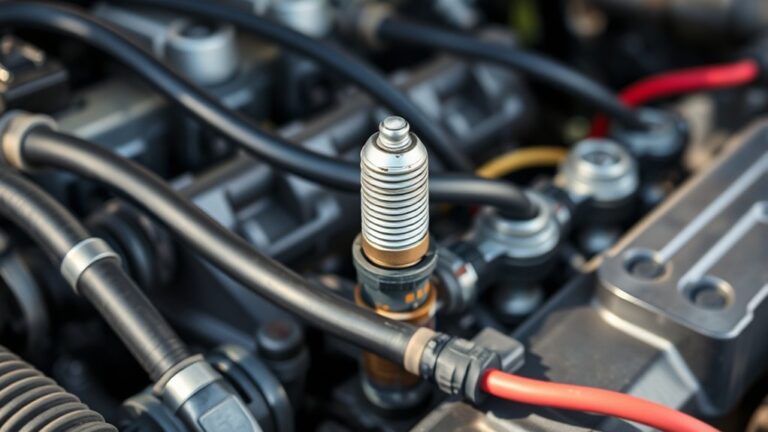
Spark plugs are small but essential components that ignite the fuel-air mixture in your engine’s cylinders, powering your vehicle. They play a vital role in the ignition system, which is responsible for starting and running your engine smoothly.
Different spark plug types like copper, platinum, and iridium are designed to meet various performance needs and durability requirements. Copper plugs are affordable and conduct electricity well but wear out faster.
Copper spark plugs are cost-effective and conduct electricity efficiently, but they tend to wear out more quickly.
On the other hand, platinum and iridium plugs last longer and provide more reliable sparks, which helps keep your engine running smoothly. The ignition system relies on spark plugs to generate the sparks needed to ignite the mixture at just the right moment.
If your spark plugs are faulty or worn, your engine may misfire, use more fuel, or struggle to start. Choosing the right spark plug type is key to ensuring your engine runs efficiently. Regular maintenance and timely replacements are essential for peak performance.
How to Recognize Signs of Bad Spark Plugs
When spark plugs start to fail, you might notice your vehicle doesn’t run as smoothly as it used to. Look out for common spark plug symptoms like rough idling, hesitation during acceleration, or a noticeable decrease in fuel efficiency.
You may also feel vibrations or hear knocking sounds, which indicate the engine isn’t firing properly. Engine misfires are a clear sign that something’s wrong, often caused by worn or fouled spark plugs.
If your car stalls unexpectedly or struggles to start, it’s likely a spark plug issue. Additionally, a strong smell of fuel or black smoke from the exhaust can point to incomplete combustion from faulty plugs.
Regularly checking your spark plugs and paying attention to these signs can help you catch problems early. Recognizing these symptoms ensures you can address issues before they cause more serious engine damage.
Is It Safe to Drive With Faulty Spark Plugs?
Driving with faulty spark plugs isn’t just a minor hiccup – it can really mess with how your engine runs. You might notice it running rough or even stalling unexpectedly, which is definitely not something you want happening while you’re on the road.
And here’s the thing: if you ignore the problem for too long, it can lead to more serious engine damage down the line. So, for your safety and to keep your car in good shape, it’s best to get those spark plug issues sorted out sooner rather than later.
Engine Performance Impact
Although it might seem convenient to ignore a faulty spark plug, doing so can greatly impact your vehicle’s performance. Faulty spark plugs reduce engine efficiency, causing misfires, rough idling, and decreased power.
Different spark plug types, like iridium or copper, affect how well your engine runs when worn out. Consider this table:
| Spark Plug Type | Impact on Engine Performance |
|---|---|
| Copper | Quick wear, needs frequent replacement |
| Iridium | Longer lifespan, stable performance |
| Platinum | Good durability, consistent sparks |
| Double Iridium | Extended life, smooth operation |
| Nickel | Basic performance, less efficient |
Ignoring these issues can lead to poor acceleration and increased fuel consumption. Understanding how spark plug types influence engine performance helps you recognize when replacements are needed.
Risk of Engine Damage
Ignoring faulty spark plugs can lead to serious engine damage if you keep driving without fixing the issue. When spark plugs don’t fire properly, your engine’s efficiency drops, causing misfires and incomplete combustion.
Over time, this puts extra stress on parts like pistons, valves, and the catalytic converter, speeding up wear and tear. Faulty spark plugs can also shorten their own lifespan, so you end up replacing them more often.
If you ignore the problem, it can cause overheating, fouling, and even damage to the ignition system. Driving with bad spark plugs isn’t just about poor performance; it risks costly repairs and engine failure.
To keep your vehicle running smoothly and avoid bigger problems, it’s best to fix spark plug issues as soon as you notice them. Addressing the problem early helps prevent more severe engine damage down the line.
Safety Concerns Arising
Driving with faulty spark plugs can pose immediate safety risks, especially if the misfires cause sudden engine stalls or rough idling. Worn-out spark plugs have a reduced lifespan, making misfires more likely and disrupting your ignition system’s efficiency.
These issues can lead to unpredictable engine behavior, increasing the risk of accidents, especially in traffic or high-speed driving. Faulty spark plugs can also cause your vehicle to lose power abruptly, compromising your control.
Ignoring signs of spark plug deterioration puts you and others at risk. It’s crucial to address spark plug problems promptly to maintain safe operation and prevent further damage that could compromise your vehicle’s reliability and safety on the road.
What Are the Risks of Driving With Bad Spark Plugs?
Driving with bad spark plugs can really mess with your engine’s performance. You might notice it running rough or not accelerating as smoothly as usual. Plus, your fuel economy could take a hit, meaning you’ll be stopping for gas more often.
If you ignore these warning signs, it can lead to bigger problems down the road, like serious engine damage. That’s definitely going to cost you more in repairs later on, so it’s best to get those spark plugs checked out sooner rather than later.
Reduced Engine Performance
When spark plugs are worn or faulty, your engine may have trouble producing smooth, consistent power, which leads to noticeable performance problems. You might notice rough idling, hesitation, or sluggish acceleration.
This drop in engine efficiency can cause misfires that make performance worse. Here’s a table showing how bad spark plugs affect your engine:
| Effect | Cause | Result |
|---|---|---|
| Reduced power | Poor combustion | Sluggish acceleration |
| Rough idling | Ignition misfire | Engine stalls |
| Increased emissions | Incomplete fuel burn | Higher pollutants |
| Engine hesitation | Irregular spark delivery | Hesitant throttle response |
Fixing these issues quickly helps keep your engine running at its best and avoids further damage.
Increased Fuel Consumption
Worn or faulty spark plugs can cause your engine to burn fuel less efficiently, leading to increased fuel consumption. When your spark plugs aren’t firing properly, your engine has to work harder to generate power, wasting fuel in the process.
To improve fuel efficiency and save money, consider these maintenance tips:
- Regularly check and replace spark plugs as recommended by your vehicle’s manufacturer.
- Use the correct type of spark plugs for your engine to guarantee peak performance.
- Keep up with routine maintenance like air filter changes and fuel system cleaning.
Ignoring these issues can lead to higher fuel costs over time. Staying on top of spark plug maintenance not only boosts your fuel efficiency but also helps your engine run smoothly and reliably.
Potential Engine Damage
Bad spark plugs can cause serious engine damage if you ignore their symptoms. When spark plugs fail, misfire symptoms become common, leading to uneven engine operation.
Over time, misfires strain the engine, causing it to work harder and overheat. This overheating can damage internal parts like pistons and valves, which can be costly to repair.
Ignoring issues like rough idling, poor acceleration, or persistent misfires increases the risk of severe damage. Continuous misfiring also leads to unburned fuel buildup, which can foul the catalytic converter and other engine parts.
Driving with bad spark plugs isn’t just inefficient; it can also harm your engine’s longevity. Addressing misfire symptoms quickly helps prevent further damage and keeps your engine running smoothly.
How Bad Spark Plugs Can Damage Your Engine
Poor spark plugs can cause serious damage to your engine if you don’t keep an eye on them. When they get old or faulty, engine misfires become more common. Over time, this can lead to some serious issues.
Misfiring causes unburned fuel to enter the exhaust system, which can damage parts like the catalytic converter. Faulty spark plugs also make the engine work harder, leading to overheating and risking warped pistons and valves.
Constant misfires put extra strain on your engine, reducing fuel efficiency and causing uneven power. If ignored, this can turn into more costly damage down the line.
Skipping spark plug replacements shortens their lifespan and speeds up engine damage. Regular maintenance keeps your engine running smoothly and helps avoid expensive repairs.
How Long Is It Safe to Drive With Faulty Spark Plugs?
You really shouldn’t be driving around for too long with faulty spark plugs. They can cause your engine to misfire and don’t run as efficiently as they should. It’s kind of like your engine struggling to get the right spark at the right time, which isn’t great for performance.
If you ignore the problem for too long, it can lead to more serious damage that’s pretty costly to fix later on. So, it’s always best to get it checked out and fixed sooner rather than later. That way, you’re helping to keep your engine healthy and your car running smoothly.
Engine Performance Impact
Driving with faulty spark plugs can quickly cause noticeable declines in engine performance, but how long it’s safe to do so depends on the severity of the issue. Faulty spark plugs can reduce engine efficiency, leading to sluggish acceleration, rough idling, or misfires.
The longer you drive with bad plugs, the more your engine struggles to run smoothly. Mild misfires might let you go a few hundred miles but will still drop your efficiency. Severe misfires can cause quick power loss and higher fuel use.
Spark plug lifespan varies, and as they near the end, performance drops sharply. Prompt replacement helps keep your engine running at its best and protects the spark plugs from further damage.
Potential Long-Term Damage
While it might seem manageable to keep driving with faulty spark plugs for a little while, doing so for too long can cause serious, costly damage to your engine. Faulty spark plugs can speed up wear on other parts, which can hurt your car’s performance and shorten the lifespan of the spark plugs.
Over time, misfires and incomplete combustion can lead to carbon buildup, damaging your catalytic converter and pistons. Ignoring these issues risks starting a chain reaction of engine problems that can be expensive to fix.
The longer you wait to replace faulty spark plugs, the more likely you are to face serious long-term damage. To avoid costly repairs, it’s best to fix spark plug issues quickly, ideally within a few thousand miles of noticing symptoms.
How to Check and Diagnose Spark Plug Problems at Home
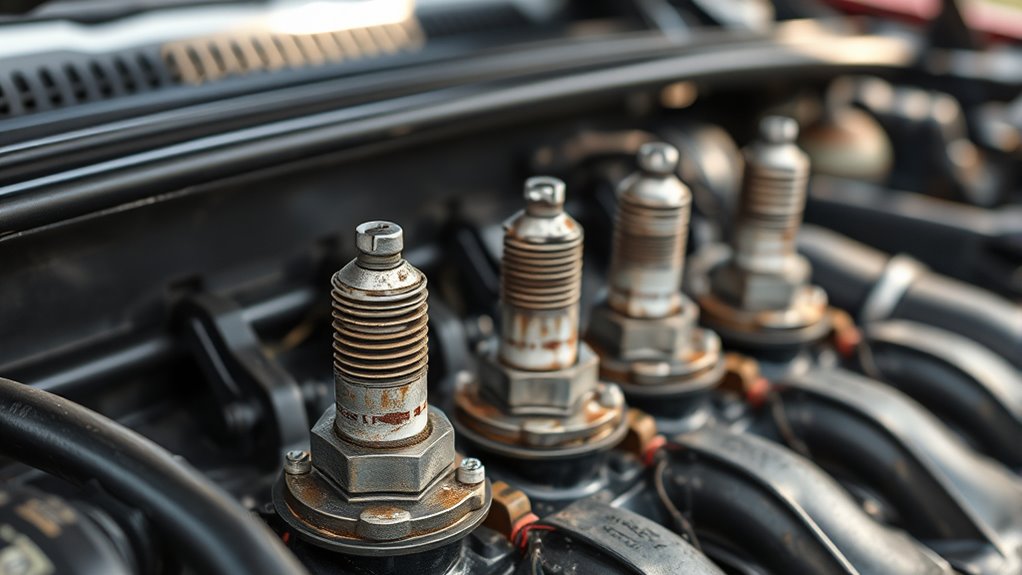
To check for spark plug issues at home, start by inspecting the plugs visually. Remove each spark plug and look for signs of wear like carbon buildup, oil deposits, or cracks. These are common indicators of spark plug trouble.
Inspect spark plugs for wear, carbon buildup, oil deposits, or cracks to identify potential issues early.
For DIY diagnostics and spark plug maintenance, follow these steps:
- Check the electrode gap with a feeler gauge, making sure it matches your vehicle manufacturer’s specs.
- Examine the plug’s insulator for cracks or discoloration, which can indicate overheating or fouling.
- Inspect the spark plug wire connections for corrosion or looseness, as these can cause misfires.
When Should You Replace or Repair Your Spark Plugs?
Knowing when to replace or repair your spark plugs is key to keeping your vehicle running smoothly and efficiently. Most spark plugs last about 30,000 to 50,000 miles, but this can vary based on your driving habits and the type of plugs you use.
Pay attention to signs like rough idling, misfires, or lower fuel economy. These usually mean it’s time for a replacement. It’s also a good idea to follow your vehicle manufacturer’s recommended replacement schedule, which you can find in your owner’s manual.
Regular inspections are helpful to catch problems early before they cause bigger engine issues. If your spark plugs are worn out, fouled, or damaged, replacing them promptly will restore proper combustion and improve efficiency.
Keeping track of your mileage and sticking to the maintenance schedule can prevent unnecessary repairs and help your engine run smoothly for longer.
Tips for Maintaining Spark Plugs and Preventing Future Issues
Regularly inspecting and cleaning your spark plugs can really help extend their lifespan and prevent costly issues later on. To keep your spark plugs in good shape and your engine running smoothly, try these tips:
- Perform routine inspections: Check for signs of wear, corrosion, or carbon buildup every 30,000 miles. Clean or replace them as needed.
- Use the correct tools: Properly gapping your spark plugs ensures peak performance and helps prevent misfires.
- Keep your engine tuned: Regular maintenance like changing air filters and fuel injectors helps prevent spark plug fouling and keeps combustion efficient.
Expert Advice: Best Practices for Spark Plug Maintenance
Maintaining your spark plugs properly can greatly improve engine performance and longevity. The first step is understanding the different spark plug types, such as copper, platinum, or iridium, and choosing the right one for your vehicle.
Each type has specific maintenance needs, so check your owner’s manual to find the recommended replacement intervals. Establishing a consistent maintenance schedule is essential; typically, spark plugs should be inspected every 30,000 miles.
Some high-performance plugs can last longer, but regularly checking for signs of wear is important. Look for corrosion, carbon buildup, or misfiring, and address these issues early.
Cleaning or replacing spark plugs at the recommended intervals helps prevent problems like rough idling and poor fuel efficiency. Always use the correct tools and torque specifications when installing new plugs.
Staying proactive with your spark plug maintenance ensures your engine runs smoothly, reduces breakdown risks, and extends your vehicle’s ignition system lifespan.
Frequently Asked Questions
Can Bad Spark Plugs Affect Fuel Efficiency?
Yes, bad spark plugs can reduce your fuel efficiency. When you neglect spark plug maintenance, your ignition system struggles to ignite the fuel-air mixture properly.
This leads to incomplete combustion, which makes your engine work harder and burn more fuel than necessary. Regularly checking and replacing spark plugs helps keep your ignition system running smoothly.
Do Spark Plug Issues Cause Engine Overheating?
Absolutely, spark plug issues can cause engine overheating! When spark plugs fail, they disrupt engine performance, leading to misfires and excess heat buildup.
This overheating can cause serious engine damage if you ignore it. To avoid that, you need to replace your spark plugs promptly.
Keeping your spark plugs in good shape helps your engine run smoothly, preventing costly repairs and keeping your vehicle cool under pressure.
Don’t wait—address spark plug issues before overheating takes over!
How Do Bad Spark Plugs Impact Emissions?
Bad spark plugs cause incomplete combustion, which leads to more emissions that can cause your vehicle to fail emissions tests. When spark plugs aren’t working properly, the fuel doesn’t burn efficiently.
This results in releasing more pollutants like hydrocarbons and carbon monoxide. So, your car becomes less eco-friendly and might not pass inspection.
Regularly checking and replacing faulty spark plugs helps keep emissions in check. It also reduces harmful pollutants and keeps your engine running smoothly.
Are There Specific Driving Conditions That Worsen Spark Plug Problems?
Like a knight facing a dragon, your driving habits can worsen spark plug problems. Aggressive acceleration, high speeds, and short trips strain your spark plugs, especially if they’re poorly maintained.
Cold weather and stop-and-go traffic also make it harder for your spark plugs to perform well. Regular spark plug maintenance and smooth driving habits help prevent issues, ensuring your engine runs efficiently and avoiding costly repairs.
Can Bad Spark Plugs Lead to Catalytic Converter Damage?
Yes, bad spark plugs can lead to catalytic converter damage. When spark plugs fail, they cause misfires and incomplete combustion, which can increase unburned fuel entering the exhaust system.
Over time, this unburned fuel can overheat and damage the catalytic converter. To prevent this, you should monitor your spark plug lifespan and maintain engine performance.
Neglecting spark plug issues can result in costly repairs and reduced vehicle efficiency.
Conclusion
Driving with bad spark plugs is like sailing a ship with a leaky hull—you might get by for a while, but the risks are real. Ignoring the signs can lead to engine damage and costly repairs.
Stay vigilant, check your spark plugs regularly, and don’t wait until the storm hits. Proper maintenance keeps your engine running smoothly.
When your car’s heart is healthy, every drive feels like a breeze. So, don’t underestimate the importance of good spark plugs for your vehicle’s performance.