Preventing Engine Damage: Addressing Car Oil Leaks When Running
Many drivers worry about engine damage caused by oil leaks, and you’re not alone. It can be stressful to spot signs of trouble and wonder if your car is safe to drive. Addressing oil leaks early on is key to keeping your engine healthy and avoiding costly repairs.
To prevent engine damage while driving, you should regularly check your oil levels and inspect for signs of leaks like oil spots or warning lights. Tighten loose parts, replace worn seals or gaskets promptly, and keep up with scheduled oil changes.
Monitoring your vehicle and addressing leaks early helps avoid costly repairs and engine failure.
Keep an eye out for symptoms that signal trouble. If you notice anything unusual, don’t ignore it. Staying proactive is the best way to keep your engine running smoothly and avoid bigger problems down the road.
Key Takeaways
- Regularly check your oil levels and look for fresh oil spots to catch leaks early. Keeping an eye on this can save you from bigger engine problems later.
- Make sure to tighten any loose drain plugs, filters, and engine parts. This helps prevent oil from escaping while you’re driving.
- Clean around the engine to improve visibility and spot leaks quickly. A clean engine makes it easier to catch issues early.
- Replace worn seals and gaskets as part of routine maintenance to keep the oil inside where it belongs. This helps avoid leaks and engine damage.
- Watch for dashboard warning lights and unusual engine sounds. They can be signs of leaks or other issues that need immediate attention.
Why Are Oil Leaks During Driving a Serious Problem?
Oil leaks during driving are a serious problem because they can quickly lead to engine damage if not addressed promptly. When oil escapes, it reduces the lubrication needed for engine parts, increasing wear and the risk of overheating.
The consequences of an oil leak can be severe, including engine parts grinding against each other and eventually failing. Ignoring these leaks can also compromise safety, since a sudden engine breakdown can happen unexpectedly, risking you and others on the road.
Oil leaks can cause slippery road conditions or oil stains, which might lead to accidents. Over time, low oil levels can trigger warning lights and leave you stranded.
Understanding how serious oil leaks are shows why timely repairs are so important. They help prevent costly damage and keep driving safe. Regular inspections and quick action at the first signs of a leak are your best defense against these risks.
How Do Oil Leaks Happen When You Drive?
Oil leaks usually happen when the seals in your engine start to weaken over time, and that lets oil escape. Sometimes, worn or cracked gaskets — maybe from a small impact or just age — can also create openings for leaks while you’re driving. These leaks can come on gradually, or they might happen suddenly if the damage is more severe.
Seal Failures Over Time
| Cause of Seal Failures | Effects on Oil Leaks |
|---|---|
| Heat cycles | Hardening and cracking of materials. |
| Vibration | Can cause seals to dislodge. |
| Contaminants | Lead to faster degradation. |
| Age | Results in loss of elasticity. |
| Poor maintenance | Increases the risk of leaks. |
Regular inspections help catch seal failures early and prevent costly engine damage.
Gasket Wear and Tear
As you drive, the constant exposure to heat, pressure, and vibrations causes gaskets to gradually wear down. Over time, this weakens the gasket’s seal and can lead to oil leaks. Regular gasket maintenance helps you spot early signs of deterioration before things get worse.
If you notice any leaks or changes, it’s a good idea to get your gaskets checked. When gaskets become too worn or damaged, replacing them is necessary to restore a proper seal and prevent engine damage.
Ignoring these signs increases the risk of oil escaping, which can cause overheating and damage to engine parts. Staying attentive to gasket health and replacing them on time keeps your engine sealed and reduces the chances of costly repairs.
Proper gasket care is key to maintaining your engine’s integrity and avoiding bigger problems down the line.
Cracks From Impact
Impact from road debris, collisions, or rough terrain can cause cracks in engine components like gaskets and covers, leading to oil leaks. To prevent further damage, you need an impact assessment to determine how severe the cracks are.
Small cracks might be repairable with techniques like epoxy repairs or sealants, but bigger ones usually mean replacing the damaged parts entirely. Regular inspections are key to spotting cracks early before they get worse.
When damage happens, using proper repair methods ensures the engine’s sealing surfaces stay intact, reducing the risk of leaks. Always get a professional mechanic to assess and fix the issue.
Addressing cracks quickly not only keeps your engine healthy but also helps you avoid costly repairs later on.
How to Recognize the Signs of an Oil Leak
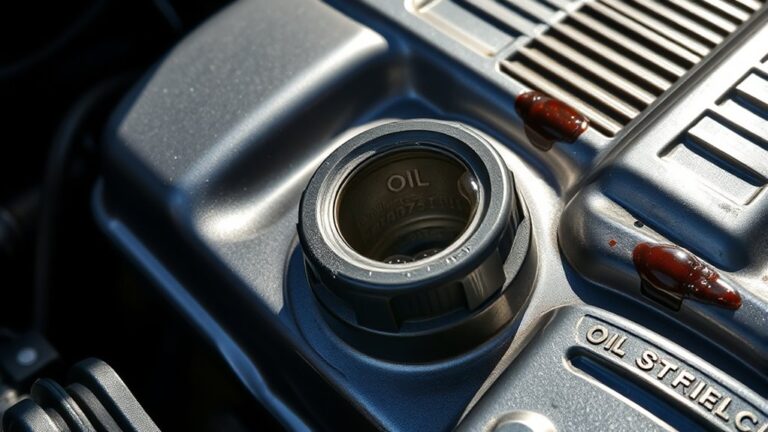
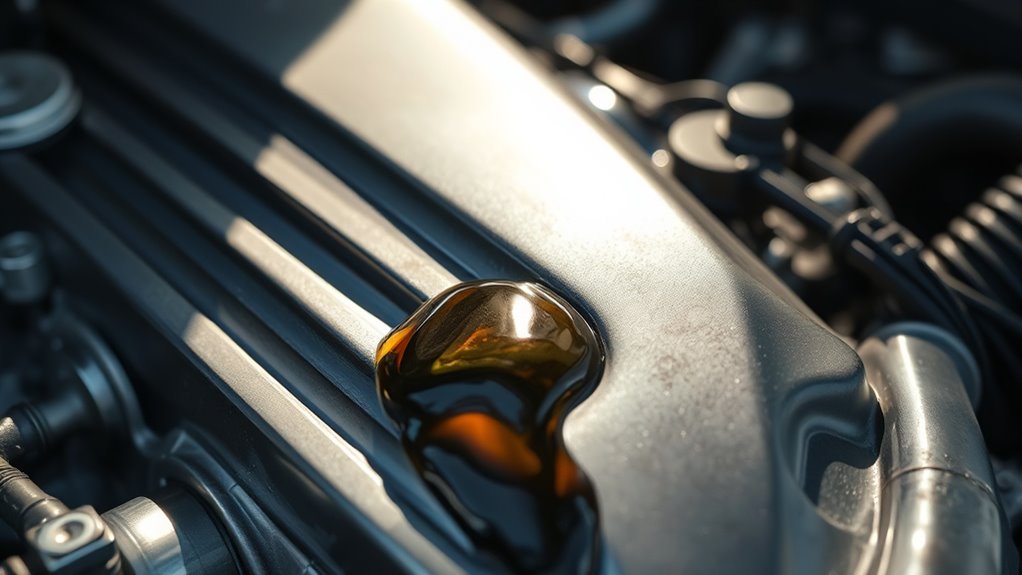
Recognizing the signs of an oil leak early can save your engine from serious damage. Start by checking for fresh oil spots under your car, especially after parking. Look for oil stains on the ground—bright or dark patches can signal a leak.
Inside your engine bay, inspect hoses, the oil pan, and around the valve cover gasket for oil. If your dashboard oil warning light comes on, it’s a sign your oil levels might be low due to a leak.
Unusual engine behavior like misfires, increased noise, or a burning oil smell can also point to a leak. Make it a habit to check your oil level regularly with the dipstick. If it drops quickly, that’s a clear warning sign.
What Causes Oil Leaks While You’re on the Road?
Oil leaks while you’re on the road usually happen because seals and gaskets wear out over time, which then allows oil to escape. It’s pretty common, especially if your vehicle is older or hasn’t had regular maintenance.
Sometimes, cracked engine parts or a loose oil pan can cause leaks too, especially if you hit a bump or pothole. When you’re driving, these issues can lead to oil dripping or spraying out, which isn’t good for your engine or the environment.
Knowing what to look out for can really help you catch problems early, before they turn into serious damage. So, keeping an eye on oil levels and getting regular check-ups can save you a lot of headaches down the road.
Worn Seals and Gaskets
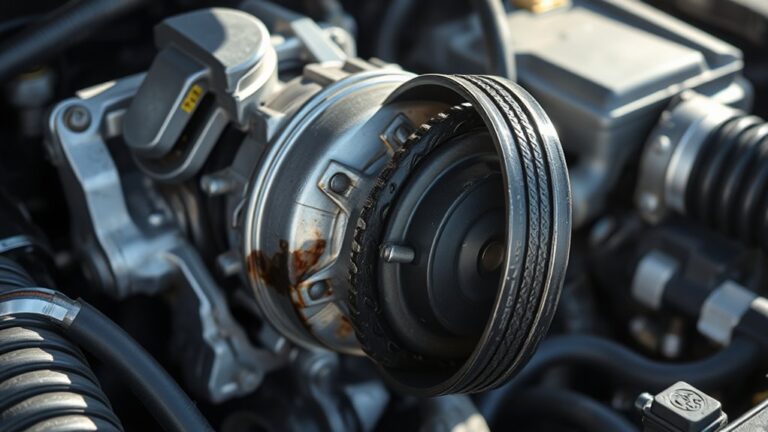
Worn seals and gaskets are common culprits behind oil leaks that develop while you’re driving. Over time, seal deterioration happens due to heat, friction, and age, causing them to become brittle or cracked.
When seals and gaskets wear out, oil can escape from engine components, leading to leaks. If you notice oil spots on your driveway or a drop in oil levels, it’s probably a sign of seal deterioration.
Addressing this early helps prevent more serious damage. Gasket replacement is often necessary to restore proper sealing and stop leaks from getting worse.
Regular inspections can catch worn seals before they cause big problems. Staying proactive with seal and gasket maintenance keeps your engine running smoothly and helps avoid costly repairs.
Cracked Engine Components
When engine components develop cracks, they can become hidden sources of leaks that get worse while you’re driving. Cracks in parts like the valve cover or oil filter housing can cause oil to seep out unnoticed until it’s too late.
Regular engine diagnostics help spot these issues early, revealing hidden cracks or damage before they lead to major leaks. Once you know there’s a problem, options include welding small cracks or replacing damaged parts altogether.
Ignoring cracked engine parts can lead to serious engine damage and expensive repairs. Staying proactive with routine inspections ensures you catch problems early. If you notice oil spots or low oil levels, have a mechanic check your engine for cracks.
Addressing cracked components quickly keeps your engine running smoothly and prevents leaks from getting worse on the road.
Loose or Damaged Oil Pan
A loose or damaged oil pan is a common cause of oil leaks you might notice while driving. Over time, impacts or corrosion can weaken the oil pan, leading to leaks. Regular maintenance helps catch issues early and avoids costly repairs.
If you see signs of a leak like oil spots or low oil levels, consider replacing the oil pan. Making sure the gasket is intact is crucial because worn gaskets often cause leaks. Tightening or replacing the oil pan can stop leaks and keep your engine healthy.
Keep an eye on this quick tips table:
| Issue | Solution |
|---|---|
| Damaged oil pan | Oil pan replacement |
| Loose bolts | Tighten or replace bolts |
| Corrosion or rust | Replace the oil pan |
| Worn gasket | Gasket replacement |
How to Safely Inspect for Oil Leaks While Driving
Ever wondered how you can spot oil leaks while you’re on the road without risking your safety? The key is to perform quick, safe leak detection checks during your drive.
First, stay alert for any unusual oil spots on the pavement when parking or stopping. Keep an eye on your dashboard for warning lights, like the oil pressure warning.
Watch for oil spots on the pavement and dashboard warning lights during stops.
When safe to do so, pull over to a secure location and check under your car for fresh oil spots or puddles. Always prioritize safety measures—never attempt to inspect under the hood while driving.
Use your mirrors to observe for any oil spray or drips on the sides of your vehicle. If you notice signs of a leak, avoid aggressive driving and get your vehicle checked promptly.
Regularly monitoring your car’s condition during your trips helps catch leaks early, preventing engine damage and keeping you safe on the road.
What Immediate Steps Can You Take to Fix Oil Leaks?
If you spot an oil leak, the first thing you should do is check your oil levels and add oil if they’re low. It’s a simple step that can help prevent more serious issues down the line.
Next, take a look at any loose parts, like drain plugs or filters, and tighten them up. Sometimes, a quick fix like this can stop the leak from getting worse.
And don’t forget to clean the area around the leak. This way, you can better see where the oil is coming from and keep dirt from sticking to the leaked oil, which could cause extra problems.
Check Oil Levels
When you notice oil spots under your car or a decrease in oil levels, checking your oil regularly becomes vital. Start by locating the dipstick, pulling it out, and wiping it clean. Reinsert it fully, then remove it again to check the oil level.
If it’s below the minimum mark, top it up with the correct oil viscosity recommended for your vehicle. Be sure to check your oil levels at least once a month or sooner if you notice leaks.
Regular monitoring helps you stay ahead of potential issues and keeps your engine running smoothly. Also, try to align your oil checks with your maintenance schedule to keep the oil fresh and effective.
Consistent level checks can prevent engine damage caused by oil leaks and help maintain peak performance.
Tighten Loose Components
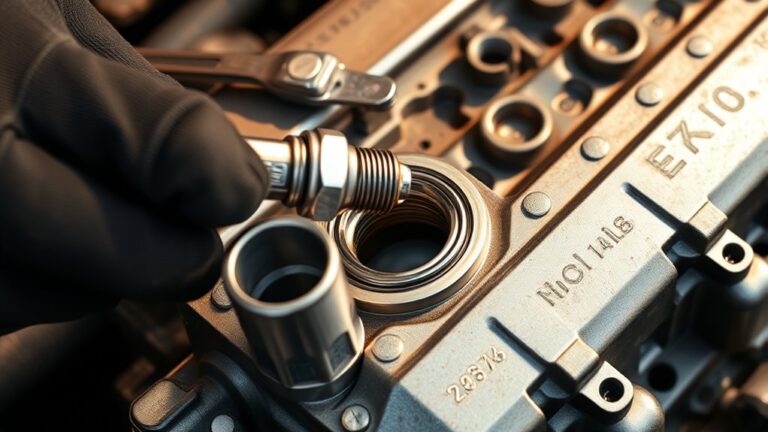
Loose components like oil filters, drain plugs, or valve covers are common causes of oil leaks. To fix this quickly, start by inspecting these parts for loose bolts or fittings. Use a wrench to tighten any loose bolts, making sure they’re snug but not over-tightened, which could cause damage.
Check the component alignment too. Misaligned parts can create gaps where oil escapes. If you find a filter or cover that isn’t seated properly, reseat it firmly and ensure it’s aligned correctly. Tightening loose components can often stop small leaks before they get worse.
But be careful not to overtighten. Over-tightening can strip threads or crack parts, leading to bigger problems. Regularly inspecting and tightening these components is a simple and effective way to prevent engine damage from oil leaks.
Clean Leak Area
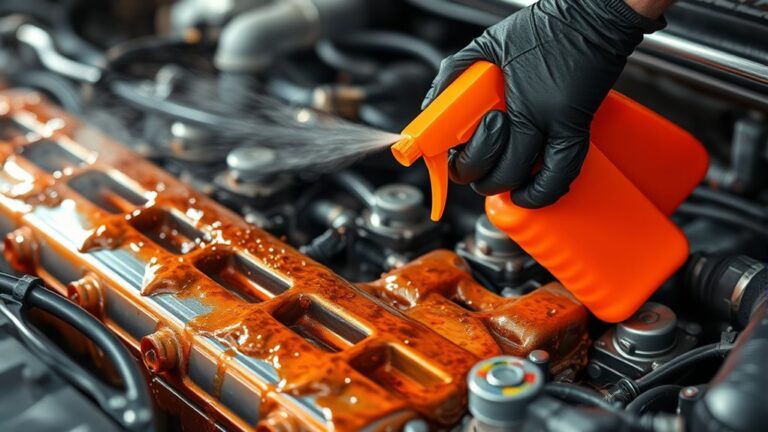
Start by cleaning the area around the leak thoroughly to remove oil, dirt, and grime. This step is key for effective leak detection and helps you spot the source more easily.
Use appropriate cleaning techniques like degreasers, brushes, or rags to make sure the surface is spotless. Once it’s clean, you’ll be able to see where the leak is coming from and assess how serious it is.
To improve leak detection, try these steps:
- Apply a UV dye and use a UV light to find hidden leaks.
- Use a degreaser to loosen stubborn grime, making leaks more visible.
- Wipe the area with a clean cloth to get a clear view of any fresh oil seeping out.
A clean leak area ensures you’re addressing the right spot and helps prevent further engine damage.
Preventative Tips to Avoid Future Oil Leaks
Regularly inspecting your engine and its components can catch potential leaks early before they become serious issues. Preventative maintenance involves checking oil levels, seals, and gaskets during routine inspections to spot wear or damage early.
Keep an eye out for cracked or hardened seals, loose bolts, or any signs of oil seepage around the engine. Replacing worn seals and gaskets promptly helps prevent leaks from developing further.
Also, make sure your oil is changed at the recommended intervals. Old or contaminated oil can speed up seal deterioration. Using quality oil and filters helps maintain sealing integrity.
Regularly inspecting your oil pan, drain plug, and valve cover gasket can also prevent leaks from forming. Staying proactive with routine inspections and maintenance reduces the risk of leaks that could cause engine damage, saving you time and costly repairs down the line.
When Should You See a Mechanic for Oil Leak Repairs?
While routine inspections can catch many small leaks early, there are clear signs that indicate it’s time to see a mechanic for professional repairs. If you notice a persistent oil spot beneath your car, even after an oil change, it’s a good idea to get it checked out.
A noticeable decrease in oil levels between regular checks is another red flag. Also, pay attention to unusual engine noises or warning lights related to oil pressure. These signs suggest the leak could be getting worse or causing damage.
Decreased oil levels and warning lights signal potential leaks and engine damage—seek professional help promptly.
Ignoring these symptoms can lead to engine damage and costly repairs. When you spot any of these issues, schedule a mechanic consultation promptly. A professional can accurately find the source of the leak and perform the necessary repairs to protect your engine.
Addressing leaks early helps prevent oil loss, which can affect lubrication and engine performance. Don’t delay if you notice these signs—timely intervention can save you money and extend your vehicle’s lifespan.
How to Monitor Oil Levels and Protect Your Engine
Keeping a close eye on your oil levels is key to protecting your engine from damage caused by leaks or running low on oil. Regular checks help you catch problems early before they turn serious.
To do this, park your car on a level surface, turn off the engine, and wait a few minutes for the oil to settle. Pull out the dipstick, wipe it clean, then reinsert and remove it again. Check the oil level; it should be between the minimum and maximum marks.
If the oil is low, add the recommended type right away. Also, look at the oil’s color and texture. Dark, gritty oil means it’s time for an oil change. Keeping up with oil checks helps your engine stay properly lubricated, which reduces wear and prevents damage from leaks or low oil.
Make oil level checks part of your regular routine, especially if you notice any signs of leaks or strange engine sounds. Staying on top of this simple task can save you a lot of trouble down the road.
Tips to Extend Your Engine’s Lifespan After an Oil Leak
After experiencing an oil leak, taking quick steps to protect your engine can really help it last longer. First, get your engine checked out by a professional and have the leak fixed as soon as possible.
Next, think about using oil additives to boost lubrication and reduce wear, but only after talking to your mechanic. It’s also important to regularly check your oil levels and top off when needed to avoid running low.
Consult your mechanic before using oil additives, and regularly check and top off your oil levels to prevent engine damage.
Switching to high-quality engine oils designed for leak-prone engines can also help prevent further damage. Keep an ear out for unusual sounds or any drop in performance, and deal with problems right away.
These simple steps can shield your engine from long-term damage and keep it running smoothly for years. Proper maintenance and choosing the right additives will help maximize your vehicle’s lifespan and save you money on repairs later on.
Frequently Asked Questions
Can Driving With an Oil Leak Cause Engine Failure?
Yes, driving with an oil leak can cause engine failure. Oil leaks often happen because of worn seals or gaskets, which lowers lubrication and causes more friction.
This reduced lubrication can lead to overheating, faster wear of parts, and eventually serious engine damage. Ignoring an oil leak puts your engine at risk of severe problems.
It’s really important to fix the leak quickly to keep your engine healthy and avoid costly repairs down the line.
How Long Can I Drive With an Oil Leak Before Damage Occurs?
Sure, keep driving with an oil leak—what’s the worst that could happen? In reality, ignoring oil leak symptoms like smoke or low oil levels risks severe engine damage.
You might get away with a few days, but preventative maintenance is your best friend. Once the oil is gone, your engine’s toast is inevitable.
Don’t gamble—check your oil regularly and fix leaks promptly to avoid costly repairs.
Are Oil Leaks More Common in Certain Car Models?
Oil leaks are more common in certain models like older Subaru, Honda, and Ford vehicles. These leaks often happen because of worn-out gaskets, seals, or damage to the oil pan.
If you drive a model that’s prone to leaks, keep an eye out for signs like oil spots or low oil levels. Regular maintenance can help prevent serious engine damage, especially in cars known for leak issues.
What Are the Long-Term Effects of Ignoring an Oil Leak?
Ignoring an oil leak can cause long-term damage to your engine. As oil viscosity decreases because of leaks, engine parts may wear out faster, leading to costly repairs.
Poor maintenance habits make this worse, reducing lubrication and increasing friction. Over time, this can cause your engine to overheat, perform poorly, or even break down completely.
It’s really important to fix leaks quickly to protect your engine’s health and keep everything running smoothly.
How Does Oil Leak Severity Affect Repair Costs?
The severity of an oil leak directly impacts repair costs. You’ll likely spend less on minor leak detection and simple repairs, like gasket replacements.
But more severe leaks require extensive diagnostics and potentially costly repairs, such as replacing seals or engine components. Addressing leaks early can help minimize expenses.
Always get professional advice to investigate repair options promptly, which can prevent further damage and keep costs down.
Conclusion
Ignoring an oil leak is like ignoring a ticking time bomb beneath your hood—silent but deadly. While a small drip might seem harmless, it can quickly lead to costly engine damage, leaving you stranded.
Think of your engine as a delicate dance partner. With proper care and timely repairs, you can keep it performing smoothly.
Don’t let a tiny leak become a big problem. Stay vigilant, act promptly, and keep your engine’s rhythm steady by addressing oil leaks early.