Why Does Your Car’s Engine Misfire At Idle? Let’s Find Out
Feeling frustrated when your car’s engine misfires at idle? You’re not alone—many drivers face this issue and wonder what’s going wrong. It can be annoying and sometimes even scary, but the good news is that understanding the common causes can help you fix it.
If your car’s engine misfires at idle, it’s often caused by issues like a faulty fuel mixture, worn spark plugs, or sensor problems affecting fuel delivery and ignition.
Vacuum leaks, EGR malfunctions, or timing issues can also disrupt engine balance. Worn components or clogged filters might be the culprits.
Staying aware of these signs and diagnosing each part can help you fix the problem. Keep going, and you’ll uncover more ways to keep your engine running smoothly.
Key Takeaways
- Incorrect fuel mixture or issues with fuel delivery can cause your engine to misfire while idling.
- Problems with the ignition system, like worn-out spark plugs or weak coils, lead to inconsistent sparks.
- Vacuum leaks and faulty sensors can throw off the air-fuel balance, making your engine idle rough.
- Malfunctioning EGR valves or sensors such as TPS and IAC can affect engine stability when you’re at a stop.
- Mechanical issues, including low fuel pressure or worn parts, also contribute to engine misfires at idle.
What Causes Engine Misfires at Idle?
Engine misfires at idle often come from issues with the fuel or ignition systems. One common cause is an improper fuel mixture, where too much or too little fuel disrupts smooth engine operation.
Engine misfires at idle often stem from fuel or ignition system problems.
If the mixture leans too much, meaning more air than fuel, your engine struggles to ignite properly, causing misfires. On the flip side, a rich mixture with more fuel than air can flood cylinders and lead to rough idling.
Engine timing is also crucial. If the timing is off—maybe because of a slipped timing belt or a faulty timing chain—the spark happens at the wrong moment. This misalignment prevents proper combustion and causes idle misfires.
Problems with sensors like the throttle position sensor or mass airflow sensor can also mess up fuel delivery and timing. This makes the engine run unevenly, especially at idle.
Making sure these systems are correctly calibrated and working well helps keep your engine running smoothly at idle and prevents misfires caused by fuel mixture and timing issues.
Are Ignition System Problems Causing Your Idle Misfire?
Is your engine misfiring at idle? It could be due to problems in the ignition system. Things like worn-out spark plugs, weak ignition coils, or wiring issues can mess with the spark that’s essential for your engine to run smoothly.
Taking a look at these parts can help you figure out if they’re the culprits behind that rough idle. Sometimes, a simple check or replacement can make a big difference!
Faulty Spark Plugs
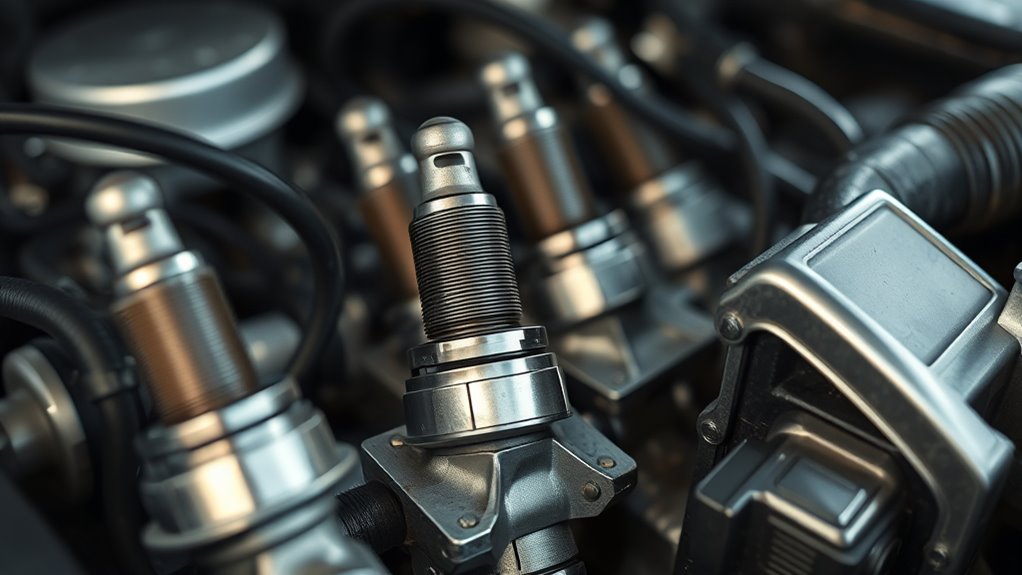
Faulty spark plugs are a common reason for idle misfires because they directly affect the ignition process. Worn or fouled spark plugs can cause incomplete combustion, leading to rough idling or stalling. Regular spark plug maintenance helps prevent these issues, but if they fail, replacing them is necessary.
Look out for signs like difficulty starting or engine hesitation, which can indicate spark plug problems. Keeping up with proper maintenance ensures your engine runs smoothly and lasts longer.
Here’s a quick overview:
| Symptom | Cause |
|---|---|
| Rough idle | Worn spark plugs |
| Engine misfire at idle | Fouled or damaged spark plugs |
| Difficulty starting | Spark plug gaps or wear |
Addressing these issues promptly keeps your engine running smoothly.
Weak Ignition Coils
Weak ignition coils can really mess up your engine’s performance, especially when idling. These coils turn the battery’s voltage into the high voltage needed to create a spark.
Different types, like coil-on-plug or coil packs, work with various engine setups. When coils start to weaken, they can cause inconsistent sparks and lead to misfires.
To diagnose the problem, you can test the coils by measuring resistance and checking the voltage output. Faulty coils often show signs like overheating, cracks, or carbon tracking.
If your testing shows weak or failing coils, replacing them can restore proper sparks and make your engine run smoothly again. Ignition coils are crucial for reliable combustion, so don’t ignore signs of misfire that might be caused by coil issues.
Proper testing helps you find the problem quickly, saving you both time and money.
Wiring or Connection Issues
Wiring and connection issues are common culprits behind engine misfires at idle, especially when electrical pathways become loose, corroded, or damaged. Over time, wiring damage and connection corrosion can disrupt the flow of electrical signals, causing misfires. Here’s what to look for:
- Frayed or broken wires that interrupt the ignition signal.
- Corroded connectors that hinder proper contact.
- Loose or disconnected wiring harnesses.
- Signs of corrosion buildup around connection points.
These issues weaken the electrical system’s reliability, leading to inconsistent spark delivery. Regularly inspecting and cleaning wiring and connections can help prevent misfires. Replacing damaged wiring or cleaning corroded connections restores proper electrical flow and keeps your engine running smoothly at idle.
Can Fuel Delivery Issues Lead to Rough Idling?
Have you noticed your engine roughening at idle? Fuel delivery issues could be the culprit. When fuel pressure drops, your engine doesn’t get the steady supply it needs, causing misfires or rough idling.
Low fuel pressure can stem from a failing fuel pump or clogged fuel filter. Moreover, injector cleanliness plays an essential role. Dirty or clogged fuel injectors can’t spray the proper amount of fuel into the combustion chamber, leading to uneven combustion cycles.
This inconsistency results in engine vibrations and rough idling. Regular maintenance, like replacing the fuel filter and cleaning or replacing injectors, helps maintain ideal fuel pressure and injector function.
If these components aren’t working properly, your engine’s performance suffers, especially at idle. Ensuring your fuel system is clean and operating correctly can prevent misfires and keep your engine running smoothly.
Are Vacuum Leaks Making Your Engine Idle Rough?
If your engine is feeling a bit rough or unstable when idling, there’s a good chance a vacuum leak could be the culprit. You might notice some signs like a hissing sound coming from the engine bay, or maybe your engine’s idle is way higher than normal or keeps fluctuating. Poor acceleration can also be a telltale sign that something’s off.
Signs of Vacuum Leaks
Vacuum leaks are a common cause of rough engine idling, and catching them early can save you from costly repairs. Signs of a leak include noticeable engine hesitation, irregular idle speeds, rough running, and a high or fluctuating vacuum gauge reading.
When performing leak detection, you might see the vacuum gauge jumping unpredictably or staying abnormally high, which indicates a leak. You may also hear hissing sounds from the engine bay, especially around vacuum hoses.
If your car struggles to idle smoothly or stalls unexpectedly, a vacuum leak could be the cause. Recognizing these signs early lets you address the issue before it gets worse, saving you money and preventing engine damage.
Regular leak detection checks help keep your engine running efficiently and avoid more serious problems down the line.
Common Leak Locations
Many common leak locations can cause your engine to idle roughly, and pinpointing these areas is key to fixing the problem. A vacuum leak is often at the root, disrupting the air intake system. Check the vacuum hoses—cracked or disconnected hoses are frequent culprits.
The intake manifold gasket can also develop leaks, allowing unmetered air to enter. The throttle body gasket is another common leak point, especially around the air intake connection. Moreover, vacuum ports and fittings may crack or loosen over time.
These leaks cause the engine to receive too much or too little air, resulting in rough idling or misfires. Identifying and sealing these leak points restores proper air intake balance, helping your engine run smoothly at idle.
Repair and Prevention Tips
To repair and prevent vacuum leaks that cause rough idling, start by inspecting your engine’s vacuum hoses for cracks, disconnections, or signs of wear. Proper engine maintenance helps keep the idle stable.
To find leaks, try these steps:
- Listen for hissing sounds around hoses and the intake manifold.
- Spray carburetor or brake cleaner around suspected areas; if the engine idle changes, there’s likely a leak.
- Visually check all hoses for tears or loose fittings.
- Replace any cracked or damaged hoses with quality replacements.
Regularly inspecting and maintaining your vacuum lines can prevent idle issues caused by leaks. Keeping your vacuum system in good shape not only improves engine performance but also extends its lifespan, leading to smoother idling and better reliability.
Do Worn Spark Plugs and Wires Cause Misfires at Idle?
Worn spark plugs and damaged wires are common culprits behind engine misfires at idle. Over time, spark plugs can become fouled or worn out, causing weak or inconsistent sparks that disrupt combustion.
Regular spark plug maintenance helps keep them clean and functional, preventing misfires. Likewise, damaged or worn spark wires can lead to poor electrical current delivery to the spark plugs, resulting in misfiring.
If you notice rough idling or hesitation, inspecting these components is essential. Replacing worn spark plugs is straightforward and can restore smooth engine operation.
Meanwhile, wire replacement guarantees reliable electrical connections, reducing misfire chances. Neglecting these parts often leads to ongoing engine issues, increased fuel consumption, and potential engine damage.
Keeping up with spark plug maintenance and replacing damaged wires promptly can help keep your engine running smoothly at idle and beyond.
Could EGR Valve Malfunctions Be to Blame?
If your engine misfires at idle despite having fresh spark plugs and good wires, the problem might be elsewhere—specifically with the EGR valve. The EGR function involves recycling some exhaust gases back into the intake, helping reduce emissions and smooth engine operation.
When the EGR valve malfunctions, it can cause idle misfires by disrupting this balance. Common issues include carbon buildup blocking the valve, a stuck open EGR valve, or a faulty EGR control solenoid that fails to regulate flow.
EGR valve issues, like carbon buildup or a stuck valve, can cause idle misfires and disrupt engine balance.
Dirty EGR passages can also hinder proper operation and might require cleaning. Addressing these issues involves inspecting the EGR valve, cleaning it if needed, and making sure it opens and closes correctly.
Proper EGR function is essential for smooth idle performance and maintaining engine health.
Which Sensors Affect Idle Stability and How?
Your engine depends on sensors like the Throttle Position Sensor to keep things running smoothly when you’re idling. This sensor keeps track of how much you’re pressing the gas pedal, helping the engine maintain a steady idle.
Then there’s the Idle Air Control Valve, which adjusts the airflow into the engine to keep it running smoothly when you’re stopped. If either of these sensors starts acting up or malfunctions, you might notice your engine idling roughly or even misfiring.
Throttle Position Sensor Role
The throttle position sensor (TPS) is crucial for keeping your engine running smoothly at idle by constantly monitoring the throttle valve’s position. If it malfunctions, it can send false signals, leading to rough idling or misfires.
Proper throttle calibration is key to making sure the sensor’s readings match the actual throttle position. This helps keep your engine running smoothly and avoids potential issues.
When the TPS isn’t working right, it might give inconsistent data, which can mess with fuel delivery and cause engine misfires. You might notice hesitation or surges when your car is idling.
Regularly checking the TPS can help catch problems early. Fixing a faulty sensor restores proper throttle response and keeps your engine stable, preventing stalls and misfires.
Idle Air Control Valve
The idle air control (IAC) valve helps keep your engine running smoothly at idle by adjusting how much air bypasses the throttle plate. This process, called idle airflow regulation, ensures your engine stays steady when you’re not pressing the gas.
If the IAC valve gets dirty or malfunctions, it can mess up this airflow. That can lead to rough idling or even stalling, which is pretty frustrating.
The valve’s performance really matters; a faulty IAC can cause inconsistent idle speeds and misfires. Regularly inspecting and cleaning it helps maintain proper airflow and keeps your engine stable.
When the IAC isn’t working right, your engine has a hard time maintaining a steady idle. This directly impacts how well your engine runs and can even affect fuel efficiency.
How to Diagnose Mechanical Problems Causing Idle Misfires
When diagnosing mechanical issues causing idle misfires, start by inspecting the spark plugs and ignition coils. Worn or fouled spark plugs can cause weak sparks, leading to misfires. Look for cracks or carbon buildup, and test the ignition coils to make sure they’re working properly.
Next, check the fuel pressure with a gauge. If the pressure is inconsistent, it can cause the engine to run lean or rich, which affects idle stability. Performing a compression test on each cylinder can reveal low compression, indicating problems like worn piston rings, valves, or a blown head gasket.
Keep an eye out for these key steps:
- Inspect spark plugs and ignition coils for wear or damage
- Test fuel pressure to make sure fuel delivery is correct
- Conduct a compression test to find internal engine issues
- Examine vacuum lines for leaks that could mess with the air-fuel mixture
These checks will help you identify mechanical faults causing idle misfires, so you can focus on repairs before considering fuel system problems.
Troubleshooting Fuel System Components for Smooth Idle
If mechanical checks show your engine’s parts are in good shape, the next step is to look at the fuel system. Faulty fuel delivery can cause misfires at idle, so start by inspecting the fuel injectors. Regular maintenance helps ensure they spray properly and don’t clog.
Also, check the pressure regulator, which keeps the right fuel pressure. If it’s not working right, fuel flow can become inconsistent, leading to rough idling.
Here’s a quick overview:
| Component | What to Check | Common Issue |
|---|---|---|
| Fuel Injectors | Clean and spray pattern | Clogging or leaks |
| Fuel Pressure Regulator | Proper pressure output | Too high or low pressure |
| Fuel Filter | Blockages or debris | Reduced fuel flow |
Performing these checks can restore smooth idling and keep your engine running efficiently.
When Should You Seek Professional Help for Engine Misfires?
Noticing your engine misfires repeatedly despite basic repairs? It’s time to seek professional help. Engine diagnostics and a professional assessment are crucial when misfires stick around.
Consider consulting a mechanic if:
- The misfire worsens or happens frequently, affecting drivability.
- You notice a significant drop in fuel efficiency or engine power.
- Your check engine light stays on or keeps blinking.
- You’ve already tried simple fixes but the problem persists.
Ignoring these signs can lead to more severe engine damage. A professional assessment guarantees accurate diagnosis using advanced engine diagnostics tools that pinpoint the root cause.
This step is essential to prevent further issues and costly repairs down the line. Trusting experts means you’ll get a clear understanding of what’s wrong and a proper fix, restoring your engine’s performance and reliability.
Frequently Asked Questions
Can a Faulty PCV Valve Cause Engine Misfires at Idle?
A faulty PCV valve can definitely cause engine misfires at idle. When it malfunctions, it can lead to vacuum leaks, which mess with engine performance and cause unstable idling.
This imbalance affects the air-fuel mixture, making your engine stumble or misfire. Regularly checking and replacing a faulty PCV valve helps keep the idle smooth and stable.
Doing so improves engine operation and prevents further problems caused by vacuum leaks and poor performance.
How Does a Clogged Air Filter Impact Engine Idle Quality?
A clogged air filter drastically hampers airflow, creating a bottleneck that’s almost like trying to breathe through a tiny straw. This airflow restriction messes up your engine’s fuel mixture, causing it to stumble and misfire at idle.
When the air filter gets dirty, your engine struggles to get the right amount of air. This leads to rough idling, hesitation, and poor overall performance.
Regularly replacing the air filter keeps your engine running smoothly. It ensures proper airflow, which helps maintain a steady and clean idle.
Can Low-Quality Fuel Lead to Engine Misfires?
Low-quality fuel can cause engine misfires because it often has a lower fuel octane, leading to knocking and poor combustion. When you use subpar fuel, your engine’s injectors may struggle with cleanliness, causing inconsistent fuel delivery.
This disrupts the combustion process, especially at idle, which can result in misfires. To avoid this, always use the recommended fuel octane and keep your injectors clean for smoother engine performance.
Do Engine Mounts Affect Idle Smoothness?
Yes, engine mounts do affect idle smoothness. If your mounts are worn or damaged, they can’t absorb engine vibrations effectively, which leads to more engine shake at idle.
This can make your car feel shaky or rough, and the engine may not run as smoothly as it should. Over time, worn mounts make this problem worse.
Replacing those worn mounts can help restore a smoother idle and cut down on uncomfortable vibrations.
Can Recent Repairs Cause Temporary Idle Misfires?
Recent repairs can indeed cause temporary idle misfires. When you’ve had work done, especially involving vacuum leaks or adjustments to ignition timing, your engine might stumble at idle.
These issues disrupt smooth combustion, leading to misfires. It’s common for systems to need a little time to stabilize after repairs, so if misfires stick around, recheck vacuum seals and ignition timing.
Make sure everything’s correctly aligned and sealed to get your engine running smoothly again.
Conclusion
Think of your engine like a delicate dance partner. Every component needs to move in harmony. When your car misfires at idle, it’s like one dancer missing a step, throwing off the entire performance.
Understanding the common causes and troubleshooting wisely can help you get your engine back in sync. Sometimes, the problem is simple, like a dirty spark plug or a clogged fuel injector.
Other times, it might be more complex, involving issues with the ignition system or sensors. Don’t hesitate to seek professional help if needed. A well-tuned engine is the steady beat that keeps your journey smooth and reliable.
If your engine misfires at idle, addressing the problem early can save you time and money in the long run.