Are All Spark Plugs the Same Size? What You Need to Know
Are you tired of dealing with engine misfires, poor acceleration, or rough idling? You’re not alone—many car owners struggle to find the right spark plugs that fit perfectly and keep their engines running smoothly.
Finding the correct size can feel overwhelming, especially with so many options out there.
No, all spark plugs aren’t the same size. They vary by thread diameter, reach, and electrode gap depending on your car’s make and model.
Using the wrong size can cause misfires, poor performance, or engine damage, so it’s essential to check your owner’s manual or measure your current plugs.
Want to make sure you get the right fit? Keep going to learn more about choosing and installing the perfect spark plug for your vehicle.
Key Takeaways
- Spark plug sizes vary depending on the vehicle’s make, model, and engine design. This includes the thread diameter, reach, and electrode gap.
- Using the wrong size can lead to misfires, poor combustion, and even damage your engine.
- Always double-check your vehicle’s manual or look at your current spark plugs to make sure you get the right fit.
- Incorrect spark plug sizes can cause overheating, fouling, and lower fuel efficiency.
- Making sure you install the right size and match the specifications is key to keeping your engine running smoothly.
How Spark Plug Sizes Vary by Car Make and Model
Since different car makes and models have unique engine setups, their spark plug sizes can vary quite a bit. This means you need to find the right fit for your vehicle to keep things running smoothly.
This variation affects factors like thread size, reach, and electrode gap, making it crucial to choose the correct spark plug for your specific car. Using the wrong size can cause poor combustion, misfiring, or even engine damage.
Manufacturers design engines with specific specs, so sticking to the recommended size and type is essential. Always check your vehicle’s manual or ask a trusted mechanic to confirm the right dimensions.
Properly matched spark plugs ensure reliable ignition, better fuel efficiency, and smooth engine performance. Understanding how spark plug sizes differ by make and model helps keep your vehicle running at its best and avoids unnecessary problems.
Standard Spark Plug Dimensions You Should Know
Knowing the standard spark plug dimensions is really helpful when you’re trying to pick the right one for your vehicle. It’s good to be familiar with things like the common thread sizes, reach and seat height, and electrode gap specs. These details are important because they ensure the spark plug fits properly and helps your engine run at its best.
Common Thread Sizes
Knowing the common thread sizes for spark plugs is important because these measurements ensure your spark plug fits your engine properly.
The thread size affects compatibility and helps you determine which spark plug types will work best. Most vehicles use standard sizes, but some need unique dimensions.
Here’s a quick reference:
| Thread Size | Diameter (mm) | Common Spark Plug Types |
|---|---|---|
| 14mm | 14 | Standard, iridium, platinum |
| 18mm | 18 | High-performance engines |
| 12mm | 12 | Small engines, motorcycles |
| 10mm | 10 | Lawn equipment, small bikes |
Matching your spark plug to the right thread size guarantees a proper fit. It also helps your engine run at peak performance, prevents damage, and ensures reliable ignition.
Reach and Seat Height
The reach and seat height of a spark plug are key dimensions that show how well it fits into your engine’s combustion chamber. Reach is the length from the seat to the tip, making sure it extends properly for good firing.
Seat height measures how high the plug sits when installed. It affects the gap and how securely the plug fits into the cylinder head. If either measurement is off, the spark plug might not seat correctly, leading to poor performance or damage.
It’s really important to match the spark plug reach and seat height to your vehicle’s specs. Using the right size ensures proper combustion, better fuel efficiency, and smooth running.
Always double-check these measurements before you replace your spark plugs to keep everything running smoothly.
Electrode Gap Specifications
Electrode gap specifications are a key dimension to check when selecting or replacing spark plugs. The gap affects how the spark forms and influences engine performance. Different electrode designs can require specific gaps for peak operation.
If the gap is too narrow, the spark might be weak, causing misfires. Too wide, and the spark may not jump reliably. Adjusting the gap ensures proper ignition and smooth engine running.
Always refer to your vehicle’s manual or manufacturer recommendations. Keep in mind, the electrode design—such as fine-wire or standard—can impact the ideal gap size.
- Proper gap guarantees reliable ignition and fuel efficiency
- Electrode design influences the correct gap measurement
- Incorrect gap can lead to performance issues
- Regular checks help maintain peak engine performance
How to Find the Right Spark Plug Size for Your Vehicle
Looking for the right spark plug size for your vehicle? The easiest place to start is by checking your vehicle’s manual—most of the time, it’ll have the exact specifications you need. If you don’t have the manual handy, no worries! You can simply measure your current spark plugs to find out their size. It’s a quick and straightforward way to make sure you’re getting the perfect fit, which is key for keeping your engine running smoothly and at its best.
Checking Vehicle Manual Specifications
Wondering how to find the right spark plug size for your vehicle? The best place to start is by checking the manual specifications. Vehicle manufacturers list the exact spark plug size and type needed for optimal performance, so you meet your vehicle’s requirements.
Here’s what to look for:
- Owner’s manual: Your first go-to for detailed specs.
- Engine type: Different engines need specific spark plugs.
- Model and year: These details help verify the right specifications.
- OEM recommendations: Always follow the original equipment manufacturer’s guidelines for fit and performance.
Measuring Existing Spark Plugs
When you have your existing spark plugs on hand, measuring them is a simple way to find the right size for your vehicle. Use tools like a caliper or a spark plug gauge for accurate measurements.
First, measure the overall length, including the threaded part, to match your vehicle’s specs. Then, check the diameter of the threaded section, which is key for a proper fit.
Some people unscrew the spark plug carefully and place it on a flat surface to verify the size visually. Always double-check your measurements against your vehicle’s manual or manufacturer’s recommendations.
Getting accurate measurements ensures you pick the right spark plug size, helping prevent issues like misfiring or engine damage.
Risks of Using Incorrect Spark Plug Sizes
Using the wrong spark plug size can cause serious engine problems. If the spark plug isn’t compatible with your engine, it may lead to performance issues like misfires and rough idling.
Incorrect sizes can also mess with the heat range, risking overheating or fouling the plug. This impacts ignition timing and reduces fuel efficiency. Installing the wrong type might cause installation errors, leading to more damage and costly repairs.
Poor maintenance practices, such as not verifying spark plug compatibility, only make these issues worse. Be aware of these risks:
- Spark plug compatibility issues can affect your engine’s overall performance
- Performance problems like misfires and loss of power
- Heat range mismatches may cause overheating or fouling
- Ignition timing and fuel efficiency decline due to improper fit
Always follow proper installation procedures to avoid these hazards. Doing so helps your engine run smoothly and efficiently.
How to Check Your Current Spark Plug Size and Compatibility
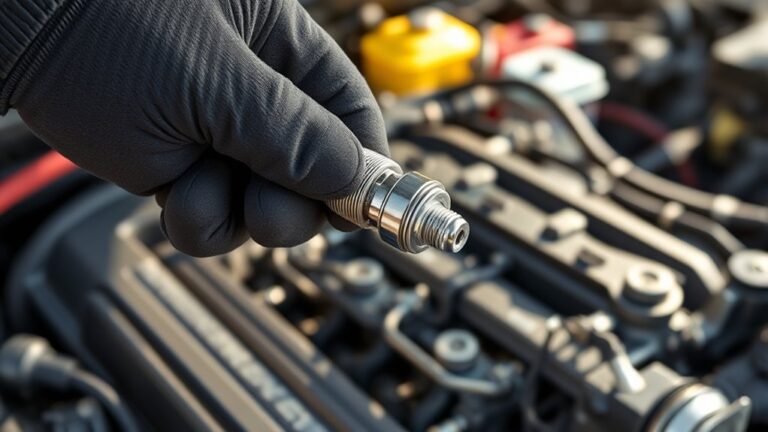
To guarantee your spark plugs are the correct size and compatible with your engine, start by inspecting the existing plugs carefully. Remove the spark plug using a spark plug socket and examine it closely.
Spark plug identification involves noting the brand, model number, and any markings on the ceramic insulator or metal shell. Check the size and thread type to confirm compatibility, as different engines require specific specifications.
Comparing your current spark plug’s size and design to your vehicle’s manual or manufacturer’s recommendations helps confirm compatibility. If the spark plug shows any visible damage or signs of wear, replace it with an exact match.
Keep in mind that spark plug compatibility isn’t just about size; the heat range and electrode design matter too. By thoroughly inspecting and identifying your current spark plug, you ensure proper fitment and peak engine performance.
This step helps you select the right replacement and avoid potential issues.
Understanding Thread Diameter and Reach in Spark Plugs
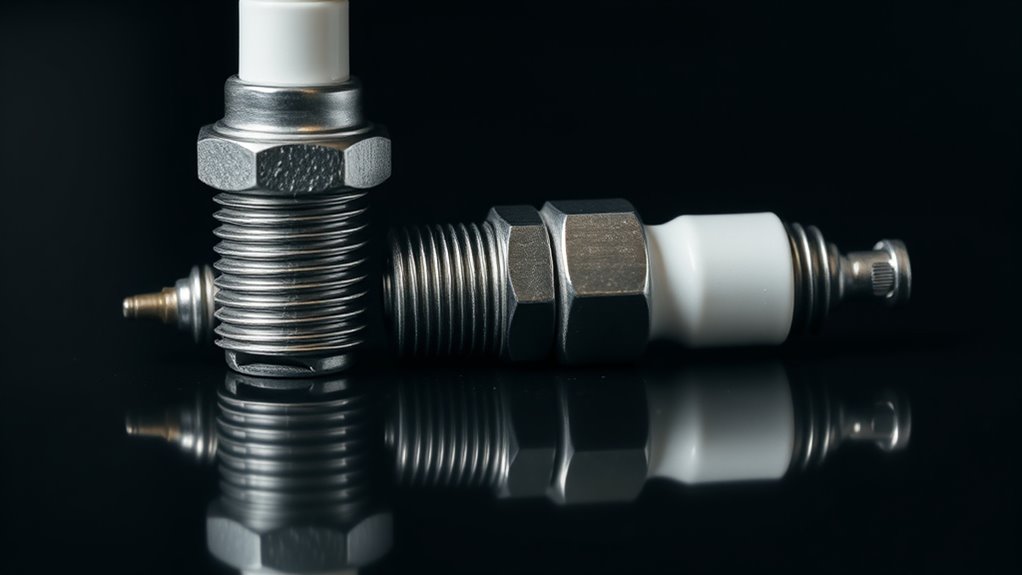
Ever wondered how the thread diameter and reach affect your spark plug fitment? These factors are key for ensuring proper thread compatibility and optimal engine performance. The thread diameter determines if your spark plug fits securely into the cylinder head, preventing leaks or cross-threading.
Reach measurement shows how deep the spark plug sits in the combustion chamber, which impacts ignition and combustion efficiency.
Here’s what you should keep in mind:
- Thread diameter must match your engine’s specs to avoid compatibility issues.
- Reach measurement makes sure the plug sits at the right depth for proper combustion.
- Different engines need specific thread sizes and reach lengths for the best fit.
- Ignoring these details could lead to misfiring, damage, or poor engine performance.
Knowing these details helps you pick the right spark plug, keeping your engine healthy and performing well.
How to Read Spark Plug Part Numbers and Specs
Sure! Here’s a more conversational version of your text:
—
Spark plug part numbers might look a little confusing at first, but they actually hold a lot of useful info about size and performance. Once you get the hang of reading them, it’s pretty straightforward to pick the right one for your engine. So, let’s dive into what those numbers and codes really mean and how you can understand them better.
Understanding Part Number Format
Have you ever looked at a spark plug’s part number and wondered what all those codes mean? Understanding part number format is key to proper spark plug identification. Most part number basics include details about the heat range, electrode type, and size. These codes are structured systematically, making it easier to find compatible replacements.
Here’s what to look for:
- Manufacturer’s code: Identifies the brand and model.
- Heat range: Indicates how hot or cold the plug runs.
- Electrode type and design: Shows the shape and material.
- Size and thread specifications: Guarantees correct fitment.
Knowing how to read these codes helps you select the right spark plug for your vehicle, avoiding guesswork and ensuring peak engine performance.
Interpreting Spark Plug Specs
Understanding how to read spark plug part numbers is key to picking the right one for your vehicle. Spark plug specs, like the part number, show important details such as thread size, reach, and heat range.
Pay attention to the materials—copper, platinum, or iridium—as they affect durability and performance. These materials influence how well the spark conducts electricity and how long the plug lasts.
The specs impact how smoothly your engine runs and can help improve fuel economy or power. Knowing how to read these codes ensures compatibility and helps you get the best performance.
When to Consider Upgrading or Changing Spark Plug Sizes
While spark plug sizes are generally standardized, there are specific situations when upgrading or changing their size can improve your vehicle’s performance. If you notice issues like misfires, rough idling, or reduced engine efficiency, it might be time to evaluate a size upgrade. Enlarging or modifying spark plug size can boost spark plug performance, leading to a stronger spark and better fuel combustion.
Think about upgrading or changing spark plug sizes if you’ve modified your engine for more power or torque. Your vehicle might also experience frequent misfires or difficulty starting, which could benefit from a different size.
Consider changing spark plug sizes if you’ve upgraded your engine for more power or torque.
You might also want to consider a size change if you’re aiming to maximize engine efficiency for better fuel economy. Or, if you’re looking for improved throttle response and overall performance, a different spark plug size could help you get there.
In these cases, a different size can help you unlock your engine’s potential. But always check your vehicle’s specifications or talk to a mechanic before making any changes. Proper sizing ensures safety and helps your engine run at its best.
Common Mistakes When Choosing the Correct Spark Plug Size
Choosing the right spark plug size might seem straightforward, but mistakes happen when you overlook key details. One common error is assuming all spark plugs with similar dimensions are compatible, which can lead to compatibility issues.
Using the wrong size or type can cause misfires, engine damage, or poor performance. Another mistake is ignoring manufacturer specifications, which detail the exact size, thread pitch, and reach needed for your engine.
Installation errors also contribute to problems. For example, over-tightening can strip threads, while under-tightening might cause the spark plug to loosen. Always double-check the vehicle’s manual or consult a professional before selecting a spark plug.
Rushing the process or relying solely on visual guesses increases the risk of incorrect fitment. Taking extra care to verify compatibility and proper installation helps guarantee your engine runs smoothly.
This approach prevents costly repairs down the line and keeps your engine performing at its best.
Tips for Selecting and Installing the Right Spark Plug Every Time
How can you guarantee you select and install the right spark plug every time? First, always check your vehicle’s owner’s manual for the correct spark plug types and specifications. When choosing, consider factors like heat range and electrode design, which influence performance.
Proper installation techniques are essential. Use a torque wrench to avoid over-tightening or under-tightening, which can damage threads or cause misfires. Double-check the spark plug gap before installation, matching manufacturer specs.
Use anti-seize compound sparingly on the threads to prevent future removal issues. Always replace spark plugs one at a time to avoid mixing up types. Follow the recommended torque settings for your vehicle to guarantee proper fit and function.
Frequently Asked Questions
Can Spark Plug Sizes Affect Engine Performance?
Yes, spark plug sizes can affect engine performance. Using the correct spark plug types that match your engine’s specifications guarantees proper fit and ideal function.
If the size doesn’t match, it can lead to misfires, poor fuel economy, or engine damage. Always check your vehicle’s engine compatibility before choosing spark plugs.
Getting the right size and type is essential for smooth operation and reliable performance.
Are There Universal Spark Plugs for Multiple Vehicle Types?
Surprisingly, there are no true universal spark plugs that fit all vehicles perfectly. Some spark plug types claim they can work with many cars, but you still need to check specific sizes and thread patterns.
It’s like trying to find one key for every lock—tempting, but often not practical. To avoid engine trouble, always verify the spark plug size and type recommended for your vehicle, even if a product claims to be universal.
How Do Climate Conditions Influence Spark Plug Size Choices?
Climate impact and engine temperature greatly influence your spark plug size choices. In colder climates, you might need a spark plug with a different heat range to prevent fouling or pre-ignition.
In hotter climates, plugs that dissipate heat effectively are essential. Adjusting spark plug size helps keep the engine at the right temperature, preventing damage and boosting performance.
Always think about your local climate when selecting spark plugs for your vehicle. It can make a big difference in how well your engine runs.
Do Aftermarket Spark Plugs Come in Different Sizes?
Yes, aftermarket spark plugs come in different sizes to match various engine requirements. When choosing, you need to consider aftermarket compatibility to ensure a proper fit.
Spark plug materials, like platinum or iridium, also affect size options and performance. Always check your vehicle’s specifications and talk to experts to pick the right size and material.
This way, you can get the best ignition performance and your engine will last longer.
What Tools Are Best for Measuring Spark Plug Size Accurately?
You should use spark plug gauges to measure spark plug size accurately. These gauges are made specifically for precise measurements.
To get the right size, just insert the spark plug into the gauge slots, which are marked for different sizes. This makes it easy to check the thread diameter and reach.
Using these gauges helps you avoid mismatched spark plugs that could cause engine issues. Always double-check your measurements before buying replacements.
Conclusion
So, next time you’re tempted to grab any spark plug off the shelf, remember—size really does matter. Think it’s just a simple swap? Think again. Using the wrong size isn’t just a minor mistake; it’s like trying to fit a square peg in a round hole—frustrating and pointless.
Take a moment, double-check, and be sure. Your engine’s performance depends on it. And when it comes to spark plugs, size is everything. Who doesn’t want a smooth ride?