Is An Electric Scooter A Motor Vehicle: Essential Guide
Are you thinking about zipping around town on an electric scooter but feeling confused about the legal side of things? You’re not alone—many people struggle with understanding whether these popular rides are considered motor vehicles or just fun personal mobility devices.
Knowing the rules can be tricky, but it’s essential to stay safe and compliant.
Whether an electric scooter is considered a motor vehicle depends on local laws, mainly based on speed, power, and design features. Some areas classify high-speed or powerful scooters as motor vehicles, requiring registration, licensing, and safety gear.
Others see them as personal mobility devices or bicycles.
To understand how your location treats electric scooters and stay compliant, you’ll find valuable details that can help keep you safe and legal.
Key Takeaways
- Electric scooters are often classified differently depending on local laws, sometimes as bicycles or personal mobility devices.
- Whether they’re considered a motor vehicle depends on factors like speed, wattage, and design features such as pedals or seats.
- The legal requirements for registration, licensing, and insurance vary based on whether the scooter is seen as a motor vehicle.
- Safety regulations, including helmet use and lighting, are important for legal riding, especially if classified as a motor vehicle.
- Disputes over classification can affect insurance claims, legal responsibilities, and enforcement actions.
Are Electric Scooters Considered Motor Vehicles?
Are electric scooters classified as motor vehicles? The answer depends a lot on local scooter laws and how authorities define vehicles.
Electric scooters’ classification varies based on local laws and vehicle definitions.
In many places, electric scooters aren’t considered traditional motor vehicles because they don’t have engines and aren’t powered by internal combustion. However, some areas categorize them as motor vehicles if they reach certain speeds or are used on public roads.
This classification impacts what safety gear you need and where you can ride. For example, some areas require helmets or restrict scooters to bike lanes, which lines up with local scooter rules.
Others might need you to have a license or register your scooter if it’s considered a motor vehicle. It’s really important to check your local laws to understand how they classify electric scooters.
This affects your rights, responsibilities, and legal duties when riding. Always look up your local regulations to stay compliant and ride safely.
What Is a Motor Vehicle? A Legal Overview
A motor vehicle is a device mainly built for transportation that runs on an engine or motor, usually on roads or designated pathways. Understanding what defines a motor vehicle is important because legal classifications influence how they’re regulated and what rules apply.
Here’s what helps paint a clear picture:
- Engine or Motor: Most motor vehicles use internal combustion engines or electric motors.
- Design Purpose: They’re primarily designed to carry people or goods.
- Legal Status: Motor vehicles are classified differently by law, which affects licensing, registration, and insurance.
- Operation Environment: They mainly operate on public roads or designated pathways.
Knowing these points helps you understand how the law views different devices, like electric scooters, and why their legal classification matters for safety and regulation.
How Are Electric Scooters Classified Under the Law?
Electric scooters often fall into a gray area in legal classifications, which can vary widely depending on local laws and regulations. Some areas classify them as motor vehicles, while others see them as bicycles or personal mobility devices.
Electric scooter regulations differ greatly across jurisdictions, affecting where and how you can ride them. In some places, they’re required to follow traffic laws similar to those for bicycles, including speed limits and helmet use.
In others, they may be considered motorized vehicles, requiring licensing, registration, and insurance. These varying classifications influence the legal implications you face, like potential fines or liability in accidents.
Understanding how your local laws classify electric scooters helps you ride responsibly and avoid legal issues. Always check your specific city or state regulations to stay compliant and be aware of the legal implications tied to your electric scooter use.
What Features Decide if an E-Scooter Counts as a Motor Vehicle?
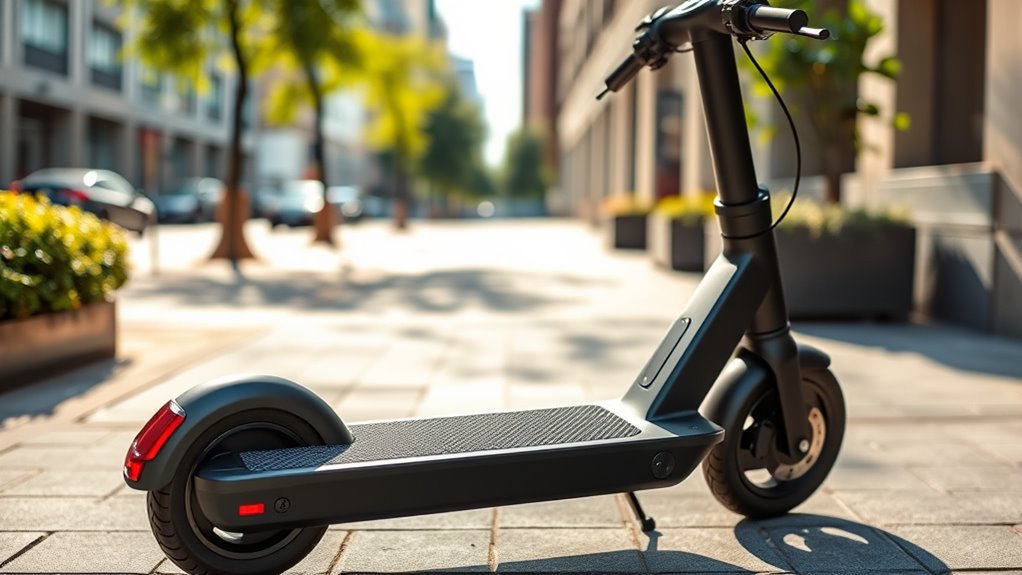
The specific features of an e-scooter determine whether it qualifies as a motor vehicle, and understanding these features is essential for legal classification. Your e-scooter specifications, like speed, power, and design, heavily influence whether it’s considered a motor vehicle.
Here are four key features that decide this:
- Maximum Speed: If it goes over a certain speed limit, usually around 20 mph, it’s more likely to be classified as a motor vehicle.
- Motor Power: Higher wattage motors, typically over 750W, tend to push the vehicle into motor vehicle classification.
- Vehicle Design: Features such as pedals or a seat can influence whether it’s seen as a traditional scooter or a motor vehicle.
- Lighting and Safety Features: The presence of headlights, taillights, and turn signals can also contribute to its classification as a motor vehicle.
These factors, based on your e-scooter specs, are crucial in determining its vehicle classification under the law.
Are E-Scooters Considered Motor Vehicles in Every State?
Laws about e-scooters can really vary depending on where you are. So, whether they’re considered motor vehicles isn’t the same across all states. Some states have a pretty broad definition of motor vehicles and include e-scooters in that category, while others don’t.
It’s a good idea to look up your specific state’s rules to see where e-scooters fit in. That way, you’ll know exactly what’s allowed and what’s not when you’re out riding.
State Laws Vary
Although e-scooter regulations vary from state to state, many places haven’t set clear standards for them as motor vehicles. This leads to confusion about how to classify and regulate e-scooters.
Some states see e-scooters as motor vehicles, while others treat them like bicycles or pedestrian devices. This inconsistency makes it hard to know what’s legal.
Enforcement becomes tricky because laws aren’t uniform. This creates uncertainty for riders and police alike.
Within states, cities often have their own rules, adding another layer of complexity. Riders might not know which rules apply where.
All these differences can leave riders unsure of what’s legal, which increases the risk of fines or penalties.
Knowing these variations helps you stay on the right side of the law and avoid trouble.
Definition of Motor Vehicle
You might wonder if e-scooters are considered motor vehicles in every state, since the rules vary. The definition of motor vehicle depends on state laws and how courts interpret them. Usually, it includes any self-propelled vehicle meant for road use, but the details differ.
Some states see e-scooters as motor vehicles, so they require registration, licenses, and insurance. Others view them more as personal mobility devices, which aren’t subject to those rules. These legal differences affect where and how you can ride your e-scooter legally.
Knowing your state’s definition of a motor vehicle helps you understand your rights and responsibilities. Clarifying this makes sure you’re following local laws and helps you avoid penalties or legal trouble.
Do I Need to Register or License My Electric Scooter?
Whether you need to register or license your electric scooter really depends on where you are. Different places have different rules, so it’s a good idea to look up your local laws. Some states or cities might require registration or a license, while others don’t.
Legal Registration Requirements
Regulations about registering and licensing electric scooters vary depending on where you are, so it’s important to check your local laws before riding.
Some areas require you to complete specific registration steps, while others don’t. Here’s a quick overview of what you might encounter:
You might need to register your scooter with local authorities.
Insurance requirements could be mandatory, especially if your scooter is more powerful.
Some regions require a license plate or registration sticker.
And in certain places, you might have to renew your registration or undergo inspections regularly.
Knowing these rules helps you avoid fines and legal troubles. Keep in mind that registration rules can vary a lot, and insurance might be stricter if your scooter is classified as a motor vehicle.
Always double-check your local laws before hitting the road.
Licensing Necessities
The requirements for licensing and registration often go hand-in-hand, but they serve different purposes. Licensing requirements determine whether you need a permit to operate your electric scooter on public roads or bike paths.
Some states consider electric scooters as motor vehicles, meaning you’ll need a driver’s license or a specific permit to ride legally. Other regions may not require any license at all.
It’s crucial to check local laws to understand what’s necessary for your area. Even if licensing isn’t mandatory, having proper permits guarantees you’re riding safely and legally.
Always stay informed about the licensing requirements for your electric scooter, as regulations can change and vary from place to place.
Regional Regulation Variations
Regional rules for registering or licensing electric scooters vary widely, so it’s important to check your local laws before riding. Some areas require scooter insurance or registration, while others don’t.
Your city’s urban infrastructure can also influence regulations, like designated scooter lanes or speed limits. Here’s what you might encounter:
- Some regions mandate scooter registration and licensing, similar to motor vehicles.
- Others only require proof of insurance or safety checks.
- Certain cities have specific regulations based on their infrastructure, like dedicated lanes.
- Some areas exempt small e-scooters from registration altogether.
Knowing these differences helps you stay compliant and safe. Always verify local rules to avoid fines or penalties and find out if you need to register or license your electric scooter before hitting the streets.
How Do Speed and Power Affect E-Scooter Classification?
Since an e-scooter’s speed and power directly influence how it’s classified, understanding these factors is essential. Higher speeds and more powerful motors often categorize e-scooters as motor vehicles, which come with specific regulations.
Many regions enforce speed limits for e-scooters to prevent them from being classified as motor vehicles. Usually, non-motorized e-scooters are capped at a maximum speed of around 15 mph. These regulations vary depending on where you are.
Power limits also play a role. They restrict how powerful an e-scooter’s motor can be, often capping wattage at around 750W. Excessive power can push an e-scooter into a different legal category, sometimes requiring licensing or registration.
What Safety Regulations Do E-Scooter Riders Need to Know?
Understanding and following safety regulations is essential for e-scooter riders to stay protected and avoid legal issues. Being aware of scooter safety rules helps you navigate streets responsibly and reduces accidents.
Here are four key safety regulations to keep in mind:
- Wear a helmet at all times to protect your head during falls or collisions.
- Follow local traffic laws, including riding on designated bike lanes and obeying traffic signals.
- Avoid riding under the influence of alcohol or drugs, which impairs rider awareness and reaction time.
- Limit riding at night or in poor visibility conditions unless equipped with proper lights and reflectors.
What Are Common Legal Disputes Involving E-Scooters and Motor Vehicle Laws?
Legal disputes involving e-scooters often center on how they’re classified and whether existing motor vehicle laws apply to them. You might run into issues like insurance claims or questions about who’s liable if you get into an accident.
If authorities see e-scooters as motor vehicles, you could be required to carry insurance, and you might be held responsible for damages in crashes. But if they aren’t classified as vehicles, you may not qualify for insurance coverage, which can make liability claims trickier.
| Dispute Type | Common Issue | Possible Outcome |
|---|---|---|
| Insurance Disputes | Coverage eligibility | Insurance claims might get denied or limited |
| Accident Liability | Determining fault | Court decisions or settlements |
| Classification Disputes | Vehicle versus non-vehicle status | Laws or regulations could change |
| Regulatory Enforcement | Ticketing or fines | You might face penalties or legal challenges |
How Can I Ride My Electric Scooter Legally and Safely?
If you want to ride your electric scooter legally and safely, it’s important to know and follow the rules in your area. Different places have different laws, so it’s a good idea to check what’s required where you live.
And of course, safety gear is a must. Wearing a helmet is really important, and pads for your elbows and knees can help prevent injuries if you fall. Being prepared and staying informed makes your ride much smoother and more fun.
Follow Local Laws
Riding your electric scooter safely and legally starts with knowing and following local laws. To stay compliant, get familiar with the specific regulations and guidelines in your area.
Here are four key steps:
- Check where electric scooters are allowed—bike lanes, streets, or designated zones.
- Know the speed limits and riding restrictions so you don’t get into trouble.
- Find out if wearing a helmet is required and if you need any license to ride.
- Learn the parking rules to avoid fines or having your scooter impounded.
Following these steps helps ensure you’re riding legally and responsibly. Always stay updated on local regulations since rules can change. Being compliant keeps you safe and prevents legal issues or fines.
Wear Safety Gear
Wearing the right safety gear is essential for protecting yourself while riding your electric scooter. Make sure you use proper safety equipment, including a well-fitted helmet, reflective clothing, and gloves.
Protective clothing helps minimize injuries if you fall or collide. Always wear a helmet that meets safety standards to protect your head.
Bright or reflective clothing increases your visibility to others, especially at night or in low light conditions. Gloves can improve your grip and protect your hands from scrapes.
Don’t underestimate the importance of safety equipment; it can be the difference between a minor fall and a serious injury. Prioritize your safety by consistently wearing protective clothing and gear every time you ride.
Frequently Asked Questions
Are Electric Scooters Allowed on Highways or Interstates?
Electric scooters are generally not allowed on highways or interstates because of highway regulations and interstate restrictions. These roads are built for faster vehicles, and electric scooters usually don’t have the speed or safety features needed for such environments.
You should check your local laws, but in most cases, riding an electric scooter on highways or interstates isn’t permitted. Always prioritize safety and follow the specific rules in your area.
Can Electric Scooters Be Used for Commercial Delivery Services?
Yes, electric scooters can be used for commercial delivery services, but you’ll need to check local laws first. Regulations vary depending on where you operate.
It’s important to streamline your delivery logistics to make sure scooters are quick and efficient for your needs. Planning routes and timing helps improve overall service.
Fleet management is key to handling multiple scooters. It helps you track routes, coordinate deliveries, and keep everything safe and organized.
What Are the Insurance Requirements for Electric Scooter Riders?
You need to understand that insurance requirements for electric scooter riders vary by location. Typically, you’ll need liability insurance, which covers damages to others, and possibly personal injury protection.
Make sure your insurance has adequate coverage limits to protect against potential accidents. Some areas might require additional coverage or specific insurance types like extensive or collision.
Always check local laws to verify you’re fully insured and compliant while riding your electric scooter.
How Do Age Restrictions Vary Across Different Regions?
Age restrictions for electric scooters vary widely across regions, balancing youthful freedom with safety concerns. In some places, the age limit is as low as 14, which encourages teens to be independent.
In other areas, the limit is set at 18 to ensure riders are mature enough to handle the scooter safely. These differences reflect local safety priorities and laws.
Always check your local regulations before riding, as age limits can change and affect whether you can legally enjoy your scooter.
Are There Specific Helmet Laws for Electric Scooter Riders?
Yes, there are specific helmet laws for electric scooter riders. You need to follow local safety regulations, which often require wearing a helmet while riding.
These laws usually specify helmet types, like full-face or standard helmets, to ensure safety. Always check your area’s regulations before riding.
Wearing the right helmet helps protect you and keeps you compliant with the law.
Conclusion
So, while electric scooters can sometimes dance on the edge of traditional motor vehicle laws, staying informed keeps your journey smooth. Steering through the legal landscape may seem like a delicate waltz, but understanding your local rules guarantees you glide confidently.
By respecting safety regulations and staying aware of evolving laws, you’ll find your ride not just lawful, but truly enjoyable. Remember, whether an electric scooter is considered a motor vehicle depends on where you are.
Welcome the rhythm of responsible riding, and let your e-scooter adventures flow seamlessly ahead. Staying informed about whether your e-scooter qualifies as a motor vehicle helps keep you compliant and safe on the road.