Maximizing Engine Performance: The Impact of Transmission Fluid in Diesel Fuel
Many diesel engine owners know the frustration of sluggish performance or unexpected breakdowns. You’re not alone—keeping your engine running smoothly can sometimes feel like a constant challenge.
Proper transmission fluid management is key to maximizing your diesel engine’s performance. It lubricates and cools transmission components, helping prevent wear and overheating.
High-quality fluid reduces friction, improves shifting, and maintains efficiency, all vital for ideal fuel economy.
Regular checks and timely changes prevent fluid breakdown and contamination that can lead to sluggish performance.
To keep your diesel engine running smoothly and efficiently, ongoing maintenance is essential—keep exploring to uncover more ways to boost your engine’s power.
Key Takeaways
- Proper transmission fluid helps gear shifts stay smooth, which reduces engine strain and boosts overall diesel engine performance.
- High-quality, synthetic transmission fluids can handle higher temperatures, preventing overheating and keeping the engine running efficiently.
- Regular maintenance and timely fluid changes stop contamination and sludge buildup that can hurt fuel economy.
- Clean, well-lubricated transmission fluid reduces friction and heat, helping your engine last longer and run more efficiently.
- Ignoring transmission fluid care can cause increased wear, lower performance, and higher fuel consumption in diesel engines.
What Does Transmission Fluid Do in Your Diesel Engine?
Transmission fluid plays an essential role in your diesel engine’s overall performance by lubricating the transmission components, preventing wear and tear. It also helps transmit power from the engine to the wheels, ensuring smooth gear shifts.
Different transmission fluid types, such as conventional and synthetic, serve specific vehicle needs and driving conditions. Synthetic fluids often last longer and withstand higher temperatures, making them ideal for demanding diesel engines.
Synthetic transmission fluids last longer and handle higher temperatures, ideal for demanding diesel engine performance.
Regularly checking your transmission fluid level and quality is vital. The fluid change frequency depends on your vehicle’s manufacturer recommendations and your driving habits.
Typically, you should change your transmission fluid every 30,000 to 60,000 miles. However, some diesel engines may require more frequent maintenance.
Using the correct fluid type and sticking to recommended change intervals keeps your transmission running efficiently. It also prolongs its lifespan and helps maintain peak engine performance.
How Transmission Fluid Keeps Your Diesel Engine Lubricated and Cool
Your transmission fluid is like the lifeblood of your engine’s transmission system. It lubricates all those moving parts, helping to reduce friction and prevent parts from wearing out too quickly. Without it, things would get pretty rough inside your engine, and you’d be looking at more repairs down the line.
But that’s not all—transmission fluid also plays a big role in keeping everything cool. It absorbs and disperses heat generated during engine operation, which helps prevent your engine from overheating. So, making sure your fluid levels are right and that the fluid itself is in good condition is really important.
When you keep your transmission fluid in check, you’re not just protecting your engine; you’re also making sure it runs smoothly and lasts longer. It’s a simple step that can make a big difference in how well your diesel engine performs over time.
Lubrication of Moving Parts
A crucial function of transmission fluid is to keep moving parts of a diesel engine properly lubricated and cooled. Its engine lubrication properties ensure that metal components slide smoothly, reducing wear and tear.
The fluid’s unique qualities help it form a thin film between moving parts, preventing direct contact that could cause damage. Good transmission fluid maintains consistent viscosity under different temperatures, ensuring reliable lubrication.
By minimizing friction, it helps the engine run efficiently and last longer. Plus, its ability to coat and protect metal surfaces reduces corrosion and mechanical stress.
Properly functioning transmission fluid is essential for maintaining peak engine performance. It guarantees your diesel engine runs smoothly, reliably, and needs less maintenance.
Heat Dissipation Efficiency
Since heat buildup is a natural part of engine operation, effective heat dissipation is key to preventing overheating and keeping things running smoothly. Your transmission fluid helps with this by working within the cooling systems to absorb and transfer heat away from engine parts.
Its fluid viscosity ensures it flows smoothly through cooling channels, maintaining contact with hot surfaces. When properly formulated, transmission fluid keeps its viscosity stable at different temperatures, so it doesn’t become too thin or thick.
This stability helps it carry heat away efficiently, reducing the risk of overheating. By keeping your engine cool, the fluid supports consistent performance and helps prevent damage caused by excessive heat.
In the end, it guarantees your diesel engine runs reliably under demanding conditions.
Reducing Engine Wear
Effective heat dissipation helps prevent engine overheating, but proper lubrication is just as important to reduce wear on engine parts. Transmission fluid creates a lubricating film that cuts down friction and protects moving components.
Its fluid makeup ensures engine efficiency by reducing metal-on-metal contact, which can cause early failure. Good lubrication also helps keep temperatures in check, preventing heat buildup that could damage the engine.
| Benefit | Explanation |
|---|---|
| Reduced Friction | The fluid forms a barrier that lowers wear and tear. |
| Temperature Control | It helps dissipate heat and keeps the engine cool. |
| Component Longevity | Protects parts from early damage and deterioration. |
| Engine Efficiency | Keeps the engine running smoothly and saves fuel. |
| Fluid Composition | Ensures consistent lubrication in all conditions. |
All this teamwork helps your engine stay smooth and last longer.
How Transmission Fluid Quality Affects Diesel Fuel Efficiency
The quality of transmission fluid plays an essential role in maintaining diesel engine efficiency because it directly impacts the smooth operation of your vehicle’s drivetrain. Using the right transmission fluid types guarantees ideal lubrication and prevents overheating, which can cause energy loss.
Not all transmission fluids are compatible with diesel engines, so choosing a fluid designed specifically for diesel engine compatibility is vital. High-quality transmission fluid reduces friction and wear, helping your transmission run smoothly and efficiently.
When you select a fluid suited to your vehicle’s specifications, you minimize power loss caused by poor lubrication, leading to better fuel economy. On the other hand, low-quality or incompatible fluids can cause sluggish shifting and increased engine strain, decreasing fuel efficiency.
Regularly maintaining and using proper transmission fluid types tailored for diesel engines is an effective way to improve overall performance and maximize fuel savings.
Signs Your Transmission Fluid Is Worn Out and Impacting Performance
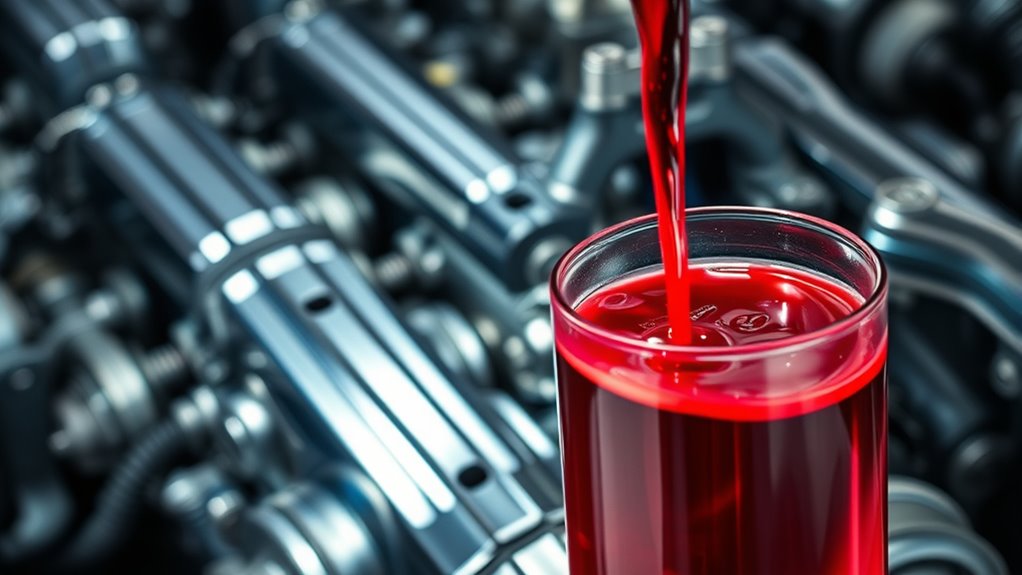
Worn-out transmission fluid can silently affect your vehicle’s performance, often giving early warning signs. You might notice the fluid turning dark or murky instead of its bright red color.
You could also hear strange noises like grinding or whining when shifting. These sounds suggest the fluid has broken down and isn’t lubricating properly, which can cause more wear and potential damage.
If your car hesitates to shift or shifts roughly, it’s a clear sign the transmission fluid needs checking. Regular inspections can help catch problems early and save you from costly repairs later.
| Sign | Explanation | Impact on Performance |
|---|---|---|
| Fluid discoloration | Fluid turns dark or murky | Less lubrication, more wear |
| Unusual noises | Grinding or whining during shifts | Poor transmission operation |
| Hesitation or rough shifts | Delayed or jerky gear changes | Less smooth driving |
| Overheating | Transmission fluid gets too hot | Damage to internal parts |
How Regular Transmission Fluid Checks Extend Your Diesel Engine’s Life
Checking your transmission fluid regularly is a simple way to prevent wear and tear on your transmission. When the fluid level is just right, your engine doesn’t have to work as hard, which helps it run smoother and last longer.
Keeping an eye on the fluid isn’t just about avoiding problems now—it’s about giving your diesel engine the best chance to stay healthy over the years. Regular maintenance like this really can make a big difference in how long your engine keeps going strong.
Prevents Transmission Wear
Checking your transmission fluid regularly is crucial to prevent premature wear on your transmission components. Proper maintenance keeps the fluid clean and at the right level, reducing friction and heat that can cause damage.
When the fluid quality declines, adding fluid additives can help restore its lubricating properties, giving a protective layer for moving parts. Regular inspections let you spot issues early, preventing costly repairs and extending your transmission’s lifespan.
Maintaining ideal fluid conditions minimizes metal-to-metal contact, which speeds up wear. By staying proactive with fluid checks and using the right additives when needed, you keep your transmission running smoothly.
This also helps safeguard your diesel engine’s performance and longevity. Consistent maintenance is key to avoiding unnecessary wear and ensuring reliable operation.
Enhances Engine Longevity
When you keep your transmission fluid clean and at the proper level, you directly help your diesel engine last longer. Regular maintenance, like checking fluid levels and quality, stops unnecessary stress on engine parts.
Using the right type of fluid ensures it lubricates and cools properly, reducing wear and tear over time. Clean, well-maintained transmission fluid keeps your engine running at its best and lowers the risk of overheating and corrosion.
Staying proactive with fluid checks means you can extend the lifespan of key engine parts and avoid costly repairs. Consistent maintenance also helps keep your engine’s internal systems in good shape, making your diesel engine more reliable and durable for years to come.
Choosing the Best Transmission Fluid for Diesel Engines
Choosing the right transmission fluid for your diesel engine is crucial to guarantee smooth shifting, peak performance, and long-lasting components. When selecting a fluid, consider synthetic options, which often provide better stability, enhanced lubrication, and higher resistance to breakdown under extreme conditions. Synthetic transmission fluids can boost your engine’s efficiency and longevity, especially in demanding environments.
Pay close attention to viscosity ratings, which indicate the fluid’s thickness at different temperatures. Using a fluid with the proper viscosity guarantees ideal flow and protection during cold starts and hot running conditions. Always check your vehicle manufacturer’s recommendations for the perfect type and specifications.
Avoid using generic or low-quality fluids, as they may compromise transmission performance and cause costly damage. By choosing a high-quality synthetic transmission fluid with the correct viscosity ratings, you’re investing in smoother shifts, better fuel economy, and extended transmission life for your diesel engine.
How to Check and Change Your Transmission Fluid Properly
Regularly inspecting and changing your transmission fluid is key to keeping your vehicle running smoothly and avoiding costly repairs. Proper maintenance helps your transmission perform at its best and lasts longer.
To check the fluid, start with a warm engine. Find the transmission dipstick, pull it out, and wipe it clean. Reinsert it fully, then remove it again to see the fluid level and color.
Check transmission fluid with a warm engine; wipe, reinsert, then assess level and color.
Healthy transmission fluid should be bright and reddish. If it’s dark or smells burnt, it’s time for a change. When replacing the fluid, drain out the old stuff, swap any filters if needed, and refill with the recommended type and amount.
Be proactive with your transmission maintenance by regularly inspecting the fluid to catch problems early. Use the correct transmission fluid for your vehicle, and follow your manufacturer’s guidelines for how often to change it.
Common Transmission Fluid Problems That Hurt Your Fuel Economy
Contaminants and sludge can build up in your transmission fluid over time. When that happens, the fluid isn’t as effective, and your engine has to work harder than it should. It’s like trying to drive with dirty oil — not ideal.
As the fluid breaks down, it can’t lubricate parts properly anymore, which leads to more friction. That extra friction makes your engine work harder, and guess what? Your fuel economy takes a hit. If you ignore these issues, they can lead to even more costly repairs down the line. So, keeping an eye on your transmission fluid is a smart move!
Contaminants and Sludge Build-Up
Have you ever wondered how dirty transmission fluid can drag down your vehicle’s fuel efficiency? Contamination sources like dirt, metal particles, and degraded additives can build up over time, forming thick sludge that hampers your transmission’s performance.
This sludge can clog important passages, making your engine work harder and burn more fuel. To prevent this, regular fluid changes and high-quality fluids are key to keeping contaminants out.
When sludge does build up, it can cause decreased fuel economy and power, increased wear on transmission parts, and higher repair costs over time.
Fluid Degradation Effects
When transmission fluid breaks down, it loses its ability to lubricate, cool, and transmit power effectively. This can significantly reduce your vehicle’s fuel economy.
As the fluid ages, its composition changes. Oxidation, contamination, and thermal breakdown make it less effective. This degradation can cause increased friction and overheating.
These issues force your engine to work harder and burn more fuel. Regular fluid testing helps catch signs of deterioration early, so you can address problems before they damage your transmission or affect fuel efficiency.
When the fluid’s composition shifts due to wear, it no longer offers the protection and performance it once did. Addressing fluid degradation quickly by changing or topping off your transmission fluid keeps your system running smoothly.
Doing this helps maintain your fuel economy and prevents costly repairs down the line.
Upgrading Transmission Fluid to Boost Diesel Engine Power
Upgrading your transmission fluid can really boost your diesel engine’s performance by making power transfer smoother and reducing stress on key parts.
Picking the right fluid is crucial. Go for high-quality options made for diesel engines. These often include additives that improve lubrication, prevent wear, and handle heat better.
Choose high-quality diesel-specific transmission fluids with additives for better lubrication and heat resistance.
Switching to a better transmission fluid can make shifts more responsive, save fuel, and help your transmission last longer.
Feel the difference as your vehicle handles heavier loads with less effort. You’ll experience:
- Better power delivery that keeps you confidently moving forward
- Less overheating in the transmission, helping you avoid costly repairs
- Improved overall engine efficiency, saving you money over time
Investing in the right transmission fluid isn’t just routine maintenance. It’s a smart move to unlock your engine’s full potential and enjoy smoother, more powerful drives.
Tips to Keep Your Transmission Fluid in Top Condition
To keep your transmission fluid in prime condition, regular maintenance is key. Checking the fluid level once a month and topping it off if it’s low is a good habit.
Make sure to use the correct type of transmission fluid recommended by your vehicle manufacturer. Keep an eye on the fluid’s color and smell; dark or burnt-smelling fluid signals it’s time for a change.
Scheduling periodic fluid replacements or flushes, usually every 30,000 to 60,000 miles, is important—especially depending on your driving conditions. Avoid aggressive driving and towing overloads, as these can speed up fluid deterioration.
Keeping your transmission clean and free of debris helps prevent contamination. By staying proactive with these maintenance tips, you’ll extend your transmission’s lifespan and keep your engine running smoothly.
Proper care of your transmission fluid is essential for a reliable and efficient diesel engine.
Frequently Asked Questions
Can Transmission Fluid Improve Diesel Engine Horsepower?
Adding transmission fluid to diesel fuel doesn’t directly boost horsepower, but it can improve engine performance if the fluid is compatible with your engine. This may lead to smoother operation and potentially better power delivery.
However, using incompatible fluid can harm your engine, so always verify the fluid you add is designed for diesel engines. Proper maintenance and quality fluids are key for peak horsepower improvement.
How Does Transmission Fluid Affect Diesel Engine Emissions?
Transmission fluid composition can influence diesel engine emissions by helping maintain ideal transmission operation, which reduces excess emissions. When the transmission fluid is at the right level and in good condition, it guarantees smoother shifts and less engine strain.
Incorporating transmission fluid into emissions reduction strategies can improve overall engine efficiency, lower harmful exhaust gases, and support environmental compliance. Regular maintenance of transmission fluid is essential for minimizing emissions and keeping your engine running cleaner.
Is Synthetic Transmission Fluid Better for Diesel Engines?
Yes, synthetic transmission fluid is better for diesel engines. Its benefits include improved lubrication, better temperature stability, and reduced wear, helping your engine run smoothly and efficiently.
When comparing fluids, synthetic options often last longer and provide better protection against contaminants. Using synthetic transmission fluid can lead to improved engine performance, lower emissions, and increased longevity.
What Are the Long-Term Effects of Neglected Transmission Fluid?
Neglecting transmission fluid leads to maintenance issues that cause performance to decline over time. When you skip regular checks, the fluid can break down, lose its lubricating properties, and become contaminated.
This results in more friction, overheating, and wear on the transmission components. Over the long run, it can lead to costly repairs or even transmission failure.
To avoid these problems, make sure you regularly monitor and change your transmission fluid. This helps keep your vehicle running smoothly and extends the life of your transmission.
Can Transmission Fluid Contamination Cause Diesel Engine Damage?
You bet it can. Transmission fluid contamination from dirt, water, or degraded oil can cause serious diesel engine damage if you ignore it.
Contaminants can clog filters, harm lubrication, and lead to worn-out parts. To avoid this, check and replace your transmission fluid regularly and fix any contamination sources quickly.
Think of it as an ounce of prevention. Keeping the fluid clean helps your engine run smoothly and saves you from costly repairs later on.
Conclusion
Keep your diesel engine running smoothly by paying close attention to your transmission fluid. Regular checks and timely changes are your best allies—think of it as your engine’s own secret weapon, much like a trusty steed in a medieval joust.
Don’t wait for trouble to knock on your door. Proactive maintenance guarantees peak performance and longevity. Remember, a well-cared-for transmission fluid keeps your engine roaring like a lion, not whining like a broken cart.
By taking care of your transmission fluid, you’re helping your diesel engine perform at its best. This simple step makes a big difference in maximizing engine performance and fuel efficiency.