Can Electric Vehicles Use HOV Lanes: Proven Access
Many electric vehicle owners wish they could save time and avoid traffic jams by using HOV lanes, but navigating the rules can be confusing.
You’re not alone—many people struggle with understanding if their EV qualifies for these lanes and how to access them.
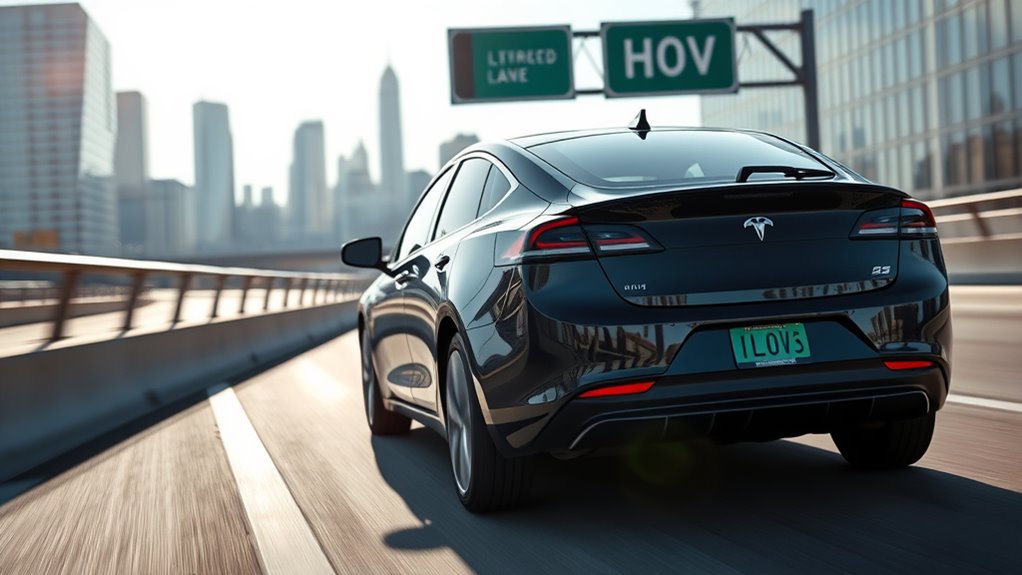
Yes, electric vehicles can often use HOV lanes with proven access, depending on your state’s regulations.
Many states allow EVs to enter these lanes with a single occupant, usually requiring special decals or permits, which you can obtain through the registration process.
These policies aim to promote eco-friendly transportation and reduce traffic.
If you’re interested in how these rules vary and how to qualify, you’ll find plenty of useful details ahead.
Key Takeaways
- Many states let EVs use HOV lanes with just a single occupant, but they usually need specific decals or permits.
- Eligibility depends on the state, often including plug-in hybrids and fully electric vehicles that meet emission standards.
- To get an HOV permit, you typically need proof of vehicle registration and might have to pay a fee. Regulations can vary from place to place.
- Allowing EVs in HOV lanes encourages more people to buy electric, speeds up commutes, and supports eco-friendly transportation.
- Keep up with your local policies so you stay compliant and avoid fines or penalties for unauthorized lane use.
What Are HOV Lanes and Why Do They Matter for EV Drivers?
High Occupancy Vehicle (HOV) lanes are special lanes reserved for vehicles with multiple passengers, like carpools, vanpools, and buses. These lanes are meant to cut down on congestion and encourage ride-sharing.
For EV drivers, the benefits of HOV lanes are pretty significant. Many regions let electric vehicles use these lanes even with just one person inside.
This can save you a lot of time during rush hour and make your EV commute much easier. Using HOV lanes helps you avoid slow-moving traffic in regular lanes and get to your destination quicker.
Plus, allowing EVs into HOV lanes supports environmentally friendly transportation. It promotes cleaner air and reduces emissions.
If you drive an electric vehicle, knowing the rules about HOV lanes can give you a real advantage, especially on busy days. It’s a smart way to make the most of your EV and enjoy smoother, more efficient trips.
Do All States Allow Electric Vehicles to Use HOV Lanes?
Laws about electric vehicle use in HOV lanes can vary quite a bit depending on where you are. So, it’s a good idea to check the specific rules in your state before hitting the road. Some states do allow EVs to use HOV lanes if they display special decals, but others might have restrictions or different requirements.
Basically, always double-check the local regulations to make sure you’re eligible. That way, you can avoid any fines or penalties and enjoy the benefits of those faster lanes without any worries.
State Laws Vary
While many states allow electric vehicles (EVs) to use HOV lanes, policies can vary a lot from one place to another. State regulations decide whether EVs qualify, and these rules can be quite different.
Some states let any EV with a clean air decal or specific certification access HOV lanes. Others restrict access to certain types of vehicles or require special permits. Policies can also change over time, adding or removing eligibility rules.
It’s really important to check your local laws to see what rules apply to your EV. Because policies differ so much, assuming you can use HOV lanes without verifying your state’s laws could lead to fines or violations.
Always stay updated on your state’s current regulations before counting on HOV lane access.
Exceptions and Restrictions
Not all states let electric vehicles use HOV lanes, and even in those that do, there are often specific rules and restrictions. Some states require electric cars to display a special decal or registration to qualify for lane access.
However, these exemptions aren’t the same everywhere. Some states only allow hybrid or alternative fuel vehicles, excluding pure electric cars. Lane restrictions can also change by time of day or route.
You might only be able to use HOV lanes during peak hours or on certain roads. Always check local rules to see if your electric vehicle qualifies and if any restrictions apply. This way, you stay compliant and avoid penalties.
Vehicle Eligibility Criteria
Eligibility for using HOV lanes varies from state to state, so it’s important to know if your electric vehicle qualifies in your area.
Each state sets its own eligibility criteria and access guidelines, which determine if EVs can use HOV lanes.
Generally, qualifying electric vehicles include plug-in hybrid and fully electric models that meet specific emission standards or have a certain number of occupants.
Some states require you to display a special decal or sticker on your vehicle to prove eligibility.
Always check your local transportation department’s rules, as they often update these criteria annually.
Understanding these guidelines helps you stay compliant and avoid fines.
Confirming your vehicle’s eligibility allows you to take full advantage of HOV lane benefits, saving time during your daily commute.
How Do State Policies Provide HOV Lane Access to EVs?
State policies play a key role in deciding whether electric vehicles (EVs) can access high-occupancy vehicle (HOV) lanes. Many states offer incentives for EVs to promote clean transportation, which often include HOV lane access.
These incentives usually come with specific rules for HOV lane use, outlining which EVs qualify—like plug-in hybrids or fully electric models. State agencies regularly review and update these policies to encourage EV adoption while keeping traffic flowing smoothly.
Some states allow all qualifying EVs to use HOV lanes regardless of occupancy, while others restrict access to certain vehicle types or require registration. The goal is to balance supporting electric vehicle use with maintaining lane efficiency.
What Criteria Must EVs Meet to Use HOV Lanes?
To qualify for HOV lane access, electric vehicles need to meet specific criteria set by transportation agencies. These often include emission standards and vehicle classifications.
The EV lane criteria usually specify that only certain types of EVs, like plug-in hybrids or fully electric cars, qualify for HOV access.
HOV access rules also often require your vehicle to meet particular emission standards, such as zero-emission or low-emission requirements.
Some regions designate eligible vehicles by vehicle classification codes, so your EV must fall within those categories.
Additionally, the vehicle may need to have a certain age or certification to qualify.
It’s really important to check your state’s specific EV lane criteria and HOV access rules because they can vary a lot.
Meeting these standards ensures your EV is eligible to use HOV lanes, helping you enjoy faster travel and less congestion during peak hours.
How Can EV Owners Get HOV Lane Permits?
Want to get an HOV lane permit for your electric vehicle? It’s pretty straightforward—just fill out an application with your local transportation agency. Before applying, double-check that you meet all the eligibility requirements, like providing proof that your vehicle is electric and is properly registered.
Once your application is approved, you’ll get a permit that lets you use the HOV lanes during the times they’re designated for such vehicles. Easy as that!
Application Process Overview
Getting an HOV lane permit for your electric vehicle is pretty straightforward, but there are a few steps to follow. First, you’ll want to check the application requirements, which usually include proof of EV registration and vehicle details.
The permit process involves filling out an online or paper form, providing the necessary documents, and paying any fees. Some areas might also ask for vehicle photos or extra verification to confirm you’re eligible.
Once you’ve submitted everything, authorities will review your application to make sure all the requirements are met. If approved, you’ll get your permit either by mail or electronically, so you can start using HOV lanes.
Keeping your documentation up to date and following regional rules makes the whole process easier.
Eligibility Requirements Explained
If you’re an electric vehicle owner interested in using HOV lanes, you need to meet specific eligibility requirements. Permitted vehicles usually include qualifying electric cars that meet emissions standards and are registered properly.
To get a permit, you’ll generally need to apply through your state’s transportation agency and provide proof of your vehicle type and registration. Some regions charge a fee, while others offer free permits for eligible EVs.
Once you’re approved, you’ll get a decal or permit that allows you to use HOV lanes even if you’re driving alone. Keep in mind that rules vary by location, so it’s a good idea to check your local agency’s guidelines.
Meeting these requirements makes sure you can enjoy the benefits of using HOV lanes as an EV owner.
Are There Restrictions on EVs in HOV Lanes?
Are electric vehicles (EVs) allowed to use HOV lanes without restrictions? Not always. While many states encourage EV use by granting HOV lane access, some have specific restrictions you need to follow. These rules are part of the guidelines to ensure fair and safe lane use.
Here’s a quick overview:
| State | EV Lane Restrictions |
|---|---|
| State A | EVs with decals only |
| State B | All EVs allowed, no decals needed |
| State C | Limited to certain hours |
| State D | No restrictions, full access |
Always check your local EV lane rules so you don’t get fined. Knowing the guidelines helps you take full advantage of your EV without running into issues or penalties.
How Do HOV Lane Policies Affect EV Adoption and Traffic?
HOV lane policies can really encourage more folks to go electric by giving them perks like faster travel times or dedicated lanes. It’s like a little nudge to choose EVs over traditional cars. Plus, when these policies are in place, they can help keep traffic flowing more smoothly for everyone.
Incentives Boost EV Use
In many regions, policies that grant HOV lane access to electric vehicles are strong incentives that encourage EV adoption. These benefits, along with charging incentives and tax credits, motivate you to switch to cleaner transportation.
The environmental impact of more EV use is significant, reducing emissions and improving air quality. Fuel savings and shorter commute times also help urban planning and make daily travel more efficient.
Such policies make owning an EV more attractive, boosting their effectiveness. For example, consider these incentives:
| Incentive Type | Impact |
|---|---|
| Charging incentives | Lower charging costs, faster adoption |
| Tax credits | Financial savings on vehicle purchase |
| Access benefits | Priority in traffic, reduced commute time |
| Environmental impact | Reduced emissions, cleaner air |
Traffic Flow Improvements
Policies that give electric vehicles access to HOV lanes can really help improve traffic flow, especially during busy hours. When EVs share lanes with other high-occupancy vehicles, overall congestion drops, making commutes smoother.
This dedicated lane access encourages more efficient vehicle movement, which reduces delays and makes travel quicker for everyone. By easing bottlenecks, HOV lane policies help prevent traffic jams and save time during rush hours.
As electric vehicles become more common, including them in HOV lanes can further optimize traffic patterns. These policies not only support EV adoption but also boost roadway performance.
Policy Impact on Adoption
Allowing electric vehicles to access high-occupancy vehicle lanes can significantly boost their adoption rates. Policy incentives like HOV lane access motivate drivers to choose electric options by making their commutes faster.
These policies also help tackle adoption challenges such as higher purchase costs and limited charging infrastructure. They make EVs more appealing and practical for everyday use.
| Policy Incentives | Adoption Challenges | Traffic Benefits |
|---|---|---|
| HOV lane access for EVs | Cost of EVs | Reduced congestion |
| Tax credits | Charging station scarcity | Shorter commute times |
| Priority parking | Limited public awareness | Better traffic flow |
Incentives directly encourage EV adoption by making electric cars more attractive. Meanwhile, easing traffic congestion benefits everyone.
Recent Changes and Future Trends in EV and HOV Lane Rules
Recent changes in EV and HOV lane rules show how authorities are adjusting to the rise of electric vehicles and the need for better traffic flow. Many areas have expanded EV lane access to include electric cars, encouraging more eco-friendly transportation.
HOV lane rules now often allow electric vehicles even if they don’t meet traditional occupancy rules. This change promotes cleaner travel and helps reduce congestion.
Looking ahead, more states are expected to adopt flexible policies. These could let EVs use HOV lanes regardless of how many passengers they have, especially during busy times. The goal is to make traffic smoother and encourage more people to drive electric.
Some regions are also trying dynamic HOV lane rules that change based on real-time traffic data. These adjustments aim to support EV use and improve overall traffic flow.
As these updates happen, it’s clear that transportation authorities see electric vehicles as a crucial part of sustainable mobility. Evolving HOV lane rules are designed to support that vision.
How to Check HOV Lane Access Rules in Your Area
Wondering how to find out if your electric vehicle qualifies for HOV lane access in your area? The first step is to review local traffic policies and HOV lane regulations. Many states and cities publish this information on their transportation department websites. Look for specific criteria regarding electric vehicles and any required decals or stickers.
You can also contact local transportation agencies directly or visit their offices for clarification. Some regions have online tools or maps that detail HOV lane rules, including hours of enforcement and qualifying vehicle types. Keep in mind that HOV lane regulations can change, so it’s vital to stay updated.
Moreover, community forums and local news outlets often share recent updates or policy shifts. Checking these resources guarantees you understand the exact requirements and avoid fines or penalties. Staying informed helps you make the most of your electric vehicle’s HOV lane privileges.
Key Takeaways for EV Drivers Using HOV Lanes
Understanding the key takeaways for EV drivers using HOV lanes can help you get the most out of your privileges and avoid penalties. One big advantage is the faster travel times and less congestion, which can save you a lot of time during commutes.
Make sure you’re familiar with the rules in your area, like required decals or stickers that show your vehicle qualifies. Staying updated on changing regulations can help you avoid costly fines or violations.
Always carry the necessary documentation or apps that confirm your vehicle’s eligibility for HOV lane access. Using HOV lanes responsibly not only makes your driving smoother but also supports sustainable transportation.
Keep in mind that rules can vary across regions, so checking local policies regularly will ensure you’re making the most of your EV’s privileges and enjoying all the benefits of HOV lane access.
Frequently Asked Questions
Can Non-Electric Hybrid Vehicles Use HOV Lanes With EVS?
Yes, non-electric hybrid vehicles can often use HOV lanes if they meet the local rules for hybrid vehicle access and lane use. Many areas allow hybrids with specific decals or tags to access HOV lanes, just like electric vehicles.
However, rules vary depending on where you are, so it’s a good idea to check your area’s regulations. If your hybrid qualifies, it can help you save time during busy hours and make your commute smoother.
Are There Penalties for Unauthorized Use of HOV Lanes by EVS?
When you use an HOV lane without meeting EV lane regulations, you risk penalties. HOV lane violations, whether by electric vehicles or others, can lead to fines and citations. These rules exist to keep traffic flowing smoothly.
If you’re unsure about specific EV lane regulations, check local signage and laws. Ignoring these guidelines might seem minor, but the consequences can add up quickly.
Stay informed and abide by the rules to avoid penalties and help keep traffic moving smoothly.
How Do HOV Lane Rules Differ Between Urban and Rural Areas?
HOV lane rules differ between urban and rural areas mainly because of urban congestion and rural accessibility.
In cities, HOV lanes often allow electric vehicles to use them with fewer passengers to help reduce urban traffic.
In rural areas, there’s usually less traffic, so HOV lanes might require more passengers or have stricter rules.
Always check local signs, as regulations can change to fit specific traffic conditions.
Do EV Charging Station Locations Influence HOV Lane Access?
Yes, EV charging station locations can influence HOV lane access, especially if local regulations require EVs to meet specific criteria like charging station accessibility to qualify for lane usage.
You should check lane usage regulations in your area, as some jurisdictions may grant HOV lane access to EVs only when charging stations are conveniently located nearby.
This helps ensure your vehicle remains compliant and maximizes the benefits of using HOV lanes.
Are There Plans to Expand HOV Lane Access for EVS Nationwide?
Think of HOV lane policies like the highway’s VIP pass. More states are planning to expand EV access, making it easier for electric drivers to skip traffic.
Currently, several states are considering nationwide expansions, driven by EV incentives and environmental goals. You’ll likely see more regions adopting these policies.
This will give electric vehicle owners a smoother ride and encourage cleaner transportation options across the country.
Conclusion
Maneuvering HOV lanes with your electric vehicle can save you time, reduce stress, and promote eco-friendly driving. Knowing the rules, meeting the criteria, and staying updated on policy changes helps you make the most of these lanes.
Understanding how to qualify and what policies are in place allows you to drive confidently. Staying informed about updates ensures you’re always aware of any changes that could affect your access.
By knowing where you stand and how policies evolve, you can enjoy smoother commutes and contribute to cleaner air. Electric vehicles with proven access to HOV lanes make every trip greener and more efficient.