Unlocking the Power: All About EV Battery Management for Optimal Performance and Longevity
Many EV owners know the frustration of worrying about their battery’s health and longevity. You’re not alone—keeping your battery performing at its best can feel overwhelming.
To access your EV’s full potential, you need a reliable Battery Management System (BMS) that monitors and controls your battery’s health, safety, and performance. It balances cells, manages temperature, and optimizes charging, helping extend battery life.
A good BMS detects issues early and adapts in real time to prevent damage. Staying informed about features, maintenance tips, and latest trends can guarantee your EV runs smoothly and lasts longer.
Keep exploring how to maximize your battery’s lifespan and get the most out of your EV.
Key Takeaways
- An EV Battery Management System (BMS) keeps an eye on battery health, safety, and efficiency by tracking data in real time.
- Proper cell balancing and thermal management help prevent overheating and overcharging, which extends the battery’s lifespan.
- Optimized charging and discharging strategies, along with regular software updates, make the battery perform better and last longer.
- Safety features like fault detection, emergency shutdowns, and temperature controls help prevent thermal runaway and damage.
- Emerging tech like predictive analytics and wireless communication boost battery reliability and make maintenance easier.
What Is an EV Battery Management System and Why Is It Essential?
An EV Battery Management System (BMS) is the key technology that keeps an eye on and controls your electric vehicle’s battery pack. It makes sure your battery runs safely and efficiently, helping you get the most out of it.
The BMS tracks voltage, temperature, and how much charge is left. It helps prevent problems like overheating or overcharging that could harm the battery. By managing these factors, it ensures your EV runs smoothly and conserves power.
The BMS monitors voltage, temperature, and charge to prevent damage and keep your EV running smoothly.
This system also balances each cell within the pack, so they wear evenly and last longer. Without a BMS, your battery could degrade faster, lowering your range and performance.
Basically, the BMS acts as the brain of your EV’s battery. It boosts safety, reliability, and energy efficiency, letting you maximize your battery’s lifespan and performance.
How Does an EV BMS Monitor Battery Health and Performance?
Ever wonder how your EV’s BMS keeps tabs on your battery’s health and performance? It uses advanced diagnostics to constantly monitor key metrics like voltage, current, and temperature.
These measurements help detect any irregularities or signs of aging early on. The BMS gathers real-time data from individual cells to ensure they’re operating within safe limits.
It also tracks capacity and state of charge, giving you insights into how much energy remains and how well the battery is holding up over time. When any parameter deviates from normal ranges, the system triggers alerts or adjusts operations to prevent damage.
This continuous monitoring helps optimize performance, extend battery life, and ensure safety. By analyzing these diagnostics and metrics, the BMS keeps your battery healthy, reliable, and efficient—giving you peace of mind on every drive.
What Are the Main Components Inside an EV BMS?
Inside an EV BMS, you’ll find some pretty important parts. First up, there are the battery cells and modules—they’re basically where the energy is stored. Then, there are sensors that keep an eye on things like voltage and current. These sensors send real-time data back to the system so it can make sure everything’s working safely and smoothly.
And it doesn’t stop there. The BMS also has a thermal management system that helps keep the battery cool. That way, it doesn’t overheat, which can help the battery last longer and stay in good shape over time.
Battery Cells and Modules
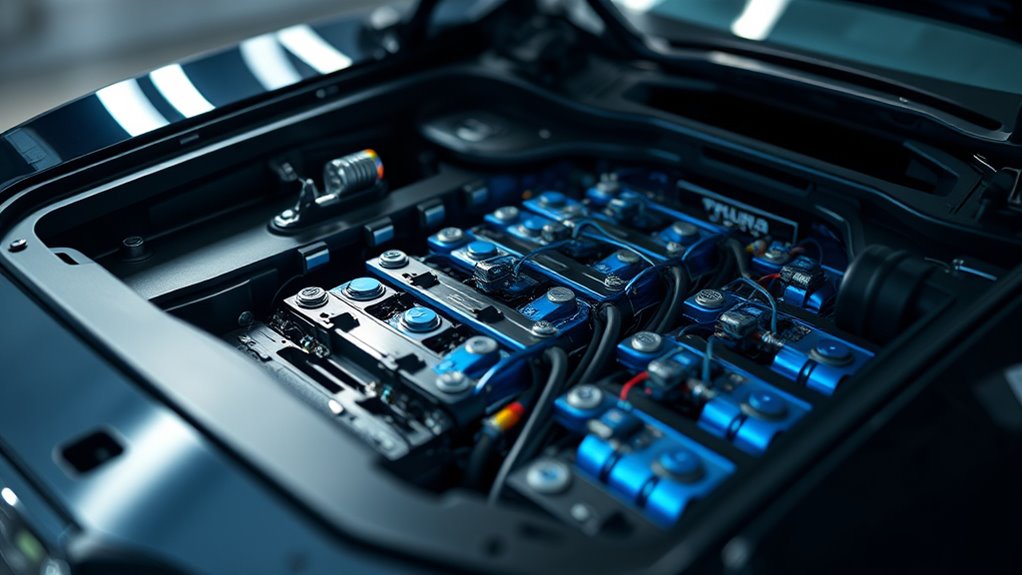
Battery cells and modules are the fundamental building blocks of an EV battery management system (BMS). The cell chemistry determines how your battery stores and releases energy, affecting performance, safety, and lifespan. Different chemistries, like lithium-ion variants, offer unique benefits and challenges.
Module design organizes individual cells into manageable units, making it easier to monitor and balance the battery. This design influences heat dissipation, reliability, and ease of maintenance. Your BMS continually assesses each cell’s condition within these modules, ensuring peak operation.
Voltage and Current Sensors
Voltage and current sensors are essential parts of your EV’s battery management system. They help monitor the battery’s health and performance in real time.
These sensors provide vital data for voltage regulation, current measurement, and system calibration, making sure the readings are accurate. High sensor accuracy is key to effective data integration, which supports performance analysis and safety measures.
They also enable real-time monitoring, so your BMS can quickly respond to any changes. Signal processing helps refine raw data, boosting energy efficiency and system reliability.
Key features include:
- Precise voltage and current measurements for peak performance
- Seamless integration with data systems for real-time insights
- Support for safety protocols through accurate monitoring
Thermal Management System
Effective thermal management is key to keeping EV batteries performing well and staying safe. Inside an EV BMS, you’ll find components focused on thermal efficiency, like cooling systems and heat dissipation methods.
These include cooling fluids such as liquids or air, which help regulate temperature through heat exchange. This prevents thermal cycling that can damage the batteries.
Insulation materials also play a role by containing heat and improving temperature control. This ensures the battery maintains a steady, safe temperature for optimal performance.
Active cooling methods like liquid cooling plates or airflow systems help transfer heat more efficiently and conserve energy. Sensors constantly monitor temperature levels so the system can adjust cooling in real time.
This integrated setup keeps the battery within safe temperature limits, extends its lifespan, and boosts overall thermal efficiency.
How Does the BMS Optimize Charging and Discharging for Better Battery Life?
To extend the lifespan of an electric vehicle’s battery, the Battery Management System (BMS) actively monitors and controls how charging and discharging happen. It uses advanced algorithms to optimize charging strategies, making sure the battery charges at safe rates and avoids overcharging.
During discharge cycles, the BMS manages power flow to prevent deep discharges that can hurt the battery’s health. It keeps the battery in good shape by controlling how much energy is taken out and when.
Key methods include regulating charge rates to reduce stress on the cells, limiting the maximum and minimum state of charge to slow down aging, and balancing individual cell voltages to keep performance uniform.
Key Features of a Reliable EV Battery Management System
A reliable EV battery management system really depends on accurately figuring out the state of your battery so it can perform at its best. It keeps an eye on each individual cell to make sure they stay balanced, which helps prevent uneven wear and extends the overall life of your battery. Plus, it comes with strong safety features that protect you from potential hazards, making your driving experience safer and more dependable.
Accurate State Detection
Accurate state detection is the cornerstone of a reliable EV battery management system, ensuring you get precise insights into the battery’s health and performance. You rely on advanced state estimation techniques to monitor parameters like state of charge (SOC) and state of health (SOH).
These methods improve battery accuracy by reducing errors and providing real-time data. To achieve this, focus on implementing robust algorithms that adapt to changing conditions and using high-quality sensors for precise readings.
Continuously refining estimation models is also key for better accuracy. These strategies elevate your battery’s reliability, maximize lifespan, and optimize performance.
Accurate state detection allows you to make informed decisions about charging, discharging, and maintenance. Ultimately, it helps reveal your EV’s full potential.
Balanced Cell Monitoring
Balanced cell monitoring is key to keeping your EV battery working at its best and lasting longer. It makes sure each cell stays within safe voltage and temperature limits, preventing early wear and tear.
You do this with different cell balancing techniques, mainly passive and active methods. Charge equalization helps by balancing the charge across all cells, so none get overcharged or undercharged.
Passive balancing gets rid of excess energy as heat, while active balancing moves energy between cells more efficiently. Modern EV battery systems keep an eye on cell voltages and temperatures all the time.
They adjust the balancing process as needed, helping to keep the battery balanced and performing well. This not only boosts overall performance but also extends the lifespan of your battery.
In the end, reliable cell monitoring and balancing mean your EV stays dependable and efficient for the long haul.
Robust Safety Features
Robust safety features are crucial for ensuring your EV battery works reliably and keeps everyone safe. A good Battery Management System (BMS) uses advanced safety protocols to prevent issues like overheating, overcharging, and short circuits.
These protocols detect unsafe conditions quickly and respond instantly. Key safety features include:
- Emergency shutdowns that cut power immediately if dangerous situations are detected, helping prevent damage or accidents.
- Temperature control systems that monitor and adjust battery temperature to avoid thermal runaway.
- Fault detection capabilities identify cell imbalances or failures early, triggering alerts or shutdowns.
Together, these features make your driving experience safer and more reliable, keeping your EV’s battery secure throughout its life.
Tips to Keep Your EV Battery Performing at Its Best Over Time
To keep your EV battery performing at its best over time, it’s important to develop good charging habits. Avoid frequent deep discharges and try to keep your charging sessions within recommended ranges to protect the battery’s health.
Temperature control is key. Park in shaded areas or garages to prevent overheating or freezing, both of which can hurt performance. Regular maintenance and using software monitoring tools can help you keep an eye on your battery’s condition.
Adjust your driving habits to reduce stress on the battery. Avoid rapid acceleration and high-speed driving whenever possible. Following usage guidelines for peak efficiency is also a good idea.
When replacements are needed, consider battery recycling programs. Maintaining energy efficiency through mindful charging and driving can help extend your battery’s lifespan.
Tracking your battery’s performance regularly helps you catch issues early. Timely replacements ensure your EV stays reliable and efficient over time.
How Software Updates Improve Your EV BMS and Battery Longevity
Keeping your EV battery healthy isn’t just about how you charge and drive; it also depends on the software managing your battery system. Regular updates, including software improvements and battery-specific updates, are key to keeping things running smoothly and prolonging your battery’s life.
These updates fix bugs, boost efficiency, and fine-tune the algorithms that control your battery management system. When your EV gets these updates, it can:
- Improve the accuracy of battery monitoring, helping prevent unnecessary wear.
- Enhance thermal management to reduce overheating risks.
- Extend overall battery life by refining charging and discharging protocols.
Signs Your EV’s BMS Might Be Having Issues
Have you noticed your EV acting strangely or showing unexpected warning signs? These battery alerts could mean your BMS is having issues. You might see sudden drops in range, inconsistent charging, or warnings on your dashboard.
Watch for strange EV behavior and warning signs indicating potential BMS issues like range drops or dashboard alerts.
Other signs include overheating during charging or driving, or the vehicle shutting down unexpectedly. If you notice any of these, it’s a good idea to check some BMS troubleshooting tips.
Start by checking for software updates that might fix bugs or calibration issues. Also, inspect for loose connections or damaged sensors since they can interfere with BMS performance.
Keep an eye on the battery’s temperature and voltage readings. Irregular data could be a sign of a problem. Addressing these signs early can help prevent more serious damage.
Regular maintenance and quick attention to warning signs can extend your battery’s lifespan. It also helps keep your EV running smoothly and at its best.
What’s Next? Emerging Trends in EV Battery Management Technology
As electric vehicle technology advances, emerging trends in battery management systems (BMS) are set to transform how your EV monitors and maintains battery health. Expect innovations like predictive analytics, which will anticipate issues before they happen, boosting safety and extending battery life.
Wireless communication will enable real-time data exchange, making lifecycle management more efficient and allowing for smoother updates. Modular design approaches will make upgrades and repairs easier, helping batteries last longer and supporting second-life uses.
Improvements in energy density will increase your vehicle’s range, while smart charging systems will optimize power use and reduce battery stress. Looking ahead, BMS will integrate better recycling practices, making disposal more sustainable.
These advancements will not only enhance performance but also promote sustainability and resource efficiency. They’ll help ensure your EV stays reliable, eco-friendly, and cost-effective for years to come.
Practical Steps to Unlock Your EV Battery’s Full Potential
Advancements in battery management technology now make it easier to get the most out of your EV’s battery performance and lifespan. To unlock its full potential, focus on good battery maintenance and smart charging habits.
Try to avoid deep discharges often and keep your charge level between 20% and 80%. Temperature control is also key—park in shaded areas or garages to prevent overheating or freezing, which can damage your battery.
Avoid deep discharges; keep your battery between 20% and 80% for optimal health.
Software features like regenerative braking and performance tuning can help recover energy and extend your battery’s life. Adjust your driving style by accelerating smoothly and maintaining steady speeds to reduce stress on the battery.
Use energy recovery techniques to capture power during deceleration, boosting your efficiency. Remember to regularly update your vehicle’s software to benefit from the latest battery management improvements.
Following these simple steps will help you optimize your EV’s performance, reduce battery degradation, and extend its lifespan for years to come.
Frequently Asked Questions
How Does Temperature Affect EV Battery Management and Performance?
Temperature plays an essential role in EV battery management because thermal dynamics directly influence battery chemistry. When it’s too hot, the battery risks overheating, which can degrade cells and reduce lifespan.
Conversely, cold temperatures slow chemical reactions, decreasing performance and range. Proper thermal regulation keeps temperatures within ideal ranges to ensure your battery performs well.
It also helps prolong the battery’s longevity and prevents damage caused by thermal stress. Keeping your EV’s battery within safe temperatures is key to maintaining its efficiency and health.
Can BMS Prevent All Battery Failures or Only Detect Them?
A BMS mainly detects potential issues through battery diagnostics, helping prevent failures rather than stopping all of them outright. It keeps an eye on parameters like voltage, temperature, and current to spot early signs of trouble.
While it’s a pretty effective failure prevention tool, it can’t guarantee that all battery failures will be prevented. Regular maintenance and proper usage are also important to keep your EV’s battery healthier longer.
What Safety Features Are Integrated Into Modern EV BMS?
Modern EV BMS integrates safety features like advanced safety protocols, thermal management, and monitoring of battery health and charging cycles. These systems actively prevent overheating, overcharging, and short circuits, ensuring safe operation.
They also detect early signs of potential issues and trigger protective measures. By managing thermal conditions and maintaining ideal battery health, these safety features help extend battery longevity and prevent failures.
All of this work together gives you peace of mind during every drive.
How Do Different Driving Habits Impact BMS Efficiency?
Your driving habits shape your EV’s battery health like an artist shaping clay. Aggressive acceleration and frequent hard braking put extra strain on the BMS, which can reduce efficiency.
Driving at high speeds or on hilly routes uses more energy. Meanwhile, gentle acceleration and smooth braking help promote regenerative braking, helping extend the battery’s life.
Heavy loads and extreme weather conditions put additional stress on the system. By choosing better routes and moderating your speed, you help your BMS perform at its best, ensuring longevity and peak performance.
Are There Any Environmental Factors That Influence BMS Accuracy?
Environmental factors definitely influence your BMS accuracy. Humidity can cause corrosion, which might mess with the system’s readings.
Altitude changes can affect air pressure and cooling efficiency, impacting how well your battery stays cool.
Extreme temperatures, whether hot or cold, also play a big role—they can change the battery chemistry and lead to inaccurate readings.
Plus, chemical reactions inside the battery speed up with temperature shifts, which can alter performance.
Conclusion
Think of your EV’s battery management system as the conductor of a symphony, making sure every element plays in harmony. When it works well, your battery delivers top performance and lasts longer.
Regular updates and attentive care keep this orchestra running smoothly, preventing dissonance. Staying on top of your BMS helps avoid issues and keeps everything in tune.
By understanding and maintaining your BMS, you’re not just extending your battery’s life—you’re creating a masterpiece of efficiency and reliability. This ensures your EV stays humming beautifully for miles to come.