Preventing Costly Repairs: How to Address Power Steering Fluid Leaks Under Your Car
Many car owners worry about costly repairs, especially when it comes to power steering fluid leaks. You’re not alone—these issues can sneak up, leaving you with unexpected expenses and frustration.
Luckily, there are simple steps to catch problems early and keep your steering smooth.
To prevent costly power steering repairs, regularly check fluid levels and condition, ensuring they stay within recommended marks. Look for signs like whining noises, stiffness, or puddles under your car.
Inspect hoses, fittings, and seals for leaks or damage, tightening loose connections or replacing worn parts. Using stop leak additives can be a temporary fix, but replacing damaged hoses or seals offers a more durable solution.
Keep up with maintenance—if you do, you’ll learn how to spot issues early and fix them promptly.
Key Takeaways
- Regularly check hoses, fittings, and the pump for any signs of leaks or damage. Catching issues early can save you a lot of trouble later.
- Keep your power steering fluid at the right level and replace old or dirty fluid quickly. This helps prevent leaks and keeps everything running smoothly.
- Tighten any loose fittings and swap out worn seals or hoses before leaks become a bigger problem. Small fixes now can save you money down the road.
- If you notice minor leaks, you can try using stop leak additives temporarily. But it’s best to focus on repairing or replacing the damaged parts.
- If leaks keep happening or your steering feels off, don’t hesitate to get professional help. Addressing these issues early can prevent costly repairs later.
How to Recognize the Signs of Power Steering Fluid Leaks
Recognizing the signs of a power steering fluid leak early can save you time and costly repairs. One of the first indicators is a change in fluid color. Fresh fluid is usually clear or amber, but if you notice a darker, dirty hue, it might be leaking or contaminated.
Early signs of power steering fluid leaks include color changes and contamination.
You might also hear unusual steering noise, like whining or squealing sounds when turning the wheel. This often points to low fluid levels. Plus, if your steering feels harder or less responsive, it’s a sign that the fluid isn’t providing proper lubrication.
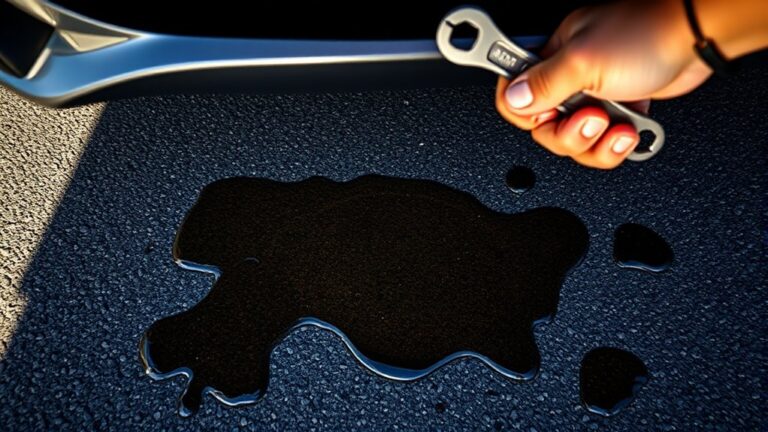
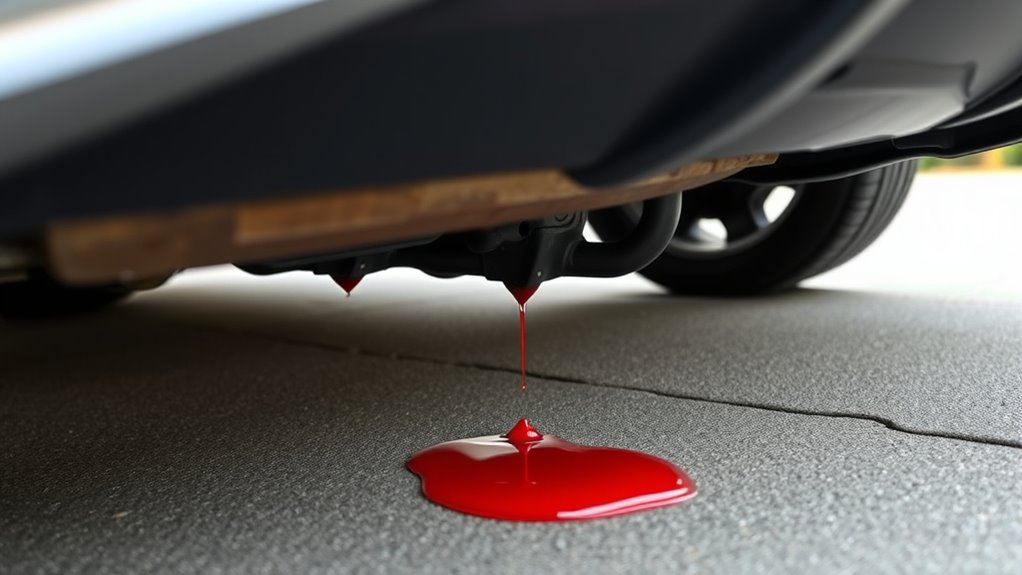
Keep an eye out for puddles or spots underneath your car, especially near the front wheels. These could be leaks. Regularly inspecting your power steering fluid and listening for steering noises can help you catch leaks early.
Doing this can prevent more extensive damage and ensure your vehicle remains safe and easy to handle.
What Causes Power Steering Fluid Leaks?
Power steering fluid leaks usually happen because the hoses get worn out or damaged over time. You know, as the vehicle ages, those hoses can crack or develop tiny holes, which let the fluid seep out.
Sometimes, the seals or gaskets can be the culprits, especially if they’re old or weren’t installed quite right in the first place. When these seals start to fail, fluid can leak and cause steering problems.
And don’t forget about the fittings—if they’re loose or broken, fluid can escape through those gaps too. All of these issues can lead to leaks and make steering less smooth or even hard to control.
Worn or Damaged Hoses
Worn or damaged hoses are a common cause of power steering fluid leaks because they handle the high-pressure fluid circulating through your steering system. Over time, heat, vibration, and road debris can cause hoses to crack, bulge, or develop holes.
These issues weaken the hose’s integrity, leading to leaks that can affect steering performance. Regularly inspecting for signs like fluid drips, cracks, or worn spots is essential to prevent leaks.
If you notice any damage, replacing the hose is necessary to keep the system working properly. Addressing worn hoses quickly helps avoid costly repairs and keeps your steering smooth and responsive.
Proper maintenance of hoses preserves your vehicle’s steering system and helps extend its lifespan.
Faulty Seals or Gaskets
Faulty seals or gaskets often cause power steering fluid leaks because they create a tight, leak-proof seal between different parts of the steering system. Over time, they can wear out due to heat, age, or exposure to dirt and debris.
When seals weaken or crack, fluid starts to escape, leading to leaks. Replacing gaskets is crucial when you notice leaks or your steering feels less responsive. Regular inspections help catch worn seals early before they cause bigger problems.
Good seals and gaskets keep the system pressurized and prevent fluid loss. Fixing seal issues quickly can save you money and keep your power steering working smoothly.
Loose or Broken Fittings
One common cause of power steering fluid leaks is loose or broken fittings, which connect various hoses and components in the system. Fitting types vary, including compression fittings, threaded fittings, and quick-connects, all of which can loosen over time or become damaged.
When fittings aren’t secure, fluid can seep out, leading to leaks and reduced steering performance. Regularly inspecting fittings helps catch issues early before they get worse.
If you find a loose fitting, tightening it might solve the problem. However, broken or severely damaged fittings need repair, like replacing the fitting or reinstalling new connectors.
Using the right tools and ensuring compatibility with your vehicle’s system are essential for effective repairs. Addressing loose or broken fittings quickly can prevent more extensive damage and costly repairs later on.
Where Are Common Leak Locations in Your Vehicle?
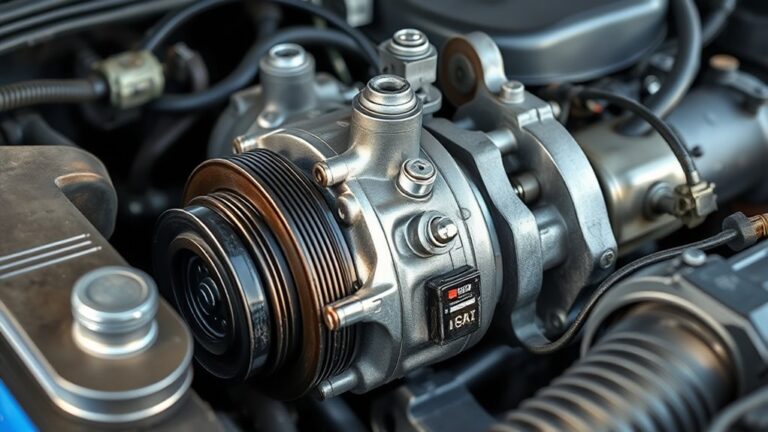
Power steering fluid leaks often happen at specific, easy-to-spot locations in your vehicle. The most common leak points are the power steering pump, hoses, and fittings.
Over time, worn seals or loose connections can cause fluid to escape, which can affect leak prevention and fluid levels. The steering rack is another common spot, especially around the inner boots where fluid might seep out.
Worn seals and loose connections cause leaks, especially around the steering rack’s inner boots.
The steering gear or the reservoir can also develop cracks or leaks, impacting how your steering feels and works. Regular inspections help catch leaks early and save you money on repairs.
Keep an eye on the power steering hoses for cracks, bulges, or wet spots. Make sure all fittings are tight. Addressing leaks quickly helps preserve fluid levels and prevents damage to other components.
Understanding these common leak spots makes it easier to maintain your steering system and avoid costly repairs down the road.
How to Check Your Power Steering Fluid Levels and Condition
Checking your power steering fluid levels and condition is an easy step that can help prevent leaks from causing steering problems. Regular fluid checks keep your system working smoothly and can catch issues early.
To check the fluid, find the power steering fluid reservoir under the hood, usually near the engine. Remove the cap and look at the fluid level, comparing it to the “Min” and “Max” marks.
The fluid should be clear or slightly translucent and pink or red in color. If it looks dark, cloudy, or has debris, it might need to be replaced. Also, check for a burnt smell, which can mean contamination.
Keeping the fluid at the proper level and in good condition is key to preventing leaks. Low or dirty fluid can cause extra wear or damage to your steering components.
Make checking your power steering fluid part of your regular maintenance routine. This will help keep your steering system working well and avoid costly repairs down the line.
Step-by-Step: How to Inspect for Power Steering Leaks
Sure! Here’s a version with a more conversational tone:
First, take a look at the usual suspects—hoses, fittings, and the pump. These are the spots where leaks tend to happen, so give them a good inspection. Next, check your power steering fluid level; if it’s lower than it should be, that’s a sign there might be a leak somewhere. Lastly, take a peek underneath your car to see if there are any puddles or wet spots. That kind of evidence can really point you toward where the leak is coming from.
Locate Potential Leak Areas
Before you start inspecting, it’s helpful to know the common spots where power steering fluid leaks happen. Begin by visually checking the power steering pump, hoses, and connections for signs of fluid seeping or wetness.
Look around the steering rack and gear box, since leaks often start there. Also, examine the fluid reservoir and its hoses for cracks or loose fittings.
While inspecting, keep an eye out for puddles or drips under the vehicle, especially near these parts. Dark, oily spots are a good sign of a leak. Using a flashlight can help you spot small leaks or cracks more easily.
Pinpointing these areas helps you focus your inspection. This way, you can decide if a quick repair will do or if more extensive work is needed before the problem gets worse and costs more to fix.
Check Power Steering Fluid Level
Start by locating the power steering fluid reservoir, which is usually a translucent container with a cap labeled “Power Steering” or something similar. Check the fluid level regularly as part of your routine maintenance.
Make sure the fluid is within the recommended range marked on the reservoir. Low fluid levels can cause poor steering performance and may lead to leaks. If the fluid is below the minimum line, top it off with the correct type of power steering fluid for your vehicle.
Be careful not to overfill, as that can cause other issues. Regularly inspecting the fluid level helps you catch leaks early and keeps your steering working smoothly. Keeping the fluid at the right level minimizes wear on steering parts and helps avoid costly repairs later on.
Examine Under Car Surface
When inspecting under your car for power steering leaks, park on a level surface and turn off the engine. Start by looking for fluid stains around the power steering parts, hoses, and the reservoir.
Check for any fresh, shiny leaks or wet spots that might show a leak. Keep an eye out for pooling fluid or dark streaks along the undercarriage. Be thorough—small drips can turn into bigger problems quickly.
Feel for dampness or wetness on hoses and fittings. Look for discoloration or streaks that suggest fluid flow. Notice if fluid is pooling or dripping from specific spots.
Stay alert to any changes in the surface under your car over time.
Preventive Tips to Avoid Power Steering Fluid Leaks
Regularly inspecting your power steering system can catch small issues before they turn into leaks. Consistent fluid maintenance is key to preventing leaks.
Check the power steering fluid level often and top it off with the recommended fluid type. If you notice the level drops, look for potential leaks or other problems.
Keep the fluid clean by replacing it as per your vehicle’s maintenance schedule. Dirty or degraded fluid can damage components and cause leaks.
Pay attention to hoses and connections; tighten or replace any that show signs of wear or corrosion. Avoid overfilling the reservoir, as excess pressure can damage seals.
Use high-quality fluids designed for your system to ensure proper lubrication and reduce leak risks. Following these simple tips can help prevent costly power steering fluid leaks.
When Should You Seek Professional Help for Power Steering Leaks?
If you spot a steady leak or notice that steering feels off—or maybe it’s becoming harder to turn the wheel—it’s a good idea to see a professional. Don’t just brush it off; ignoring these signs can lead to bigger steering issues or even damage to your vehicle.
It’s better to get it checked out sooner rather than later. Catching and fixing power steering leaks early can save you a lot of money and hassle down the road. So, when in doubt, it’s worth getting a pro to take a look!
Persistent Leak Signs
Persistent power steering fluid leaks are a clear sign that you shouldn’t delay getting professional help. If you notice puddles under your car or a drop in steering responsiveness, it’s time to focus on leak detection and fluid maintenance.
Ignoring these signs can lead to more serious damage and costly repairs. You should seek help if you see constant fluid puddles that grow larger or if you have difficulty turning the wheel smoothly.
Other warning signs include unusual whining noises when steering or a burning smell near the front of your car. These symptoms mean your leak might be getting worse or your system needs urgent attention.
Addressing leaks early can save you money and prevent dangerous driving situations. Don’t wait—trust professionals to diagnose and fix the problem quickly.
Difficulty Steering
When steering gets noticeably difficult or feels inconsistent, it’s a clear sign you should seek professional help for your power steering system. Poor steering performance often points to low or contaminated fluid, which can happen from leaks or not maintaining the fluid properly.
If you notice it takes more effort to turn or the steering feels stiff, don’t ignore it. These signs suggest your system isn’t working right. Catching fluid leaks early helps keep steering smooth and prevents more damage.
Regular fluid maintenance is key. It makes sure your power steering fluid stays at the right level and stays clean, which keeps your steering responsive. When steering problems stick around, it’s best to get a professional inspection.
Getting help early can save you from costly repairs and keeps your steering system running reliably.
How to Fix Minor Power Steering Leaks Yourself
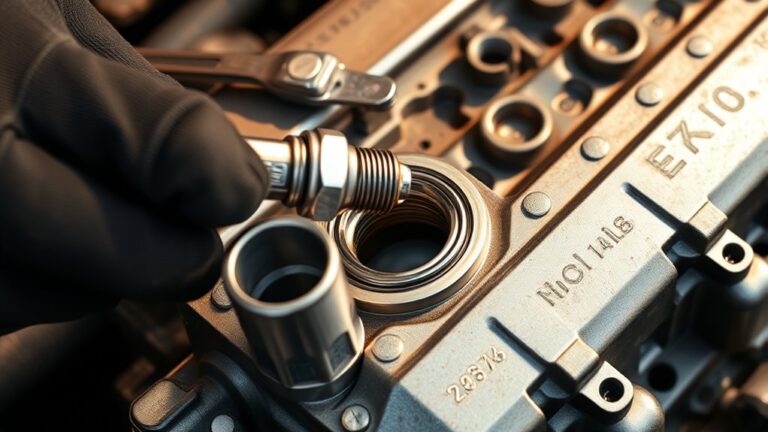
Fixing minor power steering leaks yourself can save you time and money. With some basic DIY solutions and the right repair tools, you can address small leaks before they get worse.
Start by inspecting the power steering hoses and connections for cracks or loose fittings. Tighten any fittings that may have become loose over time. If you notice a small crack, using a power steering stop leak additive can be a quick temporary fix.
For more durable repairs, you might need to replace a damaged hose or seal. Remember to stay safe by wearing gloves and working in a well-ventilated space.
Keep these tips in mind: Use a clean rag to wipe away excess fluid, gather your repair tools ahead of time, and follow the manufacturer’s instructions for replacement parts. After finishing, check for leaks to ensure everything is sealed properly.
Taking these simple steps can help prevent leaks from turning into costly problems later on.
Why Regular Maintenance Saves You Money on Power Steering Repairs
Regular maintenance of your power steering system can really help you avoid leaks and costly repairs later on. Keeping up with a consistent schedule means you catch problems early, saving you money over time.
Checking fluid levels, hoses, and connections regularly helps prevent small issues from turning into big, expensive repairs. Staying proactive is the best way to keep costs down.
Here’s a quick look at what to focus on:
| Maintenance Task | Benefits |
|---|---|
| Check fluid levels regularly | Prevents leaks and system damage |
| Inspect hoses and connections | Stops leaks before they happen |
| Change power steering fluid as recommended | Keeps the system running smoothly |
| Watch for unusual noises or stiffness | Detects early warning signs |
| Schedule professional inspections | Ensures everything stays reliable |
Questions to Ask Your Mechanic About Power Steering Leaks
Ever wonder what specific questions you should ask your mechanic about power steering leaks? Being informed helps you understand the issue and guarantees proper fluid maintenance. Start by asking about the mechanic’s expertise—do they have experience diagnosing power steering problems?
Then, inquire about the root cause of the leak to prevent future issues. Don’t forget to ask if the fluid needs replacing or topping off, as proper fluid levels are essential. Finally, ask about the long-term health of your power steering system and any signs to watch for.
Here are key questions to reflect on:
- *How experienced are you with power steering system repairs?*
- *What’s causing the leak, and how can we fix it?*
- *Is my current fluid level sufficient, or does it need a flush?*
- *What symptoms should I watch for to avoid costly repairs?*
These questions help you gauge the mechanic’s expertise and ensure your fluid maintenance stays on track.
Frequently Asked Questions
How Much Does It Typically Cost to Repair a Power Steering Fluid Leak?
Repair costs for a power steering fluid leak usually fall between $150 and $400. The exact amount depends on how severe the leak is and the types of fluid involved.
You might end up paying more if hoses or the power steering pump need to be replaced. The price covers diagnosis, parts, and labor.
Regularly checking your fluid level can help catch leaks early. This can save you money and prevent further damage to your steering system.
Can Driving With a Leak Cause Damage to Other Vehicle Components?
Driving with a power steering fluid leak can cause significant damage to your vehicle. Fluid contamination might spread and affect other parts like the pump and hoses, leading to costly repairs.
Low fluid levels can make steering harder and less responsive, which increases safety risks. So, it’s important to fix leaks quickly and check your power steering fluid regularly to keep everything running smoothly.
Are There Specific Driving Habits That Increase the Risk of Leaks?
They say, “A stitch in time saves nine,” and that’s true for your car’s power steering. Aggressive turning and driving on rough roads put extra stress on your steering system, which can increase leak risks.
You might not notice early signs, but these habits can weaken hoses and seals over time. Drive smoothly and avoid harsh maneuvers to protect your power steering.
Doing so helps prevent costly leaks from developing and keeps your car running smoothly.
How Long Can I Drive With a Power Steering Fluid Leak Before Repairs Are Urgent?
You shouldn’t drive long with a power steering fluid leak before repairs are essential. Fluid leak symptoms like difficulty turning the wheel or whining noises indicate a leak.
Leak detection is vital; if you notice these signs, stop driving and get it checked. Continuing to drive can damage your power steering pump or rack, leading to costly repairs.
Address the issue promptly to keep your steering responsive and safe. It’s best not to delay repairs to avoid bigger problems down the line.
What Are the Latest Tools Used for Diagnosing Power Steering Leaks?
When it comes to leak detection, the latest diagnostic tools really make a difference. Electronic pressure testers, UV dye kits, and infrared leak detectors are all popular options now.
These tools help you pinpoint power steering leaks quickly and accurately. They allow you to identify the exact source without guesswork, which saves you both time and money.
Staying ahead of issues means you won’t get caught off guard. Addressing leaks early can prevent them from turning into costly repairs down the road.
Conclusion
Ignoring power steering fluid leaks might save you a few bucks now, but it’s a sneaky way to turn a small fix into a costly repair.
So, next time you notice a leak, don’t brush it off—because who wouldn’t want to spend more on repairs instead of catching it early?
Stay vigilant, tackle minor issues early, and enjoy the irony of saving money by simply paying attention.
Your wallet and steering wheel will thank you. Addressing power steering fluid leaks promptly is key to avoiding bigger, more expensive problems down the road.