Car Engine Parts And Functions Disassembled and Explained
Are you often confused about how your car engine actually works? You’re not alone—many people struggle with understanding the complex parts under the hood. Knowing your engine parts can make a big difference in how you maintain and troubleshoot your vehicle.
Understanding your car engine means knowing its main parts and how they work together. The engine assembly includes pistons, which move up and down to generate power, and a crankshaft that turns this motion into rotation.
Valves control airflow for proper combustion, and the cylinder head covers these components. The cooling and lubrication systems keep everything running smoothly.
By exploring these parts further, you’ll learn how each one contributes to your vehicle’s performance and longevity.
Key Takeaways
- The engine assembly includes cylinders, pistons, crankshaft, valves, and cylinder head, each with specific roles in power generation.
- Pistons move within cylinders to convert fuel combustion into linear motion, which then drives the crankshaft for rotational power.
- The crankshaft transforms the pistons’ linear motion into rotational energy, powering the vehicle.
- Valves control air intake and exhaust gases, and their precise timing is critical for optimal engine function.
- Cooling and lubrication systems keep the engine temperature in check and reduce friction, helping prevent damage and keeping everything running smoothly.
What Are the Main Components of a Car Engine?
A car engine is a complex machine made up of several essential parts that work together to produce power. The engine assembly includes key components like the cylinders, pistons, crankshaft, and valves, each playing a significant role.
The materials used in these parts are important. For example, pistons are often made from aluminum for lightweight strength, while the crankshaft is usually forged steel for durability.
Pistons are typically aluminum for lightweight strength, while forged steel ensures durability for the crankshaft.
The cylinder head, which is typically crafted from aluminum or cast iron, contains the intake and exhaust valves that control airflow and combustion. Connecting rods link pistons to the crankshaft, transmitting force.
The camshaft, made from hardened steel, manages valve timing. Understanding the materials helps you see how each part withstands high temperatures, pressure, and friction.
When assembled correctly, these components form a reliable engine that powers your vehicle efficiently and smoothly.
How Do Pistons Generate Power in Your Car’s Engine?
Pistons are crucial for turning fuel into motion by moving up and down inside the engine’s cylinders. Their design helps them withstand high pressure and heat while efficiently transferring force.
When fuel combusts in the cylinder during the power stroke, it creates a burst of energy that pushes the piston downward. This movement is what generates power.
The piston’s shape and material ensure it seals tightly against the cylinder walls, maximizing force transfer and reducing loss. During the power stroke, the combustion gases expand rapidly, pushing the piston down with considerable force.
This linear motion is then transferred to the crankshaft, turning it into rotational energy that powers your car. The piston’s features like rings and the skirt help reduce friction and keep gases sealed in.
Without this critical movement during the power stroke, your engine wouldn’t generate the power needed to move your vehicle.
What Do Valves Do in an Engine, and Why Are They Important?
Valves are like the gatekeepers of your engine. They open and close at just the right moments to let air and fuel in, and then let the exhaust gases out. It’s all about timing—if the valves don’t open or close when they’re supposed to, your engine just won’t run right.
Their job is super important because they work together with the pistons to keep the engine cycle moving smoothly. When everything’s working properly, your engine can generate power efficiently and run reliably. But if the valves aren’t functioning well, your engine might struggle to perform or even break down.
Valve Function and Operation
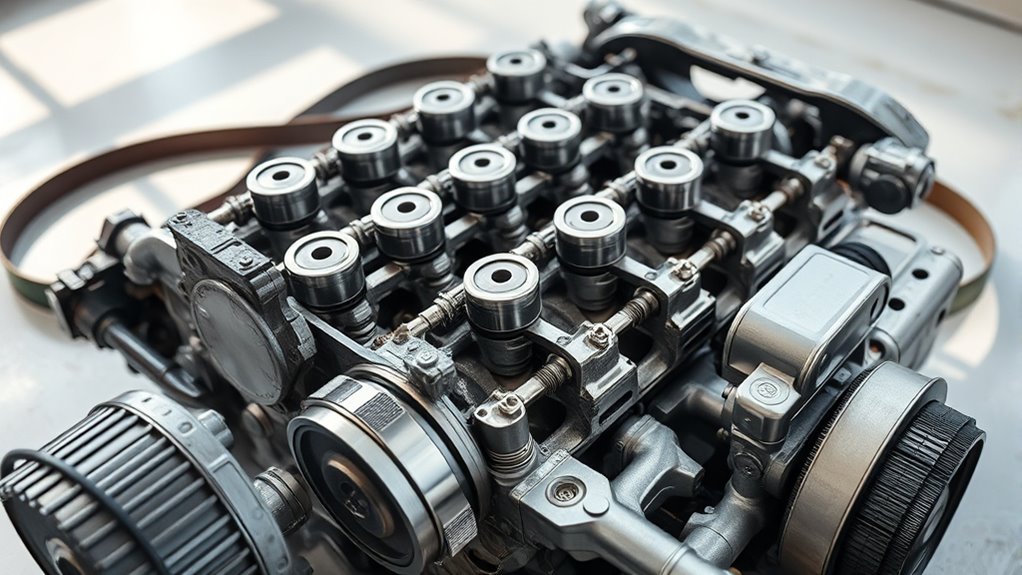
Valves play a critical role in controlling the flow of air and fuel into the engine’s combustion chambers, as well as exhaust gases out. There are different valve types, such as intake and exhaust valves, each designed for specific functions.
Their operation depends on precise valve timing, which guarantees they open and close at the right moments during the engine cycle. Proper valve operation allows the engine to breathe efficiently, optimizing power and fuel economy.
The valves are opened by camshafts, which synchronize their movement with the pistons’ positions. If valve timing is off, it can cause poor engine performance or damage.
Understanding how valves operate helps you appreciate their essential role in maintaining smooth engine function.
Importance in Engine Cycle
In an engine, the opening and closing of valves are essential steps that control the flow of air, fuel, and exhaust gases. This directly affects how well the engine runs. Proper valve operation ensures the right mixture enters the cylinders at the right time, boosting combustion efficiency.
This process is crucial for maintaining engine efficiency and optimizing fuel use. It helps your vehicle run smoothly and economically. If valves don’t open or close correctly, it can cause poor performance, higher emissions, or fuel waste.
How Do the Crankshaft and Camshaft Keep the Engine Running?
The crankshaft is like the engine’s power generator. It takes the up-and-down movement of the pistons and turns it into rotational energy, which ultimately powers your car. Without it, the engine wouldn’t be able to move forward.
On the other hand, the camshaft is responsible for controlling the timing of the engine’s valves. It makes sure the valves open and close at the right moments, so the engine runs smoothly and efficiently.
Together, these two parts work in perfect harmony. The crankshaft and camshaft coordinate their movements to keep your engine running smoothly and reliably.
Crankshaft’s Power Conversion
The crankshaft is key in turning the up-and-down motion of the pistons into rotational energy that powers your engine. Its design is crucial for generating effective torque, which influences how much power your engine makes.
As the pistons move up and down inside the cylinders, they push against the connecting rods, transferring force to the crankshaft. The crankshaft then transforms this linear force into rotation through its carefully shaped and offset crankpins.
This rotation is passed on to the transmission, which ultimately turns the wheels. A well-designed crankshaft ensures smooth operation and efficient power transfer. It’s an essential part of keeping your engine running reliably and effectively. Without it, your engine wouldn’t be able to produce the torque needed to move.
Camshaft’s Timing Control
Since the engine relies on precise timing to run smoothly, the camshaft plays a key role in controlling when the valves open and close.
Proper camshaft alignment ensures the intake and exhaust valves work in sync with the piston movement. If the timing is off, your engine might run rough or lose efficiency.
Timing adjustments involve setting the camshaft’s position relative to the crankshaft, usually through a timing belt or chain. This keeps the valves opening at the right moments during each cycle.
Regular checks of camshaft alignment help prevent timing issues that can cause misfires or engine damage. When done correctly, these adjustments optimize engine performance and keep your car running smoothly and efficiently.
How Does Combustion Power Your Vehicle?
When fuel ignites inside the engine’s cylinders, it creates a powerful explosion that drives the pistons downward. This is the core of the combustion process, where chemical energy turns into mechanical energy.
The force pushes the pistons, which then turn the crankshaft. This movement ultimately powers your vehicle and gets it moving.
Efficient combustion maximizes power while conserving fuel, helping improve fuel efficiency. Proper timing and the right fuel mixture are key to making this process work smoothly and avoiding engine knocking.
Here’s a quick overview:
| Aspect | Explanation |
|---|---|
| Combustion process | Turns fuel into mechanical energy through explosion |
| Fuel efficiency | Achieved by complete combustion with minimal waste |
| Power generation | Pistons move down, turning the crankshaft |
| Impact on vehicle | Powers the wheels and moves your car forward |
How well your engine harnesses this explosion really determines how smoothly your vehicle runs and how much fuel it uses.
How Do Cooling and Lubrication Systems Keep Your Engine Healthy?
As your engine runs through continuous combustion, it produces a lot of heat and friction that can cause damage if not managed properly. The cooling system helps prevent overheating by circulating coolant, which absorbs the engine’s heat.
Different coolant types, like water-based or glycol-based mixtures, transfer heat efficiently and also help prevent corrosion. Meanwhile, the lubrication system reduces friction between moving parts using oil.
Choosing the right oil viscosity is important; thinner oils flow more easily at low temps, while thicker oils offer better protection at high temps. Oil also helps seal gaps and keeps engine parts clean.
Together, these systems work smoothly to keep your engine at the right temperature and minimize wear. Regular maintenance, like checking coolant levels and changing the oil with the proper viscosity, keeps your engine healthy, efficient, and lasting longer.
What Are Common Engine Problems and How Do Parts Contribute?
Engine problems often come from wear and tear or failure of specific parts, which can lead to reduced performance or even engine damage. When issues pop up, engine diagnostics help pinpoint the root cause quickly.
For example, a failing spark plug can cause misfires, while a worn timing belt may lead to poor engine timing. Analyzing parts like fuel injectors or piston rings shows how they contribute to overall engine health.
Damaged radiators or clogged air filters can cause overheating or power loss. Recognizing symptoms early means you can fix problems before they get worse.
Common engine issues include rough idling, decreased acceleration, and higher fuel consumption—all linked to specific part failures. Knowing how each component works helps you spot warning signs and get timely repairs.
This approach prevents costly damage and keeps your engine running smoothly. Regular maintenance and understanding your engine parts make all the difference.
How Can You Maintain and Care for Your Car’s Engine Parts?
Regular maintenance and proper care are key to keeping your engine parts working smoothly and avoiding costly repairs. Start with regular engine cleaning to get rid of dirt and grime that can cause overheating.
Consistent maintenance helps your engine run smoothly and prevents costly repairs.
Make sure to schedule oil changes so your engine stays well-lubricated and runs efficiently. Check coolant levels often to prevent overheating and damage. Replacing filters regularly ensures clean air and fuel intake, which helps boost performance.
Spark plug maintenance is important for good combustion and fuel economy. Inspect belts for signs of wear and replace them before they break down. Keep an eye on your battery—make sure the terminals are clean and the battery stays charged.
Use high-quality fuel to reduce deposits and improve efficiency. Performing diagnostic checks every now and then helps catch issues early. For better performance, think about upgrades like performance air filters or exhaust systems.
Consistent care not only extends your engine’s lifespan but also keeps your car running at its best.
What Are the Latest Engine Technologies and Future Trends?
Have you ever wondered how emerging technologies are transforming the way engines operate? Today, hybrid technology combines electric engines with traditional engines to boost fuel efficiency and cut emissions.
Electric engines are becoming more powerful and affordable, paving the way for fully electric vehicles. Autonomous driving relies on advanced engine systems and smart diagnostics to improve safety and optimize performance.
Turbocharging advancements allow smaller engines to deliver more power while maintaining fuel efficiency. Future trends focus on reducing emissions through alternative fuels like hydrogen and biofuels, supporting environmental goals.
These innovations aim to make vehicles smarter, cleaner, and more efficient. As technology progresses, engines will become increasingly integrated with digital systems, providing real-time diagnostics and predictive maintenance.
Staying ahead means embracing these trends, which promise a more sustainable and connected driving experience. The future of engine technology is all about smarter, greener, and more efficient mobility solutions.
Summary: Keeping Your Engine Running Smoothly
To keep your vehicle running smoothly, it’s important to do regular maintenance and fix issues quickly. This helps keep your engine efficient and saves fuel.
Regular oil changes, air filter replacements, and spark plug checks stop buildup and wear that can hurt performance. Keep an eye on fluid levels and inspect belts and hoses to make sure everything works properly.
Regular oil, air filter, and spark plug checks prevent buildup and maintain engine performance.
Watch for warning signs like strange noises, vibrations, or lower fuel economy. Keeping your engine clean and well-maintained lowers the chance of breakdowns and helps it last longer.
Using good quality fuel and sticking to your service schedule also boosts efficiency. Staying proactive prevents small problems from becoming expensive repairs.
Frequently Asked Questions
What Are the Signs of a Failing Engine Part?
You’ll notice signs like unusual engine noise, oil leaks, or a sudden drop in performance.
Overheating issues and warning lights on your dashboard also signal trouble. Vibration problems can indicate engine misfires or worn parts.
If your engine starts making strange sounds or you see fluid leaks, don’t ignore it. Addressing these signs early helps prevent costly repairs and keeps your engine running smoothly.
How Often Should Engine Parts Be Inspected or Replaced?
Think of your engine as a finely tuned orchestra; regular inspections keep every instrument in harmony. You should follow your vehicle’s recommended maintenance and inspection schedules, usually every 5,000 to 10,000 miles, or as advised by the manufacturer.
Replace worn parts promptly to prevent a symphony of breakdowns. Consistent engine maintenance guarantees smooth performance and prolongs your engine’s lifespan, much like a conductor safeguarding the integrity of a masterpiece.
Can Engine Parts Be Repaired or Only Replaced?
You can often repair engine parts, especially if the damage is minor, but some issues require replacement.
When it comes to engine repairs, think about the cost—repairing might be cheaper than replacing, but it depends on how bad the damage is.
If parts are severely worn or broken, replacing them is usually more reliable.
Regular inspections help you decide whether repairs will do or if replacing parts is the better, long-term choice.
What Role Do Sensors Play in Engine Operation?
Think of sensors in your engine as the engine’s senses, like eyes and ears. They monitor important data using different types like oxygen sensors, temperature sensors, and pressure sensors.
Their job is to send real-time info to the engine control unit, which then adjusts how the engine performs. Proper sensor calibration is essential; it ensures accurate readings and helps your engine run smoothly and efficiently.
Without sensors, your engine wouldn’t know how to respond properly, which could lead to poor performance or even damage.
How Do Aftermarket Parts Affect Engine Performance and Longevity?
Aftermarket parts can boost your engine’s performance and potentially help it last longer if you pick the right ones. Upgrades like better filters, exhaust systems, or tuning chips can increase power and efficiency.
But be careful—poor-quality aftermarket parts might put extra stress on your engine or cause it to wear out faster. It’s always a good idea to research reputable brands and make sure the modifications match your engine’s specs.
That way, you get the best mix of improved performance and long-term durability.
Conclusion
So, there you have it—your engine’s tiny army of parts working tirelessly, like a well-choreographed ballet or a busy bee colony.
Keep them happy with proper maintenance, or risk turning your car into a rebellious metal beast that refuses to start, coughs, and stalls like a grumpy old man.
Treat your engine right, and it’ll keep you rolling smoothly. Otherwise, you’ll be the proud owner of a fancy paperweight.
Remember, understanding your engine parts and their functions is key to keeping your vehicle running smoothly.
Cheers to happy motoring and a well-maintained engine!