Warning Signs and Preventive Tips for Transmission Fluid in Radiator
Many car owners worry about unexpected breakdowns and costly repairs, especially when it comes to transmission issues. If you’re noticing strange smells, shifting problems, or unusual colors in your radiator fluid, you’re not alone.
These signs often point to contaminated or low transmission fluid, which can cause serious damage if not addressed early. If you notice signs like unusual color, burning smells, sluggish shifting, or delayed engagement, your transmission fluid may be contaminated or low, especially if it’s in the radiator.
Regularly check the fluid level and condition, and look for leaks or debris. Use high-quality fluid and replace it as recommended. Taking these preventive steps can save you costly repairs.
Keep an eye out for warning signs—you’ll find practical tips to protect your vehicle’s transmission system ahead.
Key Takeaways
- Keep an eye out for transmission fluid leaks around the radiator and hoses to prevent contamination.
- Regularly check the fluid’s color and smell; burnt or dark fluid can signal problems.
- Make sure the fluid levels are correct and follow the manufacturer’s schedule for replacing or flushing the transmission system.
- Inspect hoses and seals for cracks or leaks to keep dirt and debris out of the system.
- Watch how your vehicle responds—delayed or rough shifting could mean there’s an issue with the transmission fluid.
What Is Transmission Fluid in the Radiator and Why Is It Important?
Transmission fluid is an essential lubricant that helps your vehicle’s transmission operate smoothly. Although it’s usually associated with the transmission itself, some vehicles store transmission fluid in the radiator.
This setup allows the fluid to circulate between the transmission and radiator, helping with cooling and keeping the transmission working at its best. When transmission fluid is in the radiator, it plays a key role in preventing overheating and ensuring efficient heat transfer.
If the radiator’s performance drops because of contamination or leaks, the transmission fluid can degrade faster or become less effective. This can cause slipping gears, delayed engagement, or even transmission failure.
Understanding that transmission fluid in the radiator helps with both cooling and lubrication shows how important it is. Proper maintenance of this fluid ensures your transmission runs smoothly and your radiator stays efficient.
Keeping the fluid in good shape helps prevent costly repairs and extends your vehicle’s lifespan.
How Do You Check Transmission Fluid Levels in the Radiator?
Checking the transmission fluid levels in the radiator is a simple process, but you need to pay attention to a few details. First, make sure the engine is cool to avoid burns and get an accurate reading.
Find the transmission fluid dipstick—it’s usually labeled—and pull it out. Wipe it clean with a rag, then fully reinsert it before pulling it out again.
Check the fluid level against the marked indicators to see if it’s within the recommended range. For the most accurate reading, look at the dipstick at eye level.
Regular checks should be part of your maintenance routine, typically every 30,000 miles or as your owner’s manual suggests. Here’s a quick guide:
| Step | Action | Tip |
|---|---|---|
| Locate dipstick | Find and remove the transmission fluid dipstick | Verify engine is cool |
| Wipe and reinsert | Clean and fully reinsert the dipstick | Check level at eye level |
| Read fluid level | Pull it out again to check the level | Keep it within the marked zone |
Signs of Transmission Fluid Problems in Your Radiator
You might notice that your radiator fluid starts to change color or maybe looks cloudy or dark—that’s usually a sign something’s off. If you smell a burning odor coming from your engine, it could also be related to transmission fluid problems.
And hey, if your transmission is acting up—like shifting slowly or jerking around—that’s another clue that your fluid might need some attention. Keep an eye out for these signs to catch issues early!
Unusual Fluid Color Changes
Unusual color changes in your radiator’s fluid can be a clear sign that something’s off with your transmission fluid. Fluid discoloration often happens because of contamination, oxidation, or breakdown of the fluid, which can mess with its lubricating properties.
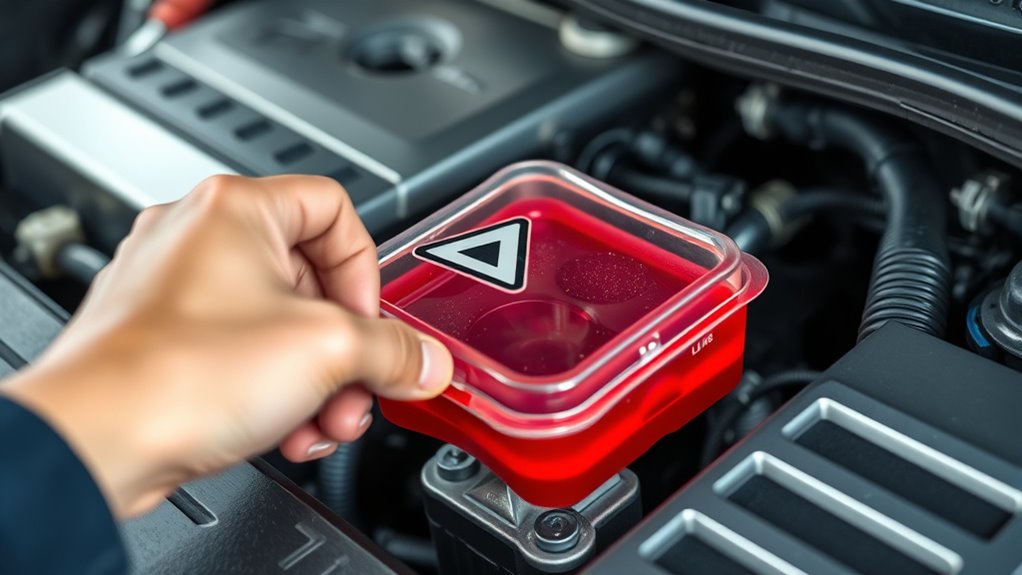
To catch these issues early, you can visually inspect the fluid through the radiator cap or dipstick. Healthy transmission fluid usually looks clear and reddish, but if it turns dark brown, black, or milky, that’s a red flag.
These color changes can indicate debris, burnt fluid, or water contamination. Regularly check your radiator fluid’s color and consistency, and don’t ignore sudden or strange discoloration. It’s a key warning sign that your transmission fluid might need attention.
Strange Burning Smell
A burning smell coming from your radiator or engine bay can signal a serious issue with your transmission fluid. You might notice a distinct burning odor, which often means the fluid is overheating.
When transmission fluid gets too hot, it can break down and emit that characteristic smell. This could happen if the fluid is leaking into the radiator or if the cooling system isn’t effectively regulating temperature.
Ignoring this warning increases the risk of transmission damage and costly repairs. If you detect a burning odor, it’s important to check your transmission fluid level and condition right away.
Addressing fluid overheating early can prevent further damage and help keep your vehicle running smoothly. Don’t dismiss a strange smell—it’s your vehicle warning you about potential transmission problems.
Sluggish Transmission Response
When your transmission starts responding sluggishly or hesitates during shifts, it can be a clear sign that your transmission fluid isn’t working properly. This slow response directly impacts how well your transmission works, making your vehicle feel less responsive.
Over time, low or dirty fluid can cause the transmission to struggle with gear changes, leading to jerking or delays. Regular fluid checks and maintenance are essential to keep everything running smoothly.
If you notice sluggish shifts, it’s a good idea to check your transmission fluid level and quality right away. Fixing fluid problems early can prevent more serious damage and keep your transmission running efficiently.
Proper fluid maintenance not only improves response times but also helps extend the life of your transmission.
Common Causes of Transmission Fluid Contamination
Leaks and cracks in your transmission system can let dirt and debris sneak in, which can really mess things up. When this happens, contaminants like dust, grime, and even old, degraded fluid can find their way into the transmission, causing problems down the line.
It’s also worth noting that if your transmission components are dirty or haven’t been maintained properly, they can be a gateway for these unwanted particles. So, keeping an eye on leaks and staying on top of maintenance can really help prevent fluid contamination. That way, your transmission stays in good shape and runs smoothly for longer.
Leaks and Cracks
Leaks and cracks in your transmission system are some of the most common causes of fluid contamination. When you see transmission fluid leaking, it’s a sign that there might be a crack or loose seal, which can lead to dirt and debris getting in and causing damage.
Regular maintenance, including radiator inspections, helps catch these issues early. Cracks can form from wear, overheating, or impacts, allowing dirt, debris, and water to enter the system. Leaks usually happen at seals, gaskets, or fittings, which can reduce fluid quality.
Dealing with cracks and leaks quickly is key to preventing further damage and keeping your transmission working properly. Regular inspections and timely repairs are essential to keep your transmission fluid clean and your vehicle running smoothly.
Contaminants and Dirt
Contaminants and dirt are among the most common culprits behind transmission fluid degradation. Over time, debris from worn seals, dirt, or rust can enter the system, causing damage. To prevent this, regular filter maintenance is essential because clogged filters can’t trap harmful particles effectively.
Furthermore, poor-quality fluid additives may introduce impurities, speeding up contamination. Here are some key points to keep in mind:
- Failing to replace or clean filters allows dirt to circulate, damaging transmission components.
- Using subpar fluid additives can introduce contaminants that compromise fluid integrity.
- Not checking for leaks or cracks increases exposure to dirt and debris, making contamination worse.
Staying vigilant and performing regular maintenance helps keep your transmission fluid clean and working properly.
How to Prevent Transmission Fluid Issues in the Radiator
To prevent transmission fluid issues in your radiator, regular maintenance is key. Check your fluid levels and condition often to catch problems early. Using high-quality transmission fluid helps ensure your system runs smoothly and reduces contamination risks.
Preventive steps also include flushing the radiator and transmission system at recommended intervals. This helps clear out dirt, debris, and old fluid that can cause issues down the line. Inspect hoses and connections for leaks or cracks, as these can let contaminants in or cause fluid loss.
Keep the radiator clean and free of debris to support proper airflow and cooling. Watch for signs of overheating or shifting problems, which might point to fluid issues. Staying on top of fluid quality and routine checks can extend your transmission’s lifespan and save you money on repairs.
Why Ignoring Transmission Fluid Problems Can Cost You
Ignoring transmission fluid problems can lead to costly repairs and even complete transmission failure. When you skip fixing these issues early, you risk more serious damage that’s expensive to repair.
Neglecting transmission fluid issues can cause costly damage and potential complete failure.
Neglecting preventive maintenance often causes:
- Increased repair costs: Small leaks or low fluid levels, if ignored, can cause serious internal damage that needs costly part replacements.
- Reduced transmission lifespan: Without enough proper fluid, your transmission wears out faster, shortening its overall life.
- Breakdowns and inconvenience: Sudden transmission failure can leave you stranded, leading to towing and emergency repairs.
When Should You Seek Professional Help for Transmission Fluid Concerns?
If you’re noticing that your transmission isn’t shifting smoothly or you see some strange behavior with the fluid, it’s probably time to talk to a pro. Things like your car slipping gears repeatedly, rough shifts, or fluid that’s dark and smells burnt shouldn’t be brushed off.
Getting it checked out early can save you a lot of money in the long run. So, if anything feels off, don’t wait—reach out to a mechanic and get it looked at before small issues turn into big, expensive repairs.
Persistent Transmission Issues
Persistent transmission issues, like slipping gears, delayed engagement, or rough shifting, usually mean your transmission fluid isn’t working properly. If you notice these signs, it’s a good idea to get professional help.
Common problems include transmission overheating, which can damage parts. This is often caused by low or dirty fluid. Dirt, debris, or worn-out fluid can also impair lubrication and cause poor shifting.
If your transmission keeps slipping or reacting slowly, it’s probably because your fluid isn’t providing the right hydraulic pressure. Addressing these issues early helps prevent more serious damage and costly repairs.
If you’re dealing with ongoing overheating or suspect your fluid is contaminated, don’t wait. Consult a mechanic to diagnose and fix the problem before it gets worse.
Unusual Fluid Behavior
Unusual fluid behavior is a clear sign that your transmission may need professional attention. If you notice changes in fluid viscosity, like it becoming too thick or too thin, it could mean contamination or overheating.
Temperature fluctuation is another warning sign. If the transmission fluid heats up excessively or cools down unexpectedly, it suggests the fluid isn’t working properly. These variations can hurt transmission performance and cause more damage if you ignore them.
You should get help if you see these signs, especially if they stick around despite regular maintenance. Ignoring unusual fluid behavior risks bigger transmission problems, costly repairs, and safety issues.
Getting a professional assessment early helps keep your transmission in top shape and stops minor issues from turning into bigger ones.
How to Flush and Replace Transmission Fluid in Radiator-Based Systems
Performing a flush and replacement of transmission fluid in radiator-based systems helps your vehicle run smoothly and prevents costly damage.
Start by warming up your engine so the fluid flows easily. Then, follow these simple steps for an effective flush and fluid change:
First, drain the old transmission fluid by removing the drain plug or disconnecting the transmission pan. Be sure to collect and dispose of it properly.
Next, use a specialized flushing machine or additive to circulate cleaning fluid through the system. This helps remove debris and old fluid effectively.
After the flush, refill with the recommended transmission fluid, making sure to add the correct amount as specified in your vehicle’s manual.
Finally, check for leaks and confirm the fluid level is right. Regularly doing this maintenance keeps your transmission healthy and extends its lifespan.
Proper flushing and timely fluid replacement are key to maintaining peak transmission performance and avoiding costly repairs.
Tips for Maintaining Transmission Fluid Quality Over Time
After completing a fluid flush, keeping your transmission fluid in good shape is an ongoing task that helps your vehicle run smoothly.
To do this well, make a habit of regular inspections and checking fluid levels. Use simple tests like looking for discoloration or debris and smelling for burnt odors.
Watch the fluid color—bright red or pink usually means it’s in good condition. Dark or murky fluid might mean it’s time for a change.
Also, pay attention to how your transmission performs. Slipping or delayed shifting can be signs that the fluid is degraded.
Check your owner’s manual for recommended service intervals.
Consistent maintenance not only extends your transmission’s life but also ensures it operates smoothly.
Staying proactive helps you catch problems early and keeps your transmission in top shape over time.
Simple Steps to Avoid Transmission and Radiator System Failures
To prevent transmission and radiator system failures, regular maintenance and mindful driving habits are key. Focus on preventive checks by inspecting fluid levels and quality regularly.
Make sure the fluids are compatible between your transmission and radiator to avoid chemical reactions that could cause damage. Here are three simple steps to keep everything running smoothly:
- Schedule routine fluid checks: Regularly inspect your transmission and radiator fluids, topping up or replacing them as needed to keep levels just right.
- Use manufacturer-recommended fluids: Always choose fluids that match your vehicle’s specifications to ensure compatibility and optimal performance.
- Address leaks promptly: Fix any signs of fluid leaks immediately to prevent low fluid levels and contamination, which can lead to system failures.
Frequently Asked Questions
Can Transmission Fluid Leaks Cause Radiator Overheating?
Yes, transmission fluid leaks can cause radiator overheating. When transmission fluid leaks, it can contaminate or degrade the radiator’s coolant system, which hurts its ability to cool the engine effectively.
This reduces the radiator’s capacity to regulate engine temperature, leading to overheating. It’s important to regularly check for leaks and keep fluid levels in check to avoid radiator problems.
Addressing leaks quickly helps ensure your radiator works properly and can prevent expensive engine damage.
Are There Specific Transmission Fluids Recommended for Radiators?
You should use transmission fluid types specifically designed for radiator compatibility, often labeled as universal or compatible with your vehicle’s make and model.
It’s essential to check your car’s owner manual to ensure the fluid matches the required specifications.
Using the right transmission fluid helps prevent damage, overheating, and leaks, guaranteeing smooth operation.
Avoid mixing incompatible fluids, as this can compromise radiator performance and lead to costly repairs.
How Often Should Transmission Fluid Be Inspected in the Radiator?
You should inspect your transmission fluid in the radiator at least every 30,000 to 50,000 miles or during regular maintenance schedules. Regular fluid checks help catch potential issues early and prevent costly repairs.
Check the fluid’s color, smell, and level, and top off or replace it if you notice any signs of contamination or thinning. Staying consistent with inspections keeps your cooling and transmission systems in top shape.
Can Transmission Fluid Contamination Damage the Radiator?
When transmission fluid gets contaminated and mixes into your radiator, it’s like adding fuel to a fire—radiator damage is a real risk. Contaminated fluid can cause corrosion, clogging, and leaks, which can damage your radiator’s core.
So, yes, transmission fluid contamination can lead to radiator damage. To avoid this, you should regularly check and maintain proper fluid levels.
Doing this helps prevent costly repairs and keeps your vehicle running smoothly.
What Are the Long-Term Effects of Neglected Transmission Fluid Issues?
Neglecting transmission fluid issues can seriously harm your vehicle over time. You might face costly repairs like transmission failure, reduced fuel efficiency, and increased wear on engine parts.
Poor vehicle maintenance leads to contaminated or low transmission fluid, which can cause overheating and damage internal components.
If you ignore warning signs, your vehicle’s performance drops, and repair bills can skyrocket.
Regularly checking and changing your transmission fluid helps prevent long-term damage and keeps your vehicle running smoothly.
Conclusion
Keeping an eye on your transmission fluid in the radiator is essential for smooth vehicle performance.
Regular checks and timely maintenance can prevent costly repairs down the road. Don’t wait for warning signs to catch you off guard—staying proactive is key.
Follow the tips outlined to keep your system running like clockwork. Your car will thank you for caring before problems arise, especially when it comes to transmission fluid in the radiator.