Top Signs It’s Time to Change Your Transmission Fluid: Expert Tips
Many drivers find themselves worried when their car doesn’t shift smoothly or starts making strange noises. You’re not alone—transmission issues can be stressful and costly if not caught early.
One of the best ways to keep your vehicle running smoothly is by staying on top of your transmission fluid.
If your transmission shifts become sluggish, jerky, or erratic, it’s time to change the fluid. Watch for unusual noises like grinding or whining, and check for leaks underneath your car—reddish or brown fluid signals a concern.
Notice any burning smells, slipping gears, or warning lights on your dashboard. Decreased fuel economy can also point to transmission issues.
Paying attention early can save you repair costs; stay tuned for more expert tips on maintaining your transmission health.
Key Takeaways
- Notice sluggish, jerky, or delayed gear shifts that might mean your transmission is slipping because the fluid is old or has degraded.
- Check the transmission fluid color—if it’s dark or cloudy—or if it smells burnt or foul, it’s time for a change.
- Listen for unusual noises like whining, grinding, or clunking during shifts; these can indicate fluid problems or internal damage.
- Keep an eye on warning lights on your dashboard related to transmission health, and get it inspected right away.
- If you notice decreased fuel economy or rough shifting, those are signs your transmission fluid might be overdue for a change.
How to Recognize Sluggish or Erratic Transmission Shifts
You might notice your car shifting gears more slowly than usual or making sudden, unpredictable movements. These are clear signs that your transmission performance is slipping.
Slow shifting and unpredictable movements signal your transmission may be slipping. Check your fluid soon.
Your driving habits can influence how well your transmission works, but if your shifts become sluggish or erratic regardless of how you drive, it’s time to check the fluid.
When transmission fluid is degraded or low, it can prevent smooth gear changes, making shifts feel delayed or jerky. You may also feel your car hesitating between gears or seeming to hunt for the right gear.
These symptoms often come from dirty or old transmission fluid that no longer lubricates the components properly. Pay attention to how your vehicle responds during acceleration, deceleration, and gear changes.
Consistent, smooth shifts are essential for good transmission performance. Recognizing these signs early can help you avoid more serious problems later on.
Signs of Unusual Noises When Changing Gears
If you’re experiencing jerky gear shifts or hear weird noises when you change gears, it could be a sign that your transmission needs some attention. Those strange sounds like grinding, whining, or clunking aren’t just annoying—they might actually point to fluid issues or other problems under the hood.
It’s always a good idea to pay attention to these signs early on. Catching the problem sooner rather than later can help you avoid more serious and costly damage down the line.
Gear Shifts Feel Jerky
A jerky feeling during gear shifts often signals that your transmission fluid may be overdue for a change. When your transmission fluid isn’t fresh, it can’t lubricate or hydraulically operate the components smoothly, causing rough shifts. This is a clear sign that your transmission maintenance is needed.
Different fluid types, such as synthetic or conventional, require regular checks to prevent this issue. Using the wrong fluid can worsen shifting problems. Consider this table for clarity:
| Fluid Type | Recommended Interval | Common Symptoms |
|---|---|---|
| Synthetic | 60,000 miles | Smoother shifts, less wear |
| Conventional | 30,000 miles | Jerky shifts, delayed engagement |
| Automatic | As per manufacturer | Hard shifting, slipping |
Keeping an eye on fluid types and change intervals helps maintain smooth gear shifts.
Unusual Noises During Shifting
Unusual noises during shifting often mean there’s an issue with your transmission fluid or internal parts. If you hear strange sounds or grinding when changing gears, it’s a warning sign your transmission might need some attention.
Gear grinding, in particular, suggests the clutch isn’t engaging right or the fluid isn’t lubricating the internal components properly. These noises can happen during acceleration, deceleration, or switching between gears.
Ignoring these sounds can lead to more serious damage, higher repair costs, or even total transmission failure. If you notice any unusual noises while shifting, it’s a good idea to check your transmission fluid and replace it if needed.
Addressing these signs early can help extend your transmission’s life and ensure smoother driving.
Spotting Transmission Fluid Leaks Under Your Car
Transmission fluid leaks often leave visible signs beneath your vehicle, making it easier to catch early issues. If you see fluid puddles on your driveway or garage floor, it’s a clear sign something’s wrong. These puddles are usually reddish or brownish and can vary in size depending on the leak’s severity.
To find where the leak is coming from, take a look underneath your car. Check around the transmission pan, cooler lines, or seals. Leaks usually come from loose or damaged fittings, cracked seals, or worn-out gaskets.
Keep in mind that transmission fluid leaks tend to be slow. So, the puddles might appear gradually over days or weeks. Ignoring these signs can lead to low fluid levels, which may cause shifting problems or damage the transmission.
Regularly checking under your vehicle and fixing fluid puddles early can help prevent costly repairs. Staying on top of it ensures your transmission stays in good shape and runs smoothly.
Smelling Burning Odor While Driving
A burning odor while driving is a clear warning sign that something inside your vehicle isn’t right. If you notice a burning smell, it often means fluid inside your transmission is degrading.
As transmission fluid ages, it breaks down and can’t lubricate properly. This causes increased friction and heat, which can make the fluid emit a burning smell. It’s a sign that it’s time to change the fluid.
Old transmission fluid breaks down, causing friction, heat, and a burning smell indicating it’s time for a change.
Ignoring this warning can lead to serious transmission damage and costly repairs. The smell might be strongest after driving for a while or when shifting gears, especially under heavy load or high temperatures.
If you notice a persistent burning odor, don’t wait. Check your transmission fluid level and condition. Replacing old or degraded fluid promptly can prevent further damage.
This simple step can extend your transmission’s life and keep your drive smooth. Always check your vehicle’s manual or talk to a professional mechanic for proper fluid change procedures.
Feeling a Slipping or Soft Transmission Shift
If you notice your vehicle shifting gears more softly or slipping out of gear unexpectedly, it’s a sign that your transmission isn’t operating properly. This feeling can be caused by low or degraded transmission fluid, which affects smooth shifting.
Ignoring this can lead to bigger problems, so it’s important to take action. Regularly checking your fluid levels and following the recommended fluid change schedule can help prevent slipping and soft shifts.
If the fluid looks dark, smells burnt, or doesn’t flow freely, it’s time for a fluid change. Keeping your transmission fluid clean and fresh helps ensure smooth shifting and efficient operation.
Don’t ignore these signs, because delaying fluid changes can lead to costly repairs. Make sure to do routine checks and stick to the suggested change intervals to keep your transmission in top shape and avoid future slipping or soft shifting.
How to Check Your Transmission Fluid’s Color and Smell
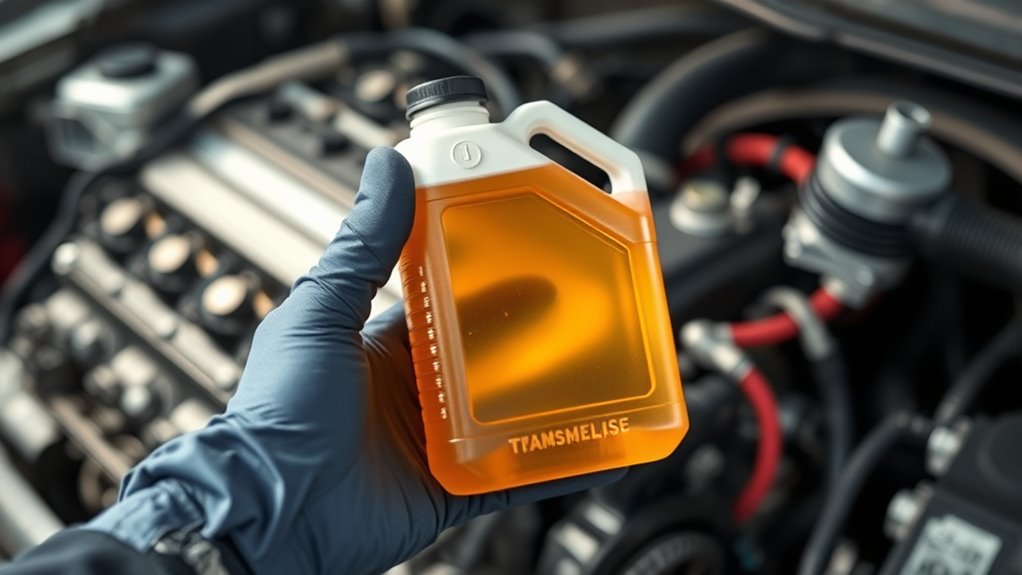
Wondering how to tell if your transmission fluid is in good shape? It’s pretty simple—just take a look and smell it. First off, check the color. Fresh transmission fluid usually has a bright red or pink hue, so if it looks dark, cloudy, or has a brownish tint, that’s a sign it might be time to look closer.
Next, give it a sniff. If you notice any burnt or strange odors, that’s definitely a red flag. Fresh fluid shouldn’t smell burnt or off. Just make sure you’re using the right checking techniques—like checking the fluid level when the engine is warm and the car is on a level surface—to get an accurate idea of its condition. Catching these signs early can help you avoid bigger problems down the road.
Identifying Fluid Color Changes
Checking your transmission fluid’s color and smell is a quick way to see how it’s doing. Fresh fluid usually looks bright red and has a slightly sweet smell, showing it’s in good shape.
As the fluid gets older, it darkens to brown or black, which means it might need to be replaced.
| Fluid Color | What it Means |
|---|---|
| Bright Red | Healthy, good condition |
| Dark Brown/Black | Worn out, needs changing |
| Murky or Cloudy | Contaminated or degraded |
| Fluid Smell | What it Indicates |
| Slightly Sweet | Normal, fresh fluid |
| Burnt or Rotten | Overheating or breakdown happening |
Regularly checking these signs helps you stay on top of maintenance and avoid costly repairs.
Recognizing Unusual Odors
Unusual odors coming from your transmission fluid can signal underlying problems that need immediate attention. If you notice a burnt smell, it’s usually a sign that the fluid has overheated, breaking down and losing effectiveness.
Other odors, like a sweet or syrupy scent, might mean coolant leaks are contaminating the fluid. Check the fluid’s consistency too; thick or gritty fluid could point to debris or sludge buildup, which can hurt transmission performance.
A foul or rancid smell might indicate bacteria or mold inside the fluid, meaning it’s time for a change. Paying attention to these smells helps you catch issues early before they cause costly damage.
Regularly checking your transmission fluid’s smell and consistency keeps your vehicle running smoothly.
Proper Checking Techniques
Paying close attention to your transmission fluid’s color and smell helps you spot potential problems early. To check properly, use simple methods like pulling the dipstick or removing the fill plug. Regular checks should be done every 30,000 to 60,000 miles, as recommended by your vehicle.
When inspecting, look for clear, pinkish fluid. Darker or cloudy fluid could mean contamination or wear. Smell the fluid—burnt odors suggest overheating. Here’s a quick guide to help you interpret what you find:
| Fluid Color | Smell | Maintenance Frequency |
|---|---|---|
| Pink/Red | Neutral or slight sweet | Every 30,000-60,000 miles |
| Dark Brown/Black | Burnt or pungent | Inspect immediately |
| Cloudy or Milky | Sour or moldy | Schedule maintenance soon |
| Murky or Contaminated | Foul odor | Replace promptly |
| Fresh & Translucent | No smell | Regular checks |
Transmission Warning Lights: What They Mean
Transmission warning lights are your vehicle’s way of signaling that something might be wrong with your transmission system. When these lights turn on, it’s a clear sign you need to pay attention to your transmission maintenance.
The warning light could mean issues like low fluid levels, overheating, or worn-out parts. Ignoring these signals can lead to more serious damage or costly repairs.
Transmission warning lights indicate low fluid, overheating, or worn parts—ignoring them risks costly damage.
Often, the light appears if your transmission fluid has reached the end of its lifespan or if there’s a leak. Checking your owner’s manual can help you interpret what the specific warning means.
If the light comes on, don’t wait—schedule a professional inspection to get an accurate diagnosis. Regularly monitoring these warning lights helps you catch problems early.
Decreased Fuel Economy and Transmission Problems
When your vehicle’s warning lights indicate a transmission issue, you might also notice a drop in fuel efficiency. This decline often signals underlying transmission problems that need attention.
Poor transmission maintenance can cause slipping gears, rough shifting, or delayed engagement—all of which make your engine work harder. As a result, your vehicle uses more fuel than usual.
If you see a sudden decrease in your miles per gallon, it’s a sign that your transmission isn’t running properly. Addressing these problems early can prevent further damage and improve fuel economy.
Regular transmission upkeep, like fluid checks and changes, helps keep everything running smoothly. Ignoring these warning signs can lead to higher fuel consumption and costly repairs later on.
Being proactive about your transmission health means better performance, saving you money, and keeping your vehicle efficient over time.
When to Schedule Your Transmission Fluid Change
If your transmission is making strange noises or the gears are shifting more sluggish than usual, it’s probably time to get that fluid changed. Don’t ignore these signs — they’re your car’s way of telling you something’s not quite right.
Waiting too long could lead to bigger, more expensive problems with your transmission later on. So, when you notice these issues, it’s a good idea to schedule that fluid change sooner rather than later. Taking care of it now helps your car shift smoothly and can really extend the life of your transmission.
Unusual Transmission Noises
Unusual noises coming from your vehicle’s transmission can be a clear sign that something isn’t right. These sounds often indicate issues like fluid contamination or new noise sources within the system.
If you hear whining, grinding, or clunking, it’s time to check your transmission fluid. These noises can be warning signs that something needs attention.
Consider these signs:
- Persistent whining when the engine is running
- Clunking noises during gear shifts
- Grinding sounds when shifting into drive or reverse
- Unusual noise patterns that change with vehicle speed
Such noises often come from fluid contamination, which hampers lubrication and causes noise sources to develop. Addressing these sounds early can help prevent more severe damage.
It’s usually a sign that a transmission fluid change is overdue. Catching these issues early can save you money and avoid costly repairs down the line.
Sluggish Gear Shifts
Sluggish gear shifts are a clear sign that your transmission fluid may need changing. When your vehicle struggles to shift smoothly or delays happen between gears, it shows that your transmission isn’t performing well.
Old or degraded fluid can’t lubricate or transmit power effectively, which makes shifting feel sluggish. Regular fluid maintenance is essential to keep your transmission running smoothly.
If you notice your car hesitating or shifting rougher than usual, it’s a good idea to schedule a transmission fluid change. Addressing this early can prevent more serious damage and costly repairs.
Don’t ignore these signs. Keeping your transmission fluid fresh helps ensure smoother gear shifts and extends your vehicle’s lifespan. Proper fluid maintenance is the key to a well-functioning transmission.
What to Do If You Notice These Signs
When you notice signs indicating your transmission might be failing, it’s crucial to act promptly to prevent further damage. Ignoring these signals can lead to costly repairs or complete transmission failure. Here’s what to do:
- Schedule a professional inspection: A mechanic can assess your transmission’s condition and confirm if fluid change is needed.
- Check your owner’s manual: Follow recommended transmission maintenance tips, including fluid change frequency, to guarantee peak performance.
- Monitor fluid levels and condition: Low or dirty transmission fluid can worsen issues; top off or replace it as advised.
- Prioritize timely fluid change: Regularly changing transmission fluid helps prevent problems and prolongs your transmission’s lifespan. Adhering to recommended intervals based on your vehicle’s usage is key. Taking these steps guarantees you stay ahead of potential issues and maintain a smooth driving experience.
Frequently Asked Questions
How Often Should I Change My Transmission Fluid for Optimal Performance?
You should change your transmission fluid every 30,000 to 60,000 miles for peak performance. Keep in mind, the lifespan of the transmission fluid varies depending on your driving habits and vehicle type.
Using the right, ideal fluid types helps extend this lifespan and keeps your shifting smooth. Regularly checking your transmission fluid level and condition allows you to catch issues early.
This can prevent costly repairs and make sure your vehicle runs efficiently over time.
Can Transmission Fluid Color Indicate Other Vehicle Issues?
They say, “A picture is worth a thousand words,” and the same goes for your transmission fluid. Its color can reveal issues beyond just needing a change.
Dark or burnt fluid can indicate transmission problems like overheating or wear, which show up through fluid discoloration. If you notice milky or gritty fluid, it might signal leaks or internal damage.
Pay attention to color changes—your vehicle’s health depends on it.
Is It Safe to Drive With Transmission Problems?
Driving with transmission problems isn’t safe because transmission symptoms can get worse quickly, risking more damage or accidents. If you notice slipping gears, delayed shifting, or strange noises, it’s best to stop and have your vehicle checked.
Ignoring these signs can compromise your safety and lead to costly repairs. It’s important to address transmission issues promptly so your car functions properly and keeps you safe on the road.
What Are the Long-Term Risks of Neglecting Transmission Fluid Changes?
Neglecting transmission fluid changes can lead to serious long-term risks, like transmission failure and costly repairs. As transmission fluid degrades, it loses its ability to lubricate and cool properly, which increases wear on the components.
Ignoring warning signs such as slipping gears or rough shifts only makes things worse. Over time, these issues can cause a complete transmission breakdown, leaving you stranded and facing expensive replacements.
Regular fluid changes help prevent these long-term problems and can extend your transmission’s lifespan. It’s a simple maintenance step that can save you a lot of trouble down the road.
Do Different Vehicle Models Require Unique Transmission Fluid Maintenance?
Yes, different vehicle models do require unique transmission fluid maintenance. You need to consider the specific transmission fluid types recommended for your vehicle, which vary by make and model.
Always follow your vehicle’s maintenance schedules, as some cars need fluid changes more often than others. Using the correct fluid type and sticking to the recommended schedule helps ensure smooth shifting, extends transmission life, and prevents costly repairs later on.
Conclusion
If you notice sluggish shifts, strange noises, leaks, or warning lights, don’t ignore these signs. Catching transmission issues early can save you money, prevent breakdowns, and extend your vehicle’s lifespan.
Stay alert and proactive. Keeping your transmission in top shape requires regular maintenance, timely fluid changes, and attentive driving habits.
Take action now to protect your investment. Addressing transmission problems early is key to maintaining smooth, reliable driving for miles to come.