Synthetic vs. Regular Transmission Fluid: Making the Right Choice for Your Vehicle
Feeling overwhelmed by all the options when choosing transmission fluid? You’re not alone. Many people struggle to decide between synthetic and regular transmission fluids, unsure which is best for their vehicle and driving habits.
Choosing between synthetic and regular transmission fluid depends on your driving needs and vehicle. Synthetic fluids offer better performance, longer life, and improved protection under extreme temperatures but cost more upfront.
Regular fluids are suitable for older vehicles or moderate conditions.
To make the best choice, consider your vehicle’s specifications and your driving habits. If you want to learn more about how to pick the right fluid, keep exploring your options and tips for ideal maintenance.
Key Takeaways
- Synthetic fluids offer better temperature stability, last longer, and provide improved protection compared to regular, petroleum-based transmission oils.
- Regular fluids work well for older vehicles and moderate climates, while synthetic is better suited for high-performance or extreme conditions.
- Although synthetic fluids cost more upfront, their longer change intervals and durability can save you money in the long run.
- Proper maintenance, including timely fluid changes, helps keep your transmission running smoothly and prevents damage.
- Always follow your vehicle’s manufacturer specs and avoid mixing different types of transmission fluids to ensure compatibility and optimal performance.
What Are Synthetic and Regular Transmission Fluids?
In relation to maintaining your vehicle’s transmission, understanding the difference between synthetic and regular transmission fluids is vital. The main types of fluids include synthetic and conventional (regular) options, each suited for different fluid applications.
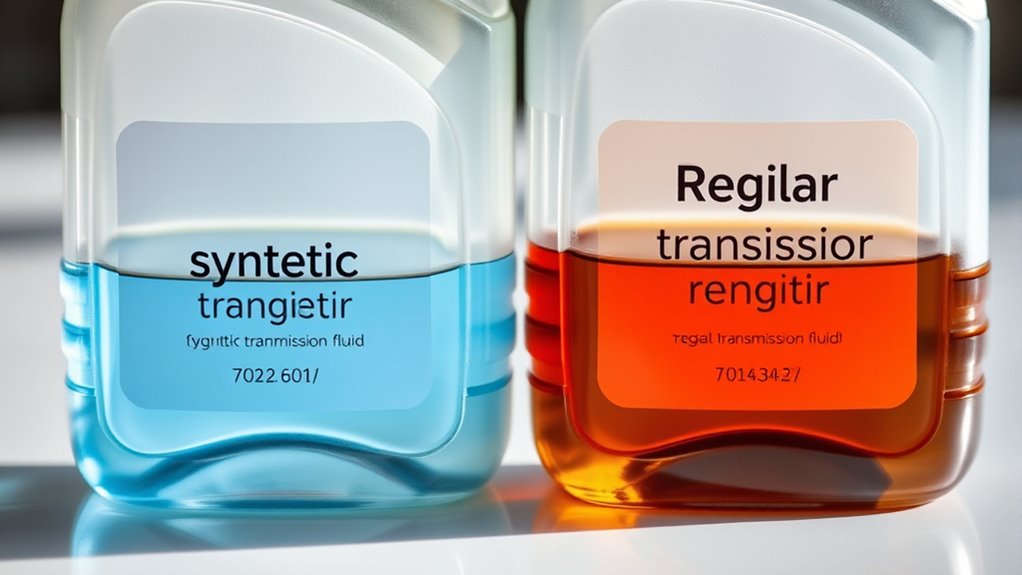
Regular transmission fluids are petroleum-based and formulated for standard driving conditions, offering reliable lubrication at a lower cost. Synthetic fluids, on the other hand, are chemically engineered to provide superior performance, including better temperature stability, reduced oxidation, and longer-lasting lubrication.
These fluids are often recommended for demanding fluid applications, such as high-performance or heavy-duty driving, where improved protection is essential. Knowing the types of fluids and their specific applications helps you select the right transmission fluid for your vehicle’s needs.
While regular fluids may suffice for everyday driving, synthetic options can offer additional benefits, especially in extreme conditions. Making the right choice depends on understanding your vehicle’s requirements and the types of fluids available.
How Do They Differ in Composition and Performance?
The key differences between synthetic and regular transmission fluids are mainly about what they’re made of and how they perform in different conditions.
Synthetic fluids are created from specially engineered base oils, which have uniform molecules that help them stay stable over time. Regular fluids, on the other hand, rely on mineral oils that tend to break down faster.
Synthetic fluids have stable, uniform molecules that last longer and resist breakdown better than mineral-based regular fluids.
When it comes to performance, synthetic fluids handle extreme temperatures better, keeping their viscosity and protecting your components. They also resist oxidation and wear longer than regular fluids.
Synthetic fluids offer better thermal stability, lubrication, and wear protection. Regular fluids may degrade more quickly when under stress.
Plus, synthetic fluids provide smoother shifting and quieter operation, and they usually last longer, meaning fewer changes needed.
Knowing these differences can help you pick the right fluid to keep your vehicle running smoothly and last longer.
Benefits of Synthetic Transmission Fluid for Your Vehicle
Synthetic transmission fluid offers significant advantages by providing superior protection and performance compared to regular oils. Its performance benefits include better lubrication, reduced friction, and improved thermal stability, helping your transmission run smoothly and last longer.
You’ll notice quicker shifting responses and less wear on internal components, especially under extreme temperatures or heavy loads. While synthetic fluids tend to cost more upfront, their durability often means fewer oil changes and less maintenance over time.
This can offset the initial expense, making synthetic fluid a cost-effective choice in the long run. Plus, synthetic transmission fluid resists breakdown and contamination better than regular oils, maintaining peak performance over extended periods.
This reliability ensures your transmission operates efficiently and reduces the risk of costly repairs down the road. Overall, investing in synthetic transmission fluid improves your vehicle’s performance and longevity, making it a smart choice for those seeking quality and durability.
When Should You Use Regular Transmission Fluid?
While synthetic transmission fluids offer many benefits, there are times when regular transmission fluid is still the way to go. If your vehicle’s manufacturer recommends using regular fluid or if you’re working with an older car, sticking with conventional fluid makes sense.
Typical situations include vehicles with high mileage, where the cost of synthetic isn’t justified, or when the transmission has specific requirements for regular fluid. Regular fluids are usually easier to find and less expensive, making them practical for routine maintenance.
If you drive in moderate climates without extreme conditions, regular transmission fluid can perform just fine. Also, if your transmission isn’t under heavy stress or doesn’t need high-performance fluids, regular transmission fluid will do the job.
Always check your owner’s manual to see if regular fluid applications are suitable for your specific vehicle model.
Cost, Longevity, and Value: Synthetic vs. Regular Fluids
When you’re trying to decide between synthetic and regular transmission fluids, it’s really about balancing upfront costs with how often you’ll need to change them. Synthetic fluids usually last longer, which means you might not have to replace them as often—and that can save you some money in the long run. However, they do tend to cost more initially.
Think about how these options impact your vehicle’s overall value and your driving habits. If you’re looking for something that might save you trouble down the road and keep your transmission running smoothly longer, synthetic could be the way to go. But if you’re on a tighter budget right now, regular fluids might be more budget-friendly upfront. It’s all about finding what works best for your budget and your driving needs.
Initial Purchase Cost
When comparing transmission fluids, the initial purchase cost is a key factor to consider, but it doesn’t tell the whole story. Synthetic fluids usually cost more upfront than regular fluids, which might seem like a drawback at first.
However, thinking long term can change the way you see this. Synthetic fluids tend to last longer and perform better under stress, so you won’t need to change them as often. Over time, this can save you money.
Here are some points to keep in mind:
- Synthetic fluids are generally more expensive when you buy them.
- Regular fluids are cheaper initially but may need more frequent changes.
- The long-term savings with synthetic fluids can outweigh the higher initial price.
- When comparing costs, consider how long the fluid lasts and how well it performs.
- Choosing quality fluids might reduce your overall maintenance costs.
In the end, it’s about balancing the upfront cost with the long-term value to make the best decision.
Maintenance and Replacement Intervals
Maintenance and replacement intervals for transmission fluids greatly impact their overall value. Synthetic fluids usually last longer, especially under tough driving conditions, providing better fluid compatibility and a longer service life. Regular fluids tend to need more frequent changes, which can add to your ongoing costs.
Your driving style and conditions, like towing or stop-and-go traffic, also affect when you should replace your fluid. Choosing the right type and sticking to the recommended intervals can help maximize your transmission’s lifespan and save you money in the long run.
| Fluid Type | Recommended Interval |
|---|---|
| Synthetic | 60,000 to 100,000 miles |
| Regular | 30,000 to 50,000 miles |
| Driving Conditions | Heavy loads or frequent stop-and-go traffic may shorten intervals |
Overall Vehicle Value
Opting for the right transmission fluid can greatly influence your vehicle’s overall value by affecting both upfront costs and long-term reliability. Using synthetic fluid may cost more initially but can boost resale value by showing you’ve maintained your vehicle well.
It also improves vehicle longevity, reducing repairs and extending the lifespan of your transmission. Regular fluids might save money at first but could lead to more frequent replacements, which can lower your vehicle’s worth over time.
Consider these points: synthetic fluids often enhance transmission performance, and better fluid quality supports a higher resale value. Longer-lasting fluids reduce maintenance costs, and improved vehicle longevity helps protect your investment.
Proper transmission care keeps your vehicle reliable, and choosing the right fluid affects your car’s long-term worth and dependability.
How Do Transmission Fluids Perform in Extreme Temperatures?
Ever wonder how transmission fluids handle extreme temperatures? It all comes down to temperature resilience and fluid viscosity.
In cold weather, a high-quality fluid stays fluid enough to lubricate parts smoothly, preventing sluggish shifts or stalling. Synthetic transmission fluids excel here because they keep their viscosity consistent even when temperatures drop, ensuring your transmission responds quickly.
Synthetic transmission fluids maintain viscosity in cold weather, ensuring smooth shifts and quick response.
On the flip side, in hot conditions, fluids need to resist thinning out too much, which can lead to less lubrication and increased wear. Synthetic fluids usually do better because they stay stable under high heat. They resist breakdown and keep their viscosity longer, protecting your transmission from thermal stress.
Whether it’s freezing mornings or scorching afternoons, choosing a fluid that handles extreme temperatures well means your vehicle will perform reliably. Overall, synthetic transmission fluids give you better performance in extreme temperatures, helping your car run smoothly and shielding important parts from heat or cold damage.
Maintenance and Replacement Intervals Explained
Regularly checking and replacing your transmission fluid is essential to keep your vehicle shifting smoothly and avoid costly repairs. Knowing when to do it depends on your fluid type and how you drive.
Most manufacturers suggest changing transmission fluid every 30,000 to 60,000 miles, but be sure to check your vehicle’s manual for specific advice. Synthetic fluids can last longer, sometimes up to 100,000 miles, but always follow your manufacturer’s recommendations.
Ignoring regular fluid changes can lead to fluid breakdown, increased wear, and even transmission failure. Here are some key tips to keep in mind:
- Stick to your vehicle’s recommended intervals for fluid replacement
- Use the right type of fluid for your transmission
- Watch for signs like slipping or rough shifting
- Regularly check the color and smell of the fluid
- Consult a professional for advice on fluid compatibility and maintenance
Factors to Consider When Choosing Transmission Fluid
When choosing transmission fluid, you need to take into account several important factors to guarantee peak performance and longevity for your vehicle. First, consider fluid viscosity, which affects how well the fluid flows at different temperatures. Using the right viscosity assures smooth shifting and protects transmission components during cold starts or hot drives.
Next, think about brand reputation. Trusted brands often offer higher-quality formulations, consistent performance, and better additives that improve transmission life. It’s wise to research customer reviews and manufacturer recommendations to select a dependable product.
Trusted brands provide high-quality fluids, reliable performance, and additives that extend transmission life.
Furthermore, verify that the fluid complies with your vehicle’s specifications, such as OEM standards. Although synthetic fluids generally provide better viscosity stability and longevity, some vehicles may require regular transmission fluid.
Balancing these factors—viscosity requirements, brand reliability, and specifications—helps you make an informed choice to optimize transmission performance and prevent costly repairs down the road.
Which Transmission Fluid Is Best for Your Vehicle and Driving Style?
Choosing the right transmission fluid depends a lot on your vehicle’s make, model, and how you drive. Your driving habits and vehicle type are key factors in picking the best fluid.
For example, if you often tow heavy loads or do lots of city stop-and-go driving, you’ll need a fluid made for higher stress. On the other hand, if you mostly drive on highways, a standard fluid might be enough.
Think about these things:
- Vehicle type: Automatic or manual transmissions need different fluids.
- Driving style: Aggressive driving needs more durable, high-performance fluids.
- Climate: Hotter conditions may require synthetic fluids for better heat resistance.
- Transmission age: Older transmissions might benefit from specific formulations to reduce wear.
- Manufacturer advice: Always check your owner’s manual for guidance.
Common Mistakes to Avoid When Selecting Transmission Fluid
Selecting the wrong transmission fluid can lead to costly repairs and performance issues, so it’s crucial to avoid common mistakes. First, don’t overlook fluid compatibility; using a fluid that isn’t designed for your vehicle can cause slipping, overheating, or damage to transmission components. Always double-check your owner’s manual for the recommended type and specifications.
Second, avoid choosing a fluid based solely on price. While budget options might seem attractive, they often lack the necessary additives or quality standards. Instead, prioritize brand reputation, as reputable brands tend to produce fluids that meet or exceed industry standards.
Third, don’t assume that all transmission fluids are interchangeable. Mixing different types or brands can impair performance. Finally, skipping professional advice can be a mistake; consult with a mechanic or trusted expert to confirm you select the correct fluid that guarantees ideal transmission operation and longevity.
Frequently Asked Questions
Can Using Synthetic Fluid Improve Fuel Efficiency?
Yes, using synthetic transmission fluid can improve fuel efficiency. Its superior lubrication benefits reduce friction within your transmission, helping it run more smoothly and efficiently.
This decreased friction means your engine doesn’t have to work as hard, which can lead to better fuel savings. Over time, synthetic fluid’s stability and performance help keep your transmission functioning at its best.
In the end, this can contribute to improved fuel economy and also extend your vehicle’s lifespan.
Is Synthetic Transmission Fluid Environmentally Friendly?
Think of synthetic transmission fluid as a green warrior on your vehicle’s behalf. It’s generally more eco-friendly thanks to its longer lifespan and cleaner performance, which reduces waste and environmental impact.
These eco-friendly benefits mean you’re helping the planet by minimizing harmful emissions and resource consumption. Choosing synthetic fluid can be a small step toward a greener future.
It’s a smart, environmentally conscious decision for your vehicle’s health and the environment.
How Does Transmission Fluid Affect Vehicle Resale Value?
Transmission fluid directly impacts your vehicle’s resale value by affecting how long the fluid lasts and the overall health of the transmission. Well-maintained, clean fluid shows that you’ve taken good care of your car, which makes it more appealing to buyers.
If you regularly change the fluid or use high-quality synthetic options, it can boost your resale value by demonstrating that your vehicle has been well cared for. This might even lead to a higher selling price.
Neglecting fluid maintenance can signal potential upcoming repairs, which can decrease your car’s appeal and overall value.
Are There Specific Brands Recommended for Synthetic Fluids?
Did you know that some brands of synthetic transmission fluids last longer and perform better?
For the best comparison, consider trusted brands like Mobil 1, Royal Purple, and Amsoil. These companies are known for high-quality synthetic fluids that can make shifting smoother and help extend your transmission’s life.
Picking reputable brands ensures you get top performance, safety, and good value. It can make your vehicle run better and even boost its resale value.
Can Mixing Synthetic and Regular Transmission Fluids Cause Damage?
Mixing synthetic and regular transmission fluids can cause compatibility issues, which might lead to problems with lubrication and even transmission damage.
This mixture can break down the fluid’s properties, potentially reducing the lifespan of your transmission. It could also increase wear and tear on the system.
To keep your vehicle running smoothly, it’s best not to mix different types of transmission fluids. If you’re unsure, check your vehicle’s manual or ask a professional mechanic to confirm the right fluid for optimal performance and longevity.
Conclusion
Choosing the right transmission fluid can extend your vehicle’s lifespan and improve performance. Did you know synthetic fluids can last up to twice as long as regular ones? This means fewer replacements and better protection for your transmission.
By understanding your driving habits and vehicle needs, you can make an informed decision that saves you money and keeps your car running smoothly. Don’t overlook this essential maintenance step. Your transmission will thank you for choosing the right transmission fluid.