Do I Need to Disconnect Battery When Changing Spark Plugs?
Are you tired of feeling unsure every time you change your spark plugs? You’re not alone—many car owners worry about messing up their vehicle’s electronics or damaging their engine in the process.
Do I need to disconnect the battery when changing spark plugs? You generally don’t need to disconnect the battery, especially in modern vehicles with safety systems designed for these tasks.
However, disconnecting the negative terminal first can prevent accidental shorts and protect sensitive electronics.
If you continue, you’ll uncover more about when it’s safest to skip this step and the best practices to guarantee a safe, successful spark plug replacement.
Key Takeaways
- Modern vehicles often don’t require disconnecting the battery when changing spark plugs because of built-in safety features.
- Still, disconnecting the battery can help prevent accidental electrical shorts and protect sensitive electronics.
- Always check your vehicle’s manual for specific instructions about whether you need to disconnect the battery.
- If you do disconnect it, make sure to reconnect the positive terminal first, then the negative, to stay safe.
- If you’re unsure or dealing with tricky engine parts, it’s a good idea to get professional help.
Do You Need to Disconnect the Battery When Changing Spark Plugs?
Do you need to disconnect the battery when changing spark plugs? In most cases, the answer is no, especially during routine spark plug maintenance.
Modern vehicles are designed with safety features that minimize electrical risks during spark plug replacement. However, it’s still important to prioritize battery safety.
Disconnecting the battery can prevent accidental electrical shorts or sparks if tools contact electrical components. If you’re working near sensitive electronics or in complex engine setups, it’s a good idea to disconnect the negative terminal to avoid potential damage.
For simpler tasks, leaving the battery connected usually isn’t a problem, but always check your vehicle’s manual. Proper spark plug maintenance keeps your engine running smoothly and reduces the risk of electrical issues.
Ultimately, you often don’t need to disconnect the battery, but taking safety precautions can protect your vehicle and make your work safer.
Why Disconnecting the Battery Can Be a Safety Measure
Disconnecting the battery is an important safety step because it stops accidental electrical shorts or sparks when you’re working on your engine. Following safety rules is crucial to avoid electrical hazards that could cause injury or damage your vehicle.
When you disconnect the battery, you reduce the risk of short circuits if tools touch live wires or terminals. This keeps you safe from electrical shocks and prevents electronics from turning on unexpectedly.
It also helps protect sensitive electronics or sensors when you’re replacing spark plugs. This simple step keeps you safe and can save you money on repairs.
When Is It Safe to Skip Disconnecting the Battery?
If you’re just popping in to change your spark plugs for a quick fix, you probably don’t need to disconnect the battery. Since it’s a short session, the chances of electrical issues happening are pretty low.
That said, it’s still important to stay cautious and follow good safety practices while you’re working on your car. Just make sure you’re careful, and everything should go smoothly!
Short Sessions Usually Safe
For short engine sessions, you usually don’t need to disconnect the battery when changing spark plugs. If you’re just doing a quick spark plug replacement and the engine won’t be running for long, the risk to spark plug safety and electrical issues is minimal.
Skipping battery maintenance steps can save you time without risking safety, especially if the vehicle’s electrical system is in good shape and there are no recent electrical mods.
That said, it’s still a good idea to disconnect the battery if you’re working near sensitive electronic components or if the vehicle manual recommends it.
No Electrical Issues Expected
When working on your vehicle’s spark plugs for a short time, you can often skip disconnecting the battery without risking electrical problems. This is especially true if your ignition system is simple or electronic systems are well-shielded.
Different spark plug types and ignition setups can affect safety; some are more sensitive to electrical interference. Here’s a quick guide:
| Ignition System Type | Spark Plug Compatibility | Disconnection Needed? |
|---|---|---|
| Conventional | Standard spark plugs | Usually no |
| Coil-on-plug | Irregular spark plugs | Often no |
| Older systems | Any spark plug | When in doubt, yes |
If your vehicle uses advanced electronics or high-voltage ignition systems, disconnecting the battery is safer.
Risks of Not Disconnecting the Battery During Spark Plug Replacement
If you leave the battery connected while you’re working on the spark plugs, there’s a chance you could get an electrical shock. That’s definitely something you want to avoid.
Plus, there’s also a risk of triggering the airbag system accidentally, which could lead to serious injuries.
Risk of Electrical Shock
Have you thought about the risk of electrical shock when replacing spark plugs? Even with the engine off, electrical hazards can still be present if the battery is still connected.
Accidental contact with exposed wiring or terminals could give you a shock, especially if there’s residual electrical energy. Shock prevention is key to avoiding injuries and damaging your vehicle’s electronic parts.
Disconnecting the battery reduces the chance of accidental grounding or short circuits during the work. Always handle your spark plug tools carefully, and keep your hands dry to stay safe.
Taking this simple step helps protect you from electrical hazards and makes the process safer and smoother. Prioritizing shock prevention keeps you safe and protects your vehicle’s electronic system.
Potential Airbag Deployment
Leaving the battery connected while replacing spark plugs can accidentally trigger the vehicle’s airbag system, risking unintended deployment. Safety is key, and even small electrical disturbances can send false signals to the airbag control module.
These risks mean that an unintentional airbag activation could cause injury or damage during maintenance. Modern vehicles have sensitive sensors and electronic modules that react to electrical changes, so disconnecting the battery helps prevent this.
If you skip this step, you might face costly repairs or safety hazards. Always think about the potential consequences of not disconnecting the battery, especially when working near sensitive electronics like the airbag system.
Prioritize safety by disconnecting the battery to eliminate any chances of accidental deployment during spark plug replacement.
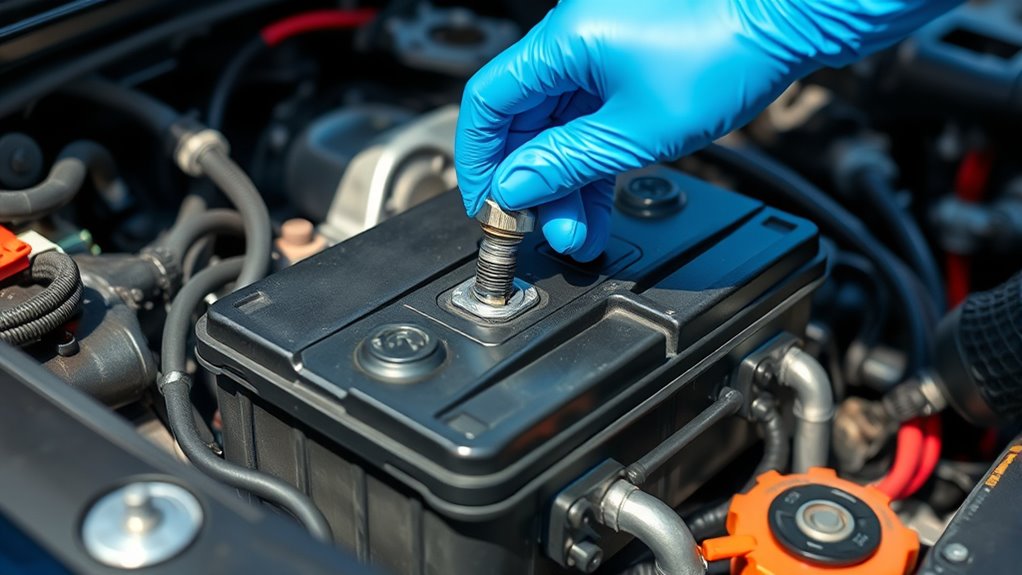
How to Properly Disconnect and Reconnect Your Car’s Battery
Before you start disconnecting your car’s battery, make sure the vehicle is turned off and parked on a flat surface. Properly handling the battery is key for safety and preventing electrical issues.
First, find the battery, usually under the hood. Use the right tools, like a wrench or socket, to loosen the terminal clamps. Always disconnect the negative terminal first to avoid sparks or short circuits—think of it as removing the black cable.
Next, disconnect the positive terminal. When reconnecting, attach the positive terminal first, then the negative. Tighten the clamps securely but don’t over-tighten, which could damage the terminals.
Keep the terminals clean from corrosion and dirt. Remember to wear gloves and eye protection to stay safe while working with electrical components.
Tips for Changing Spark Plugs Safely Without Disconnecting the Battery
When you’re swapping out spark plugs and choose not to disconnect the battery, it’s really important to have the right tools on hand. Using the proper socket and ratchet will help you avoid slipping or causing any accidental damage.
Before you start, make sure the engine is completely off. This simple step helps prevent any sparks or injuries while you’re working under the hood.
And hey, just stay cautious throughout the process. Being mindful of electrical sparks can save you from potential harm or messing up your vehicle’s delicate systems.
Proper Tool Usage
Using the right tools is essential for changing spark plugs safely and efficiently. Having the correct tools helps you apply proper torque, preventing damage to spark plug threads or engine components.
Make sure you have the right socket size for your spark plug types. Using the wrong size can strip threads or cause improper seating. A torque wrench is invaluable for tightening spark plugs to the manufacturer’s specifications, ensuring they’re not too loose or too tight.
Keep a ratchet, extension bar, and spark plug socket handy to reach tight spaces easily. Proper tool usage minimizes risks, maintains engine integrity, and guarantees a smooth, safe replacement process.
Ensuring Engine Off
Making certain the engine is off before starting the spark plug replacement is a simple step that can prevent many accidents. Turning off the engine is vital for engine safety and minimizes risks associated with moving parts.
Verify that the ignition switch is in the off position and remove the key to prevent accidental startup. This also helps you avoid electrical hazards, as working on a live system increases the chance of sparks or shorts.
Allow the engine to cool if it’s been running, reducing the risk of burns. Confirm that all electrical components are de-energized before proceeding.
Taking these precautions guarantees a safer environment while you work on your spark plugs, reducing the chance of injury or damage.
Avoiding Electrical Sparks
Although disconnecting the battery can add extra safety, you can still prevent electrical sparks during spark plug changes by taking certain precautions. Making sure you follow electrical safety tips helps protect the spark plugs and avoid damage.
To reduce sparks, keep the ignition off and remove the key before working near electrical parts. This simple step minimizes the chance of accidental sparks. Also, avoid touching metal tools to grounded parts or electrical contacts.
Work in a dry, well-lit area to prevent accidental shorts or static buildup. Good lighting and a dry environment help keep things safe and make the job easier.
Following these electrical precautions allows you to replace spark plugs safely without disconnecting the battery. It keeps your work efficient and maintains safety standards.
Common Mistakes When Replacing Spark Plugs (And How to Avoid Them)
One common mistake when replacing spark plugs is not properly gapping them to the manufacturer’s specifications. Many people fall for myths that say gapping isn’t important, but incorrect gaps can cause misfires, poor fuel economy, and engine damage. Always verify the correct gap with a feeler gauge before installing.
Another mistake is over-tightening or under-tightening the spark plugs, which can damage the threads or cause poor contact. Make sure to torque them to the recommended specifications. Also, neglecting to inspect or replace ignition wires or coils during plug changes can lead to ongoing misfires.
Rushing through the process is a frequent error that increases the risk of cross-threading or damaging the plug or cylinder head. To avoid these mistakes, take your time, double-check all specs, and follow proper procedures. Doing so ensures your spark plugs work at their best and last longer.
When to Seek Help From a Professional Mechanic
While many spark plug replacements are straightforward, there are times when it’s better to call in a professional mechanic. If you’re dealing with complex engine issues, don’t have much experience, or aren’t familiar with your vehicle’s setup, it’s a good idea to seek expert help. A qualified mechanic can ensure the job is done safely and correctly, helping you avoid potential damage.
You should consider reaching out for mechanic services if you notice stubborn spark plugs that won’t come out despite gentle effort. Also, if your engine shows unusual signs like misfires, rough idling, or reduced power, it’s a sign to get professional help.
If you lack the proper tools or knowledge to handle advanced engine components safely, don’t try to do it yourself. In these cases, a mechanic can diagnose underlying problems, offer expert advice, and perform the repair efficiently. Recognizing when to seek help keeps your vehicle safe and reliable, saving you time and preventing costly mistakes.
What Are the Consequences of Not Disconnecting the Battery?
Not disconnecting the battery before changing your spark plugs can cause electrical issues or even damage your vehicle’s electronic systems. Without proper safety measures, you risk short circuits or electrical hazards that could harm sensitive components.
Sparks or accidental contact with live wires might cause electrical surges, which can erase stored data or damage control modules. Not disconnecting the battery also raises the chance of unintentionally activating electrical systems.
This could lead to airbags deploying or alarms going off, which can be dangerous or confusing. These risks show why prioritizing battery safety is so important. Taking the simple step to disconnect the battery helps protect you and your vehicle’s electronics during maintenance.
Ignoring this step can lead to costly repairs and safety concerns. So, always remember to disconnect the battery before working near the engine’s electronics.
Final Tips: Should You Disconnect the Battery When Changing Spark Plugs?
Should you disconnect the battery when changing spark plugs? Usually, it’s not absolutely necessary, but it’s a smart move for safety and maintenance.
Disconnecting the battery can prevent accidental electrical shocks or shorts, especially if you’re working near sensitive electronics. It also helps protect the vehicle’s ECU and other components from damage.
Think about these points:
- Electrical Safety: Disconnecting reduces shock risk and shields electronic parts.
- Preventing Short Circuits: It stops sparks from accidentally happening when removing or installing plugs.
- Easier Maintenance: With the battery unplugged, you can work more confidently and efficiently.
If your vehicle has complex electronics, it’s best to disconnect the battery. For simple spark plug replacements, it’s optional but still a good idea. Always prioritize safety when working on your vehicle.
Frequently Asked Questions
Can Disconnecting the Battery Damage My Vehicle’s Computer System?
Disconnecting the battery generally won’t damage your vehicle’s computer system if done correctly. It actually helps protect the computer from power surges during maintenance, keeping everything safe.
Just make sure to disconnect the negative terminal first and reconnect it last. This simple step reduces the risk of electrical damage and helps keep your vehicle’s electronics protected while you’re changing the spark plugs.
How Long Does It Typically Take to Disconnect and Reconnect the Battery?
On average, disconnecting and reconnecting your battery takes about 5 to 10 minutes. This process is pretty quick, which makes spark plug preparation easier and safer.
You should plan for this short time to avoid any mishaps. During this process, make sure to follow the proper procedures to prevent electrical issues.
With a little preparation, you can get the job done efficiently, saving time and ensuring your vehicle runs smoothly afterward.
Are There Specific Tools Needed to Safely Disconnect the Battery?
You’ll need a wrench or socket set to safely disconnect the battery terminals, usually 10mm or 13mm sizes.
Follow safety precautions by wearing gloves and eye protection. Always disconnect the negative terminal first to prevent sparks or shorts.
Carefully loosen and remove the battery terminals from the battery posts, making sure no metal tools contact both terminals at once.
This keeps you safe during the spark plug change.
Will Disconnecting the Battery Reset My Car’s Electronic Settings?
Think of your car’s electronic systems as a delicate web of glowing lights. Disconnecting the battery during maintenance can cause these lights to flicker out temporarily.
When you disconnect the battery for spark plug changes, it might reset some settings related to your electronic systems. For battery maintenance, disconnecting helps prevent electrical surges.
But it’s wise to reconfigure your system afterward to keep everything running smoothly.
Is It Necessary to Wear Protective Gear When Disconnecting the Battery?
Yes, you should wear protective gear when disconnecting the battery to stay safe during maintenance. Safety gear like gloves and safety glasses help protect you from sparks, acid leaks, or electrical shocks.
Always handle the battery carefully and avoid contact with corrosive materials. Wearing protective gear reduces risks and keeps you safe, especially with older or damaged batteries.
Prioritizing safety is essential during any battery-related maintenance or repairs.
Conclusion
Ultimately, disconnecting your battery is like easing a tightrope walk—steadying your hands and guiding your car safely through a delicate repair. It’s a simple step that shields you from sparks and surprises, keeping your workspace calm and controlled.
While it’s tempting to skip it, think of the peace of mind it offers—an extra layer of safety when changing your spark plugs. Disconnecting the battery helps prevent any accidental sparks or electrical issues, making the process safer and smoother.