Can You Replace Spark Plugs Yourself? A Simple DIY Guide
Feeling overwhelmed by car maintenance tasks like replacing spark plugs? You’re not alone—many people struggle with DIY car repairs and worry about making mistakes.
The good news is, replacing spark plugs can be simple if you follow a few basic steps.
Yes, you can replace spark plugs yourself with some basic tools and careful steps. Start by locating and accessing the plugs, then remove the old ones carefully, inspecting and gapping new plugs as needed.
Properly install and tighten them to the correct torque to avoid damage.
Be mindful of common mistakes like over-tightening or improper gapping. If you want a clear, step-by-step guide that will help you do it confidently, keep exploring for more details.
Key Takeaways
- Yes, replacing spark plugs is a manageable DIY task with the right tools and basic mechanical knowledge.
- Accessing and removing spark plugs means locating them and handling ignition wires or coils carefully.
- Proper gapping, inspecting, and torquing new plugs helps ensure your engine runs smoothly.
- Following safety precautions prevents damage to components and keeps you safe during the process.
- Checking your vehicle’s manual is a good idea to make sure you get the correct procedures and specs for your spark plug replacement.
How Do Spark Plugs Work and Why Are They Important?
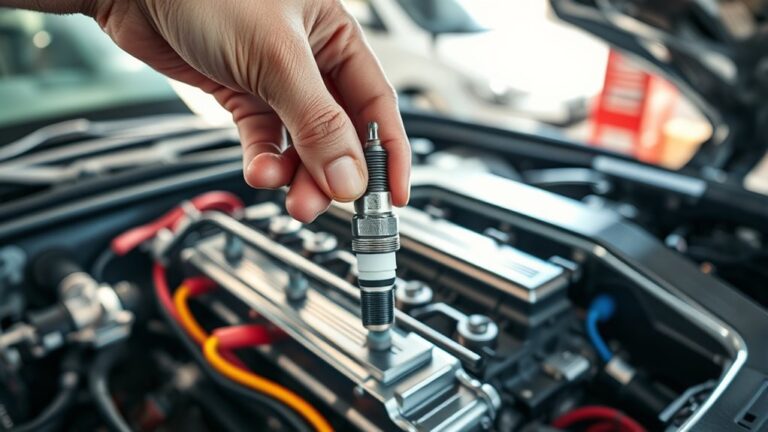
Spark plugs are small but essential parts of your vehicle’s engine that create the spark needed to ignite the air-fuel mixture. Their main job is to produce a high-voltage electrical spark at just the right moment to start the combustion process.
Spark plugs generate the high-voltage spark needed to ignite the air-fuel mixture and power your engine.
This process is crucial because it turns fuel into the energy that powers your car. If your spark plugs aren’t working properly, your engine’s ignition efficiency drops, leading to misfires, sluggish acceleration, and higher fuel use.
A good spark plug ensures a strong, steady spark, helping your engine run smoothly and efficiently. Without it functioning correctly, your engine’s performance suffers. Understanding how spark plugs work shows how important they are for maintaining peak ignition efficiency.
When spark plugs are working well, they keep your engine firing on all cylinders, saving you money and preventing future engine issues.
When Should You Replace Your Spark Plugs?
You know, it’s a good idea to keep an eye on your spark plugs. If your car is having trouble starting up or if it’s running rough when you’re idling, those are pretty good signs that it might be time to replace them.
Most car makers suggest changing your spark plugs somewhere between 30,000 and 50,000 miles, but of course, it depends on your specific vehicle and how you drive. If you start noticing that your engine isn’t performing as well as it used to or your fuel mileage isn’t as good, those are pretty clear clues that your spark plugs might be worn out and due for a change.
Signs of Wear
How can you tell if your spark plugs are worn out? The key is recognizing signs of wear that affect performance. Typically, spark plug lifespan varies, but if you notice misfiring, rough idling, or difficulty starting your engine, it’s a clue your spark plugs might be worn.
Wear indicators, such as eroded electrodes or deposits, signal it’s time for a change. You might also notice decreased fuel efficiency and sluggish acceleration.
Visual inspection can reveal if the electrodes are worn down or covered with carbon deposits. If these signs appear, don’t wait—replacing the spark plugs can restore engine performance and prevent further damage.
Regular checks guarantee your vehicle runs smoothly and efficiently.
Mileage Recommendations
Most vehicle manufacturers recommend replacing spark plugs every 30,000 to 50,000 miles, but this can vary depending on the type of spark plug and driving conditions. Keeping an eye on your mileage helps ensure your spark plugs last longer and your engine runs smoothly.
If you often drive in tough conditions like extreme temperatures or stop-and-go traffic, you’ll probably need to replace your spark plugs closer to the lower end of that range. On the other hand, high-quality iridium or platinum spark plugs can last up to 100,000 miles.
Regularly tracking your mileage is a smart way to stay ahead of potential issues. Remember, sticking to the recommended replacement schedule helps maximize spark plug lifespan and keeps your engine performing at its best.
Engine Performance Drops
When your engine’s performance starts to decline, it’s often a sign that your spark plugs may be worn out or failing. You might notice engine misfires, rough idling, or hesitation during acceleration.
These issues reduce your vehicle’s fuel efficiency and can cause further engine damage if left unchecked. Worn spark plugs struggle to ignite the fuel-air mixture consistently, leading to incomplete combustion.
If you experience increased fuel consumption or rough running, it’s a good idea to check your spark plugs. Replacing them at the first sign of performance drops can restore smooth engine operation, improve fuel efficiency, and prevent more serious problems down the road.
Don’t ignore these symptoms—they’re your car’s way of signaling it’s time for a spark plug replacement.
Tools and Materials Needed for Spark Plug Replacement
To replace spark plugs yourself, you’ll need a specific set of tools and materials to get the job done efficiently and safely. First, gather the correct spark plug types for your vehicle, which are essential for peak performance and aligning with your maintenance schedule.
Gather the right spark plugs and tools for a safe, efficient replacement and optimal engine performance.
You’ll need a spark plug socket, usually with a rubber insert to prevent damage, along with a ratchet wrench. An extension bar might help you reach deep-set plugs more easily. A torque wrench is important to install the new plugs to the manufacturer’s specifications.
You’ll also need a spark plug gap tool to check and adjust the gap if necessary. A wire brush or spark plug cleaner can help remove debris before installation. Safety gloves and eye protection are recommended to keep yourself safe.
Having these tools ready guarantees a smooth replacement process, reduces the risk of damage, and keeps your engine running smoothly according to the recommended maintenance schedule.
Locating and Accessing Your Vehicle’s Spark Plugs
First off, you’ll want to figure out where your vehicle’s spark plugs are located—that can change depending on the make and model. Once you’ve found them, the next step is to access them carefully. Usually, this means removing some covers or other parts that might be in the way. Having a clear shot at the spark plugs makes the whole replacement process much easier and helps you avoid accidentally damaging anything.
Identifying Spark Plug Locations
Locating your vehicle’s spark plugs is pretty straightforward once you know where to look. Spark plug types and ignition systems vary, but their general locations tend to be similar.
Usually, they sit on top of the engine, connected to thick wires or ignition coils. You’ll find them around the engine block, often hidden under plastic covers or components like the intake manifold.
To spot them, look for thick, rubber-coated wires leading to small, metal cylinders. Check near the top or sides of the engine, or where ignition coils are mounted directly on the engine.
You can also look for spark plug wires or boots attached to individual cylinders. The shiny, threaded ends of the spark plugs usually protrude through engine components, making them easier to identify.
Getting familiar with these clues helps you find the spark plugs quickly, no matter how your engine is laid out.
Gaining Proper Access
Getting proper access to your vehicle’s spark plugs might seem tricky at first, but it’s mostly about understanding your engine’s layout and removing any obstructions.
Start by opening the hood and locating the engine compartment. Spark plug access varies by vehicle; some engines are straightforward, while others need you to remove covers or parts.
Look for the ignition coils or spark plug wires, which show where the plugs are. Clear away any dirt, debris, or obstacles blocking your view.
If necessary, remove engine covers or other components that make access difficult, but be careful not to damage anything.
Gaining proper spark plug access is essential for a safe, efficient replacement process and can help you avoid frustration.
Step-by-Step: Removing Old Spark Plugs
To remove the old spark plugs, start by disconnecting the negative terminal of your car’s battery. This helps prevent any electrical shorts.
Next, gather your spark plug tools—usually a spark plug socket, ratchet, and extension. Carefully locate each spark plug, which is often covered by engine components.
Gather your tools—spark plug socket, ratchet, and extension—and carefully locate each spark plug hidden beneath engine components.
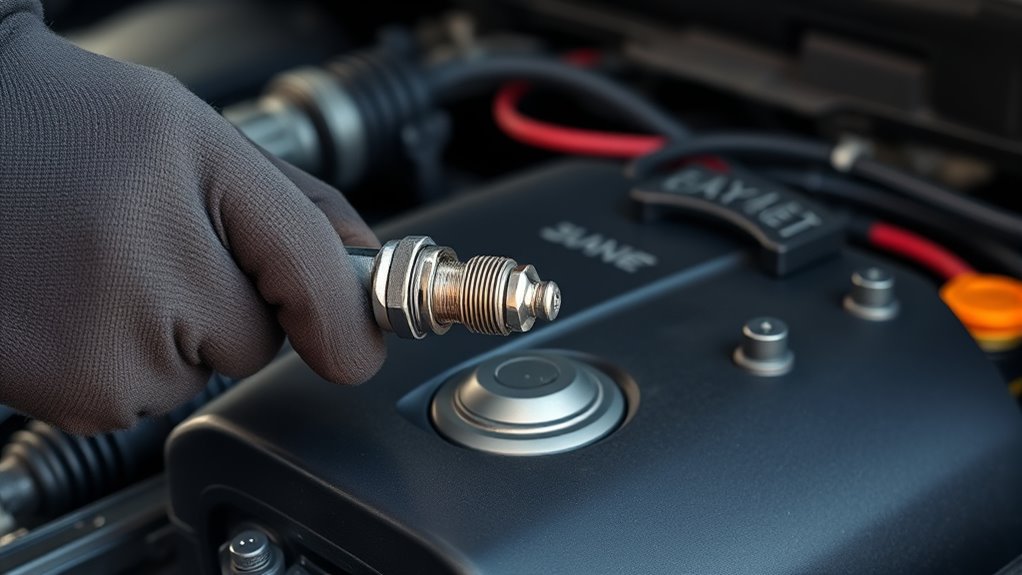
Use your tools to loosen the spark plug wire or boot before unscrewing the plug itself. Imagine the engine’s interior: shiny metal threads, tight spaces, and stubborn deposits.
As you turn the socket, feel the resistance easing. You might hear a slight pop as the plug frees from the cylinder head.
Keep your hand steady and remove each spark plug gently. This avoids damaging the threads, which is essential for proper maintenance.
Visualize the old, carbon-fouled plugs coming out, ready for inspection and replacement.
Checking and Gapping New Spark Plugs Made Easy
Before you install new spark plugs, it’s a good idea to give them a quick inspection. Just take a look to make sure there are no damages or defects—that way, you’re not putting a faulty plug into your engine.
Next up, you’ll want to check the gap. Using the right tools, carefully measure and set the gap to the manufacturer’s specifications. Don’t worry, it’s pretty straightforward once you get the hang of it, especially if you follow the proper techniques and use accurate instruments. This ensures your engine runs smoothly and efficiently.
Properly Inspect Spark Plugs
Inspecting new spark plugs is an important step to make sure they’re in perfect condition before you install them. You want to check the materials for any defects or damage. Hold the plug up to the light to spot cracks or corrosion, and examine the electrode for wear or erosion.
Make sure the ceramic insulator is intact and free from chips or cracks. Look for any signs of manufacturing flaws or deposits that could affect how well the spark plug works. During inspection, keep an eye out for bright, shiny electrodes free of buildup, smooth ceramic insulators, and clean, undamaged threads.
Also, check that the center and ground electrodes are properly aligned and there are no signs of corrosion or damage to the metal shell. This ensures your spark plugs are in top shape before you install them.
Correct Gapping Techniques
Once you’ve inspected your new spark plugs for any defects, the next step is to verify they are properly gapped for peak performance. Gapping methods vary depending on the spark plug types you’re working with, so check your vehicle’s manual for the exact specs.
Use a feeler gauge or a dedicated spark plug gapping tool to measure the gap accurately. If the gap is too wide, gently bend the ground electrode closer; if it’s too narrow, carefully bend it outward.
Always handle the spark plug carefully to avoid damaging the porcelain insulator. Proper gapping guarantees maximum spark and engine efficiency.
Take your time to check and adjust each spark plug precisely, as incorrect gaps can lead to misfires, poor fuel economy, and engine trouble.
Using Accurate Tools
Using the right tools is essential to make sure your new spark plugs are checked and gapped accurately. Different spark plug types need specific tools to measure and adjust the gap properly.
A feeler gauge is your go-to for precise gapping, ensuring the gap matches your vehicle’s specifications. When checking spark plugs, you’ll also need a torque wrench to tighten them properly without over-tightening or under-tightening.
Visualize a set of tools laid out: a feeler gauge for gap measurement, a torque wrench for proper tightening, a spark plug socket for easy removal and installation, compressed air to clean the area, and the manufacturer’s specifications chart for torque and gap.
Using these tools guarantees your spark plugs fit perfectly, perform well, and last longer.
Installing Spark Plugs Properly and Tightening Tips
Properly installing and tightening spark plugs is key to ensuring your engine runs smoothly and avoiding damage.
Before you install, make sure you pick the right spark plug types for your vehicle. Using the wrong ones can cause misfires or even harm your engine.
When installing, start by screwing the spark plug in by hand to prevent cross-threading. Once it’s hand-tight, use a torque wrench to tighten it properly.
Check your vehicle’s manual for the recommended torque setting. Overtightening can crack the ceramic insulator, while undertightening can lead to poor contact and misfires.
Use a spark plug socket with a rubber insert to protect the ceramic during installation.
Tighten the spark plug in small steps, making sure it’s snug but not overly tight. Proper torque ensures a secure fit and optimal performance.
Following these steps helps prevent future issues and keeps your engine running efficiently.
Common Mistakes to Avoid During Spark Plug Replacement
Even experienced DIYers can make mistakes during spark plug replacement that lead to engine issues. One common error is believing spark plug myths, like assuming all plugs are the same or that tightness doesn’t matter.
Over-tightening can crack the ceramic insulator, while under-tightening causes poor contact and misfires. Another mistake is neglecting proper maintenance tips, such as not checking the spark plug gap or using the wrong type of spark plug.
Over-tightening risks cracking the ceramic insulator; under-tightening leads to poor contact and misfires. Proper maintenance is essential.
Failing to clean the area around the spark plug before removal can let debris fall into the combustion chamber. Moreover, rushing the process increases the risk of cross-threading or damaging the threads.
Remember, careful attention during installation is key. Keep these points in mind to avoid costly repairs and guarantee your engine runs smoothly.
Proper knowledge of spark plug myths and maintenance tips helps you replace plugs confidently and correctly, avoiding common pitfalls along the way.
Troubleshooting: What to Do If Your Engine Runs Rough After Replacement?
If your engine starts running rough after replacing the spark plugs, it’s a sign that something might not have gone as smoothly as it should have. Engine misfire causes could include improper plug gapping, loose connections, or incorrectly installed plugs.
First, double-check each spark plug to verify they’re properly gapped according to your vehicle’s specifications. Tighten the plugs securely, but don’t overtighten, as that could damage the threads.
Inspect the ignition wires or coil packs for any damage or loose connections. If the rough idle persists, consider cleaning or replacing the fuel injectors or checking for vacuum leaks.
For rough idle solutions, resetting the engine’s computer by disconnecting the battery for a few minutes might help recalibrate sensor readings. If these steps don’t resolve the issue, it’s best to consult a mechanic, as persistent misfires can harm your engine over time.
Should You Replace Spark Plugs Yourself or Call a Mechanic?
Deciding whether to replace your spark plugs yourself or call a mechanic depends on your comfort level with car repairs and the tools you have available.
The benefits of DIY include saving money on labor costs and gaining a sense of accomplishment. If you’re comfortable using basic tools, replacing spark plugs can be straightforward, especially with guidance.
However, if your engine is in a tight spot or you’re unsure about the process, professional help guarantees proper installation and helps avoid damage.
If you’re unsure or your engine is hard to access, a professional ensures proper installation and prevents damage.
Imagine a well-lit workspace with your socket wrench ready, spark plug wires neatly organized, and your vehicle lifted securely on jack stands.
Picture the smell of engine grease in the air and having a clear step-by-step guide in hand.
Weigh these visuals against your skills and confidence. If you’re comfortable, DIY can be a rewarding way to save money.
Otherwise, calling a mechanic is a safer choice.
Frequently Asked Questions
Can I Replace Spark Plugs on Any Vehicle Myself?
Yes, you can replace spark plugs on most vehicles yourself, but it depends on the spark plug types your car uses. Some vehicles have spark plugs that are easy to access, while others may need special DIY tools or the removal of engine parts.
Check your owner’s manual to find out what type of spark plugs your car has and gather the right tools before you start. If you’re comfortable with basic repairs, replacing spark plugs is a manageable task that can save you money.
How Long Does a Typical Spark Plug Replacement Take?
Replacing spark plugs usually takes about 30 minutes to an hour, depending on your vehicle and how comfortable you are with cars.
Some people worry about how long spark plugs last or whether they need special tools, but with the right equipment, it’s often a quick job.
If you know your way around your engine, you’ll find the process pretty straightforward.
Just set aside enough time, gather your tools, and you’ll have those spark plugs replaced efficiently and easily.
Are There Risks of Damaging the Engine When Replacing Spark Plugs?
Replacing spark plugs can pose risks of spark plug damage if you’re not careful, which might lead to engine performance issues. You need to handle the plugs gently and use the right tools to avoid damaging them or surrounding components.
Improper installation can cause misfires or reduced efficiency. So, take your time, follow instructions, and double-check your work to prevent any damage that could harm your engine’s performance.
Do Spark Plugs Need to Be Replaced at the Same Time?
It’s best to replace all your spark plugs at the same time, especially since their lifespan usually falls within a similar range.
Doing so helps ensure consistent engine performance and prevents uneven wear that could lead to misfires. Regular replacement depends on your vehicle and spark plug type, but following your owner’s manual is a good idea.
This way, you can keep your engine running smoothly and avoid potential issues caused by neglecting to replace all the plugs at once.
How Often Should I Check or Replace Spark Plugs for Optimal Performance?
You should check your spark plugs every 30,000 miles and replace them around 60,000 miles, depending on your vehicle’s spark plug lifespan. Regular inspection helps keep your engine running smoothly, prevents misfires, and boosts fuel efficiency.
If you notice rough idling or poor acceleration, it’s probably time for a replacement. Keeping your spark plugs in good shape can maintain optimal engine performance and even improve how your car drives over time.
Conclusion
Replacing spark plugs yourself can save you money and give you a sense of accomplishment. Don’t worry if it feels intimidating — with the right tools and a little patience, you can do it! Just follow the steps carefully and avoid rushing the process.
Remember, if your engine still runs rough afterward, it’s okay to call a mechanic. You’ve got this. Empowering yourself with DIY skills makes vehicle maintenance less challenging, especially when learning how to replace spark plugs yourself.