Ultimate Guide: How to Clean Engine Oil Sludge Like a Pro
Many car owners struggle with engine oil sludge, which can cause serious engine problems if not addressed. You’re not alone—keeping your engine clean is a common challenge, but the good news is, it’s manageable with the right approach.
To clean engine oil sludge like a pro, start by ensuring your engine is cool and then drain the old oil, replacing the filter.
Use an effective engine flush or degreaser, carefully applying it to areas with heavy sludge, scrubbing gently, and rinsing thoroughly.
Always prioritize safety with protective gear, and consider professional help if the buildup is stubborn.
Continue, and you’ll uncover essential tips to maintain a clean, healthy engine and prevent future sludge formation.
Key Takeaways
- Identify early signs of oil sludge buildup, like rough idling and engine knocking, so you can prevent more damage.
- Drain out the old oil, replace the filter, and use the right engine flush products for effective sludge removal.
- Apply degreaser carefully, scrub gently with brushes, and rinse thoroughly to get rid of stubborn sludge.
- Keep up with regular oil changes and consider switching to synthetic oils to prevent future sludge buildup.
- If the sludge still won’t come out or your engine issues get worse, don’t hesitate to seek professional help.
What Causes Engine Oil Sludge and Why Does It Matter?
Engine oil sludge forms when contaminants like dirt, metal particles, and old oil build up in your engine and aren’t cleaned out properly. As oil ages, it breaks down, losing its lubricating properties and becoming thick and sticky.
This oil breakdown attracts dirt and debris, which combine to create sludge. If you skip regular maintenance, these contaminants build up faster, increasing the risk of engine problems.
Over time, sludge can clog vital components like oil passages and filters, impairing oil flow and causing wear or even engine failure. Keeping up with oil changes and inspections is key to preventing sludge.
A clean engine not only lasts longer but also performs at its best. Understanding how contaminants and oil breakdown lead to sludge shows why consistent care is so important. Regular maintenance is your best defense against sludge buildup.
How to Recognize Signs of Oil Sludge in Your Engine
You might start to notice your engine making weird noises or running a bit rougher than it used to. It’s not always obvious at first, but these little signs can mean something’s going on.
Another thing to watch out for is a drop in performance — like your car feeling sluggish when you press the gas or even stalling unexpectedly. Those could be clues that oil sludge is building up inside your engine.
Paying attention to these signs early on can really help you catch any problems before they get worse and cause more damage.
Unusual Engine Noises
Unusual noises coming from the engine can be a clear sign that something’s wrong, often pointing to the presence of oil sludge. These sounds may include knocking, ticking, or rattling, which can indicate restricted oil flow or worn components.
When oil sludge builds up, it hampers proper lubrication, affecting engine performance and increasing friction. Noise diagnosis becomes essential at this stage—you might notice louder engine sounds during acceleration or idling.
Pay attention to persistent or unusual noises, as they often reveal underlying issues caused by sludge buildup. Addressing these sounds early can prevent further damage, ensuring your engine runs smoothly.
Recognizing these signs helps you take timely action, preserving your engine’s health and maintaining peak performance.
Decreased Engine Performance
When oil sludge builds up, it can really slow down your vehicle’s performance by blocking the flow of lubricants and creating friction inside the engine.
You might notice things like slower acceleration, rough idling, or lower fuel efficiency. These signs show that engine parts aren’t moving smoothly, which could lead to bigger damage.
If you ignore these issues, they can threaten your engine’s lifespan over time. Catching these early signs means you can take action, like cleaning out the sludge, to improve performance.
Regular maintenance and cleaning can help bring back your engine’s peak function. This keeps your vehicle running smoothly and helps it last longer.
Dealing with decreased engine performance early on can also save you from costly repairs and extend your engine’s life.
Preparing Your Car for Oil Sludge Cleaning
Before starting the cleaning process, it’s essential to prepare your car properly to guarantee safety and effectiveness. Begin by confirming your engine is cool, as working on a hot engine can be dangerous.
Next, review your oil change practices. Drain the old oil completely and replace the oil filter if needed. This helps remove any loose sludge and contaminants, making the cleaning more effective.
Check your vehicle’s level of engine maintenance. Address any underlying issues like leaks or worn parts to prevent future sludge buildup.
Make sure your battery is in good condition, and disconnect the negative terminal to avoid accidental electrical shorts.
Gather all necessary tools and cleaning products beforehand. Performing a quick inspection of hoses, belts, and other engine components verifies everything is in proper condition.
Proper preparation sets the stage for a thorough, safe, and efficient oil sludge cleaning process.
How to Choose the Best Engine Flush Products
When you’re picking out an engine flush, it’s really important to think about how well it works and whether it’s safe for your engine. You don’t want to risk damage, so make sure it’s compatible with your specific engine type. It’s also a good idea to look at what ingredients are in the product—transparency is key here—to ensure it’s safe and won’t cause long-term problems down the road.
And of course, you should compare prices and check out the reputation of the brands. You want to find something that’s reliable and effective without breaking the bank. Taking these steps will help you choose an engine flush that’s both safe and budget-friendly.
Effectiveness and Compatibility
Choosing the right engine flush product depends on its effectiveness and compatibility with your vehicle’s engine. To guarantee it works well, consider the cleaning methods it uses and whether it’s compatible with your engine type.
Some products excel at breaking down thick sludge, while others are gentler, suited for newer engines. Always check the label for product compatibility to avoid potential damage.
An effective engine flush should thoroughly clean without harming sensitive components. Research reviews and manufacturer recommendations to find a product that matches your engine’s needs.
Ingredient Transparency and Safety
Understanding the ingredients in an engine flush product helps you make safer, more informed choices. Look for products that prioritize ingredient sourcing from reputable suppliers, ensuring the chemicals used are of high quality and free from contaminants.
Transparency about ingredients means the manufacturer clearly lists what’s inside, so you know exactly what you’re applying to your engine. Adherence to safety standards is essential. Choose products that meet or exceed industry regulations to avoid harmful side effects or damage.
Avoid products with vague ingredient lists or questionable additives. When you select a flush with transparent labeling and reliable safety standards, you protect your engine’s health, your vehicle’s longevity, and your own safety during maintenance.
Price and Brand Reputation
Price and brand reputation play critical roles in selecting an engine flush product that delivers quality without breaking the bank. When doing a price comparison, you’ll find some products offer affordability but may lack effectiveness, while others are pricier but trusted for proven results.
It’s crucial to evaluate brand loyalty, as well-established brands often guarantee safety and performance. While a lower price can be tempting, investing in a reputable brand guarantees you’re using a product with tested ingredients and positive reviews.
Step-by-Step: How to Clean Oil Sludge Like a Pro
To effectively clean oil sludge from your engine, start by gathering the necessary tools and supplies, including engine degreaser, plastic scrapers, brushes, and protective gear. Proper engine maintenance requires careful cleaning techniques to prevent damage.
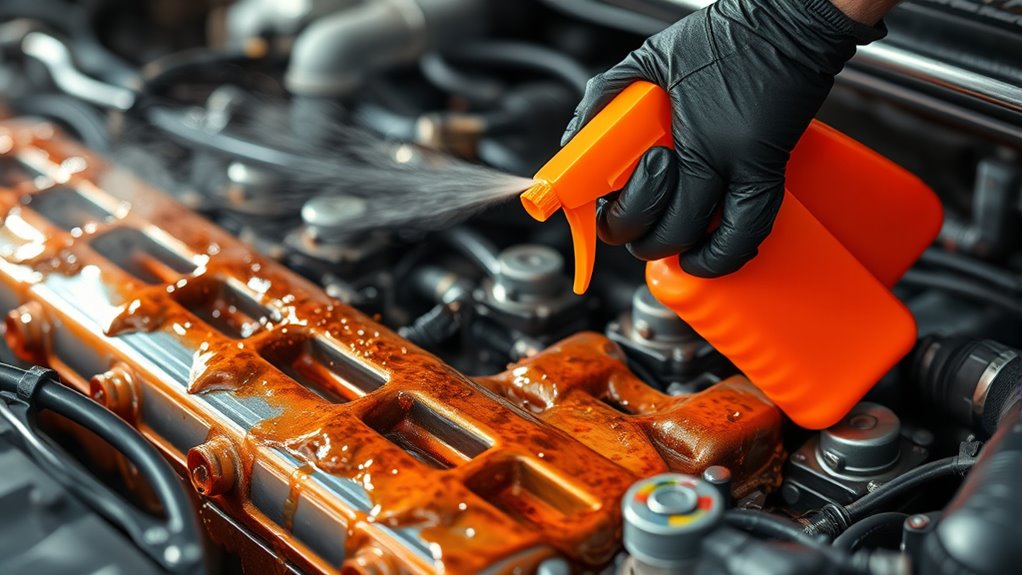
Begin by disconnecting the battery and confirming the engine is cool. Spray the engine with degreaser, focusing on heavily coated areas, and let it sit for 10-15 minutes. Use plastic scrapers and brushes to gently loosen and remove sludge buildup, avoiding metal tools that could scratch surfaces.
Disconnect the battery, ensure the engine is cool, then apply degreaser and wait 10-15 minutes before cleaning.
Rinse thoroughly with water, preferably using a hose with a gentle spray. Dry the engine completely with a microfiber cloth or compressed air. This step-by-step approach guarantees you remove sludge efficiently while safeguarding sensitive components.
Following these cleaning techniques helps restore engine performance and prolongs its lifespan, all while maintaining proper engine maintenance habits.
Tips to Prevent Oil Sludge Buildup in Your Engine
Regularly maintaining your engine can prevent oil sludge buildup before it starts. One of the best ways is to stick to the recommended oil change schedule. Check your owner’s manual for intervals, and don’t go beyond those guidelines.
Using synthetic oils can also help because they resist breakdown and sludge formation better than conventional oils, especially at high temperatures. Make sure your engine warms up properly before driving hard, which helps circulate oil thoroughly and prevents deposits.
Keep your cooling system in top shape to maintain peak engine temperatures and reduce the risk of oil breakdown. Regularly inspecting and replacing oil filters is essential because clogged filters can contribute to sludge buildup.
Finally, avoid short trips that don’t let the engine reach full operating temperature. These trips can promote sludge formation over time. Follow these tips to keep your engine cleaner and running smoothly longer.
When Should You Consider Professional Engine Cleaning?
Ever wondered when it’s time to bring in a professional for engine cleaning? If your engine shows persistent oil sludge buildup despite regular maintenance, it’s probably time to call in the experts.
Signs include rough idling, decreased fuel efficiency, or unusual engine noises. When DIY methods no longer improve engine performance or if you notice a strong burning smell, it’s a clear sign that a thorough engine cleaning is needed.
Rough idling, poor fuel economy, or strange noises signal it’s time for professional engine cleaning.
Professionals use specialized tools and cleaning agents to remove stubborn sludge safely and effectively. If you’re unsure about tackling heavy oil deposits or if your engine is older and more prone to buildup, consulting an expert is your best bet.
Professional engine cleaning guarantees that all hidden sludge is properly removed without risking damage to engine components. Ultimately, scheduling a professional service makes sense when your engine’s health is compromised or DIY solutions aren’t enough to restore peak performance.
Common Mistakes to Avoid When Removing Oil Sludge
When you’re removing oil sludge, it’s super important to pay attention to safety precautions. Chemicals used in the process can be pretty harmful if you’re not careful, so always make sure you’re wearing the right protective gear.
Also, be careful with the cleaning products you choose. Using the wrong ones can actually hurt your engine parts or even make the sludge problem worse. So, take a moment to pick the right products for the job.
And don’t rush through it. Trying to hurry might mean you don’t get everything cleaned properly, which can lead to engine damage down the road. So, go slow and steady to get the best results.
Ignoring Safety Precautions
One of the biggest mistakes you can make when removing oil sludge is ignoring safety precautions. Without proper safety gear, you risk exposure to harmful chemicals and hot surfaces, which can cause injuries or health issues.
Always wear protective equipment like gloves, goggles, and a respirator to shield yourself from fumes, splashes, and debris. Handling engine parts and cleaning agents without these precautions increases the chance of accidents.
Make sure your workspace is well-ventilated, and keep a fire extinguisher nearby in case of emergencies. Never skip these safety steps, even if you’re in a rush.
Prioritizing safety gear and protective equipment ensures you can do the job effectively without risking your health or safety.
Using Wrong Cleaning Products
Using the wrong cleaning products can do more harm than good when removing oil sludge from your engine. Many myths suggest any degreaser will work, but that’s not true.
Some products might be too harsh and damage seals or paint. Others are too mild to break down thick sludge effectively. Product comparisons show that using the right cleaner—engine-specific degreasers made for stubborn grime—is the safest and most efficient choice.
Avoid household cleaners or industrial solvents not meant for engines. They can cause corrosion or leave harmful residue. Always check labels and stick to products recommended by manufacturers or experienced mechanics.
Choosing the wrong cleaning products can prolong the cleaning process or even worsen engine damage. So, pick your cleaner wisely for safe, effective results.
Rushing the Cleaning Process
Rushing the cleaning process can lead to incomplete removal of oil sludge and potential engine damage. Effective cleaning techniques need patience and proper time management.
If you speed through it, you risk leaving stubborn sludge behind that can clog passages or hurt engine parts. Take your time to thoroughly apply cleaning products and let them work as instructed.
Rushing often results in sloppy work, which means you might have to redo steps or, worse, cause costly damage. Focus on planning your cleaning schedule and breaking it down into manageable steps.
Give each stage enough time to do its job. This ensures a thorough cleaning and reduces risks. Remember, patience and careful time management are your best tools for cleaning the engine without causing harm.
How Regular Maintenance Keeps Your Engine Sludge-Free
Regular maintenance is key to preventing engine oil sludge from forming, helping your engine stay clean and run smoothly. Keeping up with routine checks and oil changes ensures contaminants don’t settle and cause problems.
Sticking to a schedule for oil changes every 3,000 to 5,000 miles keeps your oil fresh and effective. Using the right type and quality of oil for your vehicle also makes a big difference.
Don’t forget to check and replace your oil filter regularly. It traps dirt and debris, preventing them from building up in your engine. Keep an eye on how your engine is performing and address any issues early on to avoid sludge buildup.
What to Watch for After Cleaning Your Engine
After cleaning your engine, it’s important to keep an eye on how it’s running so you can spot any issues early. Watch for changes like strange noises, rough idling, or a drop in power. These might mean some sludge or deposits are still affecting the moving parts.
Check your oil’s consistency—if it looks thinner or thicker than usual, it could signal contamination or poor lubrication. Also, pay attention to any warning lights on your dashboard, especially those related to oil pressure or engine temperature.
Make sure to regularly inspect your oil level and quality. If the oil darkens quickly or feels gritty, it suggests the cleaning wasn’t fully effective. Listen for odd engine sounds or vibrations too. Staying vigilant after cleaning helps keep your engine in good shape and prevents future problems caused by leftover sludge or improper oil flow.
Frequently Asked Questions
Can Engine Oil Sludge Cause Engine Failure?
Yes, engine oil sludge can cause engine failure if it’s not taken care of. Sludge buildup can block oil flow, which leads to poor lubrication and more wear on engine parts.
Regular engine maintenance is key to preventing sludge from forming. Keeping your engine clean helps it run smoothly and avoids issues down the line.
If sludge builds up, it can clog passages, causing overheating or even engine breakdown. So, addressing sludge problems early keeps your engine healthy and makes it last longer.
How Often Should I Perform Engine Flushes?
You should perform engine flushes every 30,000 to 50,000 miles, or as recommended by your vehicle’s manufacturer. Regular engine maintenance, including flushes, helps prevent sludge buildup and keeps your engine running smoothly.
If your engine shows signs of sludge or oil-related issues sooner, consider doing flushes more often. Always follow the recommended flush schedule in your owner’s manual to keep your engine in top shape and avoid costly repairs.
Are DIY Engine Cleaning Methods Safe?
Did you know that improper engine cleaning can cause engine damage?
DIY engine cleaning methods can be safe if you follow proper safety precautions, like disconnecting the battery and avoiding electrical components.
But rushing or neglecting safety can lead to costly repairs. Always do your research, use the right cleaning products, and wear protective gear.
When you’re unsure, it’s a good idea to consult a professional. That way, you can keep your engine safe and clean without worries.
What Are the Best Oils to Prevent Sludge Formation?
You should choose synthetic oils or high mileage oils to prevent sludge formation. Synthetic oils resist breakdown better and stay cleaner longer, which helps reduce sludge buildup.
High mileage oils contain special additives that clean engine deposits and protect worn seals. This prevents oil leaks and helps keep your engine free of sludge.
Regularly changing these oils as per your vehicle’s schedule keeps the engine cleaner. It also extends its lifespan and ensures smoother performance over time.
How Can I Improve My Engine’s Overall Health?
To improve your engine’s overall health, follow essential engine maintenance tips and stick to the recommended oil change frequency.
Regularly check your oil levels and quality, and use high-quality oils to prevent sludge buildup. Keeping an eye on these things can save you trouble down the road.
Make sure your cooling system is in good condition, replace filters as needed, and listen for unusual sounds. These small steps can make a big difference.
Consistent maintenance not only extends your engine’s life but also guarantees peak performance and efficiency. Taking care of your engine now pays off later.
Conclusion
So, after all that fuss, it turns out keeping your engine clean isn’t rocket science—just some routine maintenance and the right products.
Ironically, the biggest mistake is ignoring the sludge until it’s too late. But hey, now you’re ready to tackle it like a pro.
Who knew that simple care could save you from costly repairs? Just remember, a clean engine is a happy engine—especially when you’ve mastered cleaning engine oil sludge.