Are Spark Plugs Universal? What You Need to Know
Are you tired of guessing which spark plug is right for your car? You’re not alone—many car owners struggle with finding the perfect fit, leading to poor performance or costly mistakes.
Choosing the wrong spark plug can cause misfires, engine issues, or even damage. Spark plugs are not universal; each vehicle needs a specific type based on its engine’s size and heat range.
Using the wrong spark plug can cause misfires, poor performance, or even engine damage. It’s important to check your owner’s manual or consult a professional to find the right size, gap, and material.
Keep in mind that subtle differences matter—learn more to guarantee you select the best spark plug for your car and avoid costly mistakes.
Key Takeaways
- Spark plugs aren’t universal. They need to match your engine’s specs for size, heat range, and thread type.
- Always double-check the owner’s manual or ask a professional before buying new plugs.
- Materials like copper, platinum, and iridium each offer different durability and performance. Pick what suits your needs best.
- Make sure the spark plug size and gap are correct for your engine. Check these before installing.
- Using the wrong or universal spark plugs can lead to misfires, worse fuel economy, and even engine damage.
Are Spark Plugs Truly Universal or Not?
Are spark plugs truly universal, or do they vary considerably between different vehicles? Many people believe in spark plug myths that suggest one size fits all, but that’s a widespread misconception.
Spark plugs are not universal; they vary greatly between vehicles and should be chosen carefully.
In reality, spark plugs are designed to match specific engine requirements, including size, heat range, and electrode design. Using the wrong spark plug can lead to poor engine performance, misfires, or damage.
You might think all spark plugs are interchangeable because they look similar, but subtle differences matter. Manufacturers create spark plugs tailored to each vehicle’s specifications, so what works for one car may not work for another.
Avoid falling for widespread misconceptions, and always check your vehicle’s owner manual or consult a professional before replacing your spark plugs. This guarantees you get the right fit and peak performance, rather than relying on myths or assumptions about universal compatibility.
The Different Types of Spark Plugs Explained
Spark plugs come in various types, each designed to suit different engine needs and driving conditions. The main differences lie in spark plug materials, construction, and design, which impact performance and durability.
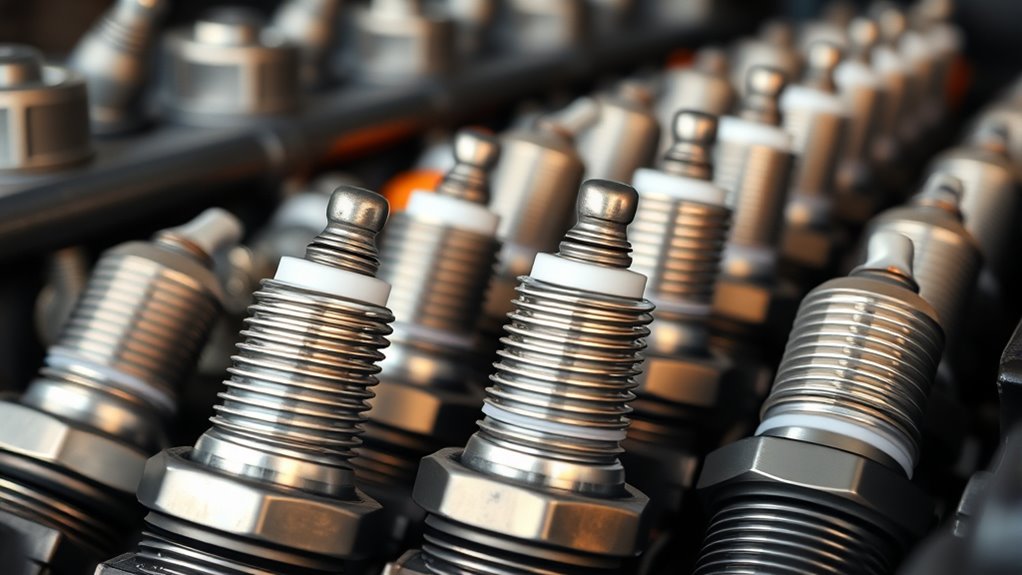
You’ll find options like copper, platinum, and iridium spark plugs, each with unique advantages. Copper spark plugs are budget-friendly and provide good conductivity but tend to wear out faster.
Platinum and iridium spark plugs last longer and offer better ignitability, especially in high-performance engines. Popular brands include NGK, Denso, and Bosch, known for their quality and reliability.
When choosing a spark plug, consider your vehicle’s manufacturer recommendations and your driving habits. The right spark plug type ensures peak engine performance, better fuel efficiency, and longer lifespan.
Keep in mind that different materials and brands are suited for different conditions. Understanding these options helps you make the best choice for your car.
How to Find the Right Spark Plug Size for Your Car
Choosing the right spark plug size is crucial for ensuring your engine runs smoothly and avoids problems. Start by checking your vehicle’s owner manual or the manufacturer’s specifications for the correct plug size, including thread diameter and reach.
It’s also a good idea to examine your current spark plugs to see their size and type, making sure they match the recommended measurements. When picking brands, go for reputable ones known for quality and reliability, since differences can affect starting, fuel efficiency, and engine smoothness.
Keep in mind that small differences in size, like thread pitch or length, can cause misfires or even damage. Always verify that the spark plug’s size, thread type, and heat range match your vehicle’s requirements.
Getting the right size guarantees a proper fit, better performance, and longer-lasting spark plugs.
What Factors Affect Which Spark Plug Fits Your Vehicle?
When it comes to choosing the right spark plug for your vehicle, there are a few important things to keep in mind. First off, your vehicle’s engine compatibility is key. You want to make sure the spark plug you pick is designed to work with your specific engine type.
Then, there’s the size and type of the spark plug. Not all plugs are the same, so it’s important to match the correct size and style recommended for your car. And don’t forget to check the manufacturer’s specifications—these often include the ideal gap and heat range for optimal performance.
Skipping these details can cause some pretty serious issues, like engine knocking, misfires, or even damage to your engine over time. So, it’s really worth taking the time to find a spark plug that fits your vehicle perfectly. When you do, your car will run smoother and more efficiently, giving you the best possible performance.
Engine Compatibility Requirements
Because engines vary widely in design and specifications, several factors determine which spark plug will fit your vehicle. Your engine type influences the required spark plug, as different engines need specific heat ranges and electrode designs.
Spark plug brands also matter because quality and compatibility can differ. Additionally, the engine’s compression ratio and ignition system can affect the fit.
Key considerations include your engine type, such as gasoline, diesel, or hybrid. Also, check the manufacturer’s specifications, heat range requirements, and brand preferences.
Always consult your vehicle’s manual or ask a mechanic to make sure you pick the right spark plug for your engine. Using incompatible spark plugs can lead to poor performance or even damage your engine.
Spark Plug Size and Type
The size and type of spark plug your vehicle needs depend on a few important factors, like the engine’s design and specs. It’s important to check the thread size, reach, and heat range to ensure a proper fit.
Different brands offer various options that can affect performance, durability, and compatibility. Picking the right type, such as copper, platinum, or iridium, can really impact how well your engine runs and how efficient it is.
Always refer to your vehicle’s manual or ask a mechanic to find the correct size and type. Using the wrong spark plug can cause misfires, poor fuel economy, or even engine damage.
Vehicle Manufacturer Specifications
Choosing the right spark plug for your vehicle mainly depends on manufacturer specifications, which are designed to boost performance and extend engine life. Your vehicle’s manual will specify the exact type, size, and heat range you need.
Ignoring these recommendations can cause misfires, poor fuel economy, or even damage your engine. When picking a spark plug brand, stick with those recommended by the manufacturer to ensure compatibility and quality.
Pay attention to factors like electrode gap, thread size, and heat range—these details are all in your manual. Always double-check these specs before making a purchase.
Using the correct spark plug means reliable ignition, smooth engine operation, and avoiding costly repairs later on. Follow the manufacturer’s advice, consider reputable brands, and match all specifications precisely.
Can You Use Any Spark Plug in Your Car?
Can you use any spark plug in your car? Not quite. While many brands claim they’re universal, it’s really important to consider your vehicle’s specific needs.
Spark plug functions are vital—they ignite the fuel-air mixture in your engine, so using the right type ensures peak performance. Different engines require different spark plug types, sizes, and heat ranges.
Just swapping in any spark plug might cause misfires, poor fuel economy, or even engine damage. It’s best to stick to the manufacturer’s recommendations, which specify compatible spark plug models for your car’s engine.
Universal spark plugs might seem convenient, but they often don’t meet your vehicle’s precise specifications. Choosing the right spark plug from trusted brands guarantees the right fit and proper function.
Risks of Using Wrong or Universal Spark Plugs
Using the wrong or universal spark plugs might seem like a quick fix, but it can cause serious problems for your engine. Mismatched plugs can hurt spark plug performance, leading to misfires, hesitation, or rough idling.
Over time, this can reduce engine efficiency and even damage other components. Risks include poor combustion that lowers power and fuel economy, and increased emissions from incomplete burning.
It can also cause engine knocking or pre-ignition, which risks more serious damage. Plus, using the wrong spark plugs shortens the lifespan of your spark plugs and engine parts.
Choosing the wrong spark plugs messes with the balance needed for proper ignition, affecting your engine’s overall health. Universal plugs often don’t match your engine’s specific needs, leading to subpar performance.
Using the right spark plugs ensures your engine runs smoothly, stays efficient, and avoids costly repairs. Be cautious with substitutes—what seems like a quick fix can end up costing you more in the long run.
How to Pick the Best Spark Plug for Your Engine
Looking to find the right spark plug for your engine? Well, it’s pretty important to consider whether the spark plug is compatible with your engine’s make and model. You also want to pay attention to the materials used because that’s what helps the spark plug last longer and stay durable over time.
And don’t forget about the gap measurement! Knowing the correct gap is a big deal because it really affects how well your engine runs. When you keep these things in mind, you’re more likely to pick a spark plug that runs smoothly and doesn’t need to be replaced too often.
Compatibility With Engine Type
Choosing the right spark plug for your engine starts with understanding its specific type. Different engines need different spark plug types to get the best performance. To find the perfect fit, look at your engine’s specs like size, compression ratio, and ignition system.
Here are some key points to help you pick the right spark plug:
- Match the spark plug’s heat range to your engine’s operating temperature.
- Check that it fits your engine’s spark plug gap requirements.
- Decide if your engine needs iridium, platinum, or copper spark plugs.
- Always review your vehicle’s owner manual for the recommended spark plug type.
Making sure your spark plug matches your engine type will boost performance and prevent misfires. This helps your engine run smoothly and efficiently.
Material Durability Factors
Selecting a spark plug that can withstand your engine’s operating conditions is key to guaranteeing durability and consistent performance. Material composition plays a crucial role in extending spark plug lifespan and resisting corrosion. Look for plugs with high-quality materials like platinum or iridium, which offer better durability and long-term performance.
The heat range affects how well the spark plug manages temperature. Choosing the correct range prevents fouling or pre-ignition. Electrode design influences durability and efficiency, with fine-wire or tapered electrodes providing better ignition and longevity.
Good corrosion resistance guarantees the plug remains reliable over time, reducing maintenance needs. Ultimately, the right material choice impacts overall engine performance, fuel efficiency, and reliability, making it critical to select a spark plug suited to your specific engine requirements.
Correct Gap Measurement
Properly measuring and setting the spark plug gap is essential for ideal engine performance. It ensures efficient combustion and smooth engine operation.
To get it right, use a gap gauge or feeler gauge to measure the distance between the center and ground electrode. When adjustment is needed, gently bend the ground electrode—avoid using excessive force that could damage it.
Always check the recommended gap size for your engine, which you can find in the owner’s manual or from spark plug brands. Here are some tips:
- Use a precise gap tool for accuracy
- Confirm the gap after each adjustment
- Match the gap to your engine’s specifications
- Choose quality spark plugs for reliability
Getting the gap right helps your engine run smoothly and extends spark plug life.
When and How to Replace Your Spark Plugs
Knowing when to replace your spark plugs is key to keeping your engine running smoothly. Most spark plugs last between 30,000 and 100,000 miles, but this depends on your driving habits and the type of plugs you use.
Regular checks can help you spot signs of wear early. Look out for misfires, rough idling, or lower fuel efficiency. If your spark plugs are corroded, damaged, or covered in too much carbon, it’s time for a replacement.
Regularly inspect your spark plugs for corrosion, damage, or carbon buildup to ensure optimal engine performance.
To change them, start by disconnecting the negative terminal of your battery. Then, remove the spark plug wires or coils. Use a spark plug socket and ratchet to carefully unscrew the old plugs.
Before installing new ones, check the gap and set it according to your vehicle’s specs. Thread the new plugs in by hand to avoid cross-threading, then tighten them to the recommended torque.
Proper replacement intervals and regular maintenance ensure your engine stays efficient and runs smoothly.
Common Mistakes to Avoid When Replacing Spark Plugs
One common mistake to avoid when replacing spark plugs is rushing the process, which can lead to cross-threading or damaging the new plugs. Take your time and follow proper installation tips to guarantee a smooth replacement. Many spark plug myths suggest that all plugs are interchangeable, but using the wrong type can cause engine issues.
To avoid mistakes, remember to:
- Double-check the gap on new spark plugs before installation
- Use a torque wrench to tighten plugs to manufacturer specifications
- Avoid over-tightening, which can crack the ceramic insulator
- Clean the surrounding area to prevent debris from entering the combustion chamber
Skipping these steps can cause misfires or engine damage. Proper installation tips help guarantee your spark plugs perform effectively and last longer. Being thorough and patient during replacement dispels common spark plug myths and ensures your vehicle runs smoothly.
Do All Cars Need the Same Spark Plug Maintenance?
Do all cars require the same spark plug maintenance? Not quite. While some vehicles have similar needs, each car’s spark plug lifespan and maintenance schedule can differ based on engine type, driving habits, and what the manufacturer recommends.
For example, high-performance or older engines might need more frequent spark plug checks, whereas newer models often last longer between replacements. You shouldn’t assume all vehicles need maintenance at the same times.
Instead, check your owner’s manual to find the proper schedule for your car. Regular inspections help ensure your spark plugs stay clean and work properly, which can prevent misfires and engine problems.
Ignoring this maintenance can lead to spark plug deterioration, resulting in poor fuel economy and potential engine damage. Remember, keeping your spark plugs in good shape according to your car’s specific needs helps maintain peak performance and avoid unnecessary replacements.
Always follow the recommended maintenance intervals for your vehicle to get the most out of your spark plugs and keep your engine running smoothly.
Frequently Asked Questions
Can Aftermarket Spark Plugs Improve Engine Performance?
Yes, aftermarket spark plugs can boost engine performance by offering better improvement than stock options. Different spark plug types are designed for specific engine needs, so choosing the right one can increase efficiency, acceleration, and fuel economy.
When selecting spark plugs, consider your vehicle’s specifications and your driving habits. Upgrading to high-quality aftermarket options can lead to smoother starts, better combustion, and overall improved engine performance.
This makes your drive more reliable and responsive, giving you a better driving experience.
Are Platinum and Iridium Spark Plugs Interchangeable?
Imagine your engine’s heart, where platinum and iridium spark plug types stand side by side, but they’re not interchangeable. Platinum spark plugs offer a decent lifespan, while iridium ones boast a longer spark plug lifespan thanks to their durability.
You can’t swap them directly because their material properties differ, affecting performance and longevity. Choosing the right spark plug depends on your vehicle’s needs, ensuring ideal ignition and engine efficiency.
How Do Spark Plug Gaps Affect Engine Efficiency?
Spark plug gaps directly impact engine efficiency by ensuring proper combustion. If the gap is too wide or narrow, it can cause misfires, reduced power, and decreased fuel economy.
Different spark plug types, like platinum or iridium, have specific gap specifications you should follow.
By maintaining the correct gap, you optimize spark delivery, improve engine performance, and prolong spark plug life.
This helps your vehicle run smoothly and efficiently.
Do Electric or Hybrid Vehicles Require Different Spark Plugs?
Think of electric and hybrid vehicles as different instruments in an orchestra; they need the right spark plug types to perform well. Electric vehicles don’t require traditional spark plugs at all since they rely solely on electric power.
Hybrid vehicles might need specialized spark plugs designed for their internal combustion engines, which are different from those used in gasoline-only cars. Always check your vehicle’s specifications to choose the correct spark plug types.
Is It Necessary to Change Spark Plugs During Engine Tune-Ups?
Yes, you should change spark plugs during engine tune-ups. Spark plug lifespan varies, but most last around 30,000 to 50,000 miles. Worn spark plugs can cause engine misfire causes, leading to reduced performance and fuel efficiency.
Regularly replacing them guarantees smooth operation and prevents potential engine damage. If you notice rough idling or poor acceleration, it’s time for a tune-up and spark plug replacement.
Conclusion
Ultimately, choosing the right spark plug is like finding the key that unlocks your car’s full potential. It’s not about universal fit but about harmony — matching size, type, and quality to your engine’s rhythm.
When you select wisely and keep up with regular maintenance, you help keep your engine’s heartbeat steady. Spark plugs aren’t truly universal, so understanding what fits your vehicle is key.
Trust your knowledge, listen to your car’s needs, and let each spark ignite a smooth, powerful journey forward. Remember, the right spark plug makes all the difference in your car’s performance.