Unlocking Engine Power: What Does Boring an Engine Do?
Feeling like your engine isn’t giving you the power you need? You’re not alone—many car enthusiasts and drivers wish their engines could perform better without constantly upgrading to new vehicles.
Unlocking engine power by boring an engine involves enlarging the cylinders to increase displacement, which can boost horsepower and torque.
By removing a small layer of material, you create a smoother, more efficient combustion chamber, allowing for larger pistons and better airflow.
This process can release significant performance gains but carries risks like increased wear and potential weakening of cylinder walls.
Want to uncover how this modification can improve your engine’s power and what you should consider? Keep exploring to learn more.
Key Takeaways
- Boring enlarges the engine cylinders to increase displacement and airflow, boosting overall power and performance.
- It allows for the installation of larger pistons, which can significantly raise horsepower and torque.
- Proper boring smooths and restores cylinder surfaces, improving combustion efficiency.
- Increasing the bore size helps with heat dissipation and reduces engine stress during high-performance use.
- Boring is a permanent modification that can unlock potential but needs careful planning and precise machining.
What Is Engine Boring and How Does It Work?
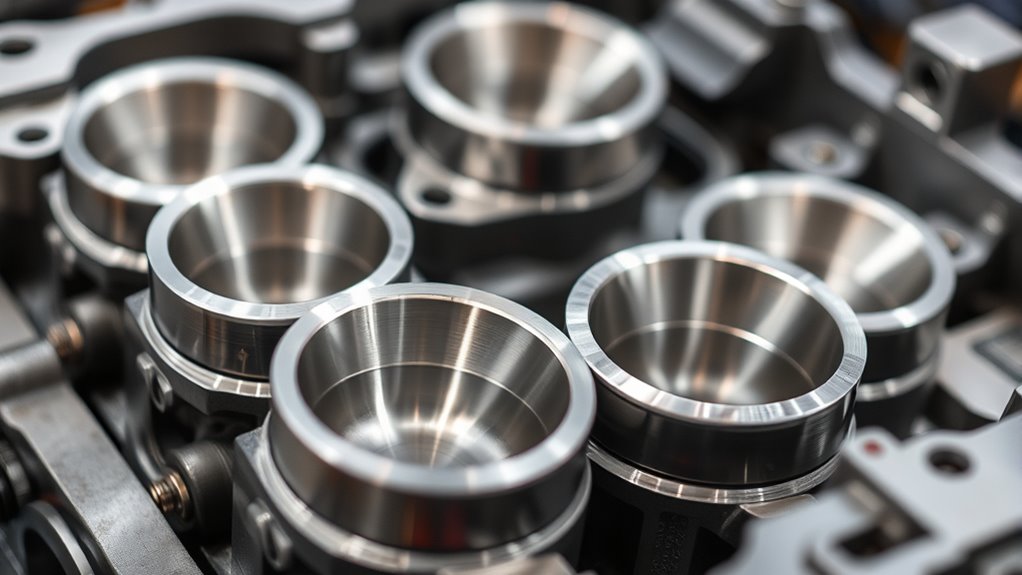
Engine boring is a precise machining process that involves enlarging the cylinder bores in an engine block. This technique is often used to restore engine specifications, ensuring the cylinders are perfectly round and smooth.
When you bore an engine, you remove a thin layer of material from the original bore, creating a fresh, clean surface. This step is crucial for performance tuning because it helps boost engine efficiency and power output.
By customizing the cylinder size, you can increase displacement, which often results in more power. Boring also allows you to fit larger pistons, further enhancing performance.
Customizing cylinder size increases displacement and power, while fitting larger pistons boosts overall engine performance.
However, it requires careful measurement and skilled craftsmanship to match the engine specifications exactly. Proper boring guarantees better sealing, reduces wear, and improves durability.
All these factors contribute to a more powerful and reliable engine. It’s a key step in customizing engines for everyday driving or high-performance builds.
Reasons Car Enthusiasts Bore Their Engines for Performance
Car enthusiasts often bore their engines to gain significant performance improvements, aiming to boost power and efficiency beyond stock specs. Boring the engine makes room for larger pistons, which directly increase displacement and airflow, leading to noticeable gains.
These modifications can result in higher horsepower and torque, making your car more responsive and quicker. It’s a popular way to unlock your engine’s full potential.
Here’s a quick look at why bore jobs are so common:
| Benefit | Explanation |
|---|---|
| Increased Displacement | Bigger pistons boost engine volume, enhancing power. |
| Better Combustion | Smoother chambers improve efficiency and torque. |
| Custom Tuning | Lets you tailor performance upgrades to your goals. |
How Much Can Engine Boring Boost Power and Torque?
Boring your engine can really boost power and torque, but how much depends on a few things. Usually, increasing the bore size lets more air and fuel into the combustion chamber, which improves performance.
You might see torque go up by around 10-20%, especially if you add other upgrades like a high-performance camshaft or better pistons. The exact gains depend on how much you bore out the engine and the quality of your supporting mods.
Bigger bores help airflow, which directly boosts combustion efficiency and power. Still, the engine’s original design and condition also play a role in the results.
While boring alone can significantly improve performance, combining it with other modifications will give you the best torque gains. Keep in mind, the potential boost varies from engine to engine.
Risks and Downsides of Engine Boring You Should Know
Boring your engine can sometimes cause it to wear out faster over time, which isn’t great if you’re looking for durability. Plus, if the process isn’t done perfectly, you might end up losing compression, and that can really hurt how your engine runs. It’s a good idea to think about these potential downsides carefully before you decide to go ahead with engine boring.
Increased Engine Wear
While engine boring can increase displacement and power, it also speeds up engine wear if not done carefully. Boring changes engine parts, so proper maintenance is crucial to avoid damage.
Ignoring wear factors can cause parts to deteriorate faster, shortening your engine’s lifespan. Here are some key points to keep in mind:
- Increased Friction: Enlarged cylinders have more surface contact, which raises friction and heat. This speeds up wear on engine components.
- Stress on Components: Boring weakens the cylinder walls, putting extra pressure on pistons and rings. This can lead to premature failure.
- Improper Machining: Poorly done boring can create uneven surfaces, causing uneven wear and less efficient engine operation.
To prevent these issues, regular maintenance and awareness of wear are essential. Keeping your engine in good shape helps it run smoothly for longer.
Potential Loss of Compression
Even though engine boring can boost power, it also risks causing a loss of compression if not done properly. When the cylinder walls are over-bored, the compression ratios may decrease, leading to less efficient combustion.
Poor cylinder sealing can happen if the bore isn’t perfectly smooth or if the piston rings don’t fit well. This can reduce power and fuel economy.
| Effect | Explanation |
|---|---|
| Lower compression | Less force during combustion, reducing power |
| Poor cylinder sealing | Increased blow-by, decreased efficiency |
| Reduced power output | Due to decreased compression ratios |
| Engine longevity | Excessive boring can damage cylinder integrity |
The Step-by-Step Process of Engine Boring
To improve an engine’s performance, technicians follow a precise step-by-step process for engine boring. First, they assess the engine specifications to determine the right bore size and make sure it matches your vehicle.
Next, they set up the boring machine, carefully aligning it to ensure accuracy. The actual boring involves removing a thin layer of material from the cylinder walls using specific techniques to get a smooth, even surface.
Here’s a quick overview of the process:
- Evaluate engine specifications and decide on the bore size.
- Set up and calibrate the boring machine for precision.
- Perform the boring, gradually enlarging the cylinder while maintaining a consistent diameter.
This careful process guarantees the cylinders are perfectly aligned and smooth, helping your engine perform at its best and last longer.
Choosing the Right Boring Size for Your Engine
Choosing the right boring size is key to boosting your engine’s performance and lifespan. You’ll want to look at your engine’s specs, especially the bore size recommended by the manufacturer.
The bore size is what determines how much you can enlarge the cylinder to get more displacement, power, and efficiency. Before you pick a size, check your engine’s original bore diameter and the safe limit for boring.
Going too big can weaken the cylinder walls or cause overheating. On the other hand, a bore that’s too small won’t give you the power gains you want. It’s a good idea to consult a professional or follow manufacturer guidelines to find the best bore size for your goals.
How Much Does Engine Boring Cost?
The cost of engine boring really depends on a few things, like the size of your engine, how much work it actually needs, and where you take it. Usually, you’re looking at anywhere from about $300 to $1,000 for the job. Knowing these price ranges can help you get a better idea of what to expect and plan your budget accordingly for boosting your engine’s power in a smart way.
Boring Cost Factors
Engine boring costs can vary a lot depending on a few key factors like the size of the bore, the engine type, and the quality of work done. The method used, whether it’s precision machining or hand-finishing, also impacts both the price and the results.
Engine specs, such as the material and design, are important too. Here are the main factors that influence the costs:
- Bore Size: When the bore diameter increases a lot, more material needs to be removed, which raises the cost.
- Engine Complexity: Older or more complicated engine designs may require extra labor and care.
- Quality of Work: Higher-quality, precision boring costs more but ensures better performance and durability.
Knowing these factors can help you better estimate the actual costs based on your engine and what you want to achieve.
Typical Price Range
Engine boring costs typically range between $400 and $1,000 per cylinder, depending on the specifics of your project. Your engine size and condition influence the final price.
If you’re aiming for performance upgrades, expect higher costs due to precision machining and quality parts. The price includes not just the boring process but also components like pistons and rings.
Cheaper options may save money but can compromise quality, affecting durability and performance. Customizations, such as oversized bores or complex setups, also increase costs.
It’s important to balance your budget with your goals for increased power and efficiency. Investing in quality engine boring ensures reliable performance and ideal engine specs.
Does Boring Affect Engine Durability and Longevity?
Boring a cylinder can influence its durability and longevity, but whether it’s good or bad depends on how you do it. Proper boring keeps the engine balanced, which is key for smooth running and less wear.
If it’s done wrong, it can throw off the engine’s balance, causing uneven stresses and faster parts failure. Boring also affects heat management by increasing the cylinder’s surface area, helping to dissipate heat if done correctly.
But too much boring can weaken the cylinder walls, making them more likely to crack or warp over time. To keep the engine durable, focus on precise machining to maintain balance, proper surface treatment for heat dissipation, and using quality materials to strengthen the walls.
In the end, if done right, boring can extend your engine’s life and boost performance. Neglecting these factors, though, can shorten its lifespan.
Is Engine Boring a Good Investment for Your Car?
Is investing in engine boring worth it for your car? It really depends on what you’re aiming for.
Boring an engine is a modification that can boost performance, especially when combined with other upgrades. If you want more horsepower, better torque, or more efficient combustion, boring can be a good investment.
It involves enlarging the cylinders to fit bigger pistons, which can lead to noticeable power gains. But it’s not always necessary if you’re just driving casually or using your car daily.
Boring enlarges cylinders for power but isn’t needed for casual daily driving.
You should consider the cost and effort involved in boring versus the potential benefits. If you’re serious about unlocking your engine’s full potential and planning more modifications, boring might be worth it.
On the other hand, if your goal is reliability or a budget-friendly upgrade, there are simpler and cheaper options out there.
In the end, whether it’s a good investment depends on your specific performance goals.
Can Engine Boring Be Reversed or Modified Later?
Wondering if boring can be undone or modified later? The answer isn’t straightforward, but generally, engine boring is a permanent change. Once you bore an engine, the cylinders are reshaped, making it tough to revert to the original size.
If you’re thinking about future upgrades, keep in mind that boring can affect those plans. It’s not easily reversible, and you’d need extensive machining and new pistons to restore the original bore.
Future modifications like larger pistons or high-performance parts may also require additional adjustments. Boring is permanent, but it can open doors to performance upgrades.
Just remember, while boring can boost your engine’s performance, it might limit some rebuild options later on. Plan your engine mods carefully, knowing that boring is mostly a one-way street.
Frequently Asked Questions
How Does Boring Impact Fuel Efficiency?
Boring your engine can improve fuel efficiency by allowing for better fuel combustion. When the cylinders are precisely bored, the engine runs more smoothly, reducing wasted fuel and boosting overall performance.
This process helps ensure ideal airflow and combustion, which can lead to better mileage. But if it’s not done correctly, it might actually hurt your engine’s performance.
Can Engine Boring Be Performed on All Engine Types?
Engine boring can be performed on most engine types, including gasoline, diesel, and rotary engines. You’ll enjoy performance benefits like increased power and smoother operation.
However, it may lead to higher maintenance frequency and cost implications, especially for complex engine types. Before proceeding, check if your specific engine type supports boring and if the performance gains are worth the potential costs and maintenance needs.
What Are the Signs My Engine Needs Boring?
If your engine shows signs like decreased performance, rough idling, or excessive oil consumption, it might need boring. Engine wear from repeated use can cause cylinder walls to become uneven, which reduces power and efficiency.
Boring removes this wear, preparing your engine for performance upgrades or restoring its original strength. Recognizing these signs early helps keep your engine running smoothly and makes sure you get the most out of your vehicle.
Does Boring Affect Engine Emissions?
Boring your engine can impact emissions, but it mainly depends on how it’s done. Proper boring can boost engine performance and help reduce emissions by creating a smoother combustion chamber.
However, if not done correctly, it might lead to increased emissions due to improper sealing or incomplete combustion. Always consult a professional to make sure boring improves engine performance without negatively affecting your vehicle’s emissions.
How Long Does a Bored Engine Typically Last?
A bored engine can last around 100,000 to 150,000 miles if it’s properly maintained. Boring usually boosts performance by increasing cylinder volume, which can lead to better power and efficiency.
But keep in mind, it might slightly reduce engine lifespan if not done correctly or if parts aren’t upgraded properly. Regular maintenance and careful tuning are key to getting the most out of both performance and longevity after boring.
Conclusion
If you’re considering engine boring, weigh the potential power gains against the risks like reduced durability. While it might seem like a quick way to boost performance, keep in mind that improper boring can cause lasting damage.
However, if done correctly, it’s a worthwhile upgrade for serious enthusiasts wanting more torque and horsepower. Just be prepared for the cost and maintenance, and don’t overlook the importance of professional expertise—your engine’s longevity depends on it.
In the end, understanding what boring an engine does can help you make the right decision for your vehicle’s performance and reliability.