Understanding the Difference Between Bad Torque Converter and Bad Transmission in Vehicles
Are you tired of that uncomfortable slipping or jerking feeling when you drive? Many car owners face this issue and wonder if it’s a sign of a bigger problem. You’re not alone—knowing whether it’s a bad torque converter or transmission can save you time and money.
If you notice your car slipping, jerking, or having trouble shifting, it could be a bad torque converter or transmission. A faulty torque converter often causes shuddering, delayed shifts, or engine stalls at stops, while transmission problems usually produce whining noises, slipping gears, or delays in shifting.
Knowing the specific signs helps determine the issue.
Keep exploring to understand how to identify, diagnose, and fix these problems effectively.
Key Takeaways
- A bad torque converter mainly causes shuddering, slipping, or delayed shifting, while transmission issues often cause grinding noises and gear slippage.
- Torque converter problems usually come from hydraulic fluid issues, but transmission failures are often due to wear, neglect, or internal damage.
- If your engine stalls at stops, it could be a sign of a torque converter failure. On the other hand, persistent grinding or delayed shifts point to transmission problems.
- Fixing a torque converter typically involves rebuilding or replacing it, while transmission repairs might need extensive part replacements or a full overhaul.
- Early signs like unusual vibrations or delayed engagement can help tell whether it’s a torque converter issue or a transmission problem.
What Is a Torque Converter and How Does It Work?
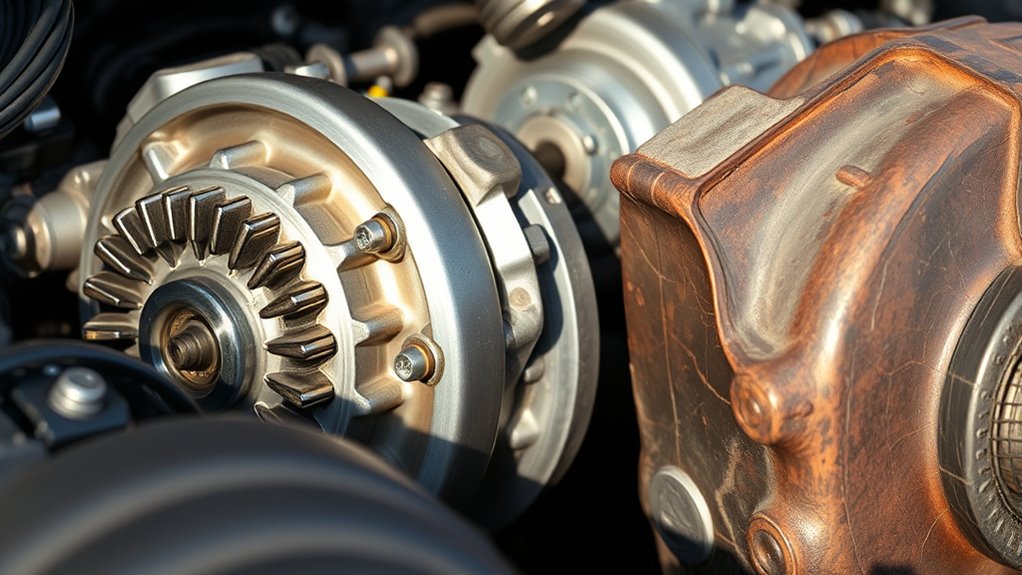
A torque converter is a key part of automatic transmissions that helps transfer power from your engine to your wheels. Understanding the basics can help you see how your car moves smoothly without needing to shift gears manually.
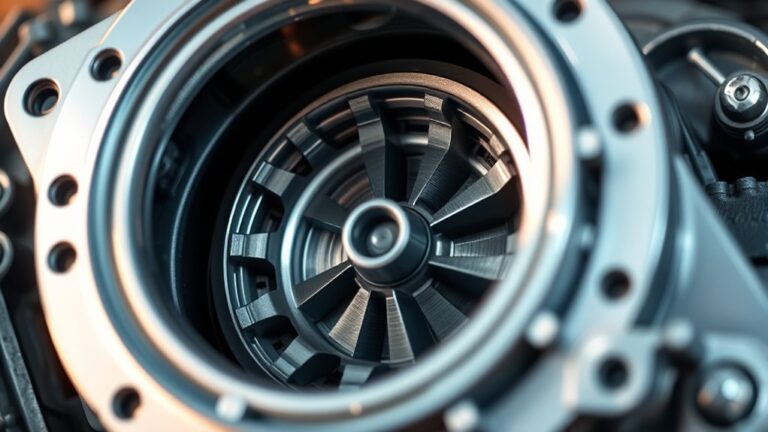
It works by using hydraulic fluid to connect the engine to the transmission. When your engine runs, it spins the impeller, which then uses fluid to spin the turbine connected to the transmission.
This process allows the engine to keep running even when the vehicle is at a stop or moving slowly. The torque converter also boosts torque during acceleration, giving your car extra power when needed.
Its design includes a lock-up clutch that engages at higher speeds to improve fuel efficiency by eliminating slip. Overall, the main job of the torque converter is to smooth out power delivery and enable seamless acceleration, making driving more comfortable and efficient.
What Are Common Signs of a Faulty Torque Converter?
If your car’s transmission isn’t behaving quite right, it might be a sign that your torque converter is having issues. You could notice things like rough or delayed shifting, and sometimes your engine might even stall unexpectedly. These are pretty common warning signs that you should take a closer look at what’s going on.
Unusual Transmission Behavior
Have you noticed unusual shifts or slipping sensations while driving? These can indicate a faulty torque converter that’s affecting your transmission’s behavior. You might feel inconsistent shifting or that your vehicle is slipping out of gear.
Changes in how your car drives, like rough or delayed shifts, are common signs to watch for. Sometimes, your transmission might jerk or hesitate, especially during acceleration or deceleration.
| Shifting Pattern | Driving Habit Impact |
|---|---|
| Irregular shifts | Increased wear and tear |
| Slipping gears | Reduced control |
| Delayed response | Poor fuel efficiency |
Pay attention to these signs because they often point to issues with the torque converter. Recognizing these behaviors can help prevent further damage and keep your driving safe.
Engine Stalling or Shuttering
Engine stalling or shuttering often signals a faulty torque converter. This is especially true when your vehicle unexpectedly stalls at stoplights or jerks during acceleration.
These issues directly impact engine performance, causing rough idling or sudden loss of power. You might notice your engine struggles to stay running or hesitates before moving forward, disrupting your driving experience.
Shuttering can feel like jerks or vibrations, making driving uncomfortable and unpredictable. If these signs appear, it suggests the torque converter isn’t properly transferring power from the engine to the transmission.
Addressing this early helps prevent further damage and keeps your engine running smoothly. Recognizing these signs allows you to act quickly, ensuring your vehicle stays reliable and your drive remains safe and comfortable.
How Can You Recognize Transmission Problems?
Have you ever heard strange noises coming from your transmission, like a whining or buzzing sound? That’s often a sign that something’s not quite right. It’s worth paying attention to these sounds because they can indicate early problems.
You might also notice your gears slipping or feeling delayed when you try to shift. These issues can be a warning sign that your transmission needs some attention. Catching these signs early can really help prevent more serious and costly problems down the road.
Unusual Transmission Noises
Unusual transmission noises are often the first sign that something’s wrong inside your vehicle’s transmission system. If you notice strange vibrations or grinding noises while driving, it’s a clear warning that your transmission may be failing.
Grinding sounds, especially when shifting gears, indicate internal components are struggling or damaged. You might also hear whining or buzzing noises, which suggest issues with the transmission fluid or bearings.
These noises tend to be persistent and get louder over time. Ignoring them could lead to more severe problems like complete transmission failure.
Pay close attention to any abnormal sounds, and don’t hesitate to have your vehicle inspected promptly. Doing so can prevent costly repairs and ensure safe driving.
Slipping Gears or Delays
When your vehicle starts to slip out of gear or experiences noticeable delays in shifting, it’s a clear sign something isn’t right with the transmission. You might notice rough or delayed gear engagement, where the car hesitates before shifting into the next gear.
Delay issues can make the vehicle feel sluggish or jerky during acceleration. You may also hear a slipping sound or notice the engine revving without an immediate increase in speed.
These symptoms indicate problems with the transmission’s ability to smoothly engage gears. Ignoring these signs can lead to further damage, so it’s important to address slipping gears or delays early.
Recognizing these signs helps you figure out whether you’re facing transmission trouble or something else, like a faulty torque converter.
Torque Converter vs. Transmission: What Are the Key Differences?
Ever wondered how a vehicle’s power transfer system works seamlessly? The key difference lies in their functions: the torque converter and the transmission serve distinct roles.
The torque converter connects the engine to the transmission and uses fluid dynamics to transfer power smoothly. There are various torque converter types, each designed for specific performance needs.
It relies heavily on transmission fluid, which lubricates, cools, and transmits hydraulic pressure. Meanwhile, the transmission’s job is to change gear ratios, controlling speed and torque.
It uses complex gear sets and clutches to shift smoothly. While the torque converter manages the flow of power from the engine through fluid, the transmission actively adjusts gear ratios to optimize performance.
Understanding these differences helps you identify issues and maintain your vehicle better. Fundamentally, the torque converter acts as a fluid-based link, whereas the transmission is the gear-shifting mechanism that directs power to the wheels.
What Causes Torque Converter Failures?
Torque converter failures usually happen because of overheating or issues with the transmission fluid. When the fluid isn’t at the right level or gets contaminated, it can cause the converter to work improperly.
Sometimes, the internal parts of the torque converter can wear out or get damaged over time. This can lead to problems like slipping or stalling, which definitely isn’t fun.
The good news is, catching these signs early can save you a lot of money on repairs down the road. So, keeping an eye on how your car shifts and ensuring your transmission fluid is in good shape can really make a difference.
Overheating and Fluid Issues
Overheating is a common cause of torque converter failures, often caused by fluid issues in the transmission system. When the fluid temperature gets too high, it reduces lubrication and speeds up wear on parts.
Coolant leaks can also play a role by lowering the transmission fluid level, making it harder for the system to stay cool. When fluid levels drop or the fluid burns from excessive heat, the torque converter can’t work smoothly.
This can lead to slipping or shuddering, which affects your vehicle’s performance. Regularly checking for coolant leaks and monitoring fluid temperature can help prevent overheating.
If the fluid isn’t cooled or maintained properly, it can cause the torque converter to overheat and fail early. This ultimately impacts your vehicle’s overall performance and lifespan.
Worn or Damaged Components
Worn or damaged components are a leading cause of torque converter failures. They often happen because of prolonged use, lack of maintenance, or manufacturing defects. Over time, worn bearings can cause excessive play, which leads to vibrations and slipping.
Damaged seals may leak fluid, reducing the hydraulic pressure needed for proper operation. These issues impact the converter’s ability to transfer power smoothly and reliably.
| Component | Common Issue | Effect |
|---|---|---|
| Worn Bearings | Excessive play | Vibrations, slipping |
| Damaged Seals | Fluid leaks | Loss of hydraulic pressure |
| Internal Components | Corrosion or wear | Reduced efficiency, overheating |
What Leads to Transmission Failures?
Transmission failures often happen because of a mix of neglect and mechanical issues that develop over time. Poor driving habits, like sudden acceleration or lots of stop-and-go driving, put extra stress on your transmission.
If you skip regular maintenance, like checking and changing the transmission fluid, your system can overheat and wear out faster. Warning lights on your dashboard are important alerts—you shouldn’t ignore them.
As your vehicle gets older, its internal parts naturally wear down, which raises the risk of failure. Environmental factors like extreme heat, cold, dirt, and water can speed up this deterioration.
Over time, these elements cause components to wear out, leading to parts malfunctioning or breaking. Diagnostic tools can help catch problems early, but ignoring these signs makes things worse.
In the end, staying on top of maintenance, driving carefully, and understanding environmental impacts can help your transmission last longer and save you from costly repairs.
How Can You Diagnose Whether It’s Your Torque Converter or Transmission?
How can you tell if a problem is caused by your torque converter or the transmission itself? Start by looking for torque converter symptoms like shuddering during acceleration, slipping gears, or unusual overheating. These signs often point to issues with the converter.
Transmission diagnostics involve checking for problems like delayed shifting, slipping gears, or fluid leaks. If your vehicle stalls or struggles to move when in gear but runs fine in neutral, it might be a torque converter issue.
On the other hand, if shifting feels rough or delayed, it suggests a transmission problem. You can also inspect the fluid: burnt or contaminated fluid hints at transmission trouble. Problems with the torque converter may not show up until symptoms worsen.
Doing these checks can help you narrow down whether the issue is with the torque converter or the transmission itself.
What Are Your Repair Options for a Bad Torque Converter?
If you suspect your torque converter is failing, you have a few repair options to consider. The simplest is torque converter repair, which involves removing the part for inspection, cleaning, or rebuilding.
Rebuilding can save you money compared to a full replacement, but it depends on how badly the converter is damaged. Sometimes, replacing it entirely is the better choice, especially if the damage is severe or there are multiple issues.
Rebuilding may save money, but full replacement is better for severe or multiple damages.
Before jumping into repairs, make sure your transmission fluid is clean and at the right level. Proper maintenance can help extend the life of your torque converter.
If you’re unsure about how to proceed, it’s a good idea to consult a professional mechanic. They can accurately diagnose the problem and recommend the best solution.
When Should You Consider Replacing Your Transmission?
Determining the right time to replace your transmission can save you from costly repairs and unexpected breakdowns.
If your vehicle shows signs of slipping gears, delayed engagement, or frequent stalling, it might indicate serious transmission issues that could shorten its lifespan.
When repairs become more frequent and expensive, and fixing costs exceed your vehicle’s value, replacement is often the best choice.
Additionally, if your transmission fluid is burnt or contaminated despite regular maintenance, it signals internal damage that’s hard to fix fully.
Persistent warning lights or strange noises during shifting also suggest your transmission is nearing the end of its life.
Keep in mind that ongoing high replacement costs and declining performance mean fixing it further isn’t worth it.
Recognizing these signs early can help you decide if replacement is needed before you face unexpected breakdowns or more severe damage.
Tips to Extend the Life of Your Transmission Components
To keep your transmission running smoothly and avoid costly repairs, regular maintenance is key. Check your fluid levels often and change the fluid as recommended by your vehicle’s manufacturer.
Watch for signs of wear, like slipping or delayed shifting, and deal with any issues quickly. Your driving style matters too; avoid aggressive driving, rapid acceleration, and hard braking, which put extra stress on your transmission.
Use your parking brake on hills to reduce strain during starting. Also, stay within your vehicle’s towing limits and don’t overload it. Make sure your cooling system is working well because overheating can damage transmission parts.
Frequently Asked Questions
Can a Faulty Torque Converter Cause Transmission Slipping?
Yes, a faulty torque converter can cause transmission slipping. When it shows symptoms like shuddering, delayed engagement, or overheating, it affects how the transmission performs.
As it struggles to transfer power smoothly, your vehicle may slip gears or feel unresponsive. Addressing torque converter issues quickly helps restore proper transmission function, preventing further damage and keeping your vehicle running smoothly.
How Long Do Torque Converters Typically Last?
Think of a torque converter like a reliable old clock—usually, it lasts 150,000 to 200,000 miles. Its lifespan depends on driving habits and maintenance.
Signs of failure include slipping, shuddering, or overheating. If you notice any of these, it’s time to get it checked out.
Proper care can extend its life, but eventually, wear and tear will lead to replacement.
Is It More Expensive to Repair a Torque Converter or a Transmission?
Repairing a torque converter usually costs less than a full transmission replacement. Torque converter repair costs are generally moderate, often ranging from a few hundred to over a thousand dollars, depending on the vehicle.
In contrast, transmission replacement expenses can be considerably higher, sometimes exceeding several thousand dollars. If you’re on a budget, fixing the torque converter is usually more affordable.
However, a full transmission overhaul may be necessary if the issues are severe.
Can Driving Habits Affect Torque Converter or Transmission Health?
Yes, your driving habits and maintenance routines can really affect your torque converter and transmission health.
If you tend to accelerate quickly or shift gears harshly, it puts extra stress on these parts, which can lead to faster wear and tear.
Skipping regular fluid changes or neglecting maintenance can cause overheating and damage over time.
How Often Should I Have My Transmission Inspected?
You should have your transmission inspected every 30,000 to 60,000 miles as part of regular maintenance. Regular inspections help catch problems early and prevent costly repairs.
If you notice slipping, strange noises, or trouble shifting, it’s a good idea to schedule an inspection sooner. Staying on top of inspections keeps your transmission in good shape.
Maintaining a regular check-up schedule helps prolong your transmission’s lifespan and keeps your vehicle running smoothly. Don’t wait until issues get worse—be proactive with routine checks.
Conclusion
Understanding the differences between a bad torque converter and transmission issues helps you act faster and avoid costly repairs. Recognizing the signs early can help you decide whether it’s time to repair or replace.
Think about how your car feels when you drive—are you noticing slipping, overheating, or strange noises? These clues can point to whether the problem is with the torque converter or the transmission itself.
Staying proactive keeps your vehicle running smoothly longer. Isn’t it worth catching these problems early to save both time and money? Knowing the difference in these issues is the key to keeping your car in top shape.