How Long Does It Take To Charge An Electric Vehicle? Proven Tips
Many electric vehicle owners know the struggle of waiting hours for a full charge, especially when you’re in a hurry. You’re not alone—figuring out how long it takes to charge your EV can be confusing, with different chargers and conditions all playing a role.
If you’re looking to cut down that waiting time and make charging more convenient, understanding the basics is a great first step.
Charging your electric vehicle depends on the charger type and several factors. Level 1 chargers take 12 to 20 hours, while Level 2 chargers usually need 4 to 8 hours. Fast chargers can charge up to 80% in just 20 to 30 minutes.
Battery size, weather, and your charging habits also influence speed. If you want practical tips to optimize your charging experience and save time, keep exploring what’s next.
Key Takeaways
- Charging time ranges from 12-20 hours with Level 1, 4-8 hours with Level 2, and just 20-30 minutes with DC fast chargers.
- Bigger batteries take longer to charge, but fast chargers help speed things up for larger capacity vehicles.
- Weather, battery age, and where you’re charging all affect how quickly your EV charges.
- Using high-power chargers and keeping your battery at the right level can help cut down charging time.
- Regular maintenance and clean connections ensure your charging is efficient and prevent unnecessary delays.
How Long Does It Take to Fully Charge an EV?
Have you ever wondered how long it takes to fully charge an electric vehicle? The answer depends on your charging habits and how you take care of your battery.
If you mostly use a Level 1 charger, expect a full charge in about 12 to 20 hours. It’s ideal for overnight charging when you’re sleeping.
Using a Level 2 charger speeds things up to 4 to 8 hours, which is perfect for a quick recharge during the day.
Fast chargers, or DC fast chargers, can bring your battery from 0 to 80% in just 30 minutes to an hour. But keep in mind, frequent use might impact your battery’s longevity.
Good battery maintenance, like avoiding deep discharges and keeping your battery within recommended charge levels, helps keep your charging times optimal.
Your charging habits really influence how long it takes to reach a full charge. Finding the right balance between speed and battery health is key for efficient EV use.
What Factors Affect Your EV Charging Speed?
Several key factors influence how quickly your EV charges, and understanding them can help you optimize your charging routine. First, the charging location matters; charging at a dedicated station often results in faster speeds than standard outlets.
Charging location impacts speed; dedicated stations typically offer faster charging than standard outlets.
Second, weather conditions and temperature effects play a role—cold weather can slow charging because the battery needs to stay warm, while hot weather might impact battery health. Third, battery age affects speed; older batteries tend to charge more slowly.
Fourth, your charging habits and usage patterns influence overall efficiency. Frequent, partial charges can be faster than deep discharges. Additional factors include vehicle weight, which can affect energy consumption, and the electrical infrastructure at your charging site—higher capacity outlets deliver faster power.
Being aware of these factors allows you to plan better and ensure quicker, more efficient charging sessions whenever possible.
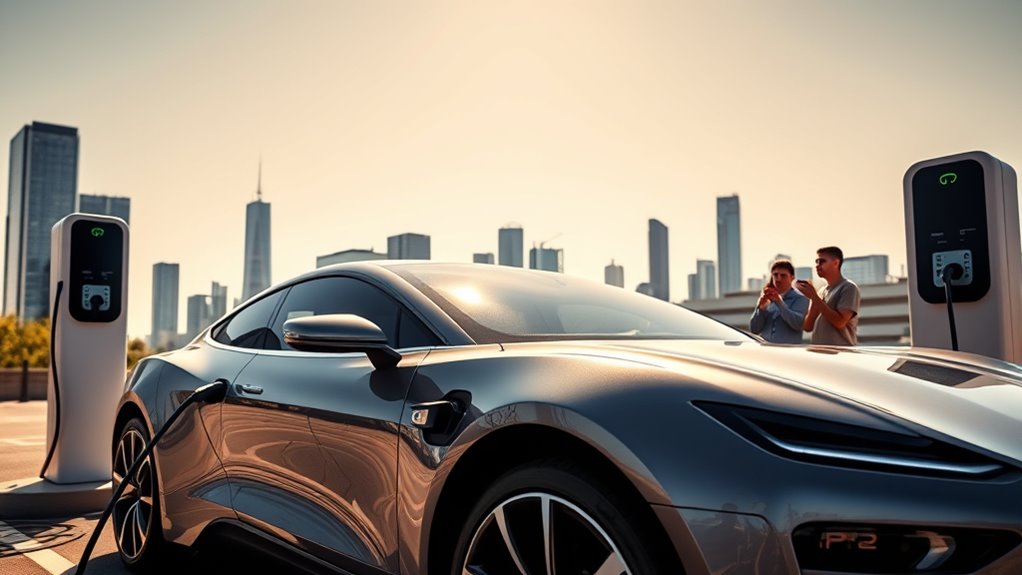
Different Types of EV Chargers and Their Charging Times
Understanding the different types of EV chargers can help you better manage your charging expectations and plan accordingly.
Level 1 Chargers are basic and plug into standard outlets. They provide the slowest charge—often taking 8 to 20 hours.
Level 2 Chargers are faster, typically charging your vehicle in 4 to 8 hours. They’re great for home use or public stations.
DC Fast Charging offers rapid charging—about 80% in 20 to 30 minutes. It’s perfect for quick stops during long trips.
Charging networks give access to these fast chargers at many public locations. Just be aware that charging costs vary depending on the station and network.
When charging in public, follow proper etiquette—unplug promptly and leave the station available for others.
Knowing the differences between these chargers helps you plan your trips better, balancing convenience, costs, and charging times to keep your EV ready when you need it.
How Battery Size Influences Charging Duration
The size of your EV’s battery directly affects how long it takes to charge since larger batteries hold more energy and need more time to fill. While bigger batteries can give you a longer driving range, they also put more demand on your charging setup.
To speed up charging times, keep these points in mind:
- Battery efficiency determines how quickly energy is transferred. The more efficient, the faster the charge.
- Charging technology is key—fast chargers can cut down charging time, especially for bigger batteries.
- Larger batteries usually need higher-powered chargers to keep charging times reasonable.
- The overall battery size affects how long it takes to reach a full charge, even with the best charging systems.
How Charging Station Power Levels Change Charging Times
Charging station power levels play an essential role in how quickly your EV refuels. Different types, like Level 1, Level 2, and DC fast chargers, deliver different power outputs that directly impact how long it takes to charge.
Level 1 chargers, with lower power, are best for overnight charging. They take many hours to fully charge your vehicle, so they’re not ideal for quick top-ups.
Level 2 stations offer moderate power, reducing charging time to a few hours. This makes them great for daily top-ups when you’re on the go.
DC fast chargers provide high power levels. They can add 60-80 miles of range in just 20-30 minutes, making quick charging possible.
The availability of these stations in your area also affects your overall charging experience. If fast chargers are rare, you’ll spend more time waiting for a charge.
On the other hand, a well-developed network with high-power stations can significantly cut your charging time. This means you can get back on the road faster and spend less time waiting around.
Can You Speed Up Your EV Charging Process? Tips and Tricks
Want to charge your EV faster? You can do this by tweaking how you charge and picking the right gear. Using high-quality chargers that are made for your specific vehicle can really speed things up and keep everything safe. Sometimes, just making a few small changes can cut down your charging time quite a bit.
Optimize Charging Speed
While it might seem tempting to just plug in and hope for the fastest charge, there are practical ways to speed up your EV’s charging process. First, choose a good charging spot with high-power outlets, like fast chargers at public stations.
Next, manage your battery wisely by avoiding deep discharges and keeping it between 20-80% for quicker charging. Also, make sure your vehicle’s software is up to date, since updates can boost charging efficiency.
Finally, minimize accessories and features that drain power during charging, such as cabin heating or cooling. By following these steps, you can improve your charging speed and save time overall.
Use Proper Charging Equipment
Using the right charging equipment can make a big difference in how quickly your electric vehicle charges. Make sure you’re using high-quality charging cables that are compatible with your EV and charging station.
The type of charger matters—Level 2 chargers are faster than standard outlets and can significantly cut down your charging time. It’s also important to choose the correct adapters if you’re charging from different power sources.
Using incompatible adapters can slow things down or even cause safety issues. Check that your cables are rated for the power your vehicle needs to ensure a safe, efficient charge.
Upgrading to the right equipment guarantees a safer, more reliable charge, saving you both time and hassle. Properly matching your cables and adapters to your EV’s specs helps achieve optimal charging speeds and makes everything more convenient.
Does Your Vehicle Model Impact Charging Speed?
Your vehicle model really plays a big role in how quickly it charges. That’s because different models have varying battery sizes, charging port types, and power needs. So, some cars might charge up faster when you use the right charger, while others might take a bit longer due to their design.
Getting to know these differences can help you plan your charging routine better. It’s all about making sure you’re using the most compatible equipment to keep your vehicle charged efficiently.
Battery Capacity Variations
Different vehicle models come with varying battery capacities, which directly influence charging speed. Larger batteries take longer to charge, even if the charger is fast. Battery efficiency and the number of charging cycles also matter, as they affect how well the battery maintains its capacity over time.
Keep in mind:
- Bigger batteries need more time to fully charge.
- Smaller batteries charge faster but might require more frequent recharges.
- Battery efficiency impacts how quickly energy is stored during each cycle.
- Frequent charging cycles can wear out batteries, affecting overall charging speed over time.
Understanding these variations helps you plan charging sessions better, especially when considering your vehicle’s specific model and its battery characteristics.
Charging Port Compatibility
While the vehicle model itself affects charging speed, the compatibility of its charging port is just as important. Your EV’s charging standards and connector types directly influence how quickly you can recharge.
Different vehicles support various connector types, such as Type 1, Type 2, or CCS, which determine compatibility with charging stations. Some chargers are designed for specific standards, so using an incompatible port can slow charging or prevent it altogether.
Always check your vehicle’s charging port and verify it matches the station’s connector type. This ensures you maximize charging speeds and avoid delays.
Staying aware of your EV’s charging standards helps guarantee a smoother, more efficient charging experience.
Vehicle Power Requirements
The specific model of your electric vehicle plays a big role in how quickly it charges. Factors like battery efficiency and chemistry affect both charging speed and overall energy use.
Heavier vehicles with more advanced batteries may take longer to charge, especially if driving habits or climate impact battery performance. Your vehicle’s power needs also influence how it interacts with charging stations.
Keep in mind: higher vehicle weight increases energy demand, which can slow down charging. Battery chemistry impacts how fast and efficiently your vehicle charges.
Climate conditions can reduce battery efficiency and make charging take longer. Plus, grid demand affects the available power, influencing how quickly your vehicle charges.
Understanding these factors helps you optimize your charging sessions and pick the right infrastructure for your vehicle’s power needs.
Common Mistakes That Slow Down Charging
One common mistake that slows down your EV charging process is not properly preparing the charging station or vehicle before plugging in. Many drivers overlook simple steps, assuming their setup is already optimized. Poor charging habits like skipping inspection of the charging port or using incompatible cables can cause delays.
Some believe that faster chargers always save time, but that’s a misconception. Rapid charging can sometimes reduce battery lifespan or lead to slower charging overall. Another mistake is neglecting to remove dirt or debris from the charging port, which can hinder a proper connection.
Not fully understanding your vehicle’s charging capabilities can also cause issues. Using an underpowered station may prolong the process. By developing better habits—checking connections, using the correct equipment, and understanding your vehicle’s limits—you can avoid these pitfalls and make your charging sessions more efficient.
How to Plan Your Day Around EV Charging Times
Planning your day around EV charging means timing things right so your car is ready when you need it. Start by finding nearby charging stations so you know where to top up easily.
Adjust your daily routine to include charging times, like plugging in during work or overnight at home. To make it easier, keep these tips in mind:
- Charge during off-peak hours to save time and money.
- Use apps to check station availability and plan your stops.
- Incorporate charging into daily activities like grocery shopping or commuting.
- Keep a list of reliable charging spots along your usual routes.
Making these small adjustments helps you stay prepared and ensures your EV is always ready to go. With some planning, charging becomes smooth and hassle-free, letting your day flow without interruptions.
Can You Reduce Your EV Charging Time? Practical Strategies
Want to reduce your EV charging time? One way is to optimize your charging setup and choose faster options. Upgrading to a higher-capacity charger or using DC fast chargers can really speed things up. These simple tricks can help you get back on the road sooner without sacrificing convenience.
Optimize Charging Equipment
Optimizing your charging equipment is a great way to cut down EV charging times. Making sure your charger works at peak efficiency can save you valuable minutes each session.
Regular maintenance helps prevent issues like loose connections or worn-out parts that slow down charging. Keep your equipment in good shape for the best results.
To get the most out of your charger, try these simple strategies:
- Use a high-quality, compatible charging station.
- Keep connectors clean and free of debris.
- Update firmware and software regularly.
- Check for and repair any damaged wiring or outlets.
Choose Faster Charging Options
To cut down your EV charging time, opting for faster charging options can really make a difference. Fast charging stations, often available through different networks, deliver higher power levels that help you wait less.
Look for chargers labeled as DC fast chargers or ultra-fast chargers. These can give you up to 80% charge in about 30 minutes or less.
Not all charging networks offer the same speed, so it’s smart to pick ones that focus on rapid charging. Using these faster stations at compatible EVs means less time plugged in, especially when you’re on a tight schedule or on a long trip.
Keep in mind that your vehicle’s charging capacity also matters. Make sure to check your EV’s maximum charging rate for the best results.
Frequently Asked Questions
How Does Temperature Affect EV Charging Speeds?
Temperature greatly impacts your EV charging speeds by affecting battery chemistry and ambient conditions. Cold weather slows down chemical reactions inside the battery, which reduces charging efficiency and makes charging take longer.
On the other hand, high temperatures can improve charging speeds but also increase the risk of overheating. To get the best charging performance, try to keep your battery within a recommended temperature range.
Charging indoors or during milder weather can help you charge faster and more safely. Keeping an eye on the temperature can make a big difference in your EV’s charging experience.
Are There Differences in Charging Times Between New and Used EVS?
Charging times can feel like a race against the clock, but they do vary between new and used EVs.
Newer vehicles with fresh batteries typically charge faster because their battery age is minimal and they benefit from the latest technology.
Used EVs may take longer due to degraded battery capacity.
The availability and quality of charging infrastructure also influence how quickly you can recharge, regardless of your vehicle’s age.
Can Charging Speed Vary Between Different EV Brands?
Yes, charging speed can vary between different EV brands because of differences in charging infrastructure compatibility and battery technology. Some brands are designed to support faster charging, while others might be limited by their design or the charging stations they work with.
When comparing brands, it’s helpful to look at how well they work with fast chargers and how efficiently they use the existing charging infrastructure. This way, you can better understand which EVs can charge faster and fit your lifestyle better.
What Impact Does Charging Station Availability Have on Overall Charging Time?
Charging station availability greatly impacts your total charging time, especially if the charging infrastructure is limited. In areas with dense urban development, you’ll find more stations, which means less waiting and more convenience.
On the other hand, in regions with sparse charging infrastructure, you might spend extra time searching for stations or waiting for chargers to free up. Expanding urban development and improving charging infrastructure are key to making EV charging quicker and more convenient for you.
Do Software Updates Influence EV Charging Efficiency?
Software updates greatly boost your EV’s charging efficiency. They refine battery management and optimize charging algorithms, helping your vehicle charge faster and more safely.
These updates can fix bugs, improve power transfer, and extend battery life, making every charge count. Regularly updating your EV’s software helps you avoid slowdowns.
This ensures smoother, quicker charging experiences and maximizes your vehicle’s performance and longevity.
Conclusion
Charging your EV is like tuning a musical instrument—you can do it quickly or take your time depending on your approach. Understanding the factors that influence charging speed helps you make better choices.
By applying practical tips, you can make the process smoother and more efficient. Whether you’re rushing to hit the road or planning a longer stop, knowing how to optimize your charging experience is key.
When you understand how long it takes to charge an electric vehicle, you stay in sync with your busy schedule and avoid surprises. Proper planning ensures you’re always ready to go with a full battery.