How to Check Spark Plugs: Easy Steps for Better Engine Performance
Many car owners find checking spark plugs intimidating or confusing, but you’re not alone. Keeping your engine running smoothly is easier than you think, and spark plugs play a big role in that.
With just a few simple steps, you can ensure they’re in good shape and boost your engine’s performance.
To check your spark plugs, start by locating them in your engine bay and making sure the engine is cool. Disconnect the negative terminal for safety.
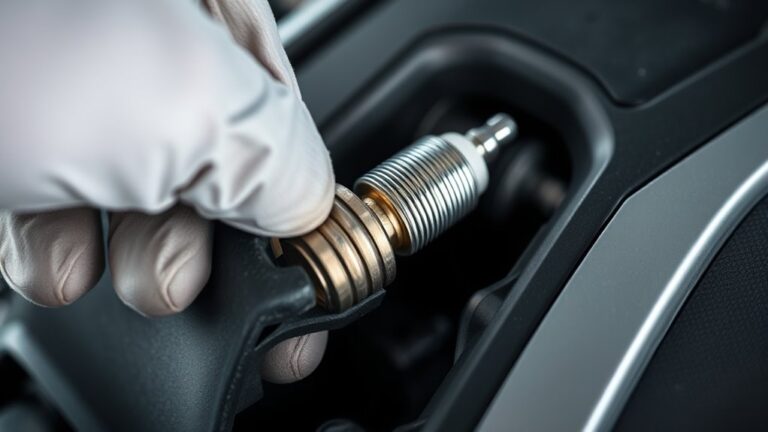
Remove any covers, then use a socket wrench to carefully unscrew the spark plugs.
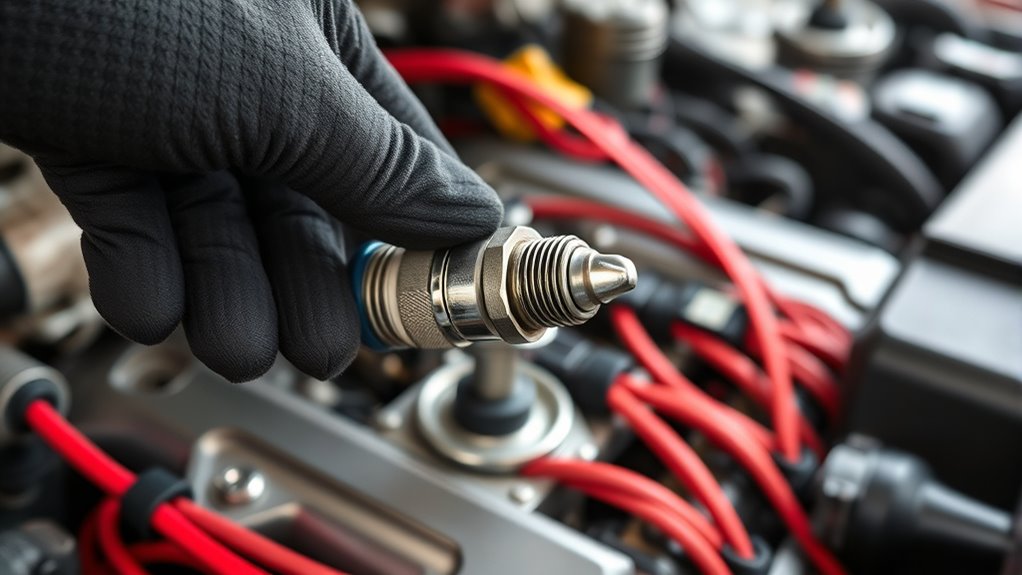
Inspect their condition for deposits, cracks, or wear, and measure the gap with a gauge to match manufacturer specs.
Clean or replace if needed, then reinstall and torque them properly.
Keep going to uncover all the tips for ideal engine performance.
Key Takeaways
- Locate and safely access the spark plugs in the engine bay, making sure the engine is cool before you start removing them.
- Use the correct socket to remove the spark plugs and check their condition for signs of wear, deposits, or cracks.
- Measure the electrode gap with a gap gauge and adjust it to the manufacturer’s specifications if needed.
- Clean any dirt off the plugs with a wire brush or replace them if they’re worn out for better engine performance.
- Reinstall the plugs, making sure to tighten them with the proper torque to prevent damage and keep your engine running smoothly.
Why Spark Plugs Are Key to Your Engine’s Performance
Spark plugs are essential to your engine’s performance because they ignite the air-fuel mixture that powers your vehicle. The right spark plug type directly affects ignition efficiency, which in turn influences how smoothly your engine runs.
Different spark plug types, such as copper, platinum, and iridium, offer various benefits. Copper plugs are affordable with good conductivity, but they wear out faster.
Platinum and iridium plugs last longer and provide more consistent sparks, improving ignition efficiency over time. When your spark plugs work well, your engine starts easily, accelerates smoothly, and maintains fuel economy.
Poorly functioning or worn-out spark plugs can cause misfires and reduced power. Choosing the correct spark plug type for your vehicle ensures peak ignition efficiency, keeping your engine running at its best.
Regularly checking and replacing your spark plugs helps maintain peak performance and prevents potential engine issues.
How to Recognize When Your Spark Plugs Need Checking
If your engine keeps stalling or misfiring randomly, that’s a pretty clear sign it’s time to check your spark plugs. You might also notice starting your car feels more difficult than usual, which could mean your plugs are worn out or dirty.
Just keep an eye out for these signs—they’re good indicators that your engine might need a little attention to keep it running smoothly.
Engine Misfire Signs
Engine misfires are a common sign that your spark plugs might be worn out or not working properly. When this happens, your engine’s health can decline, and your fuel efficiency drops.
You might notice the engine sputtering, hesitation during acceleration, or rough idling. These signs mean your spark plugs aren’t firing correctly, leading to incomplete combustion.
To help you understand better, check the table below:
| Symptom | What it Means | Action Needed |
|---|---|---|
| Engine sputters | Misfiring due to spark plug issues | Check and replace faulty spark plugs |
| Rough idling | Inconsistent spark delivery | Inspect ignition system and plugs |
| Loss of power | Poor combustion affects engine performance | Check spark plug condition |
Recognizing these signs can help keep your engine running smoothly and save you money on fuel.
Difficult Starting Symptoms
When starting your vehicle becomes noticeably harder than usual, it can be a clear sign that your spark plugs might need checking. Starting problems often point to ignition issues, which can stem from worn or fouled spark plugs.
If your engine cranks but struggles to turn over or takes longer than normal to start, it’s a warning sign. These symptoms indicate that the spark isn’t firing properly, leading to weak ignition and difficulty igniting the fuel-air mixture.
You might also notice sputtering or misfires during startup. Ignition issues like these can cause your engine to stall or have trouble maintaining a smooth idle.
Recognizing these signs early helps prevent further damage and guarantees your spark plugs are functioning correctly.
Tools You’ll Need to Inspect Your Spark Plugs
To inspect your spark plugs effectively, you’ll need a few essential tools on hand. First, gather a socket wrench with a deep socket specifically designed for spark plugs—usually 5/8-inch or 13/16-inch. A spark plug socket often has a rubber insert to protect the ceramic insulator.
You’ll also want a gap gauge to measure the electrode gap accurately, ensuring proper spark plug maintenance. An extension bar can make reaching stubborn plugs easier. A torque wrench helps reinstall the spark plugs to the correct tightness.
Furthermore, keep a wire brush or spark plug cleaner handy for removing carbon deposits. For safety, use gloves and safety glasses. Understanding the different spark plug types is useful, as each requires specific inspection techniques.
Having these tools ready makes the process simpler, helping you assess the condition of your spark plugs and perform proper maintenance for peak engine performance.
Locating and Accessing Your Spark Plugs Safely
Locating and accessing your spark plugs starts with finding their position inside your engine bay. Since their locations vary by make and model, check your owner’s manual for specifics.
Usually, they’re lined up along the cylinder head and might be covered by ignition coils or spark plug wires. To get to them safely, make sure the engine is cool so you don’t burn yourself.
Disconnect the negative battery terminal for extra safety. Remove any covers or parts blocking your view using the right tools, being careful not to damage nearby components.
Use a flashlight if needed to see clearly. Properly identifying the spark plug locations helps prevent accidental damage and makes the process safer and more efficient.
Following these steps ensures you access your spark plugs safely, giving you a solid start for inspection or replacement.
How to Remove Spark Plugs Without Damage
Sure! Here’s a more conversational version of the text:
—
If you want to remove your spark plugs without causing any damage, the first thing you need is the right tools. Using the proper spark plug socket and a ratchet will make a big difference.
When you’re loosening the plugs, take it slow and apply gentle, steady pressure. Rushing or using too much force can cause the plugs to strip or break, which nobody wants.
Just remember, patience is key. Taking your time and being careful will help you avoid costly mistakes and make the removal process much smoother.
Use Proper Tools
Using the right tools is essential to remove spark plugs without causing damage. Choose a spark plug socket that fits your spark plug brands snugly without slipping.
A ratchet with a long handle gives you better torque control, helping prevent over-tightening or breaking the plug. Avoid using pliers or makeshift tools because they can strip the ceramic insulator or damage the threads.
If you keep up with regular maintenance, you’ll reduce corrosion or buildup, making removal much easier. Keep a torque wrench nearby to reinstall the plugs correctly later.
Using proper tools helps preserve the integrity of the spark plugs and cylinder head. This ensures your engine runs reliably and extends the lifespan of your ignition system.
Apply Gentle Techniques
Gently loosening the spark plug helps prevent unnecessary stress on the ceramic insulator and threads. Use a spark plug socket and a ratchet with a smooth, steady motion to avoid sudden pulls.
Handle the spark plug with care to prevent damage during removal. Applying gentle pressure keeps the spark plug intact and maintains its functionality.
Remember, forcing the removal can crack the ceramic or strip threads, leading to costly repairs. Always prioritize gentle handling for peace of mind.
| Gentle Handling | Spark Plug Care | Peace of Mind |
|---|---|---|
| Avoid sudden movements | Prevent damage | Confident repairs |
| Use light pressure | Preserve spark plug | Long-lasting engine health |
| Be patient | Maintain efficiency | Smooth performance |
What to Look for When Checking Spark Plug Condition
When inspecting a spark plug, the first thing to notice is its coloration and deposits. A healthy spark plug usually has a light tan or grayish color on the insulator tip, which shows proper combustion.
If you see black soot, it suggests a rich fuel mixture or oil fouling. White or blistered deposits can point to overheating. Check the electrode for signs of erosion or wear, as a worn electrode can cause misfires.
Consider the type of spark plug you have—different types like iridium or platinum may show varied wear patterns but should still look in good condition. Also, keep in mind the spark plug’s lifespan; even if it looks okay, older plugs might not perform well.
Regular inspection helps you decide whether the plug needs cleaning, adjustment, or replacement. This ensures your engine runs smoothly and efficiently.
How to Measure and Adjust Spark Plug Gaps
To make sure your engine runs smoothly, it’s important to measure and adjust the spark plug gaps correctly. You can do this with a gap gauge or feeler gauge—just check if the gap matches what the manufacturer recommends.
If the gap isn’t right, you can gently adjust it by bending the electrode. Just be careful to do this evenly to ensure everything runs properly and your engine performs at its best.
Proper Gap Measurement Techniques
Measuring and adjusting spark plug gaps accurately is key to getting your engine to run its best. Use the right tools, like a wire gauge or feeler gauge, specifically designed for this job.
Gently insert the gauge between the center and ground electrodes to check the gap. Be careful not to bend the electrodes, as this can lead to inaccurate readings.
It’s a good idea to measure the gap multiple times to ensure consistency. Keep your gap tools clean and free of debris so the readings stay reliable.
Always verify that the gap matches the manufacturer’s recommended specifications. Regularly inspect your tools for wear or damage to keep them in good shape.
Using a calibrated gap tool helps ensure accuracy, and measuring at different points can catch any irregularities. Remember, precise gap measurement directly affects spark efficiency and engine performance.
Adjusting Spark Plug Gaps
Adjusting the spark plug gap is pretty straightforward, but you need to pay attention to detail to get the best engine performance. Proper gap adjustment helps your spark plugs last longer and ensures efficient combustion.
First, check the recommended gap size for your vehicle. Use a spark plug gap tool or feeler gauge to measure the current gap accurately. If it’s too wide, gently bend the side electrode inward; if it’s too narrow, carefully bend it outward.
Work slowly and evenly to avoid damaging the electrode. After making adjustments, re-measure the gap to confirm it’s correct. Properly gapped spark plugs improve ignition, fuel efficiency, and engine smoothness.
Maintaining the right gap regularly helps extend the life of your spark plugs and keeps your engine running at its best.
Cleaning or Replacing Spark Plugs for Better Performance
Cleaning or replacing your spark plugs can really boost your engine’s performance. Dirty or worn plugs can cause misfires, poor fuel efficiency, and sluggish acceleration. Regular maintenance helps your spark plugs last longer and keeps your engine running smoothly.
When cleaning, use a wire brush or a specialized cleaner to get rid of carbon buildup. If your plugs are damaged or really worn out, replacing them is the best move.
Here are some tips to keep in mind:
- Check your spark plugs for deposits, wear, or corrosion.
- Use the right tools to avoid damaging the ceramic insulator.
- Replace any plugs with worn electrodes or cracks.
- Pick high-quality plugs that are suited for your engine.
- Keep a record of when you change your spark plugs to track how your engine performs over time.
Reinstalling Spark Plugs Correctly and Applying Torque
To guarantee your spark plugs perform reliably, it’s essential to reinstall them correctly and apply the proper torque. Using proper reinstalling techniques ensures the spark plugs are seated correctly and helps prevent damage.
Start by threading the spark plug by hand to avoid cross-threading, turning it clockwise until snug. Then, use a torque wrench to tighten the spark plug to the manufacturer’s specified torque.
Over-tightening can crack the ceramic insulator, while under-tightening may cause poor contact or misfires. Check the torque setting carefully before tightening and tighten gradually to avoid uneven pressure.
Remember, proper torque not only secures the spark plug but also maintains engine efficiency and longevity. If you don’t have a torque wrench, use a spark plug socket with a ratchet, tightening until it’s snug—never force it.
Following these reinstalling techniques ensures your spark plugs are properly seated for peak performance.
Tips to Keep Your Spark Plugs in Top Shape
Keeping your spark plugs in prime condition requires regular inspection and maintenance. Proper spark plug care ensures your engine runs smoothly and performs at its best.
Regular spark plug inspection and maintenance keep your engine running smoothly and efficiently.
Check for signs of wear like erosion or carbon buildup. Regularly clean the electrodes to prevent misfires and poor combustion.
Make sure the spark plug gap matches your vehicle manufacturer’s specifications. Using the right gap helps maintain engine efficiency.
Replace worn-out spark plugs promptly to avoid damaging other engine parts. This keeps everything running smoothly and saves you money.
Here are some tips to keep your spark plugs healthy:
- Regularly inspect for corrosion or deposits
- Clean electrodes with a wire brush if necessary
- Confirm proper spark plug gap for your engine
- Use high-quality spark plugs suited for your vehicle
- Follow the manufacturer’s recommended replacement intervals
Following these simple steps will help extend your spark plug’s lifespan, improve engine performance, and keep your vehicle operating at peak efficiency.
Frequently Asked Questions
How Often Should I Check or Replace My Spark Plugs?
You should check and replace your spark plugs every 30,000 to 50,000 miles, depending on your vehicle’s lifespan and what the manufacturer recommends.
Regular maintenance includes inspecting for wear, fouling, or damage. These issues can cause misfires or poor fuel economy.
Staying on top of these checks ensures your engine runs smoothly, improves efficiency, and helps prevent costly repairs later on.
Can Dirty or Worn Spark Plugs Damage My Engine?
Dirty or worn spark plugs can indeed damage your engine. They cause incomplete combustion, which can lead to misfires, poor engine performance, and increased fuel consumption.
Over time, neglecting spark plug maintenance can cause more serious issues, like damage to the ignition system or pistons.
Regularly inspecting and replacing spark plugs helps keep your engine running at its best, prevents costly repairs, and ensures your vehicle runs smoothly and efficiently.
What Are the Signs of a Failing Spark Plug?
Like a knight’s armor, your spark plug’s lifespan can tell you a lot about engine health. Signs of a failing spark plug include rough idling, difficulty starting, misfires, or poor acceleration.
You might also notice decreased fuel efficiency or engine hesitation. These symptoms indicate that your ignition system isn’t firing properly, which can be caused by worn or fouled spark plugs.
Addressing these issues early keeps your engine running smoothly and prolongs its life.
Are There Different Types of Spark Plugs for My Vehicle?
Yes, your vehicle can have different types of spark plugs depending on the materials and heat ranges.
Spark plug materials include copper, platinum, and iridium, each offering different levels of durability and performance.
The heat range indicates how hot or cold the plug runs, which affects combustion efficiency.
Choosing the right spark plug depends on your vehicle’s specifications and your driving conditions.
This helps ensure your engine performs well and lasts longer.
How Do I Choose the Right Spark Plug Gap Size?
Think of your spark plug gap as the handshake that starts your engine’s conversation. To choose the right size, check your vehicle’s manual or the factory specifications, which are often listed in the owner’s manual.
Use a gap measurement tool to make sure the gap matches these specs. Consider spark plug materials like platinum or iridium for added longevity.
Getting the gap right ensures a strong spark, better fuel efficiency, and smooth engine performance.
Conclusion
Regularly checking and maintaining your spark plugs can boost your engine’s efficiency and lifespan. Did you know that properly gapped and clean spark plugs can improve fuel economy by up to 30%?
Staying attentive to their condition guarantees smoother starts, better acceleration, and fewer repairs. So, take a little time to inspect your spark plugs—your engine will thank you with reliable performance and long-term savings.
Keep your vehicle running at its best with these simple steps to check spark plugs.