Car Dies While Idling Alternator Issues Explained
Troubleshooting a car that dies while idling can be really frustrating, and you’re not alone in facing this issue. Many people struggle with sudden stalls and unpredictable engine performance, especially when they rely on their vehicle daily.
One common culprit behind these problems is alternator issues that disrupt the electrical system and engine performance. A failing alternator can cause fluctuating voltage, leading to rough idling or stalls, especially when electrical loads increase.
You might notice dimming headlights, warning lights, or battery trouble signs. To prevent breakdowns, it’s important to check your alternator’s health regularly.
Keep going to uncover more about diagnosing and fixing this common problem.
Key Takeaways
- A failing alternator can cause voltage fluctuations that lead to the engine stalling when idling.
- You’ll notice symptoms like dimming headlights, flickering dashboard lights, and electrical accessories not working properly.
- To check the alternator, use a multimeter to see if the voltage output is in the normal range of 13.8 to 14.4 volts.
- Bad alternators can give uneven power, which might make your engine idle roughly or stall unexpectedly.
- Regular maintenance and early testing can help prevent alternator failure and avoid engine stalling problems.
Why Does Your Car Stall at Idle?
If your car stalls at idle, it’s often a sign that something isn’t working properly with the engine or its supporting systems. A rough engine idle can be caused by fuel issues like a clogged fuel filter or not enough fuel supply, which makes it hard for the engine to run smoothly.
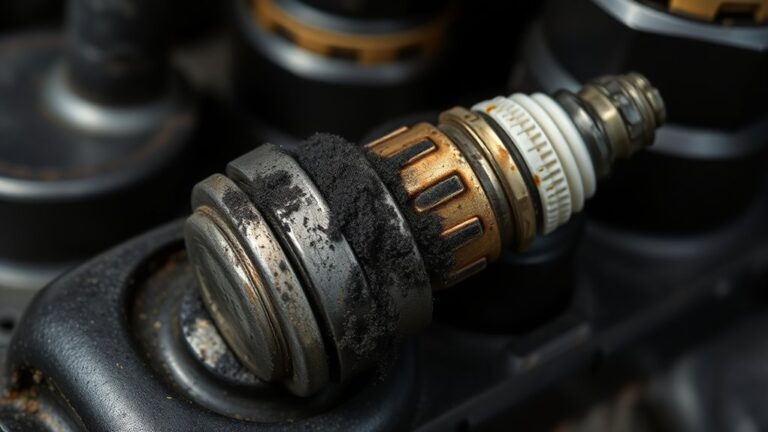
Ignition problems, such as worn spark plugs or faulty coils, can also lead to misfires and stalls when idling. Vacuum leaks are another common cause; when hoses or intake manifold gaskets develop leaks, unmetered air enters and disrupts the air-fuel mixture.
Worn spark plugs, faulty coils, or vacuum leaks can cause engine misfires and stalls at idle.
Issues with the air intake system, like dirty filters or blocked ducts, can also hamper airflow and affect engine performance. These problems strain the engine’s ability to maintain a steady idle and, if left unchecked, can cause stalls.
Finding and fixing these issues early helps keep your engine running smoothly and prevents further damage.
Recognizing the Signs of Alternator Failure
If you notice your headlights or dashboard lights flickering or looking dim, that’s often a sign something’s not right with your alternator. It’s like your car’s way of telling you, “Hey, I’m having a little trouble charging the battery.”
You might also see the battery warning light pop up on your dash. That little light is a big clue that your vehicle’s charging system isn’t working the way it should. Paying attention to these signs early on can really save you from a unexpected breakdown later.
Dim or Flickering Lights
Dim or flickering lights are common early warning signs of alternator problems that you shouldn’t ignore. If your headlights flicker or dim unexpectedly, it might mean your alternator isn’t producing enough power. This can cause your electrical system to struggle and act up.
These flickering headlights are usually caused by inconsistent voltage. That can lead to electrical drain on your vehicle’s battery. As the alternator weakens, it might not keep the headlights steady, especially when you’re idling or driving at low RPMs.
Ignoring this sign can lead to bigger issues, like your lights going completely out or your car stalling. Pay attention to these warning signs and get your alternator checked soon. Doing so can help you avoid getting stranded or damaging other electrical parts.
Battery Warning Indicator
The battery warning indicator on your dashboard is one of the clearest signs that your alternator may be failing. When this warning light appears, it signals that your vehicle isn’t charging properly, which can lead to battery drain.
If you’ve recently neglected battery maintenance or notice warning lights flickering or staying on, it’s time to check your alternator. This indicator often appears alongside other symptoms like dimming headlights or difficulty starting your car.
Ignoring the warning light risks complete electrical failure, leaving you stranded. To prevent this, address the issue promptly by inspecting your charging system.
Regularly maintaining your battery and paying attention to warning lights can help you catch alternator problems early. This way, you can avoid more costly repairs down the line.
How a Bad Alternator Affects Your Engine’s Idle Performance
A faulty alternator can really mess with your engine’s idle performance by causing uneven voltage levels that your vehicle’s systems depend on. When the alternator isn’t working right, your engine might start to idle unevenly, run rough, or even stall unexpectedly.
These fluctuations happen because your car’s electrical demands aren’t being met consistently. As the alternator struggles to provide steady power, your engine control unit (ECU) gets mixed signals, which can mess with fuel delivery and ignition timing.
You might notice your engine surging or dipping in RPMs, especially when idle. Sometimes, the engine may stall completely, especially when you turn on electrical loads like headlights or the AC.
Basically, a bad alternator throws off the balance between electrical demand and power supply. This directly impacts your engine’s ability to keep a smooth, steady idle.
Spotting these symptoms early can help prevent more serious damage down the line.
How to Check Your Alternator’s Charging Power
Want to see if your alternator is doing its job? First, take a quick look at your battery connections—make sure there’s no corrosion and that everything’s nice and tight. It’s a simple step, but it can save you a lot of trouble later on.
Next, grab a multimeter and test the alternator’s output. Just set it to measure voltage and place the probes on your battery terminals. If the reading is around 13.8 to 14.4 volts when your engine is running, your alternator is charging properly. If it’s lower or higher, that might be a sign something’s off.
And don’t forget to check your dashboard! If you see warning lights like the battery or alternator warning, it’s worth investigating further. Keeping an eye on these signs can help you catch problems early before they become bigger headaches.
Inspect Battery Connections
Your vehicle’s battery connections are the crucial link between the alternator and the rest of the electrical system. To keep everything working smoothly, start by checking the battery terminals for corrosion—white, green, or blue buildup can block electrical flow.
Next, disconnect the cables and clean the terminals using a terminal cleaning brush or a mixture of baking soda and water. Scrub away any corrosion, then wipe the terminals dry before reconnecting.
Finally, make sure the terminal clamps are tight. Loose connections can lead to charging problems. Keeping your terminals clean, tight, and corrosion-free helps your alternator do its job efficiently, preventing your car from stalling or dying while idling.
Taking good care of your battery connections is key to a reliable electrical system.
Test Alternator Output
Before diagnosing alternator problems, it’s important to check if it’s producing enough voltage.
You can do this by measuring the voltage output with a multimeter.
Set your multimeter to DC voltage, then connect the red probe to the positive terminal of the battery and the black probe to the negative terminal.
Start your engine and let it idle.
A good alternator should produce between 13.8 and 14.8 volts during the test.
If the reading is below this range, your alternator might not be charging properly.
If the voltage is higher or fluctuates, there could be an issue with the voltage regulator or the alternator itself.
This simple test helps you figure out if your alternator is providing enough power to keep your vehicle running smoothly.
Observe Warning Indicators
Pay attention to your vehicle’s warning indicators, as they can reveal if your alternator isn’t charging properly. If you notice symptoms like idle fluctuations or inconsistent engine performance, it’s time to check for warning signs. Here’s what to look for:
- Dashboard Lights: The battery or alternator warning light may turn on, signaling charging issues.
- Unusual Engine Behavior: Sudden idling fluctuations or stalling can indicate your alternator isn’t maintaining proper voltage.
- Electrical Problems: Dimming headlights or malfunctioning accessories are common signs of weak charging power.
Monitoring these indicators helps catch alternator problems early, preventing unexpected breakdowns and ensuring your engine runs smoothly. Stay alert to keep your vehicle running reliably.
Common Symptoms of Alternator Problems Beyond Stalling
Alternator problems can show up in ways other than just causing your engine to stall. You might notice your headlights dimming, dashboard lights flickering, or your radio suddenly cutting out. These signs point to issues with voltage regulation, which controls the electrical flow from your alternator.
An aging alternator might not last as long and can cause inconsistent power supply. If your battery keeps draining, it’s a good sign your alternator isn’t charging properly. Here’s a quick overview:
| Symptom | Cause | Action |
|---|---|---|
| Dim or flickering lights | Voltage regulation failure | Check alternator condition |
| Dead battery | Alternator not charging | Test alternator output |
| Electrical accessory issues | Alternator lifespan decline | Replace or repair |
| Dashboard warning lights | Alternator malfunction | Inspect and diagnose |
Catching these symptoms early can help prevent complete failure and costly repairs.
What Happens If You Ignore Alternator Warning Signs?
Ignoring warning signs like dimming lights or a flickering dashboard can lead to serious problems for your vehicle. If you dismiss these signs, your alternator’s lifespan gets shorter, and more severe damage is possible.
Over time, the alternator might completely fail, leaving you stranded. Your car’s electrical system can become unstable, affecting everything from headlights to the ignition.
The battery can drain quickly, making it hard to start your vehicle or causing it to fail altogether. You also risk damaging other parts, like the battery or serpentine belt, which can lead to costly repairs.
How to Test Your Alternator at Home
Want to check if your alternator is working okay without heading to the shop? Here’s a simple way to do it at home. First, grab a multimeter and check your battery voltage with the engine off. You’re looking for something around 12.6 volts—that’s a healthy, fully charged battery.
Next, start up your car and keep an eye on that multimeter. If everything’s working right, the voltage should jump to somewhere between 13.8 and 14.4 volts. That means your alternator is doing its job and charging the battery properly.
But if the voltage doesn’t increase or stays below that range, it might be time to dig a little deeper or get some professional help.
Check Battery Voltage
Checking your battery voltage is a simple way to see if your alternator is working properly. Regularly monitoring it helps keep your battery in good shape and ensures voltage stays stable.
Here’s how to do it:
First, turn off your engine and set your multimeter to DC voltage.
Then, place the red probe on the positive terminal and the black probe on the negative terminal of your battery.
Start the engine and watch the voltage reading. A healthy system usually shows between 13.8 and 14.4 volts.
If your voltage drops below 13.5 volts or rises above 15 volts, your alternator might be faulty. Checking it regularly can catch issues early, preventing breakdowns and keeping your battery healthy.
Perform Alternator Test
After verifying your battery voltage, you can check your alternator’s performance with a simple test at home. Start your engine and keep your headlights on. If they dim or flicker, it might be a sign of a charging system problem.
Use a multimeter to measure the voltage at your battery terminals. A healthy alternator should produce between 13.8 and 14.8 volts. If the reading is lower, your alternator could be nearing the end of its life or struggling to keep up with the charge.
Remember, a failing alternator can shorten your battery’s lifespan and cause your car to stall. Regular testing helps catch issues early and keeps your alternator working properly.
This way, you can help ensure your vehicle stays reliable and avoid unexpected breakdowns.
When Is It Safe to Drive With a Failing Alternator?
Wondering if it’s safe to keep driving with a failing alternator? Generally, it’s best to avoid long drives once you notice signs of alternator problems. Your alternator’s lifespan varies, but once it starts failing, the risk of sudden breakdown goes up.
Avoid long drives and get your alternator checked promptly to prevent breakdowns and ensure safety.
If you need to drive, consider these precautions:
- Keep your battery fully charged to prevent it from dying unexpectedly.
- Limit your driving to short, familiar routes to reduce stress on your electrical system.
- Watch for warning signs like dimming lights or electrical failures, and get repairs done quickly.
If these signs show up, it’s time to stop and see a professional. Continuing to drive with a failing alternator can cause your electrical system to fail completely, leaving you stranded.
Always prioritize safety and schedule a repair as soon as possible to avoid further damage and keep your vehicle reliable.
How to Prevent Alternator Failures in Your Car
To prevent alternator failures, regular vehicle maintenance is key. Routine inspections help catch issues early before they lead to breakdowns. Focus on checking the alternator belt’s tension and condition, as these are common trouble spots.
Keep your battery terminals clean and secure to reduce strain on the alternator. Also, pay attention to warning lights and unusual electrical behaviors—they can signal potential problems.
Here’s a simple guide to preventive maintenance:
| Task | Frequency | Purpose |
|---|---|---|
| Check belt tension | During routine oil changes | Prevent belt slippage or breakage |
| Inspect wiring | Monthly | Avoid shorts or corrosion |
| Test battery health | Quarterly | Ensure proper alternator function |
| Examine dashboard lights | As needed | Detect early warning signs |
Sticking to regular inspections and preventive care keeps your alternator in good shape. This reduces the chance of unexpected failures and keeps your car running smoothly.
Repair and Replacement Options for Your Alternator
When your alternator starts to fail, you have several repair and replacement options to consider. First, think about professional alternator maintenance; sometimes, a simple rebuild or cleaning can restore its function at a lower cost.
If repairs aren’t enough or are too expensive, replacement is usually your best bet. You can go for a new alternator, which costs more upfront but offers better longevity and reliability.
Another option is a remanufactured alternator. It’s generally more affordable and still performs well, though it might not last as long.
Always compare the replacement cost and warranty options before making a decision. Replacing your alternator quickly helps prevent further damage to your vehicle’s electrical system.
Whether you choose to repair or replace, make sure to work with a trusted mechanic. This way, you get the best value and keep your alternator properly maintained.
Frequently Asked Questions
Can a Failing Alternator Cause Your Headlights to Dim?
Yes, a failing alternator can cause your headlights to dim. When your alternator isn’t working properly, it can’t supply enough electrical power, which makes your headlights appear less bright.
This electrical drain on your vehicle’s system means less power gets to your headlights, making them look dimmer. Over time, a bad alternator can also lead to other electrical problems, so it’s a good idea to get it checked before things get worse.
How Long Can I Drive With a Weak Alternator Before Breakdown?
You can usually drive about 10 to 30 miles with a weak alternator before it breaks down. But this really depends on your battery’s condition and how much electrical stuff you’re using.
Watch out for warning signs like headlights that are dimmer than normal, flickering dashboard lights, or slow engine starts. Ignoring these can leave you stranded unexpectedly.
To stay safe, it’s a good idea to check your battery regularly. And if you notice any of these signs, have your alternator tested sooner rather than later.
Does Temperature Affect Alternator Performance and Car Stalling?
Yes, temperature extremes can impact your alternator’s performance and cause your car to stall. Cold weather makes lubricants thicker and can lower electrical efficiency.
On the other hand, heat can cause components to overheat and get damaged. If your battery isn’t in good shape, these temperature changes become even more problematic.
They can increase the risk of your car stalling unexpectedly. Keep an eye on your battery and alternator, especially during very hot or cold weather, to keep everything running smoothly.
Are There Specific Driving Habits That Can Prolong Alternator Life?
Did you know that poor driving habits can cut your alternator’s lifespan by up to 30%?
To help it last longer, try to avoid excessive idling and quick acceleration. Regularly check your battery health too, since a healthy battery puts less stress on the alternator.
Drive smoothly and turn off unnecessary accessories when parking. These simple habits can prevent unnecessary wear and keep your alternator reliable for longer.
What Are the Costs Involved in Replacing a Car’s Alternator?
Alternator replacement costs usually range from $400 to $800, depending on your car’s make and model. You’ll pay for the new alternator itself plus labor fees, which can be $100 to $300.
If you’re handy, you might save on labor costs by doing it yourself. Otherwise, plan to budget for professional service.
Always get a detailed estimate to understand the total alternator replacement costs involved.
Conclusion
Think of your alternator as the heartbeat of your car’s energy, quietly keeping everything alive. When it falters, your engine struggles like a tired dancer losing rhythm.
By recognizing the signs early and giving it proper care, you keep the dance going smoothly.
Remember, a healthy alternator is the steady drum that sustains your journey. So listen closely and ensure your car’s heartbeat remains strong for many miles to come.