How to Install Chicco Car Seat: Step by Step Safety Guide
Many parents find installing a Chicco car seat to be a bit overwhelming. You’re not alone—getting it right is crucial for your child’s safety, but the process can feel confusing.
Don’t worry, though; with a little guidance, you’ll be able to do it confidently.
To install your Chicco car seat safely, start by gathering all tools and reading the instructions. Use either the LATCH system or seat belt—whichever is simpler for you—to secure the seat tightly, with no more than an inch of movement.
Adjust the harness to fit your child snugly and guarantee the chest clip is at armpit level. Proper installation is critical; keep everything secure and check regularly for safety.
Keep exploring for detailed steps and tips to help you get it right.
Key Takeaways
- Gather all the tools you need and make sure to read both your vehicle’s manual and the Chicco car seat manual before you start installing.
- Decide whether to use the LATCH system or the seat belt method, depending on what your vehicle supports.
- Attach the seat securely with the LATCH connectors or tighten the seat belt, making sure there’s minimal movement.
- Adjust the harness straps so they’re at or below your child’s shoulders and position the chest clip at armpit level.
- Keep checking regularly to ensure the seat stays tight, at the right angle, and locked securely for ongoing safety and stability.
Why Proper Installation of Your Chicco Car Seat Matters
Proper installation of your Chicco car seat is key to keeping your child safe in a crash or sudden stop. When you set it up correctly, it provides maximum protection and helps reduce the risk of injury.
Car seat safety isn’t just about picking the right seat; it’s about making sure it’s secured properly every time you use it. An improperly installed seat can shift or even detach, putting your child at risk.
Properly securing your car seat every time is essential to keep your child safe and prevent risks.
By following the right steps and tightening everything securely, you help keep the seat stable. This minimizes movement and helps absorb crash forces, keeping your child in the safest position.
Even a small mistake during installation can compromise safety. Taking the time to do it right ensures your child gets the full benefits of your Chicco car seat’s safety features.
In the end, proper installation gives you peace of mind knowing your little one is protected during every trip.
Gather All Tools and Accessories Before Starting
Before you begin installing your Chicco car seat, gather all the necessary tools and accessories. Having everything ready makes the process smoother and keeps you focused on safety. Check that you have the right car seat accessories and installation tools on hand so nothing slows you down.
To be fully prepared, gather these essentials:
- A clean, flat surface to work on
- The vehicle’s owner’s manual for reference
- The Chicco car seat’s instruction manual
Having these items ready gives you confidence and peace of mind. You won’t need to stop midway or look for missing parts. The right tools, like a locking clip, tether strap, or level indicator, are crucial for a secure install.
Get to Know Your Chicco Car Seat and Its Features
Once you’ve gathered all your tools and accessories, it’s time to familiarize yourself with your Chicco car seat and its features. Understanding the car seat helps you operate it confidently and keeps your child safe. Take a close look at the harness system, adjustment straps, and recline positions so you know how to change them easily.
Many Chicco seats include features like a removable newborn insert, easy-to-use belt guides, and indicators that show correct installation. These features not only make your child more comfortable but also help ensure a secure setup. This makes the installation process smoother and more secure.
Take some time to read the user manual and identify key components. Knowing how each feature works allows you to install the seat correctly and quickly, reducing mistakes. Being familiar with your car seat’s features means safer, easier setup every time you go out.
Choose the Best Seating Position in Your Vehicle
Choosing the right seat location in your vehicle is really important for your child’s safety and comfort. The best spot depends on your vehicle type and where it offers the most protection.
For many cars, the middle seat in the back is ideal because it keeps your child safest from side impacts. If your vehicle doesn’t have a center seat, the rear passenger side is often the safest choice, especially if there are side airbags.
Here are three reasons to pick your seat carefully:
- Maximize safety during a collision, especially in areas with strong side impact zones.
- Make it easy to secure your child and check on them during the ride.
- Keep your child comfortable with enough space to sit without feeling cramped.
Always think about your vehicle’s layout and features when choosing a seat. This way, your child can enjoy a safe and comfortable ride.
How to Install Your Chicco Car Seat Using the LATCH System
Sure! Here’s a more conversational version of the text:
—
If you’re installing your Chicco car seat using the LATCH system, the first thing you want to do is find the LATCH anchors in your vehicle. They’re usually located between the seat cushion and the seat back, so just take a quick look there.
Once you’ve found them, attach the connectors on your car seat to these anchors. Make sure they click in securely—that way, you’ll know it’s attached properly. After that, give the seat a gentle push to ensure it’s snug and doesn’t wiggle more than an inch side to side or front to back. That way, you can be confident your little one is riding safely!
Locating the LATCH Anchors
Before installing your Chicco car seat using the LATCH system, you need to find the anchors in your vehicle. Locating the latch anchor points is key to getting a safe, secure fit.
First, check your vehicle’s owner’s manual because latch system compatibility varies by model and year. Look for small symbols or labels on the seat bight or back of the seat indicating latch anchor points.
Here are three tips to help you find them:
- Inspect the seat bight or crease—this is the most common spot for latch anchors.
- Look for metal bars or loops behind or between seat cushions.
- Verify with your vehicle’s manual to confirm latch system compatibility and exact positions.
Properly locating these anchors ensures a safe, snug installation.
Securing the Car Seat
Once you’ve found the latch anchors, securing your Chicco car seat is simple. Attach the lower anchor connectors to the latch anchors, making sure they click into place securely.
Pull the straps to remove slack, but don’t overtighten, as this can reduce stability. Many mistakes happen because the straps aren’t tight enough or there’s too much slack.
Check that the car seat doesn’t move more than an inch side to side or front to back when tested at the belt path. Proper securing prevents unwanted movement and keeps your child safe during travel.
Checking for Tight Fit
After securing the latch connectors, check the tightness of the car seat to make sure it’s installed properly. A snug fit is crucial for your child’s safety.
Perform these safety checks to confirm the installation is secure:
- Gently shake the car seat at the base. If it moves more than an inch, it’s too loose.
- Make sure the latch connectors are firmly attached and not twisted or slack.
- Double-check that the seat doesn’t rotate or tip side to side.
These tips help prevent dangerous movement during a crash or sudden stop. Always aim for a tight fit to keep your child safe.
Don’t hesitate to repeat these safety checks until you’re confident in the installation’s stability. Properly installed seats save lives.
Secure Your Chicco Car Seat With Seat Belt Installation
To secure your Chicco car seat with a seat belt, first make sure the belt is properly positioned across the seat. It shouldn’t be twisted or loose — just smooth and flat. Once it’s in place, tighten the belt so the seat doesn’t move more than an inch side to side or front to back.
Finally, double-check that the safety lock is engaged. This step is important because it keeps the seat firmly in place and ensures your child’s safety.
Proper Seat Belt Positioning
Making sure the seat belt is properly positioned is key to safely securing your Chicco car seat with seat belt installation. Different seat belt types have unique safety features, so always follow the manufacturer’s instructions for each.
Proper positioning helps keep your child safe and makes the seat work as intended. Here are three simple tips to get it right:
First, ensure the seat belt lies flat across your child’s hips and chest, avoiding the stomach or neck.
Second, check that the lap belt is snug and sits low on the hips, not on the stomach.
Finally, make sure the shoulder belt crosses the center of your child’s shoulder and chest, not the neck or face.
Securing the Car Seat Tight
Securing the car seat tight is essential for your child’s safety and stability during travel. To confirm proper car seat safety, pull the seat belt firmly across the Chicco car seat, making sure there’s no slack.
Use the installation tips provided by the manufacturer to tighten the belt as much as possible without causing damage. After threading the belt through the designated path, lock the seat belt by listening for a click or following your vehicle’s locking mechanism instructions.
A secure fit means you shouldn’t be able to move the seat side-to-side or front-to-back more than an inch. Make sure to check the tightness regularly during installation to guarantee your child’s safety and peace of mind while on the road.
Confirming Safety Lock
Begin by double-checking that the seat belt is locked properly. Confirming the safety lock is secure ensures your Chicco car seat’s safety features work as intended. Follow your installation checklist carefully to avoid mistakes that could put your child’s safety at risk.
To make sure you’re on the right track:
- Verify the seat belt clicks into place with a firm, audible lock.
- Gently tug on the seat to see if it shifts or loosens.
- Look for any slack in the belt and tighten it if needed.
These steps help you feel confident that your installation is correct and secure. Properly locking the safety features ensures maximum protection. Taking the time to confirm this lock is a key part of your installation process, giving you peace of mind.
Adjust the Harness and Tighten for a Safe Fit
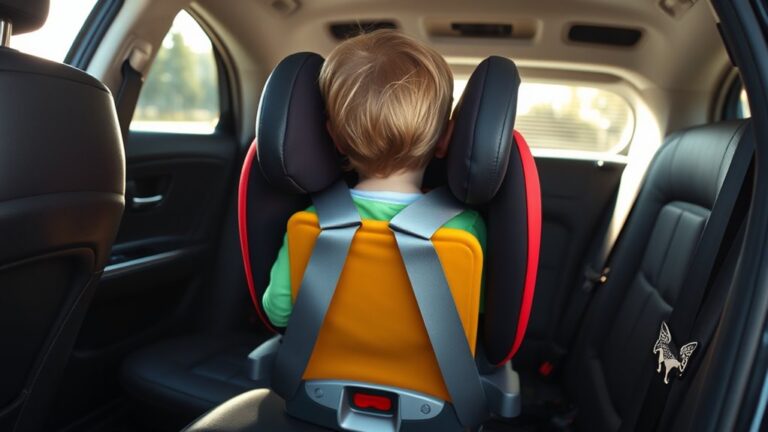
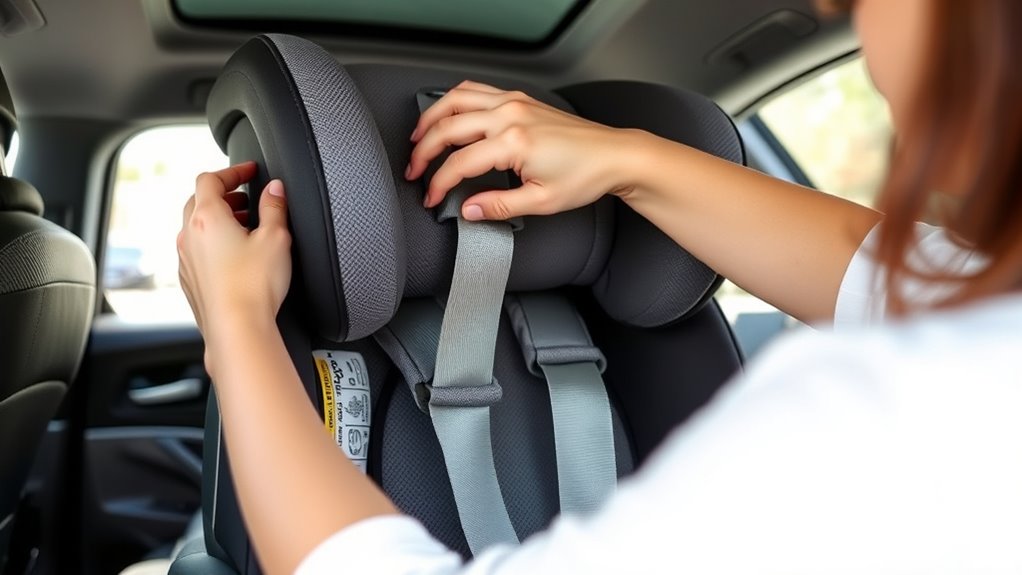
To achieve a safe and comfortable fit, start by adjusting the harness straps to be at or just below your child’s shoulders. Proper adjustment ensures your child is secure without feeling restricted.
Loosen or tighten the straps as needed, making sure they lie flat against your child’s chest and shoulders without any slack. Once everything looks good, buckle the harness.
Check that the chest clip is at armpit level. Then, tighten the harness by pulling the strap while pressing down on the buckle or harness adjuster. Make sure there’s no slack—just enough for a snug fit.
You should be able to fit one finger between the harness and your child’s collarbone. Finally, perform safety checks by gently tugging on the harness to confirm it’s secure.
A properly tightened harness prevents excessive movement during sudden stops or crashes, keeping your child safe and comfortable during every ride.
How to Verify Your Car Seat Installation Is Correct
To make sure your Chicco car seat is installed correctly, start by giving it a good firm shake. It shouldn’t move more than an inch; if it does, you might need to tighten it up a bit.
Next, check the seat angle to ensure your child’s head stays in a safe position. Getting this right is important for your little one’s comfort and safety.
Doing these quick checks can give you peace of mind that your car seat is securely installed and ready to protect your child.
Check Tightness and Stability
Making sure your car seat is installed correctly starts with checking how tight and stable it is. This step is really important for safety and shows you’ve followed your installation checklist. Here are three simple ways to verify:
First, grab the seat at the base and try to move it side to side. It shouldn’t shift more than an inch.
Next, push down on the seat while tightening the straps. It should stay firmly in place with no wobbling.
Finally, check the harness system. Make sure there’s no slack and that it’s snug against your child’s body.
Confirm Proper Seat Angle
Verifying that your car seat is at the correct angle is essential for your child’s safety and comfort. The right seat angle keeps the infant’s airway open and prevents slumping.
Use the built-in level indicator or the bubble level on your Chicco car seat to check the seat angle. Many models have an adjustable base to help achieve the proper tilt.
Follow the installation tips in your manual to set this correctly. Typically, the seat should be reclined at a 45-degree angle for infants. After installation, double-check that the seat doesn’t move excessively and that the angle indicator is aligned.
Proper seat angle reduces the risk of injury and provides a secure, comfortable ride for your child.
Tips for Maintaining and Rechecking Your Chicco Car Seat Over Time
Regularly maintaining and rechecking your Chicco car seat is essential for your child’s safety. Consistent care helps the seat last longer and stay in good working condition during each ride.
To stay on top of this, perform regular inspections and follow these tips:
- Check for wear and tear — Look for frayed straps, cracks, or damaged buckles that could compromise safety.
- Confirm proper fit — Make sure the harness stays snug and correctly positioned as your child grows.
- Tighten and secure — Regularly verify that the seat is tightly installed and all connectors and locks are engaged properly.
These simple steps help keep your car seat effective and prevent issues before they happen. Routine inspections are key to ensuring your Chicco seat remains safe for your child’s journeys, extending its lifespan and giving you peace of mind every time you hit the road.
Troubleshooting Common Installation Issues and When to Seek Help
Even with careful installation, you might run into common issues that can impact your Chicco car seat’s safety and performance. Mistakes like incorrect belt tension or improper seat angle are frequent and can compromise safety.
If you notice the seat moving too much or having trouble securing it, it’s best to get professional help. Always check the user manual and make sure your seat fits well with your vehicle to avoid any compatibility problems.
Using proper adjustment techniques is key to ensuring the seat is secure and correctly positioned. When in doubt, schedule safety inspections with certified technicians who can spot hidden issues or incorrect installations.
Remember, expert advice can help you troubleshoot common problems and keep your child safe. Don’t ignore warning signs like looseness or strange noises. Address these issues quickly by following the guidance in the user manual or seeking help from professionals.
Regular checks and proper installation are essential for keeping your Chicco car seat safe and reliable.
Frequently Asked Questions
Can I Install the Chicco Car Seat Without the Base?
Yes, you can install the Chicco car seat without the base using certain methods like the seat belt, but it’s not always recommended.
Always follow safety tips such as making sure the seat is tightly secured and at the correct angle.
Check your specific Chicco model’s instructions, since some require the base for proper installation and safety.
Proper installation is key to safety and helps reduce the risk of injury during travel.
Is the Chicco Car Seat Compatible With All Vehicle Types?
Ever wondered if your vehicle fits the bill? The Chicco car seat is designed with broad compatibility features, making it suitable for most vehicles, including cars, SUVs, and some trucks.
However, it’s important to check your vehicle’s safety features and seat belt system to ensure proper installation. While it’s generally compatible, always verify your specific model’s guidelines for the best fit and safety.
How Often Should I Recheck the Car Seat Installation?
You should recheck your car seat safety and installation tips every few months, especially after any major car accident or if you’ve removed the seat.
Regularly verifying that the Chicco car seat stays tightly secured helps keep your child safe.
Make it a habit to inspect the installation at least once a month. Confirm that the harnesses are snug and the seat hasn’t shifted so your child’s safety remains a top priority.
What Should I Do if the Car Seat Wobbles After Installation?
If your car seat wobbles after installation, start by checking for common causes like loose straps or incorrectly anchored connectors. Make sure everything is tightened properly.
Next, ensure the seat is securely fastened. Perform a safety check by gently rocking the seat; it shouldn’t move more than an inch.
If it still wobbles, double-check the installation instructions or consider consulting a professional to make sure everything is set up correctly for your child’s safety.
Can I Install the Car Seat in the Front Seat?
Think of the front seat as a wild horse—beautiful but risky. You shouldn’t install the Chicco car seat there because safety concerns outweigh convenience. Many front seat regulations even prohibit it because airbags can be dangerous during crashes.
For your child’s safety, always place the car seat in the back, away from potential airbag deployment. This ensures a safer, more secure ride for your little one.
Conclusion
Just like a captain relies on a steady compass, your careful installation of your Chicco car seat guides your little one safely through every journey. Proper setup isn’t a one-time task—regular checks keep their safety assured, like a lighthouse steadfast against the storm.
By following these steps, you’re not just installing a seat—you’re creating a safe path for your child. Ensuring the Chicco car seat is correctly installed means each trip is as safe as the last.