Are Electric Vehicles Bad for the Environment? Proven Facts
Thinking about switching to an electric vehicle but worried about its impact on the environment? You’re not alone—many people want to make greener choices but feel overwhelmed by conflicting info.
Understanding the real environmental effects of EVs can help you make an informed decision.
Electric vehicles generally produce fewer emissions than traditional cars, especially when powered by clean energy. However, their environmental impact depends on battery production, material sourcing, and the electricity grid in your area.
Manufacturing and recycling processes can pose challenges, but advances are improving sustainability.
If you want to understand how regional differences and future innovations influence EV eco-friendliness, keep exploring these proven facts.
Key Takeaways
- EVs generally produce fewer emissions over their lifecycle than gasoline cars, especially when charged with renewable energy.
- Battery production has significant environmental impacts, like resource extraction and high energy use.
- The environmental benefit of EVs really depends on whether the local electricity grid relies on fossil fuels or renewables.
- Recycling EV batteries is key to reducing waste, recovering valuable materials, and minimizing environmental harm.
- Lifecycle assessments show EVs are more eco-friendly overall, but ethical sourcing and clean energy are essential for true sustainability.
Are Electric Vehicles Truly Greener Than Gasoline Cars?
Are electric vehicles genuinely more environmentally friendly than gasoline cars? To figure this out, you need to look at EV efficiency, which often beats traditional engines, especially with better batteries.
Electric vehicles are often more efficient than traditional engines, especially with advancements in battery technology.
But the impact really depends on how we get our charge. If most charging stations run on renewable energy, the emissions go down significantly. Your habits matter too—charging during off-peak hours or using clean energy sources can lower your car’s carbon footprint.
A full lifecycle assessment shows EVs usually produce fewer emissions over their lifetime compared to gas-powered cars. Still, making the batteries and manufacturing can offset some of those benefits initially.
In the end, whether EVs are greener depends on how the electricity is made and how you use your vehicle. When powered by renewables and supported by good charging infrastructure, EVs have a much better chance of being truly eco-friendly. Understanding these factors is key to judging their real environmental impact.
What Are the Environmental Impacts of EV Manufacturing?
When you’re making electric vehicles, it’s important to think about how the raw materials are sourced. Extracting things like lithium and cobalt can actually harm ecosystems and disrupt local environments. Plus, the process of mining and refining these materials tends to generate a lot of emissions, which adds to climate change.
Raw Material Extraction Effects
The process of extracting raw materials for electric vehicle (EV) batteries, such as lithium, cobalt, and nickel, often causes significant environmental damage. This includes habitat disruption, high water usage, and pollution.
Here are some key impacts: Lithium mining can deplete water sources and harm local ecosystems. Cobalt sourcing, often linked to supply chain ethics issues, can cause community impact and unsafe working conditions.
Mining operations generate substantial production waste and consume large amounts of energy. Environmental regulations may not fully prevent habitat disruption or address recycling challenges, leading to long-term environmental concerns.
These extraction activities influence not only the environment but also social aspects, making raw material sourcing a critical factor in EV sustainability.
Manufacturing Emissions Impact
Manufacturing electric vehicles involves significant energy use and emissions, which can impact the environment. The processes for making EVs usually need more energy upfront than traditional cars, mainly because of battery production.
This leads to higher initial emissions, especially from mining and refining materials like lithium, cobalt, and nickel. While these activities raise environmental concerns, efforts are being made to cut emissions during manufacturing.
New technologies and cleaner energy sources can help reduce the carbon footprint of EV production. Still, the energy-intensive nature of making EVs remains a challenge.
Understanding these impacts helps you see the full picture, weighing both the environmental costs of production and the benefits of long-term use.
How Sustainable Is EV Battery Production?
Although electric vehicle (EV) battery production has improved over the years, concerns about its sustainability still exist. The sustainability of sourcing materials and the overall production footprint remains a key issue.
Extracting raw materials like lithium and cobalt can harm ecosystems, raising questions about ethical sourcing and environmental regulations. Battery manufacturing also demands a lot of energy, often from non-renewable sources, increasing the carbon footprint.
Supply chains are complex and global, which can lead to inefficiencies and environmental impact. However, technology advancements are working to improve transparency and sustainability in these processes.
Many manufacturers are adopting more sustainable practices, such as recycling batteries and reducing waste, to lessen environmental harm. While progress has been made, ongoing efforts are needed to make EV battery production truly sustainable and responsible.
How Does Your Electricity Source Affect EV Sustainability?
Have you ever thought about how the electricity powering your electric vehicle affects its environmental impact? The source of your power decides how sustainable and green your EV really is.
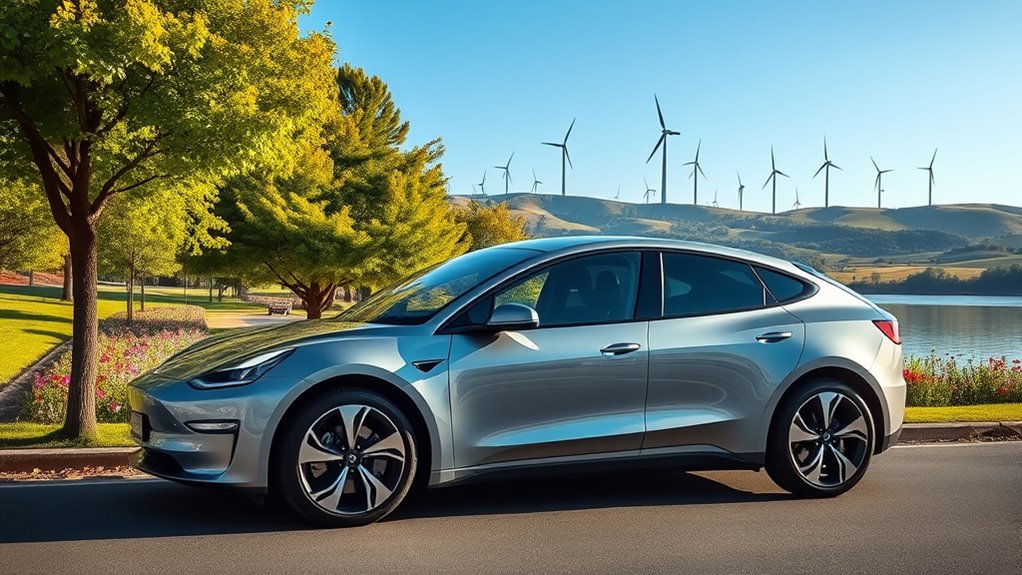
If your electricity comes from renewables like wind or solar, it significantly reduces grid emissions, making your vehicle much greener. On the other hand, relying on fossil fuels increases emissions during power generation, raising your EV’s carbon footprint.
Energy efficiency in power plants is also important. More efficient plants produce less pollution, which helps keep your electric vehicles eco-friendly. Plus, sustainable practices and strong environmental policies can further cut down the environmental impact of electricity production.
To make your EV as eco-friendly as possible, choose energy sources that support clean energy initiatives.
What Are the Challenges in Recycling EV Batteries?
Recycling EV batteries presents several significant challenges that hinder widespread adoption. First, battery disposal is complex because these batteries contain hazardous materials like lithium and cobalt, which need careful handling to prevent environmental contamination.
Second, recycling technology is still evolving. Current methods often have low efficiency, meaning valuable materials can be lost during processing.
Third, environmental regulations differ across regions, creating compliance hurdles and increasing costs for recycling facilities.
Fourth, economic factors play a major role because the high cost of recycling can outweigh the value of recovered resources, discouraging investment.
Together, these issues make resource recovery difficult, reducing the overall sustainability of the recycling process. Addressing these challenges is key to improving battery disposal practices, advancing recycling tech, and keeping EVs eco-friendly over their lifecycle.
Do Electric Vehicles Lower Overall Carbon Emissions?
Electric vehicles (EVs) are often promoted as a way to reduce overall carbon emissions, especially compared to traditional gasoline-powered cars. By switching to EVs, you can lower your personal carbon footprint, particularly if your electricity comes from renewable energy sources.
However, the impact depends on the energy mix used to charge the vehicle. If your grid relies heavily on fossil fuels, the emissions savings might be limited. Conversely, in regions with substantial renewable energy, EVs can greatly cut emissions.
Here’s a quick comparison:
| Energy Source | Emissions Impact |
|---|---|
| Fossil Fuels | Higher emissions, less reduction |
| Renewable Energy | Lower emissions, substantial benefit |
How Do EVs Compare to Traditional Cars in Lifecycle Emissions?
When comparing lifecycle emissions, electric vehicles generally produce less total pollution than traditional internal combustion engine cars, even when accounting for manufacturing and disposal. A thorough lifecycle analysis shows that EVs outperform their gasoline counterparts in emissions.
Here’s why:
- Manufacturing emissions require more energy upfront due to battery production, but this is offset during use.
- Electric motors convert energy more efficiently than combustion engines.
- EVs emit no tailpipe pollutants, reducing overall emissions during operation.
- Recycling and proper disposal of EV batteries can further lower lifecycle emissions.
Can Battery Recycling Make EVs More Sustainable?
As the adoption of electric vehicles grows, attention shifts to how their batteries are managed at the end of their life cycle. Recycling technologies play an essential role in making EVs more sustainable by recovering valuable materials like lithium, cobalt, and nickel.
Growing EV use highlights the importance of recycling batteries to recover valuable materials and promote sustainability.
Instead of disposing of spent batteries, you can give them a second life, such as repurposing them for energy storage systems. This extends the battery’s usefulness and reduces the demand for new raw materials, which are often mined under environmentally damaging conditions.
Advances in recycling technologies make it possible to extract more materials efficiently and safely, lowering environmental impacts. By improving recycling processes, we can close the loop on battery production and disposal, minimizing waste and resource extraction.
This approach not only makes EVs greener but also helps you contribute to a more sustainable transportation future.
Does Regional Power Grid Composition Influence EV Impact?
Have you ever thought about how the source of your electricity impacts the environmental benefits of driving an EV? Regional differences in how power is generated play a big role. The energy fueling your local grid determines its emissions and overall sustainability.
For example, areas that rely heavily on coal tend to have higher emissions when producing electricity. On the other hand, regions with strong renewable energy sources generate cleaner power, which reduces EV emissions. Local policies promoting renewables also improve grid resilience and energy efficiency.
These regional variations directly affect the environmental footprint of charging your EV. A cleaner grid means lower emissions and a bigger environmental advantage. Conversely, a grid dependent on fossil fuels lessens those benefits. Understanding these differences helps explain why some areas are more eco-friendly for EV use than others.
Your local policies and efforts to strengthen the grid shape this landscape. So, regional power grid composition is a key factor in how much impact your EV truly has.
Are Electric Vehicles a True Green Solution or Greenwashed?
Many people believe that switching to electric vehicles automatically means you’re making a greener choice, but the reality is more complex. While EVs are part of green technology and promote sustainable transportation, they can be greenwashed if not paired with eco-friendly practices.
The true environmental impact depends on factors like lifecycle analysis, including manufacturing, battery sourcing, and disposal. If EVs rely on electricity from fossil fuels, their carbon footprint may not be markedly lower, reducing pollution reduction benefits.
To maximize energy efficiency and environmental justice, the industry must focus on renewable energy and ethical sourcing of materials. An honest assessment shows EVs can lower emissions, but only if the entire lifecycle is considered.
Without this thorough approach, EVs risk being greenwashed, giving a false impression of being a fully sustainable solution. Ultimately, embracing true eco-friendly practices is essential for genuine progress in sustainable transportation.
Frequently Asked Questions
What Are the Long-Term Environmental Benefits of Widespread EV Adoption?
Widespread EV adoption offers long-term environmental benefits like reduced greenhouse gas emissions and cleaner air. You help by supporting battery recycling efforts, which minimize waste and recover valuable materials.
As renewable energy becomes more prevalent, EVs will rely less on fossil fuels, further lowering their carbon footprint. This shift promotes sustainability, conserving resources for future generations and making a positive impact on the planet over time.
How Do EV Manufacturing Emissions Compare to Traditional Vehicle Emissions Over Time?
You’ll find that EV manufacturing emissions, mainly from battery production, initially create a higher carbon footprint than traditional vehicles.
However, over the vehicle’s lifecycle, the emissions decrease considerably, especially if you use renewable energy for charging.
A thorough lifecycle assessment shows that EVs tend to have lower overall emissions, making them a cleaner option long-term.
As battery technology improves, these advantages will only grow stronger.
Are There Emerging Technologies That Could Reduce EV Environmental Impacts?
You’ll be pleased to know that emerging technologies are actively reducing EV environmental impacts. Battery recycling minimizes waste and conserves resources, while advances in renewable energy make charging cleaner and greener.
Researchers are also developing solid-state batteries for longer life and faster charging, and innovative manufacturing techniques aim to cut emissions from production.
Together, these innovations work to make electric vehicles more sustainable, efficient, and eco-friendly for your future travels.
How Does EV Adoption Affect Global Mineral Resource Demands?
When you adopt electric vehicles, the demand for minerals like lithium, cobalt, and nickel increases. This leads to more mineral extraction and raises concerns about resource scarcity.
To address this, recycling technologies and sustainable mining practices are crucial for reducing environmental impact. Strengthening supply chains and following strict environmental regulations help ensure responsible sourcing.
Your support for these efforts can promote a more sustainable shift to electric mobility while minimizing negative effects on global mineral resources.
What Policies Can Enhance EV Sustainability and Reduce Environmental Footprints?
You can improve EV sustainability by supporting policies like incentive programs that promote renewable energy use and advanced battery tech. Recycling initiatives help manage resource demands, and grid integration ensures cleaner power.
Urban planning and public transportation help reduce overall emissions. Thorough lifecycle assessments guide better practices. Strengthening these policies creates a more eco-friendly EV ecosystem, minimizing environmental footprints and securing long-term sustainability.
Conclusion
While electric vehicles offer a cleaner alternative to traditional cars, they’re not perfect. Their environmental impact depends on factors like manufacturing, battery recycling, and your electricity source.
By understanding these factors, you can make smarter choices. Are EVs truly a green solution or just a step in the right direction?
The answer lies in how we improve their sustainability and reduce their overall footprint. Ultimately, your decisions shape a greener future, so choose wisely.