Exploring Oil Leak Issues: Is Car Oil Leak Normal? Tips & Costs
If you’ve ever noticed oil spots in your driveway or a burning smell while driving, you’re not alone. Many car owners struggle with oil leaks, which can be stressful and confusing.
Understanding whether a car oil leak is normal or a sign of trouble is key to keeping your engine healthy. A car oil leak isn’t normal and should be checked promptly, as it can signal issues with seals, gaskets, or other engine parts that wear over time.
Look for signs like oil spots, burning smells, or warning lights. Small leaks in older cars are common but still require attention.
Repair costs vary from $150 to over $1,200 depending on the problem. Keep your car well-maintained to prevent costly damage—more useful tips and costs follow.
Key Takeaways
Small, slow oil leaks in older cars can be normal, but it’s important to keep an eye on them to avoid engine damage.
Common leak areas include valve cover gaskets, oil pan gaskets, and drain plugs.
Look out for signs like oil spots on the driveway, a burning smell, or an oil pressure warning light. These could mean you have a leak that needs checking.
Fixing these leaks can cost anywhere from $150 to $1,200, depending on where the leak is and how bad it is.
Regular maintenance and catching leaks early can save you money and help keep your engine running smoothly longer.
What Causes Oil Leaks in Cars?
Oil leaks in cars often happen because seals and gaskets wear out over time or become damaged. As your vehicle gets older, engine seals can shrink, crack, or harden, which can cause gasket failure. When seals aren’t in good shape, oil can seep out, especially under certain driving conditions.
Environmental factors like extreme temperatures or dirt also speed up the deterioration process. Your maintenance habits matter too; neglecting regular inspections can let small issues turn into bigger problems. Different fluid types, such as thicker or thinner oils, affect how well seals hold.
Extreme temperatures, dirt, and poor maintenance accelerate oil leaks and seal deterioration.
If the oil is too thin or thick, it puts extra stress on seals and increases the chances of leaks. Vehicle age is also a factor—older cars tend to have more worn seals. Harsh driving conditions, like stop-and-go traffic or rough roads, add extra strain on engine parts.
All these factors combined increase the likelihood of oil leaks, which makes attentive maintenance and understanding your vehicle’s needs really important.
How to Spot the Signs of an Oil Leak
You might notice oil spots on your driveway or garage floor—that’s often a sign of a leak. It’s pretty straightforward to spot and a good reason to check things out.
Also, listen up for any unusual engine noises, like knocking or ticking sounds. These can mean your oil levels are getting low or that oil isn’t circulating properly.
Keep an eye out for these signs so you can catch any issues early on. That way, you can prevent potential engine damage and save yourself some hassle down the road.
Visible Oil Spots
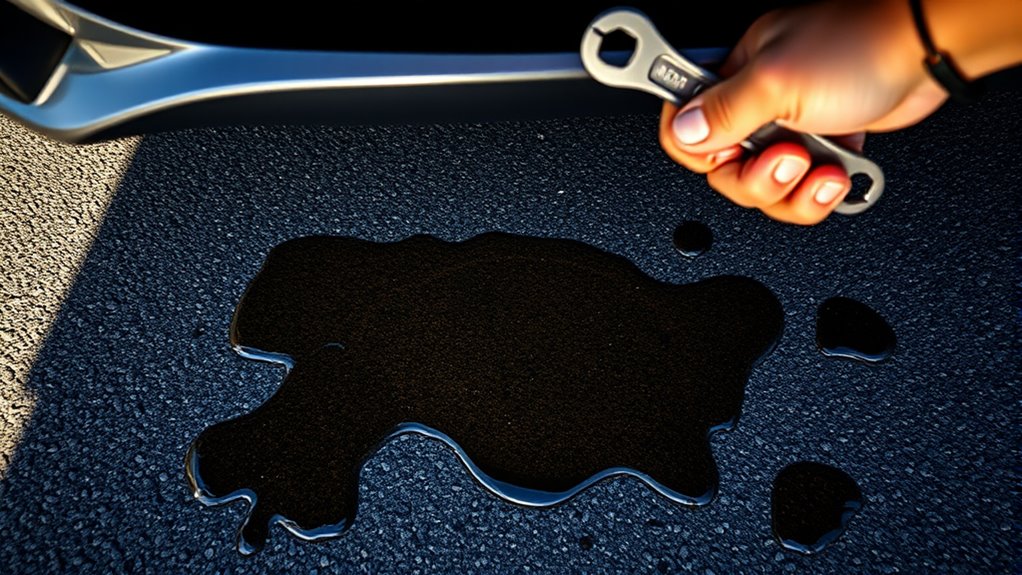
Noticing small puddles or dark spots beneath your vehicle is often the first clue of an oil leak. These visible oil spots can appear on your driveway or garage floor, signaling a potential problem.
To spot the signs early, regularly inspect the underside of your car, especially around the oil pan and drain plug. Preventing oil spots involves proper oil spot prevention techniques, like tightening fittings and replacing worn seals.
If you notice an oil stain, promptly clean it using oil stain removal methods to prevent the stain from spreading or causing damage to your driveway. Consistent monitoring and maintenance help catch leaks early, saving you money and avoiding more serious engine issues down the road.
Keep an eye out for these signs to maintain a healthy, leak-free vehicle.
Unusual Engine Noise
Unusual engine noises can be a clear sign that your vehicle is having low oil levels or oil flow issues. When oil leaks happen, they often affect engine performance and can produce distinct sounds.
To figure out what’s causing the noise, pay attention to these signs:
- Knocking or ticking sounds – These usually mean your engine isn’t getting enough lubrication, which could lead to damage.
- Screeching or whining noises – These are often linked to worn belts or problems with the oil pump caused by low oil flow.
- Rattling or banging sounds – These indicate internal engine parts aren’t being properly lubricated, increasing friction.
These noises tell you your engine isn’t running smoothly and might have oil-related problems. Recognizing these early signs can help you avoid costly repairs and keep your vehicle running at its best.
Where Do Oil Leaks Usually Happen?
Where do oil leaks usually happen? Oil leak locations often include the valve cover gasket, oil pan gasket, and rear main seal. These are common leak areas because they endure constant heat, pressure, and vibration, which can cause seals to deteriorate over time.
The oil filter housing and drain plug are also frequent sources, especially if they aren’t tightened properly or become damaged. Moreover, oil cooler lines and timing covers can develop leaks, particularly in older vehicles.
Cracks or warping in engine components can lead to leaks in less obvious areas, like around the front crankshaft seal or camshaft seals. Regular inspections can help you spot these common leak areas early, preventing more severe engine issues.
Knowing these typical oil leak locations enables you to address problems promptly and avoid costly repairs.
Are Small Oil Leaks Normal in Older Cars?
As your vehicle ages, small oil leaks can become more common, but they don’t necessarily mean something serious. Many older cars develop minor leaks that are just part of normal engine wear over time. Recognizing oil leak symptoms is key to understanding if it’s a cause for concern.
Here are some signs to watch for:
- Slight oil spots under your car, especially after parking.
- A noticeable decrease in oil levels without an obvious cause.
- Unusual engine noise or a drop in performance, which could signal increased engine wear.
While small leaks can be normal in older cars, they can also cause engine problems if ignored. Regular inspections help catch leaks early and prevent bigger issues down the line. If you notice persistent leaks or warning signs, it’s a good idea to see a mechanic to check if repairs are needed.
DIY Tips to Fix Minor Oil Leaks
Want to fix those minor oil leaks on your own? First things first, you’ll need to find where the leak is coming from and make sure you have all the necessary tools on hand. It’s a good idea to give the area a thorough cleaning so that you can see exactly where the leak is and ensure the sealant will stick properly.
Once everything’s clean and ready, follow the instructions on your sealant carefully. Using the right technique is key here—it’ll help make the fix last longer and prevent any future leaks from popping up. Just take your time, and you’ll be able to handle it like a pro!
Identifying Leak Sources
Identifying the source of an oil leak is a crucial first step in fixing it, and doing so accurately can save you time and money. Proper leak detection helps you pinpoint the exact location, making repair methods more effective.
To find the leak source, start by inspecting common problem areas: check around the valve cover gasket for signs of oil seepage. Examine the oil pan gasket and drain plug for leaks.
Look at the oil filter and its housing for drips or stains. Use a clean rag to wipe the suspected area, then see if oil reappears.
Gathering Necessary Tools
Before you start fixing a minor oil leak, gather all the necessary tools to make the job smoother and more efficient. Proper oil leak detection requires a clear view of the problem area, so have a flashlight handy.
You’ll need basic tools like wrenches, screwdrivers, and a socket set to loosen and tighten parts. A clean rag or shop towels help remove excess oil for better inspection.
A sealant applicator or scraper might be useful for repair techniques involving sealants. If you’re planning to replace gaskets or seals, verify you have the correct sizes.
Having these tools ready prevents unnecessary trips to the store and allows you to work confidently. Clear tools also help you accurately diagnose the leak and apply effective repair techniques.
Applying Sealant Properly
Applying sealant properly is key to sealing minor oil leaks and stopping them from getting worse. First, pick the right sealant type—like silicone, RTV, or gasket sealants—depending on where the leak is.
Next, clean the surface really well to get rid of oil and debris so the sealant sticks properly. When you apply, keep these tips in mind:
- Use a steady hand to run an even bead along the leak line.
- Don’t overdo it—too much sealant can squeeze out and cause mess.
- Let the sealant cure completely as the manufacturer recommends before starting the engine.
When Should You Call a Mechanic?
Ever wonder when it’s time to call a mechanic about an oil leak? Recognizing warning signs early can save you money and prevent engine damage.
If you notice fresh oil spots under your car or a burning oil smell, it’s time for a mechanic evaluation. Also, if the oil level drops quickly or the oil pressure warning light appears, don’t delay.
Here’s a quick guide:
| Warning Signs | When to Act | Possible Issues |
|---|---|---|
| Visible oil spots on driveway | During routine checks | Leaking gasket or seal |
| Burning oil smell | While driving or after parking | Oil leak near engine components |
| Low oil levels | During regular maintenance | Loose or damaged oil pan or plug |
If you notice any of these warning signs, schedule a mechanic evaluation promptly. This helps keep your car running smoothly and safely.
How Much Does It Cost to Fix an Oil Leak?
Fixing an oil leak can really vary in cost, and a lot of it depends on where the leak is and how bad it is. Usually, you might be looking at anywhere from $150 to $1,000, but keep in mind, there are several factors that can make the price go up or down.
Knowing what influences the cost can help you get a better idea of what to budget for the repair. So, it’s good to understand the different things that can affect the price before you head to the mechanic.
Average Repair Expenses
The cost to repair an oil leak varies depending on the leak’s location and severity, but on average, you can expect to spend between $150 and $1,200. The specific repair types influence the total cost, ranging from simple seal replacements to more complex gasket repairs.
Here are some common repair options to give you a clearer picture:
- Seal or gasket replacement – Usually costs $150–$400, depending on the vehicle.
- Oil pan repairs – Typically range from $300–$700.
- Timing cover or valve cover repairs – Can go up to $1,200 for labor-intensive fixes.
Cost comparisons help you understand what to expect across different repair types, making it easier to plan and budget effectively.
Factors Influencing Costs
Several factors can greatly influence the overall cost of repairing an oil leak, so it’s important to understand what drives the price variations. One key factor is the leak’s location. Simple fixes like a gasket replacement tend to be less expensive than fixing a crack in the oil pan.
The severity of the leak also affects costs. Larger leaks require more labor and parts, which can increase the price. The type of oil your vehicle uses can also play a role, especially if synthetic or specialty oils need different procedures or parts.
Finally, the age and make of your car can impact costs. Newer or luxury models often cost more to repair. Understanding these factors helps you better anticipate potential expenses and plan accordingly.
Preventive Maintenance to Avoid Oil Leaks
To prevent oil leaks, regular preventive maintenance is key. Staying on top of important tasks can save you from costly repairs later on.
First, make sure to schedule timely oil changes. This keeps your engine well-lubricated and prevents buildup that could cause leaks.
Next, check and replace gaskets and seals regularly, especially if they show signs of wear. These are common sources of leaks.
Also, inspect the oil filter and drain plug for tightness and damage. Ensuring they’re secure helps prevent leaks from these points.
Keep an eye on your oil levels and look for any signs of seepage under your vehicle. Catching small issues early can stop them from turning into big problems.
Regular maintenance not only extends your engine’s life but also keeps your vehicle running smoothly.
How Oil Leaks Can Damage Your Engine
When oil leaks go unnoticed, they can quickly cause serious damage to your engine. Loss of oil reduces lubrication, which increases friction and wear on engine parts. Over time, this can lead to severe engine damage or even failure.
As oil escapes, your engine’s performance suffers because there’s not enough oil to keep everything running smoothly. Changes in oil viscosity from leaks can also impair lubrication, making it harder for parts to move freely.
This increased stress can cause components to overheat, warp, or break down. Plus, oil leaks often attract dirt and debris, which can clog essential engine parts.
The longer you ignore a leak, the more likely you are to face costly repairs and a shorter engine lifespan. Regularly inspecting for leaks and keeping your oil levels in check are key to protecting your engine’s health.
Taking these steps helps ensure your engine runs smoothly and avoids extensive damage caused by overlooked oil leaks.
FAQs About Car Oil Leaks
Are you wondering if your car is leaking oil? It’s a common concern, and understanding the basics can save you time and money. Here are some FAQs about car oil leaks:
1. How do I know if my car is leaking oil?
Look for puddles underneath your car, oil stains on your driveway, or a burning oil smell. Leak detection may involve checking for visible drips or using UV dye to pinpoint leaks.
2. Is an oil leak normal?
Small leaks from seals or gaskets can happen over time, but persistent leaks should be addressed promptly to avoid serious engine damage.
3. How can I prevent oil leaks?
Regular oil maintenance and inspections help catch issues early. If you notice leaks, get them checked immediately to maintain proper leak detection and prevent costly repairs.
Knowing these FAQs helps you stay proactive about your car’s health.
Frequently Asked Questions
Can an Oil Leak Cause Engine Failure?
Yes, an oil leak can cause engine failure if you don’t take care of it. It can drop your oil levels, making it harder for the engine to stay properly lubricated. This can lead to parts overheating or even seizing up.
Regularly checking for leaks helps you catch problems early before they get worse. If you ignore a leak, it could cause serious engine damage, expensive repairs, or even total engine failure.
Always keep an eye on your oil levels and get leaks fixed quickly. Doing so will help your engine run smoothly and avoid costly issues down the road.
How Long Can I Drive With a Minor Oil Leak?
You can usually drive for a short while with a minor oil leak, but it’s not a good idea to ignore it. Keep an eye on your oil levels and watch out for signs like oil spots or a burning smell.
Regular maintenance is key. Check your oil regularly and get leaks fixed quickly to avoid damaging your engine.
Driving too long with even a small leak can cause more serious problems later on. It’s best to address the issue before it gets worse.
What Are the Environmental Impacts of Oil Leaks?
You might not realize it, but an oil leak can cause significant environmental harm. When oil spills into nearby soil or water, it contaminates ecosystems and affects wildlife.
This contamination hampers plant growth, harms aquatic life, and threatens water quality. By preventing leaks, you help reduce these environmental impacts and protect our planet’s health.
Regularly checking your vehicle for leaks is a simple step to avoid contributing to oil spills and contamination effects.
Are Synthetic Oils Less Likely to Leak?
Synthetic oils are less likely to leak because they offer better leak prevention thanks to their superior viscosity stability and consistency.
Their synthetic benefits include resisting breakdown and maintaining a steady film on engine parts, which reduces the chance of oil seepage.
If you want to minimize leaks, switching to synthetic oil can be a smart choice. It helps keep seals and gaskets in better condition over time.
How Do Oil Leaks Affect Vehicle Resale Value?
An oil leak can seriously lower your vehicle’s resale value, making it worth less than a treasure chest. It affects resale because potential buyers see leak issues as costly repairs coming up.
When selling, having a clear maintenance history and fixing leaks quickly can boost buyer confidence. This helps keep your car’s value high.
Ignoring leaks signals poor upkeep, which can scare off buyers and make your car less appealing on the market.
Conclusion
Think of your car’s oil leak like a tiny leak in a boat. If left unchecked, it can sink your engine’s performance. Regular maintenance and quick repairs can keep your engine running smoothly and prevent costly damages.
Don’t ignore those small drips. They’re your car’s way of telling you something’s off. Staying vigilant and fixing issues early can save you money and trouble down the road.
Remember, an oil leak isn’t always normal, but catching it early is key. A well-maintained car is your best road buddy. Keep an eye out for leaks and enjoy a smooth, trouble-free ride.