How to Quiet a Noisy Car AC Compressor: DIY Tips and Maintenance Guide
Dealing with a noisy car AC compressor can be frustrating, especially when you just want your vehicle to be comfortable and quiet. Many people struggle with that annoying rattling or whistling sound, wondering if it means expensive repairs. You’re not alone—luckily, there are simple DIY tips that can help quiet things down.
To quiet a noisy car AC compressor, start by inspecting the compressor and belt for damage or looseness. Tighten any loose bolts and replace worn or cracked parts, like belts or mounts.
Lubricate moving components and check refrigerant levels—low pressure can cause noise. Adding sound-deadening material nearby helps dampen vibrations.
If noises persist, you may need professional help, but these simple DIY tips can make your AC run quieter. Keep going to learn more effective fixes.
Key Takeaways
- Inspect and tighten loose mounting bolts, belts, and connection components to reduce vibrations and rattling noises.
- Lubricate moving parts, bearings, and clutch components with the right lubricants to minimize friction and squealing.
- Check for damage or wear in the compressor, belt, and mounts, and replace any faulty parts to stop grinding and banging sounds.
- Make sure refrigerant levels are correct and refill safely, since low refrigerant can strain the compressor and cause noise.
- If noises persist or are severe, or if you notice leaks or internal damage, it’s best to seek professional help to prevent further issues and get proper repairs.
What Causes a Noisy Car AC Compressor?
A noisy car AC compressor often signals underlying issues that need attention. Over time, the compressor’s lifespan can be shortened by wear and tear, leading to increased noise levels. Worn bearings or internal parts can cause grinding or squealing sounds, disrupting your drive.
Dirt, debris, or lack of lubrication also contribute to noisy operation, which reduces the compressor’s efficiency and lifespan. When parts become loose or damaged, vibrations get worse, making the noise even louder.
Refrigerant leaks can cause the compressor to struggle, resulting in unusual sounds. Regular maintenance is key to reducing noise. Keeping the compressor clean, checking for leaks, and ensuring proper lubrication can help it last longer and stay quieter.
Ignoring these signs not only leads to louder operation but also risks more costly repairs. Knowing the common causes can help you prevent excessive noise and keep your AC working at its best.
How to Identify Common AC Compressor Noises
Ever wondered how to tell if your car’s AC compressor is making unusual noises? Recognizing common sounds can help you diagnose issues early.
First, a rattling or banging noise often signals compressor wear or loose components. Second, a high-pitched squeal usually indicates a failing clutch or belt slipping, which affects noise diagnosis.
Rattling, banging, or high-pitched squeals signal compressor issues or slipping belts needing attention.
Third, a grinding or grating sound suggests internal damage, like worn bearings or compressor parts. These noises can point to specific problems that, if left unchecked, worsen over time.
Pay attention to when and how these sounds occur—whether during startup, operation, or shutdown—as this can help pinpoint the cause.
Identifying these common AC compressor noises early helps you decide if a DIY fix is possible or if professional repair is needed, saving you time and money.
Inspect Your Compressor and Belt for Damage
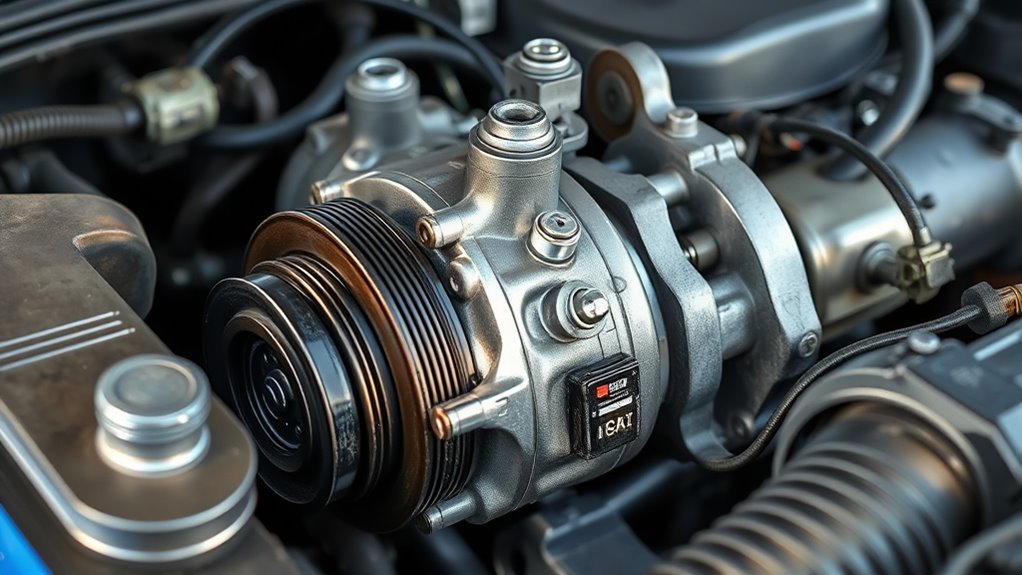
Your car’s AC compressor and belt are key parts that can show signs of trouble when you check them carefully. During routine maintenance, look for visible damage like cracks, leaks, or worn spots on the compressor.
The belt inspection is just as important. Check for fraying, glazing, or looseness that could cause slipping or noise. Damaged belts can strain the compressor, which may lead to more noise or even failure.
| Warning Signs | What They Mean |
|---|---|
| Squealing noise | Worn or loose belt |
| Visible cracks | Imminent belt breakage |
| Oil leaks around compressor | Seal failure or internal damage |
| Slipping belt | Belt needs tightening or replacement |
| Excessive vibration | Mounting or internal damage |
Check and Refill Your Refrigerant Safely
Since low or uneven refrigerant levels can cause your car’s AC compressor to work harder and make noise, it’s important to check and refill the refrigerant carefully. First, identify the correct refrigerant type for your vehicle, like R-134a or R-1234yf, so you don’t use the wrong fluid.
Next, follow proper refill techniques to avoid overcharging, which can damage the system. Here are some key steps:
- Connect a refrigerant gauge to your vehicle’s service port to keep an eye on the pressure.
- Use a recharge kit made for your refrigerant type, and add refrigerant gradually while the engine is running and the AC is on.
- Check the pressure readings to make sure they stay within the recommended range and don’t overfill.
Always wear safety gear and work in a well-ventilated area. Properly refilling your refrigerant helps your AC run quietly and efficiently.
Tighten or Replace Faulty AC Compressor Parts
First, take a look at the compressor mounts and connection bolts. Make sure they aren’t loose or damaged—that’s often the culprit behind noise. If you notice any worn or broken parts, it’s a good idea to replace them. Fixing or tightening these components can really help cut down on the noise your AC compressor makes and prevent bigger problems down the line.
Inspect Compressor Mounts
Visually inspect the compressor mounts to verify they are secure and in good condition. Look for signs of wear, cracks, or corrosion that could affect compressor alignment.
Loose or damaged mounting hardware can cause vibrations and noise, so check all bolts and brackets thoroughly. If you notice any issues, consider these steps:
- Tighten loose mounting hardware to restore proper compressor alignment.
- Replace any cracked or corroded mounts to prevent further damage.
- Confirm all bolts are properly torqued to manufacturer specifications for peak stability.
Properly secured mounts reduce vibrations and noise, keeping the compressor functioning smoothly. Regular inspection helps catch issues early, saving you from costly repairs and quieter operation.
Tighten Connection Bolts
Begin by checking all connection bolts on the AC compressor to verify they’re tight. Loose bolts can cause increased compressor vibration, which often results in noise. Tightening these bolts properly helps stabilize the compressor and reduces unwanted vibrations that contribute to noise.
Use a wrench to secure each bolt firmly, but avoid overtightening, which can damage components. Confirm that all mounting points are snug, as loose connections can also cause clunking sounds during operation.
Properly tightened bolts minimize unnecessary movement, directly impacting noise reduction. Keep in mind that a well-secured compressor not only quiets your system but also prevents further damage.
Regularly inspecting and tightening connection bolts is an easy, effective step to maintain quieter, smoother AC performance.
Replace Worn Components
Worn or damaged components in your AC compressor can cause persistent noise and reduce system efficiency. Over time, worn bearings or failing seals can lead to rattling, squealing, or grinding sounds.
To address this, start by inspecting the compressor for signs of worn bearings, like excessive play or noise. Next, replace any failing seals to prevent refrigerant leaks and improve performance.
Finally, remove and replace any damaged or worn parts, making sure everything fits properly and is well-lubricated.
Lubricate Moving Parts to Reduce Noise
To cut down on noise, the first thing you want to do is find the moving parts of your AC compressor that might need some lubrication. Once you’ve identified them, grab a suitable lubricant that’s recommended for your unit. Just be careful to apply it properly—no need to go overboard. And of course, always keep safety in mind to avoid any damage or injuries while you’re at it.
Identify Moving Components
Start by inspecting the compressor’s moving parts, like the pulleys, bearings, and clutch. These parts are key for smooth operation and help reduce noise during maintenance. Look carefully for signs of wear, looseness, or damage.
Check the pulley’s rotation and alignment to make sure everything moves freely and is properly aligned. Spin the pulley and watch for wobbling or irregular motion.
Examine the bearings for any grinding sounds or wobbling. If they feel rough or seem loose, they might be causing noise issues. Also, test the clutch to see if it engages and disengages smoothly.
If any part shows excessive play, squeaking, or roughness, it could be contributing to noise problems. Identifying these moving components helps you focus on the right areas, making your maintenance more effective.
Use Appropriate Lubricant
Once you’ve spotted any moving parts that show signs of wear or roughness, applying the right lubricant can really help cut down on noise. Proper compressor lubrication reduces friction, which in turn lowers the noise from your AC compressor. Be sure to use a lubricant designed specifically for automotive compressors to get the best noise reduction and avoid causing more damage.
| Part | Recommended Lubricant | Application Tips |
|---|---|---|
| Compressor shaft | SAE 10 or equivalent | Apply sparingly so you don’t over-lubricate. |
| Bearings | Synthetic compressor oil | Just a few drops will keep things running smoothly. |
| Pulley and clutch | Special clutch lubricant | Keep these parts well-lubricated to reduce noise. |
| Seals and O-rings | Compatible lubricant | Lubricate to prevent leaks and squeaks. |
Apply Carefully and Safely
When applying lubricant to your car’s AC compressor parts, approach with care and attention to safety. First, make sure the engine is off and the vehicle is on a flat surface.
Use proper tools like gloves and safety glasses to protect yourself. Follow these steps:
- Identify the moving parts that need lubrication, such as pulleys or bearings.
- Use the correct lubricant specified for your compressor to avoid damage.
- Apply the lubricant sparingly, focusing on areas prone to noise, and avoid over-application.
Always prioritize safety precautions to prevent injuries or damage. Keep a steady hand and double-check the lubricant type before applying.
Proper tools and cautious handling help reduce noise effectively without risking harm.
When Should You Seek Professional Help?
Have you noticed persistent or worsening noises from your car’s AC compressor despite troubleshooting efforts? If so, it’s time to seek professional help. Ignoring ongoing issues can lead to more damage and costly repairs.
When should you call in the experts? Consider these signs:
| Symptom | What It Means | Action Needed |
|---|---|---|
| Loud or grinding noises | Possible bearing or internal component failure | Consult professional technicians |
| AC not cooling properly | Compressor or refrigerant issues | Use diagnostic tools for diagnosis |
| Leaking fluid or oil | Seal or internal damage | Get a professional assessment |
If these symptoms stick around or get worse, don’t wait. A professional technician has the right tools to pinpoint the problem safely and accurately. Acting quickly can prevent bigger issues and save you money down the line.
Tips to Prevent a Noisy and Efficient AC
Regular maintenance and mindful practices can go a long way in keeping your car’s AC compressor quiet and running smoothly. To ensure noise reduction and efficiency, focus on preventive maintenance.
First, regularly check and replace the AC’s cabin air filter. A clogged filter can cause strain and noise. Second, keep the compressor’s belt properly tensioned and in good condition. Loose or worn belts often generate noise.
Third, verify that the refrigerant levels are adequate. Low refrigerant can make the compressor work harder, increasing noise and wear. Also, listen for unusual sounds during operation and address minor issues early.
Properly maintaining these components minimizes strain on the compressor, reduces noise, and extends its lifespan. Being proactive with preventive maintenance not only keeps your AC running smoothly but also saves money on costly repairs in the long run.
Consistent care is key to a quieter, more efficient car AC system.
DIY Fixes for a Quieter Car AC Compressor
Tackling noise issues directly can often be done with simple DIY fixes that don’t need special tools or skills. Start by checking the compressor for loose or worn mounting bolts—tighten or replace them if needed.
Applying a compressor maintenance tip like lubricating moving parts can help reduce friction and noise. You can also add sound-deadening material around the compressor to dampen vibrations.
Here’s a quick overview:
| Action | Benefit |
|---|---|
| Tighten bolts | Reduces rattling sounds |
| Lubricate parts | Minimizes friction noise |
| Add soundproofing | Absorbs vibrations |
Using noise reduction techniques like these can make a big difference. Regularly doing these simple DIY fixes not only quiets your AC compressor but also helps it last longer, saving you money and frustration in the long run.
Signs Your AC Compressor Might Need Replacing
While DIY fixes can help reduce noise from your AC compressor, persistent or worsening issues often mean there’s a bigger problem. Recognizing signs your AC compressor might need replacing can save you money and prevent further damage.
Here are three key signs to watch for:
- Unusual Noises: If your compressor is making grinding, squealing, or banging sounds even after trying to reduce noise, it’s likely nearing the end of its lifespan.
- Frequent Cycling or Failing to Cool: When your AC keeps turning on and off or isn’t cooling properly, the compressor might be failing.
- Leaking Fluids: Visible refrigerant leaks or oil around the compressor suggest internal damage that probably needs a replacement.
Addressing these signs early can help extend your compressor’s life and keep things running quietly. If these problems keep happening, replacing the compressor is usually the best move.
Frequently Asked Questions
Can a Dirty Cabin Air Filter Cause AC Compressor Noise?
A dirty cabin air filter can indirectly cause AC compressor noise by restricting airflow. When the filter is clogged, it makes the system work harder to circulate air.
This extra effort can put strain on the compressor and cause noise. Regularly replacing or cleaning your cabin filter improves airflow and eases the compressor’s workload.
Keeping the filter clean helps your AC system run quietly and efficiently.
Does Driving Style Affect AC Compressor Noise Levels?
Your driving habits can turn your AC compressor into a drama queen or a well-behaved companion. Accelerating aggressively or braking harshly puts extra strain on the system, making the compressor work harder and possibly noisier.
Smooth, steady driving helps maintain compressor efficiency, reducing noise and wear. Think of it like a dance—gentle steps keep your AC system in harmony, ensuring a quieter, more reliable performance.
How Often Should I Perform Maintenance on My Car’s AC System?
You should perform maintenance on your car’s AC system at least once a year. During this time, check the AC system to spot any wear or leaks and make sure refrigerant levels are correct.
Regular inspections help prevent noisy compressor problems and keep your cooling system running efficiently. If you notice reduced airflow or strange noises, it’s a good idea to schedule maintenance sooner to keep your AC working smoothly.
Are Aftermarket Parts Reliable for Fixing Noisy Compressors?
Like a trusted sidekick, aftermarket parts can be reliable if you choose wisely. While some folks worry about aftermarket reliability, many high-quality options match OEM standards, keeping compressor performance solid.
Do your research, check reviews, and pick reputable brands. When installed properly, aftermarket parts can quiet your noisy compressor effectively, saving you money without sacrificing quality or durability.
Trustworthy aftermarket parts can be a smart, budget-friendly fix for your compressor issues.
What Are the Signs of Compressor Failure Beyond Noise?
If your compressor is failing, you’ll notice symptoms like reduced cooling efficiency, strange odors, or fluid leaks.
Vibration issues may become more noticeable, hinting at internal damage. You might also hear grinding or squealing noises, and the compressor could cycle on and off unexpectedly.
Pay attention to these signs because ignoring them can lead to total compressor failure. That would leave your AC system unable to cool effectively.
Regular checks help catch problems early before they turn into costly repairs.
Conclusion
Just like tuning a musical instrument restores harmony, maintaining your AC compressor keeps your drive smooth and quiet. When I first ignored a rattling noise, it turned into a costly repair— a reminder that small fixes now save big headaches later.
Regular inspections and simple DIY tips can silence those annoying noises, ensuring your comfort on every trip. Take action today and enjoy a peaceful, cool ride every time by keeping your AC compressor quiet.