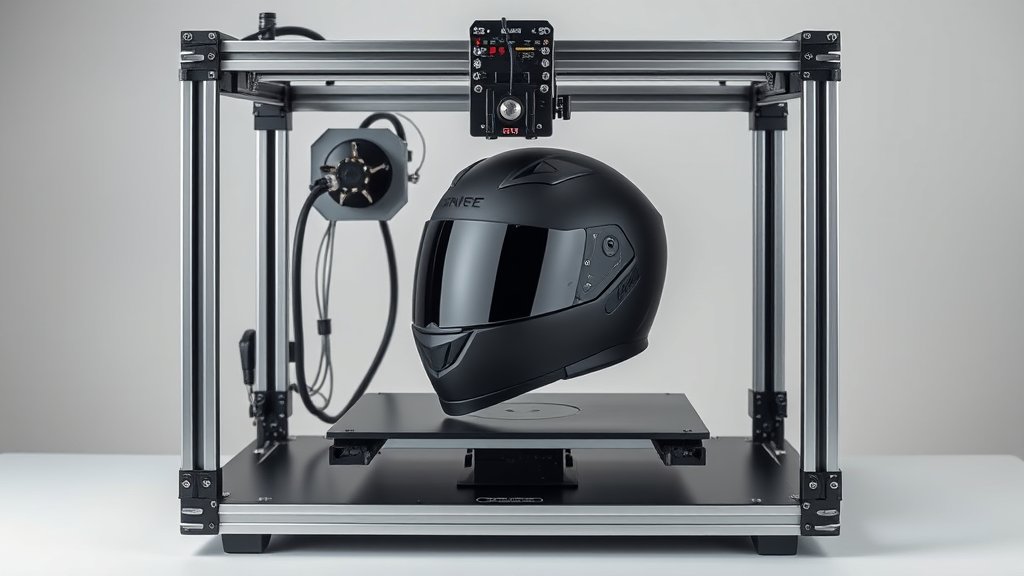
Best 3D Printer for Helmets That Elevate Your Design Game
Creating helmets through 3D printing often involves frustration with printers that struggle to balance size and detail. Many find themselves adjusting settings endlessly, hoping the machine keeps up with the precise shapes needed. Producing a helmet requires attention to strength and design, as comfort and safety depend heavily on these factors.
Some models stand out by delivering fast print times while maintaining fine surface details. The best 3D printer for helmets combines reliable accuracy, generous build volume, and compatibility with various materials. Options capable of handling different filament types or offering multi-color capabilities expand what’s possible in helmet design and customization.
These printers cater to a range of users, from professionals crafting tailored gear to creators exploring new styles. Knowing how each machine manages print speed, precision, and material choice plays a big role in quality outcomes.
This review will focus on key areas like print performance, user experience, durability, and unique features that impact helmet manufacturing. It aims to provide clear insights for anyone looking to produce helmets without getting overwhelmed by technical jargon.
Readers can expect practical information to help guide their selection and improve their printing projects. The goal is to present balanced details to support confident decisions around helmet-focused 3D printers.
Explore the Best 3D Printers Tailored for Helmet Creation
Exploring advanced 3D printers that combine speed, precision, and build capacity can elevate your helmet production process. Each model offers unique benefits tailored to different helmet design needs.
1. FLASHFORGE Adventurer 5M: High-Speed Precision 3D Printer for Helmet Production
No products found.
The FLASHFORGE Adventurer 5M stands out as a powerful choice for those looking to create helmets with precision and speed. Its CoreXY all-metal structure supports maximum print speeds up to 600mm/s, dramatically reducing production time while maintaining high accuracy. This 3D printer features a max nozzle temperature of 280°C, allowing for versatile material use, including specialized thermoplastics suitable for durable helmet shells. The print volume of 220 x 220 x 220mm is well-suited to most helmet designs, providing ample space without compromising detail.
Users benefit from the fully automatic bed leveling system, which eliminates manual calibration errors and helps achieve consistent, flawless first layers—critical for the complex curves and stable build required in helmet printing. The 3-second nozzle change system and a fast 35-second warmup time enhance workflow efficiency, especially during iterative prototyping or multiple print runs. The dual-fan nozzle setup combined with vibration compensation contributes to excellent surface finish and structural integrity, both important for the demanding requirements of wearable helmets.
In terms of maintenance, the printer is user-friendly. Routine cleaning of the nozzle and platform is straightforward, keeping performance steady. Remote monitoring through the Flash Maker app offers real-time oversight, a valuable feature when managing longer print jobs or doing print batches. The design supports multiple nozzle sizes from 0.25mm to 0.8mm, providing flexibility in balancing print speed with detail.
Best for: The FLASHFORGE Adventurer 5M is ideal for hobbyists and professionals producing helmets who need speed without sacrificing precision. Whether crafting cosplay gear, sporting helmets, or protective headwear prototypes, it delivers consistent quality and fast turnaround. Its easy-to-use features suit users looking to streamline production and those who appreciate remote print management for convenience. Compact and portable, it fits well in personal studios or small workshops.
What We Like:
- Excellent speed with up to 600mm/s travel, minimizing print times.
- Automatic bed leveling ensures reliable first layers and reduces setup hassle.
- High maximum nozzle temperature allows use of durable, varied materials.
- Quick-change nozzle system and fast warmup improve print workflow efficiency.
- Remote monitoring enhances usability, especially for longer prints.
What Could Be Improved:
- Print volume may limit production of very large helmet models without segmenting.
- Relatively heavier unit at nearly 24 pounds may reduce portability for some.
- Learning curve for advanced features such as nozzle swapping and settings optimization.
- Limited color touchscreen size could impact ease of firmware navigation for some users.
- No automatic filament detection system included.
Specification:
| Feature | Details |
|---|---|
| Print Technology | Fused Filament Fabrication (FFF) |
| Build Volume | 220 x 220 x 220 mm |
| Max Print Speed | 600 mm/s |
| Nozzle Diameter | 0.25 – 0.8 mm (interchangeable) |
| Max Nozzle Temperature | 280°C |
| Bed Leveling | Fully Automatic |
| Extruder Type | Direct Drive |
| Frame | CoreXY All Metal Structure |
| Weight | 23.8 pounds |
| Connectivity | Wi-Fi, USB |
From experience, the FLASHFORGE Adventurer 5M impresses with its balance of speed and precision, especially for helmet creation where details matter a lot. The automatic leveling feature and fast nozzle swaps help reduce common time sinks, and the durable frame maintains accuracy during quick moves. While it’s not the lightest printer around, its build quality and consistency justify the weight for a stable printing environment. Ideal for users ready to invest in quality prints without the complexity of industrial machines, this printer offers good value for those looking beyond entry-level models.
2. Bambu Lab A1 Combo: High-Speed, Multi-Color 3D Printing for Helmet Makers
No products found.
The Bambu Lab A1 Combo combines the A1 3D printer with the AMS lite module, offering users the ability to create multi-color 3D prints with impressive speed and precision. Its standout acceleration rate of 10,000 mm/s² allows rapid printing without sacrificing detail, which is instrumental when crafting complex helmet designs that require intricate features and smooth surfaces. This model supports FDM printing technology and operates with a remarkably low noise level, thanks to active motor noise canceling, making it suitable for home workshops or studio environments.
One remarkable feature is the full-auto calibration system, responsible for adjusting bed-leveling, Z-offset, and other parameters automatically, removing common setup frustrations. The active flow rate compensation helps maintain consistent extrusion flow, ensuring prints come out flawless with no stringing or layer inconsistency. This contributes greatly to the durability and finish quality of 3D printed helmets, which need to meet certain structural and aesthetic standards.
The A1 Combo also excels in user experience, featuring a straightforward touchscreen interface and quick-swap nozzles that facilitate both maintenance and versatile print settings adaptation. The build volume supports medium to large-sized prints, ample enough for most personal helmet projects. It allows printing in various filaments compatible with helmet making, such as PLA, PETG, and ABS, though careful choice of material is advised depending on the intended helmet use.
Though this system offers excellent precision and speed, it does require the AMS lite for multi-color prints, which can be a separate cost factor if bought standalone. While the printer is portable enough for workshop relocations, the 28.6-pound weight may limit frequent transport. This 3D printer presents a solid investment for users focused on high-quality, multi-tone helmet fabrication with minimal manual calibration needs.
Best for: The Bambu Lab A1 Combo is best suited for enthusiasts and professionals who need high-speed, multi-color 3D printing with precision and ease of use. Its automatic calibration and noise reduction make it ideal for users aiming to produce detailed, durable helmets either for cosplay, sports, or custom protective gear. It appeals to those who prioritize consistent print quality, straightforward maintenance, and a quiet printing environment.
What We Like:
- Impressive acceleration and speed while maintaining print quality
- Full-auto calibration simplifies setup and improves reliability
- AMS lite module allows vibrant multi-color printing
- Active noise cancellation enables quiet operation
- 1-Clip quick swap nozzles make maintenance convenient
What Could Be Improved:
- Multi-color printing requires an additional AMS lite purchase
- Some users may find the weight less convenient for frequent moves
- Material compatibility could benefit from additional high-temperature options for specialty helmets
- Build volume may not suit very large helmet designs
Specification:
| Feature | Details |
|---|---|
| Dimensions | 23.46 x 16.73 x 21.1 inches |
| Weight | 28.6 pounds |
| Print Technology | FDM |
| Max Acceleration | 10,000 mm/s² |
| Noise Level | ≤48 dB with active noise cancelling |
| Calibration | Full automatic (bed leveling, Z-offset) |
| Multi-color Support | Yes, via AMS lite |
| Control Interface | Touchscreen |
| Nozzle | 1-Clip quick swap |
In my experience, the Bambu Lab A1 Combo strikes a strong balance between speed, precision, and multi-color printing capabilities. It reduces the technical barriers often faced by users through its extensive automation features, which boosts confidence when working on intricate helmet projects. While it’s not the lightest or largest printer around, its build quality and design are robust enough to support a wide range of filament types and detailed designs, making it a valuable tool for helmet enthusiasts seeking reliable results and enhanced user convenience.
3. Longer LK5 Pro 3D Printer Review: Ideal for Helmet Printing with Large Build and Reliable Features
No products found.
The Longer LK5 Pro 3D printer stands out as an excellent choice among models designed for producing helmets, thanks to its sizable build volume of 11.8 x 11.8 x 15.7 inches. This generous printing area accommodates large objects, including intricately designed helmet shells, without the need for excessive segmentation. Its fast print speed of up to 180mm/s helps reduce production time, which can be a significant advantage when working on complex helmet projects.
One of the defining features of the LK5 Pro is its reinforced triangular frame constructed with diagonal bars, providing enhanced structural stability and minimizing vibrations during printing. This stability translates to precision, contributing to the high-quality surface finish needed for wearable helmets. It also comes equipped with a lattice glass plate, promoting better adhesion and easier removal of prints—a practical benefit when handling bulky helmet pieces.
The printer incorporates thoughtful technology such as filament run-out detection and a resume function after power interruptions. These features reduce print failures and help conserve materials, which is extremely valuable during lengthy prints typical of helmet fabrication. For quieter operation, an ultra-silent TMC2209 driver motherboard is included, making the printing process less disruptive in shared or home workshop environments. The open-source firmware adds customization flexibility for users interested in fine-tuning print parameters or experimenting with G-code adjustments.
With approximately 90% pre-assembly, this model is fairly user-friendly, especially for beginners looking to venture into helmet 3D printing but who might not want extensive setup. The dual Z-axis upgrade kit further improves print accuracy and smoothness, alleviating common issues such as bed leveling and print wobble.
What We Like:
- Large build volume supports full-sized helmet printing
- Stable triangular frame design reduces vibration
- Filament and power failure detection with print resume
- Quiet operation with TMC2209 silent drivers
- Dual Z-axis upgrade improves stability and print quality
Cons:
- Open design exposes prints to dust and external disturbances
- Filament run-out sensor accuracy can vary depending on filament brand
- Setup and calibration may require some patience despite partial assembly
- Print speed may require adjustment for high-detail helmet parts
Best for: The Longer LK5 Pro is a strong candidate for hobbyists and small businesses aiming to produce high-quality helmets or large costume pieces due to its spacious build size, solid structural design, and smart features like filament detection. Those who want a balance between print speed and precision, along with customizable firmware, will appreciate its flexible nature. It suits users willing to engage with moderate setup and calibration steps to get reliable, professional outputs.
Specification:
| Feature | Details |
|---|---|
| Build Volume | 300 x 300 x 400 mm (11.8 x 11.8 x 15.7 in) |
| Print Speed | Up to 180 mm/s |
| Frame Type | Reinforced triangular structure |
| Bed | Lattice glass plate |
| Motherboard | Open source with TMC2209 ultra-silent drivers |
| Filament Detection | Yes, filament run-out sensor included |
| Power Failure Recovery | Resume printing feature available |
| Assembly | 90% pre-assembled |
| Additional Upgrades | Dual Z-axis upgrade kit |
| Display | 4.3-inch color touch screen |
| Weight | 26.4 pounds |
The Longer LK5 Pro impresses with a balance of thoughtful engineering and practical performance that cater well to those looking to print helmets. While it may not be fully enclosed, the open design boosts accessibility and easier monitoring of prints. The combination of a sturdy frame, advanced sensors, and upgrade options creates a versatile platform for both novices and more experienced users focused on helmet or large-format 3D printing projects.
4. ELEGOO Saturn 4 Ultra 16K Resin Printer – Detailed Precision and Rapid Helmet Prototyping
No products found.
The ELEGOO Saturn 4 Ultra 16K Resin 3D Printer represents a leap forward in detailed 3D printing, ideally suited for creating helmets with exceptional clarity and surface smoothness. Its ultra-high resolution 16K mono LCD screen enables the printer to render models that capture even the finest details, making it a strong candidate for projects demanding high precision. The large build volume of 8.33 × 4.66 × 8.66 inches allows for substantial helmet models or multiple components to be printed in one go.
A standout feature is the integrated smart tank heating system that consistently maintains resin temperature around 30 °C. This improvement in resin fluidity leads to minimized layer defects such as bubbles or separation, which is particularly beneficial for helmets where structural integrity and surface consistency matter. The printer’s auto-leveling function eliminates manual calibration efforts, offering a plug-and-play experience that suits both beginners and seasoned modelers.
Real-time monitoring is elevated by an AI camera with built-in lighting, helping users track print progress day or night, while the time-lapse capability documents the printing journey. The tilt release technology accelerates printing workflows by facilitating quick release of finished models, operating at speeds up to 150 mm/h without compromising print quality. Its smart sensors further protect the machine by detecting resin residue and notifying about resin shortages or leveling issues, thus reducing downtime and material waste.
In terms of usability and build quality, the Saturn 4 Ultra features a sturdy design weighing 35.5 pounds and occupies moderate workspace dimensions. Maintenance remains straightforward thanks to these intuitive features, though working with resin always requires attention to safety and cleaning processes. Its combination of performance and detail fidelity offers impressive value for users focused on helmet prototyping with intricate design requirements.
What We Like:
- Ultra-high 16K resolution for detailed helmet models
- Constant resin temperature control for flawless layers
- Auto-leveling for hassle-free setup
- AI camera monitoring and time-lapse recording
- Fast printing speeds with tilt release technology
Pros:
- Exceptional print detail enhancing surface finish
- Large build volume suitable for full helmet prints
- Advanced features reduce print failures and material waste
- Intuitive user interface supports users of all experience levels
- Robust construction adds to durability
Cons:
- Resin handling requires careful maintenance and cleanup
- Heavier build may limit portability
- AI monitoring accuracy may vary with conditions
- Price point may be higher compared to entry-level printers
- Print chamber size may limit extremely large helmet designs
Best for: Professionals and hobbyists aiming to produce highly detailed helmet prototypes will find this printer’s combination of resolution, build volume, and intelligent features particularly valuable. The ELEGOO Saturn 4 Ultra shines in situations where surface quality and intricate detailing are key, such as cosplay helmets, custom safety gear, or scaled modeling. Its automation features make it accessible to beginners while maintaining the depth needed for advanced users. It’s suited for those willing to work with resin to achieve superior results and who need a reliable printer capable of handling complex prints swiftly.
Specification:
| Feature | Details |
|---|---|
| Resolution | 16K Mono LCD |
| Build Volume | 8.33 × 4.66 × 8.66 inches |
| Print Speed | Up to 150 mm/h |
| Resin Tank Heating | Maintains 30 °C |
| Auto-leveling | Yes |
| AI Camera | Yes, with light and alerts |
| Weight | 35.5 pounds |
| Dimensions | 24 x 17 x 15 inches |
| Model Number | Saturn Series 3D Printer |
The ELEGOO Saturn 4 Ultra 16K impresses with its high-resolution capabilities and thoughtful design that caters well to detailed helmet creation. Its combination of heated resin tank and smart monitoring reduces common print challenges, while fast print speeds help accelerate production time. Though resin use involves some maintenance effort and the machine carries some heft, its sheer precision and reliability make it an excellent choice for users aiming for premium quality helmet prints.
5. Anycubic Kobra X Multicolor 3D Printer Review: A Versatile Choice for Helmet Creation
No products found.
The Anycubic Kobra X Multicolor 3D Printer offers an innovative approach to color variety with its native 4-color printing capabilities, expandable up to 19 colors. This feature allows for complex and visually striking helmet designs, surpassing traditional single-color models. Its fast printing speed, reaching up to 600mm/s, and hardened steel nozzle ensure detailed precision combined with rapid production, which is beneficial for both professionals and enthusiasts creating custom helmets.
Designed with user comfort in mind, this printer produces noise levels as low as 45dB, making it suitable for home, educational, and workshop environments. The LeviQ 3.0 auto bed leveling system simplifies setup, providing a flawless first layer with a 49-point calibration process that reduces manual adjustments. The large build volume of 260mm³ accommodates sizable helmet parts, allowing for comprehensive projects without the need for assembly of smaller pieces.
Material compatibility is expansive, supporting a variety of filaments including PLA, PETG, TPU, PVA, and ASA, which offers flexibility for helmets that require different physical properties such as rigidity or flexibility. Smart features like AI monitoring with spaghetti and foreign object detection reduce failed prints and filament waste. Connectivity through dual-band Wi-Fi and LAN supports seamless remote operation, enhancing convenience and workflow management.
Best for: The Anycubic Kobra X is ideal for users seeking a versatile printer capable of producing colorful, detailed helmets quickly. Its blend of speed, multicolor capability, and advanced features suits hobbyists, educators, and small-scale professionals who want to experiment with complex designs and diverse materials. It meets the demands of creating functional and aesthetically appealing helmets with relative ease.
What We Like:
- Multicolor printing with up to 19 colors achievable via expansion
- High-speed printing up to 600mm/s for efficient production
- Advanced auto bed leveling with LeviQ 3.0 for precise first layers
- Supports multiple filament types suitable for various helmet materials
- Quiet operation and smart AI monitoring enhance user experience
What Could Be Improved:
- The printer’s software ecosystem might require adjustment for users new to multicolor 3D printing
- Large color expansions (up to 19) need additional ACE 2 Pro units, which are sold separately
- Build volume, while ample, might limit extremely large helmets without segmenting the design
- Replacement parts availability depends on regional support through Amazon’s program
Specification:
| Feature | Details |
|---|---|
| Build Volume | 260mm x 260mm x 260mm |
| Printing Speed | Up to 600mm/s |
| Noise Level | 45dB |
| Nozzle | Hardened Steel |
| Multicolor Capability | 4 colors native, expandable to 19 |
| Material Compatibility | PLA, PETG, TPU, PVA, ASA |
| Connectivity | 2.4G/5G Wi-Fi, LAN, Remote App Control |
| Auto Bed Leveling | LeviQ 3.0 (49-point calibration) |
| Dimensions | 23 x 13 x 22 inches |
| Weight | 20.9 pounds |
From my perspective, the Anycubic Kobra X stands out for its combination of color versatility and speed, which few models in its category offer together. It’s well-suited for creators who prioritize both aesthetics and efficiency in their helmet production, though mastering its multicolor potential may take some practice. The solid build and thoughtful features supply good reliability over extended use.
6. Creality Ender 5 Max Review: Robust 3D Printer for Helmet Production
No products found.
The Creality Ender 5 Max stands out as a highly capable 3D printer tailored for large-scale projects like helmet manufacturing. Its extra-large build volume of 400×400×400 mm offers ample space for printing full helmets or multiple parts simultaneously, a feature that significantly reduces the need for model splitting and streamlines production. Thanks to its precise CoreXY motion system, the printer reaches impressive speeds of up to 700 mm/s without sacrificing print quality, making it well-suited for professional users and production environments.
Constructed with an all-metal frame and reinforced die-cast aluminum, the Ender 5 Max provides strong stability that minimizes vibrations—a key aspect when printing sizable, intricate structures like helmets. Linear rails along the X-axis enhance precision, helping maintain clean edges and detailed surfaces. The 64-point automatic bed leveling and auto Z-offset technology reduce setup time and improve first-layer adhesion, simplifying the process for both beginners and experienced users.
Its dual-gear direct-drive extruder is built for long-lasting reliability, enabling smooth filament feeding and minimizing clogs during extensive print runs. Paired with a powerful 1000W rapid-heating bed, this printer supports a broad range of materials including PLA, ABS, PETG, and PA, offering versatility to meet different helmet design requirements. The machine’s multi-printer control over WLAN allows centralized management of multiple units, making it ideal for studios or small manufacturing setups focusing on batch production.
While the Ender 5 Max is noticeably heavy at nearly 69 pounds, this weight contributes to its durability and print stability more than portability. Maintenance is straightforward owing to its modular design and robust construction, but new users might face a learning curve when optimizing settings for advanced materials. Overall, the printer balances usability and powerful features, making it a strong contender for those looking to produce helmets with precision and efficiency.
What We Like:
- Massive 400×400×400 mm build volume perfect for large helmet prints or batch production.
- Fast printing speeds up to 700 mm/s enabled by the CoreXY system without loss of accuracy.
- Rigid all-metal frame and precision linear rails reduce vibrations and enhance print quality.
- Automated 64-point bed leveling and auto Z-offset facilitate excellent first-layer adhesion.
- Durable dual-gear extruder designed for continuous, clog-free operation.
- Broad material compatibility including PLA, PETG, ABS, ASA, and PA for diverse helmet designs.
- Multi-printer control over WLAN improves efficiency for print farm environments.
Cons:
- Substantial weight limits portability and ease of relocation.
- Initial setup and calibration may challenge beginner users despite automation features.
- Large footprint requires dedicated workspace.
- Software and firmware updates might be needed to fully utilize advanced features.
- Higher power consumption due to the rapid-heating bed.
Best for: The Creality Ender 5 Max is well-suited for designers, hobbyists, and small businesses focused on helmet production who need a printer capable of handling large, complex prints efficiently. Its expansive build volume supports full-size helmets or multiple components printed simultaneously, while its fast CoreXY mechanics and robust frame ensure high-quality, repeatable results. This printer excels in professional or semi-professional settings where productivity and precision are priorities, particularly in print farm setups requiring centralized control. Users seeking dependable material versatility and long-term durability will appreciate this model’s comprehensive feature set.
Specification:
| Feature | Details |
|---|---|
| Build Volume | 400×400×400 mm |
| Print Speed | Up to 700 mm/s |
| Frame | All-metal, die-cast aluminum |
| Bed Leveling | 64-point automatic leveling, auto Z-offset |
| Extruder Type | Dual-gear direct-drive |
| Heated Bed | 1000W rapid-heating, epoxy build plate |
| Material Compatibility | PLA, PETG, ABS, ASA, PA |
| Connectivity | WLAN multi-printer control |
| Dimensions | 15.7 x 15.7 x 15.7 inches |
| Weight | 68.9 pounds |
The Creality Ender 5 Max demonstrates a well-engineered balance between size, speed, and reliability, making it a compelling choice for users focused on helmet fabrication. Although its size and weight dictate a more stationary setup, the printer’s consistent accuracy and material flexibility give it an advantage over smaller models. This printer particularly appeals to those expanding production capabilities with multiple machines managed remotely, streamlining workflow in busy creative or industrial spaces.
7. Portable 3D Printer – Compact FDM 3D Printer for Helmet Creation
No products found.
The Portable 3D Printer by CAIDAQC offers a compact and straightforward solution for enthusiasts seeking an accessible machine for creating helmets and similar items. With a build volume of 100x100x100mm, this FDM printer is tailored for smaller projects and excels in fostering creativity with its compatibility for PLA and flexible TPU filaments. The 0.4mm nozzle combined with adjustable layer thickness ranging from 0.05mm to 0.3mm provides respectable detail that suits the contours required in helmet design and prototyping.
This model stands out with its beginner-friendly design, featuring a removable build plate that simplifies part removal—a welcomed feature when handling helmet prints which can be intricate and delicate. The printer is lightweight at 2.2 pounds and compact enough to fit in limited workspaces, making it a practical choice for students, hobbyists, and small workshop setups. The package ships complete with a 10-meter PLA filament spool, essential tools, a TF card preloaded with instructions, and necessary adapters, ensuring users have everything needed to get started quickly without added costs.
Assembly is streamlined via detailed step-by-step video tutorials that remove any uncertainty from setup and operation. This guided approach helps newcomers acclimate swiftly and fosters confidence in managing the printer’s functions. While the modest build size restricts the manufacture of larger helmets in one piece, this printer is excellent for creating smaller or modular helmet components that can be assembled post-printing. It works well for those prioritizing ease of use, portability, and versatility in filament selection, though users should plan projects within the printer’s spatial constraints.
What We Like:
- Clear video tutorials simplify setup and usage
- Compatibility with both rigid PLA and flexible TPU filaments
- Removable build plate allows easy part removal and cleaning
- Compact, lightweight form factor convenient for small workspaces
- Comprehensive kit including filament, tools, and power adapter
What to Keep in Mind:
- Build volume limits the size of single-piece helmet prints
- Performance suited to beginners rather than professional-grade prints
- Average customer feedback suggests room for improvement in reliability
- Print speed and resolution are moderate compared to larger printers
- Limited brand recognition might affect availability of support and parts
Best for: This portable 3D printer fits perfectly with beginners and hobbyists who want to craft smaller helmet designs or modular components without investing in a large, complex setup. Its user-friendly guides and included accessories are ideal for educational environments and personal projects where space and budget constraints exist, but the desire to experiment with PLA and TPU filaments persists. Those interested in detailed helmet prototypes on a manageable scale will find it especially accommodating.
Specification:
| Feature | Description |
|---|---|
| Build Volume | 100 x 100 x 100 mm |
| Nozzle Diameter | 0.4 mm |
| Filament Compatibility | PLA, TPU (1.75 mm) |
| Layer Thickness | 0.05 – 0.3 mm |
| Dimensions | 6.8 x 6.1 x 8.3 inches |
| Weight | 2.2 pounds |
| Power Supply | 12V Type-C Adapter |
| Included Accessories | 10m PLA filament, TF card with tutorials, tools |
From my perspective, this printer is a thoughtful mix of portability and simplicity aimed at beginners and those experimenting with helmet printing in smaller scales. Its accommodating filament options add flexibility, while the compact size makes it highly portable. Though it may not suit large or highly detailed helmet projects due to size constraints, the printer’s ease of use and complete starter kit offer a gentle introduction to 3D printing for creative applications. This could be a great stepping stone before moving on to more advanced, larger-capacity machines.
8. FLSUN V400 Max High-Speed Large 3D Printer Review: A Strong Candidate for Helmet Production
No products found.
The FLSUN V400 Max 3D printer offers an impressive build volume of Ø500×550mm, allowing users to print large-sized objects such as cosplay helmets and prototypes with minimal size constraints. This capacity, combined with a maximum print height of 480mm, makes it well-suited for those who require substantial print dimensions without the need for segmenting their designs. The machine features a full-metal frame providing stability, durability, and a premium feel, while the touchscreen interface simplifies operation and setup.
One of the standout capabilities is its potential print speed of up to 600mm/s, enabled by Klipper firmware. This speed offers notable time savings on large prints, reducing the production duration significantly compared to many other printers in the category. Accuracy is not compromised, thanks to integrated auto bed leveling, vibration compensation, and advanced pressure control technologies, which contribute to high-quality surface finishes and precise layer placement. Compatibility with a wide array of filament types—PLA, ABS, PETG, and TPU—grants flexibility depending on the material properties needed for durability or comfort in helmet applications.
Operational reliability is enhanced with features like power loss recovery and filament runout detection, minimizing print interruptions. Despite these advantages, the printer’s weight of over 88 pounds and substantial footprint may limit portability and require a dedicated workspace. It is also worth noting that user reviews are sparse and currently low, which suggests considering user feedback and possible initial learning curves before purchase. Maintenance demands align with typical full-metal frame printers, involving routine checks of leveling and firmware updates.
What We Like:
- Large build volume ideal for full-size helmets and big models
- High-speed printing up to 600mm/s without sacrificing print quality
- Advanced leveling and vibration compensation for precise prints
- Supports multiple filament types for varied applications
- Robust metal frame ensures stability and durability
Cons:
- Heavy and sizable, limiting portability
- Limited user reviews and low current rating
- Setup and calibration may be challenging for beginners
- Relatively high power consumption due to fast print speeds
- Large prints require significant material usage and time despite speed
Best for: Creators focused on producing large, detailed helmet models and big prototypes will find the FLSUN V400 Max suitable due to its expansive build area and quick printing speeds. It caters well to experienced users comfortable with 3D printer calibrations who need to print full-size wearables without splitting the model into parts. The robust frame and broad filament compatibility offer versatility for cosplay designers and professional prototype makers who prioritize quality and size in their projects.
Specification:
| Feature | Specification |
|---|---|
| Build Volume | Ø500×550mm (Diameter x Height) |
| Maximum Print Speed | Up to 600mm/s |
| Frame Material | Full metal |
| Filament Compatibility | PLA, ABS, PETG, TPU |
| Auto Leveling | Yes |
| Weight | 88.2 pounds |
| Dimensions | 26.65 x 25.98 x 48.62 inches |
| Firmware | Klipper |
| Additional Features | Power loss recovery, filament detection, touchscreen control |
The FLSUN V400 Max offers strong potential for helmet printing with its massive size and fast printing capabilities. While it requires some experience to maximize benefits and manage setup, the build quality and technology incorporated suggest it is capable of delivering professional-grade results for large, complex projects. Its relatively low public user rating implies some reservations among buyers, but those prioritizing size and speed might find it worth the investment after overcoming the initial learning curve.
Technical Breakdown: Best 3D Printer For Helmets
| Product Name | Build Volume (mm) | Max Print Speed | Nozzle Temperature | Special Features |
|---|---|---|---|---|
| FLASHFORGE Adventurer 5M | 220x220x220 | 600 mm/s | 280°C | CoreXY, Auto Bed Leveling, 3s Nozzle Change |
| Bambu Lab A1 Combo | Not specified | Not specified, Acceleration: 10,000 mm/s² | Not specified | Multi-Color, Auto Calibration, Flow Rate Compensation |
| Longer LK5 Pro | 300x300x400 | 180 mm/s | Not specified | Dual Z-Axis, Filament Detection, Silent Driver |
| ELEGOO Saturn 4 Ultra 16K | 211x118x220 approx. | 150 mm/h (~2.5 mm/s) | Tank Heating at 30°C | 16K Mono LCD, Auto Leveling, Resin Printer |
| Anycubic Kobra X Multicolor | 260x260x260 | 600 mm/s | 300°C | 4-Color Printing, AI Monitoring, LeviQ 3.0 Leveling |
| Creality Ender 5 Max | 400x400x400 | 700 mm/s | Not specified | 64-Point Auto Leveling, Dual-Gear Extruder, WLAN |
| Compact Portable FDM | 100x100x100 | Not specified | Not specified | Removable Build Plate, PLA & TPU Compatible |
| FLSUN V400 Max High-Speed | 500x500x550 | 600 mm/s | Not specified | Auto Leveling, Full Metal Frame, Klipper Firmware |
Which Features Make the Best 3D Printer for Helmets Stand Out?
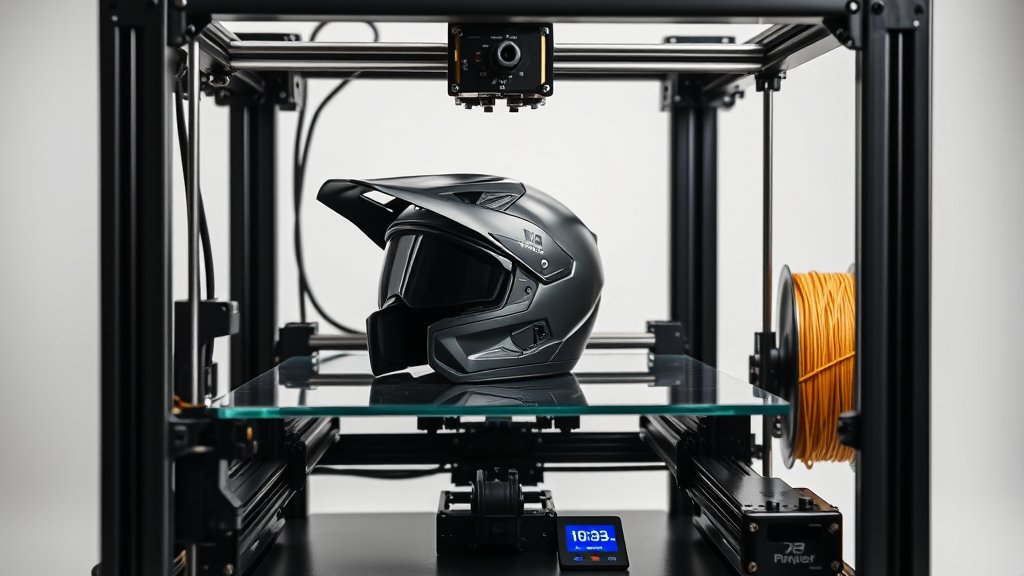
Choosing a 3D printer suited for helmets means balancing several performance factors to get the perfect blend of size, speed, and detail. Each critical feature impacts the success of your helmet fabrication, from structural integrity to visual finish.
Build Volume That Supports Full-Scale Helmet Printing
Build volume refers to the maximum printable size a 3D printer can produce in a single run. Helmets often require large, continuous surfaces to maintain structural strength and avoid visual seams. A printer with a small build volume forces users to split helmet designs into pieces, which can compromise durability and assembly time.
For instance, the Creality Ender 5 Max offers a massive 400x400x400 mm build area, suitable for printing helmets nearly full size, reducing the complexity of post-print assembly. Meanwhile, the FLASHFORGE Adventurer 5M sits at a mid-range with 220x220x220 mm, ideal for smaller helmet styles or scaled prototypes but may require chunking up larger designs.
Choosing an undersized volume often results in extra labor to piece together parts, weakening the helmet’s integrity and aesthetic. Larger build volumes enable seamless, sturdy helmet shells, saving time and producing more reliable results.
Print Speed to Accelerate Production without Sacrificing Accuracy
Print speed impacts how quickly you can move from design to finished helmet. Speedy printers cater well to rapid prototyping and iterative improvements, which is beneficial in helmet creation where multiple adjustments may be necessary.
The FLASHFORGE Adventurer 5M and Anycubic Kobra X impress with print speeds hitting 600 mm/s, thanks to advanced motion systems like CoreXY. The Bambu Lab A1 Combo claims an acceleration rate of 10,000 mm/s², meaning it can move swiftly between print moves, providing rapid results with maintained precision.
Ignoring print speed can result in frustratingly long waiting times and hinder your workflow. Yet, too fast a speed without the right mechanical stability can cause diminished print quality, defects, and poor surface finishes that ruin helmet usability.
Nozzle Temperature and Material Compatibility for Durable Helmets
Nozzle temperature range governs what filament materials your printer can handle. Helmets demand strong, impact-resistant materials such as ABS, PETG, or specialized thermoplastics, all requiring elevated nozzle temperatures.
The Anycubic Kobra X supports up to 300°C which opens up an extensive filament palette including high-temperature nylons and polycarbonates. The FLASHFORGE Adventurer 5M reaches 280°C, still ample for many helmet-grade materials. By contrast, low max temperatures limit your material choice and thus the final helmet strength and durability.
Failing to use the proper temperature or materials leads to brittle, weak helmets prone to cracks or deformation, especially under impact or stress. Selecting a printer with a nozzle that accommodates professional-grade plastic types is a must for safe helmet production.
Precision Features and Layer Resolution for Visual and Structural Quality
Print accuracy and layer resolution influence how smooth and detailed your helmet surfaces will appear. Helmets require not only aesthetic finesse but structurally sound layers to avoid weak spots.
The ELEGOO Saturn 4 Ultra 16K shines here with its ultra-high-resolution 16K mono LCD screen providing crisp surface detail for resin prints. Meanwhile, FDM printers like the FLASHFORGE Adventurer 5M and Anycubic Kobra X use fine nozzles (often 0.4 mm) and precise stepper motors for tight layer control.
Overlooking precision leads to helmets with rough finishes, inconsistent thickness, and potential structural flaws. Higher resolution allows finer re-creation of helmet contours, smoother surfaces, and professional-level appearance crucial for both cosplay and protective applications.
Multi-Color and Multi-Material Capability for Creative Helmet Design
Helmet designs often benefit from multiple colors or materials to replicate complex aesthetics or functional features. Multi-extruder systems or multi-color modules unlock this capability.
The Bambu Lab A1 Combo integrates an AMS lite module, facilitating multi-color prints with quick nozzle switching, perfect for helmets needing several color zones without manual intervention. The Anycubic Kobra X offers native 4-color printing, expandable up to 19 colors, taking creative helmet designs to new levels.
Standard single-extruder printers constrain you to one color or require post-processing coloring, reducing efficiency and finish quality. Multi-color printing embeds complexity directly into the print, simplifying workflows and producing vivid helmets ready to wear straight off the bed.
Build Platform Features and Auto-Leveling for Consistent Output
Build platform stability and automatic bed leveling improve first-layer adhesion and reduce the need for manual tinkering. Helmets’ curved surfaces necessitate precise bed tracking to avoid warping or misalignment during large prints.
Models like the FLASHFORGE Adventurer 5M and Creality Ender 5 Max feature auto bed leveling systems (e.g., 64-point leveling on the Ender 5 Max), helping maintain uniform print quality over wide surfaces. Removable build plates add convenience for safely detaching complex helmet prints.
Skipping advanced platform features risks failed prints, uneven layers, and poor adhesion, which waste material and time. Proper bed calibration contributes directly to consistent helmet geometry and reduces post-print finishing headaches.
FLASHFORGE Adventurer 5M makes a strong case with its CoreXY all-metal frame, reaching printing speeds of up to 600 mm/s. It’s particularly handy when speed and precision matter, especially for helmet creation requiring durable thermoplastics that can withstand stress. Its 280°C nozzle temperature means compatibility with various materials that support strength and flexibility. The build volume of 220 x 220 x 220 mm is practical for many helmet sizes or parts.
Bambu Lab A1 Combo stands out with its speed and multi-color printing capabilities, courtesy of the AMS lite module. Its impressive acceleration rate of 10,000 mm/s² allows for rapid, smooth printing without compromising detail—a huge plus for crafting helmets featuring intricate designs and nuanced surfaces. Silent operation and auto calibration also contribute to a stress-free printing experience.
Longer LK5 Pro impresses with a large build volume of 300 x 300 x 400 mm, facilitating the print of full-size helmets or components in one go, minimizing assembly headaches. Its fast print speed of 180 mm/s makes working on complex builds more time-efficient. Features like dual Z-axis and filament detection add reliability and smoother printing workflows, especially for long helmet projects.
ELEGOO Saturn 4 Ultra 16K Resin Printer takes a different approach with high-resolution resin printing. The 16K mono LCD screen enables ultra-fine details critical for prototyping helmets that demand exquisite surface finish and precision. Though its print speed is slower, approximately 150 mm per hour, it excels in visual and dimensional accuracy. Its build volume of about 211 x 118 x 220 mm suits smaller or segmented helmet parts.
Anycubic Kobra X Multicolor offers a rich palette with native 4-color printing expandable up to 19 colors, bringing a creative edge to helmet design. Printing speeds up to 600 mm/s combined with a 300°C nozzle accommodate a wide array of material choices and fast production times. It’s an excellent pick for artists who want to combine color variety and fine detail in helmet projects.
Creality Ender 5 Max caters to large-scale printing with a cavernous build volume of 400 x 400 x 400 mm. This printer shines for those who prefer printing whole helmets or multiple components simultaneously. The CoreXY motion system allows fast movements up to 700 mm/s, balancing speed and print quality. Features like 64-point auto leveling and WLAN connectivity add convenience to production runs.
Compact Portable FDM Printer offers a no-frills, accessible option for smaller helmet projects or prototypes. Its build volume of 100 x 100 x 100 mm limits size but supports flexibility with PLA and TPU materials and adjustable layer thickness for detail ranging from moderate to refined. Ideal for hobbyists focusing on lightweight or decorative helmet parts.
FLSUN V400 Max High-Speed Large Printer impresses with a massive print capacity of Ø500 x 550 mm, suitable for cosplay helmets or full-scale prototypes where size is a primary concern. The robust metal frame enhances stability during fast printing. It’s built to handle large and complex print jobs with fewer limitations on size, reducing the need for splitting helmets into multiple pieces.
FAQs
What Is The Best 3D Printer For High-Detail Helmet Prototyping?
The ELEGOO Saturn 4 Ultra 16K stands out for high-detail helmet prototyping. Its 16K ultra-high resolution captures intricate surface details effectively. This level of precision enhances the realism of helmets, giving them a smooth and authentic finish.
While print speeds may lag behind other models, the quality is unmatched. This printer is perfect for display-quality prototypes or creating detailed molds.
Users appreciate its ability to produce fine textures, making complex helmet designs possible. It suits those focusing on precision rather than just speed.
Which 3D Printer Allows Multi-Color Helmet Printing?
The Anycubic Kobra X Multicolor offers native 4-color printing, expandable up to 19 colors. It’s perfect for creating helmets with complex, vibrant designs that stand out from plain single-color prints.
This printer combines fast print speeds with a robust nozzle temperature, allowing the use of different materials without compromising quality.
Its versatility suits creators focused on both colorful aesthetics and durable helmet builds. This makes it a solid choice for multi-color helmet projects.
Are There 3D Printers Suitable For Printing Large Helmets Without Segmenting?
Printers like the Creality Ender 5 Max and FLSUN V400 Max support large build volumes, reaching up to 400 x 400 x 400 mm. This size lets you print helmets in fewer pieces or even one piece.
Printing helmets this way cuts down on assembly time and improves the overall strength of the final product. It’s great for cosplay enthusiasts and practical helmet makers alike.
Choosing a printer with a wide build area is key for creating seamless, sturdy helmet designs. These models stand out for that capability.
How Do Print Speeds Affect Helmet Production?
Faster printers, such as the FLASHFORGE Adventurer 5M and Creality Ender 5 Max, boost production by cutting wait times significantly. This speed is especially helpful for intricate helmet designs that require lengthy print sessions.
Still, balancing speed with precision matters. Printing too fast can cause surface issues or lose detail on complex parts.
Models with advanced motion control and higher acceleration rates keep quality intact while moving quickly. This balance is key to making helmets that look sharp and hold up well.
What Materials Work Best For Durable Helmet 3D Printing?
ABS, PETG, and certain engineering plastics are popular choices for helmet shells. They offer strong impact resistance and can handle heat well, making them reliable for safety gear.
Using a printer capable of reaching high nozzle temperatures, typically 280-300°C, is necessary to work with these materials effectively. This helps maintain print quality and strength.
For added comfort, flexible filaments like TPU can be used. These are great for padding or adjustable parts, providing a snugger fit on helmets designed with user needs in mind.
Final Thoughts on Choosing a 3D Printer for Helmets
Finding the right 3D printer for helmets means balancing build volume, print quality, and material options. Models offering larger build areas work well for complete helmet projects, while those focused on speed can enhance workflow without losing accuracy. Strong temperature control and fast printing help meet different production needs.
Resin printers deliver fine details and smooth finishes, making them practical for prototype and decorative helmets. Printers capable of handling multiple colors add creative flexibility, which suits more complex designs. Choosing between these types depends on what level of detail and appearance matter most.
Considering size requirements along with functionality and aesthetic preferences guides the printer selection effectively. This balance leads to durable, well-crafted helmets that match both practical use and design goals. Understanding these elements supports a confident decision when exploring the best 3d printer for helmets.