How Does a Torque Converter Work? | Everything You Need to Know
Are you tired of feeling unsure about how your car’s transmission smoothly shifts gears? Many drivers struggle with understanding how their vehicles handle power transfer, especially with components like the torque converter. You’re not alone in seeking a clearer picture.
A torque converter works by using fluid dynamics to smoothly transfer power from your engine to the transmission. It contains key parts like a pump, turbine, and stator that circulate hydraulic fluid to multiply torque and guarantee seamless gear changes.
During driving, it cushions shifts and manages power flow, making your ride more comfortable. The lock-up clutch improves efficiency at higher speeds, helping save fuel and reduce engine wear.
To learn more about its inner workings and maintenance tips, keep exploring further details.
Key Takeaways
- A torque converter uses fluid dynamics to transfer and multiply engine torque to the transmission smoothly.
- It consists of components like the impeller, turbine, stator, and lock-up clutch to help with efficient power transfer.
- Hydraulic fluid circulates within the converter, creating pressure that causes the turbine and impeller to spin together.
- The stator redirects fluid flow to boost torque during acceleration, which improves performance.
- At higher speeds, the lock-up clutch engages to eliminate slip and improve fuel efficiency.
What Is a Torque Converter and How Does It Work?
A torque converter is a key part of automatic transmissions that helps transfer engine power smoothly and fluidly.
It uses fluid dynamics to multiply and transmit torque from the engine to the drivetrain. Inside, it has a pump, turbine, and stator that work together with hydraulic fluid.
It employs fluid dynamics with a pump, turbine, and stator to efficiently transfer torque from engine to drivetrain.
When the engine runs, the pump moves fluid, creating force that spins the turbine connected to the transmission. The stator redirects the fluid flow to improve efficiency.
This system, based on fluid movement, allows for seamless power transfer, especially when accelerating or idling. It also minimizes power loss and provides smooth engagement without direct mechanical contact.
Basically, the torque converter acts as a hydraulic link, helping the engine’s power flow into the transmission smoothly and adjusting to different driving conditions.
How Does a Torque Converter Enable Smooth Gear Changes?
The torque converter plays an essential role in guaranteeing your vehicle shifts gears smoothly by managing the flow of power between the engine and transmission. It does this through fluid dynamics, which allows for seamless gear engagement without harsh jolts or interruptions.
When you accelerate or decelerate, the converter adjusts the flow of transmission fluid, smoothly transferring torque from the engine to the transmission. This fluid movement cushions the gear change, preventing sudden shifts that could feel rough.
During gear engagement, the converter’s internal components work together to guarantee a gradual transfer of power, maintaining stability and comfort. The fluid’s pressure and flow rate are carefully controlled, helping the transmission engage gears smoothly even under different driving conditions.
As a result, the torque converter acts like a buffer, making gear changes feel natural and effortless. This enhances your driving experience by providing smooth, comfortable shifts every time.
Key Parts Inside a Torque Converter
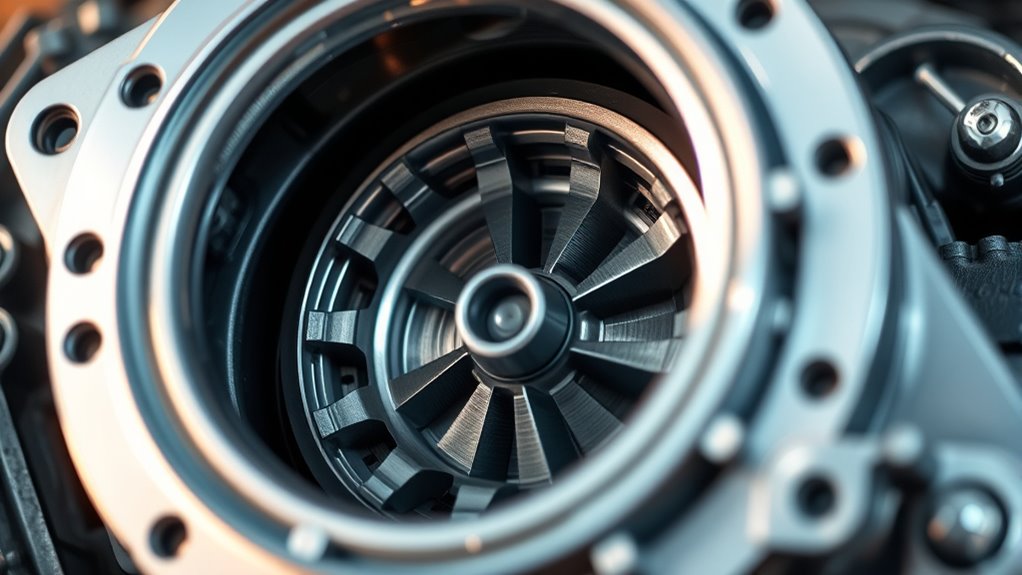
Inside a torque converter, several key parts work together to transfer and control power from the engine to the transmission. The main components include the impeller, turbine, and stator, each essential to how the torque converter functions.
The impeller, connected to the engine, spins and creates a fluid flow that transfers energy to the turbine. The turbine, attached to the transmission, receives this energy and starts to turn, transmitting power forward.
The stator sits between the impeller and turbine, redirecting fluid flow to boost torque and improve efficiency during acceleration. These parts are precisely engineered to optimize power transfer and smooth operation.
The torque converter design also includes a lock-up clutch, which engages at higher speeds to eliminate slip and increase efficiency. Together, these key components form a complex system that helps your vehicle accelerate smoothly and transfer engine power effectively.
How Hydraulic Fluid Transfers Power in a Torque Converter
Think of hydraulic fluid as the secret sauce that makes power transfer in a torque converter work smoothly. It moves quickly through the converter, building up pressure as it goes. This pressure then causes the turbine and impeller to spin together, kind of like how your blood circulates to keep your body moving.
Basically, this whole fluid-driven process is what helps your vehicle transfer power from the engine to the transmission without any jerks or stalls. It’s like a smooth handshake between the engine and the transmission, all thanks to that hydraulic fluid doing its job.
Hydraulic Fluid Circulation
Hydraulic fluid plays an essential role in transferring power within a torque converter by moving between its components. As the engine turns the impeller, hydraulic pressure builds up in the fluid, creating fluid dynamics that drive the turbine.
The fluid circulates continuously, transferring energy from the impeller to the stator and then to the turbine. This circulation relies on precise pressure differences, which enable smooth acceleration and deceleration.
The fluid’s movement is controlled by the converter’s vanes and passages, ensuring efficient power transfer. By maintaining consistent hydraulic pressure, the fluid allows the torque converter to adapt to changing engine loads and speeds, providing seamless torque multiplication and ensuring smooth operation.
Power Transmission Mechanism
The hydraulic fluid acts as the primary medium for transmitting power within a torque converter by transferring energy from the impeller to the turbine. This process allows for smooth acceleration and deceleration, providing benefits like improved ride comfort and better fuel efficiency.
When the engine spins the impeller, it creates a moving fluid that pushes against the turbine blades, transferring rotational force. To keep this system working well, regular torque converter maintenance is important.
Here’s how the power transfer works:
- The impeller spins, creating a vortex in the hydraulic fluid.
- The fluid’s movement pushes against the turbine, causing it to turn.
- The turbine then transmits power to the transmission, propelling your vehicle forward.
How Does the Lock-Up Clutch Improve Efficiency?
The lock-up clutch helps eliminate slipping between the engine and the transmission, which means less energy is lost during driving. When that happens, your vehicle uses fuel more efficiently, so you can enjoy better mileage.
Basically, when the clutch engages at the right times, you’ll notice smoother driving overall. And because less energy is wasted, your car becomes more efficient, saving you money on fuel in the long run.
Reduces Slippage Losses
When the lock-up clutch engages, it creates a direct connection between the engine and the transmission, eliminating the slip that usually happens in a torque converter. This reduction in slippage means less energy is wasted as heat, which really boosts overall efficiency.
It helps in a few ways: First, it minimizes energy loss caused by fluid friction during slippage. Second, it improves power transfer so more engine power gets to the wheels. Lastly, it reduces fuel consumption by making the drivetrain more efficient.
Enhances Fuel Economy
Engaging the lock-up clutch directly connects the engine to the transmission, allowing power to transfer more efficiently. When engaged, it eliminates slip within the torque converter, reducing energy loss and improving overall efficiency.
This improvement means your vehicle uses less fuel, especially during steady cruising, by minimizing unnecessary engine work. As a result, you get better fuel savings without sacrificing performance.
The lock-up clutch automatically engages at higher speeds, ensuring peak power transfer. This technology not only conserves fuel but also decreases heat and wear on the torque converter components.
Signs Your Torque Converter Might Be Failing
Have you noticed your vehicle slipping or shifting harshly during acceleration? These could be signs your torque converter is failing. Pay attention to common torque symptoms that indicate trouble.
Noticing slipping or harsh shifting? These may be signs your torque converter is failing—pay attention to warning symptoms.
- Unusual converter noises — Whining, rattling, or grinding sounds often point to internal issues.
- Slipping or hesitating — If your car struggles to accelerate smoothly or feels like it’s dropping power, the torque converter may not be transmitting torque properly.
- Overheating or fluid leaks — Excessive heat or transmission fluid leaks near the converter can signal damage.
If you experience these signs, don’t ignore them. Weak torque symptoms can lead to further transmission problems. Addressing issues early can prevent costly repairs and keep your vehicle running smoothly.
Always have a professional inspect your vehicle if you notice these warning signs.
How a Torque Converter Differs From a Manual Clutch
Unlike a manual clutch, which physically disconnects the engine from the transmission to control power transfer, a torque converter uses fluid dynamics to manage this connection automatically.
In a manual transmission, clutch engagement involves pressing a pedal to disconnect or connect the engine to the transmission, allowing you to shift gears smoothly. This manual process requires precise timing and driver input.
A torque converter, on the other hand, replaces the clutch with a hydraulic system that transfers power seamlessly without direct contact. It uses fluid to transfer torque from the engine to the transmission, allowing the vehicle to idle without stalling and to accelerate smoothly.
This automatic operation means you don’t need to engage or disengage a clutch pedal, simplifying driving. While a manual transmission gives you more control over gear shifts, a torque converter offers a more effortless driving experience by managing power transfer automatically.
How Temperature Affects Torque Converter Performance
Temperature plays a big role in how well a torque converter performs because extreme heat or cold can change the fluid’s viscosity and flow. When it gets too hot, the fluid becomes thinner, which can lead to worse performance and less efficient power transfer. On the other hand, cold temperatures cause the fluid to thicken, making it harder for the converter to work smoothly.
Here are a few ways temperature affects performance:
- High temperatures can cause the fluid to break down, reducing lubrication and increasing wear.
- Cold temperatures slow down fluid flow, leading to sluggish response and delayed engagement.
- Repeated overheating speeds up wear and tear, risking damage to internal parts.
Knowing how temperature impacts your torque converter helps you understand why keeping it in the right range is so important for performance and longevity. Ignoring these temperature changes can lead to decreased efficiency and shorten your vehicle’s lifespan.
Tips to Keep Your Torque Converter Running Smoothly
To keep your torque converter running smoothly, regular maintenance is key. Catching common issues early can save you from costly repairs down the road.
Start by checking your transmission fluid regularly. Low or dirty fluid can cause overheating, slipping, or shuddering.
Make sure to change the fluid and filter as recommended by your vehicle’s schedule. This helps ensure proper lubrication and cooling.
Watch out for signs like unusual noises, vibrations, or slipping shifts. These could mean there’s a problem that needs attention.
Address these symptoms quickly to prevent further damage. Also, avoid harsh driving habits like sudden acceleration or aggressive shifting that can strain the converter.
Keeping your engine and transmission in good shape will support your torque converter’s performance too.
Staying proactive with maintenance and monitoring for issues will help keep your torque converter working smoothly and efficiently.
When Should You Repair or Replace Your Torque Converter?
Figuring out whether you should repair or replace your torque converter can really save you some cash and help avoid bigger problems down the road. Keep an eye out for signs like slipping gears, weird noises, or sluggish acceleration—that usually means something’s not right.
It’s also a good idea to consider how much repairs might cost compared to replacing the whole thing. And of course, chatting with a professional mechanic can give you the best advice on what’s the right move for your car.
Signs of Torque Converter Failure
Ever wonder how to tell if your torque converter is failing? Recognizing torque converter symptoms early can save you money and prevent bigger damage. Here are three common signs:
- Sluggish acceleration or stalling. Your vehicle struggles to gain speed or stalls when shifting gears, which could mean there’s an issue.
- Overheating and fluid leaks. If you notice excessive heat or visible fluid leaks near the converter, those are red flags.
- Rough shifting or shuddering. Feel jerks or shudders during gear changes, especially if diagnostic scans show error codes.
If you spot any of these signs, it’s time to get a professional inspection. Proper diagnostic techniques can confirm if a faulty torque converter is the cause, helping you decide whether to repair or replace.
Cost of Repairs vs. Replacement
Deciding whether to repair or replace your torque converter depends on several factors, like the extent of the damage, the vehicle’s age, and costs.
Repair costs can be lower if the damage is minor, making repairs a practical choice. But if the damage is extensive or repairs keep failing, replacing it might be more cost-effective in the long run.
Replacing the torque converter can be more expensive at first, but it often offers greater reliability and lasts longer. Think about your vehicle’s overall condition and the likelihood of future repairs.
If your car is older or has high mileage, replacing it could save you money and prevent recurring issues. Always compare repair costs with replacement options to make the best decision.
When to Seek Professional Help
If you notice your transmission slipping, rough shifting, or strange noises coming from the transmission, it’s a clear sign you should get professional help for your torque converter. Ignoring these signs can lead to more damage and costly repairs. When these issues show up, it’s time to call in the experts for proper diagnosis and maintenance.
Look out for these warning signals:
- Your transmission slips or hesitates during acceleration.
- You hear unusual noises like whining or grinding from the transmission area.
- You suddenly lose power or have trouble shifting gears.
Addressing these problems early helps ensure proper repairs or replacements and prevents bigger damage down the line. Trust a professional to accurately diagnose the issue and recommend the best course of action for your vehicle’s health.
Frequently Asked Questions
Can a Faulty Torque Converter Cause Transmission Slipping?
Yes, a faulty torque converter can cause transmission slipping, especially if it affects torque transfer. Poor maintenance of the converter can lead to slipping symptoms like sudden loss of acceleration or gear slipping.
When the converter isn’t working properly, it struggles to transfer engine power smoothly, which can make your transmission slip or hesitate. Addressing these slipping signs early and keeping your torque converter in good shape helps ensure smooth transmission performance and prevents further damage.
How Long Does a Typical Torque Converter Last?
A typical torque converter can last a lifetime, or roughly 150,000 to 200,000 miles, if you keep up with proper maintenance.
Neglect or harsh driving can shorten its lifespan, leading to costly replacements.
To get the most out of it, stay alert for signs of wear and get timely servicing.
Regular check-ups help prevent major failures, saving you from expensive repairs and keeping your transmission running smoothly.
Is It Possible to Repair a Damaged Torque Converter?
Yes, you can repair a damaged torque converter, but it depends on how bad the damage is. Regular maintenance can help prevent problems before they start.
If the damage is serious, repairs might be expensive and sometimes aren’t as good as just replacing it. It’s best to talk to a mechanic to see what’s really going on and get an accurate cost estimate.
What Are the Common Symptoms of Torque Converter Failure?
You’ll notice torque symptoms like slipping gears, delayed acceleration, or a sudden loss of power, which signal converter issues.
You might also feel the engine revving higher without a corresponding increase in speed, or observe excessive heat and transmission fluid leaks.
These are common signs of torque converter failure. If you experience any of these, it’s a good idea to have a mechanic check your vehicle soon.
This can help prevent further damage and keep your car running smoothly.
How Does Driving Style Affect Torque Converter Lifespan?
Your driving style is like the steady beat of a drum influencing your vehicle’s heart—the torque converter. Aggressive driving, rapid accelerations, and harsh shifting wear it out faster.
On the other hand, gentle driving with smooth starts helps it last longer. Good maintenance practices, such as regular fluid changes, act like a steady rhythm, preserving its life.
Conclusion
Now that you understand how a torque converter works, you’re better prepared to spot potential issues early on.
Regular maintenance and paying attention to signs of trouble can help keep your transmission running smoothly for miles to come.
Remember, an ounce of prevention is worth a pound of cure, so don’t wait until it’s too late.
Keep an eye on your converter, and you’ll avoid getting caught between a rock and a hard place.