How to Dispose of Car Seat Safely and Responsibly
Getting rid of a car seat can feel overwhelming, especially with so many rules and options out there. You’re not alone—many people struggle with finding the best way to dispose of these bulky items responsibly.
Ensuring safety and eco-friendliness is key, but it can be confusing to know where to start.
To dispose of a car seat safely and responsibly, first check if it’s expired, damaged, or involved in a severe accident.
If it’s still usable, consider donating it to a local charity or organization in need.
If not, investigate recycling options at local centers or manufacturer programs.
Be sure to disassemble the seat, cut straps, and follow local disposal regulations.
Want more guidance on eco-friendly disposal options? Keep investigating to find out the best practices.
Key Takeaways
- Check if the car seat is expired, damaged, or outdated before deciding on recycling, donation, or disposal.
- Remove all fabric, harnesses, and padding, and cut straps to prevent reuse or safety hazards.
- Consider recycling programs, manufacturer take-back options, or local recycling centers for environmentally responsible disposal.
- Donate usable seats to charities, shelters, or community organizations that accept child safety equipment.
- Follow local regulations for disposal, ensuring proper disassembly and placement at designated waste facilities.
How to Know If Your Car Seat Is Ready to Toss
Determining if your car seat is ready to toss often depends on its age, condition, and safety features. First, check the expiration date printed on the seat or its label; most seats expire after six to ten years due to material degradation and evolving safety standards. If the seat has passed this date, it’s no longer considered safe.
Next, inspect the overall condition: look for cracks, frayed straps, or missing parts, which can compromise safety. If the seat shows significant wear or damage, it’s time to retire it. Also, consider if your seat meets current safety standards, as regulations update over time.
An older seat that predates recent safety features may not provide adequate protection. Remember, even if the seat appears in good shape, an expired or outdated model should be disposed of properly to guarantee your child’s safety. When in doubt, consult the manufacturer’s guidelines or local safety authorities.
Deciding Whether to Donate, Recycle, or Trash Your Car Seat
Thinking about what to do with your old car seat? Before you decide whether to donate, recycle, or just toss it out, take a moment to consider its safety and whether it’s still usable. It’s important to make sure the seat is in good shape—no cracks, damages, or missing parts—so it can serve someone else safely.
Also, think about how your choice affects the environment. Recycling can be a great way to give the materials a second life, while donating can help someone in need. On the other hand, if the seat is beyond repair or safety, trashing it might be the only option. Making an informed decision like this helps ensure your car seat is disposed of responsibly and thoughtfully.
Assessing Safety and Usability
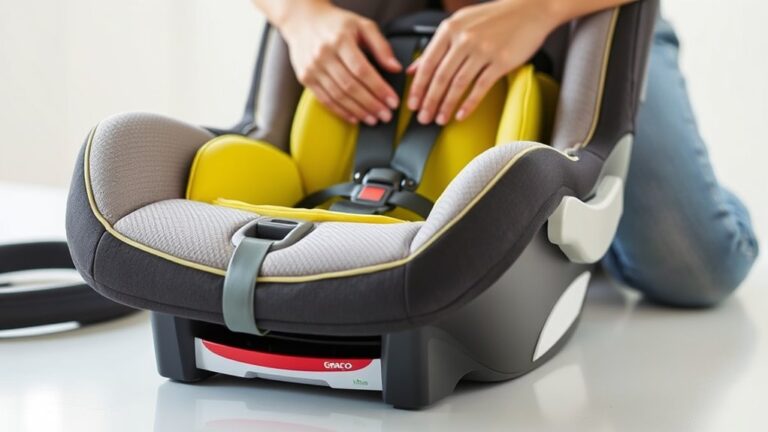
When checking if your car seat is still safe and usable, start by looking it over carefully for any damage or signs of wear. Cracks, frayed straps, or broken parts mean it might not meet safety standards anymore.
Next, test all the features like buckles, harnesses, and adjustments to make sure they work properly. If the seat has been in a severe accident, it’s usually unsafe to donate or reuse, even if it looks fine.
Check the manufacturer’s guidelines for age and expiration dates, as these are important for safety. If you find any issues or have doubts about whether it’s still safe, it’s best to recycle or discard the seat.
Prioritizing safety and usability ensures your child stays protected and helps you make responsible disposal choices.
Environmental Impact Considerations
Once you’ve checked your car seat’s safety and usability, thinking about its environmental impact can help you make more responsible disposal choices. If the seat uses sustainable materials or can be recycled, it’s worth exploring eco-friendly options that reduce landfill waste.
Recycling your car seat stops harmful plastics and metals from polluting the environment, especially if facilities properly process these materials. Donating a still-usable seat also extends its life and cuts down on resource use.
If the seat is beyond repair, trashing it might be necessary, but always look for recycling options first. Choosing sustainable materials and eco-friendly alternatives ensures your disposal helps protect the planet and lowers your carbon footprint.
How to Safely Remove and Prepare Your Car Seat for Disposal
Removing and preparing your car seat for disposal requires careful attention to safety and environmental considerations. First, examine the car seat features to understand how it’s assembled, which helps you identify the best way to safely remove it.
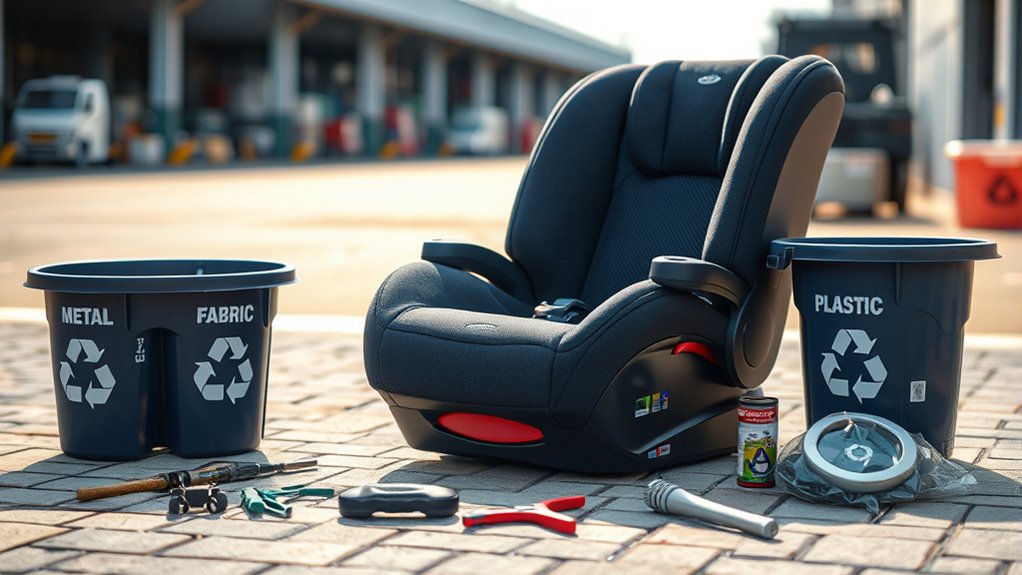
Start by removing any removable parts, such as cushions or harnesses, following the manufacturer’s instructions. Use a screwdriver or other tools if necessary, but be cautious to avoid damaging the seat or injuring yourself.
Before handling, make sure the vehicle is parked securely and the seat is stable. To prevent injury and environmental harm, cut the straps and harnesses to prevent reuse and remove any metal hardware or plastic components that could cause injury during disposal.
Wear gloves and protective eyewear for safety. Once dismantled, clean the seat thoroughly and check local regulations to determine proper disposal methods.
Proper preparation guarantees safe removal and minimizes environmental impact.
Where Can I Recycle My Old Car Seat?
Thinking about recycling your old car seat? A good first step is to see if your local recycling center accepts them. Many centers now have specific programs for car seats, making it easier to get rid of them responsibly.
You might also want to check if the manufacturer of your car seat offers a take-back program. Some companies will take back the old seats and recycle or repurpose the materials, which is a great way to ensure your old seat is disposed of in an eco-friendly way. Overall, these options are perfect for making sure your car seat is recycled or recycled properly without harming the environment.
Local Recycling Centers
Finding a local recycling center that accepts car seats can be simple if you know where to look. Start by checking your local recycling programs and guidelines, since they vary by area.
Many centers accept car seats as part of broader electronics or bulky item recycling efforts. Contact your city or county waste management department to see if they accept car seats and if any special prep is needed.
Some recycling centers might have specific drop-off spots or scheduled collection days. Keep in mind, not all facilities accept car seats, so it’s important to verify first.
Following local guidelines ensures your old car seat is disposed of responsibly and sustainably, helping reduce waste and support recycling in your community.
Manufacturer Take-Back Programs
Many car seat manufacturers now offer take-back programs, making it easier to recycle your old seat responsibly. These programs partner with recycling initiatives to ensure proper handling, simplifying disposal.
By participating, you help reduce waste and support sustainable practices in the industry. Many brands have dedicated drop-off points or provide mailing options for your convenience.
These programs often accept seats past their expiration date or those no longer in use, even if they’re damaged. Recycling through manufacturer programs guarantees materials are reused or properly disposed of, minimizing environmental impact.
Check your car seat brand’s website for specific take-back instructions. Confirm if the program accepts damaged or expired seats.
Look for nearby drop-off locations or mailing options. Understand what materials are recycled through the program and support brands committed to sustainable recycling initiatives.
What Materials Are Recycled From Your Car Seat?
Car seats are made from various materials that are often recycled to help cut down waste. During recycling, the seat is taken apart to make breaking down the materials easier.
Plastic parts like the shell and buckles are melted down and turned into new plastic products. Metal parts, such as the frame and hardware, are separated and melted for reuse in making new metal items.
Foam padding, usually made from polyurethane, is shredded and sometimes processed into insulation or cushioning. Fabric covers are usually removed and sent for textile recycling, where fibers are separated and reused.
Not all parts can be recycled at every facility, but knowing which materials are processed can help you dispose of your car seat responsibly. Recycling these materials keeps them out of landfills and conserves natural resources, making your car seat’s end-of-life more eco-friendly.
How to Find Places That Accept Car Seat Donations
Locating places that accept car seat donations can seem tricky, but there are simple ways to find options nearby. Start by reaching out to local charities or non-profits that focus on child welfare—they often accept donations.
Community centers and churches sometimes run donation drives, so check with them as well. Manufacturer websites are also worth a look, since some partners run donation programs.
Calling hospitals or social service agencies is another option—they might accept or help distribute donated car seats. Lastly, browse online community forums or social media groups to connect with people or organizations looking for donations.
Disposing of Car Seats at Local Waste Facilities
When donation options aren’t available or suitable, disposing of a car seat at your local waste facility becomes necessary. Before doing so, check your waste facility’s regulations, as they often have specific rules for disposing of large items like car seats.
Some facilities may require you to disassemble the seat or remove certain parts, so reviewing their guidelines helps guarantee proper disposal. Not all local disposal options accept car seats, so it’s important to verify what materials are accepted and if there are any fees involved.
You might need to take the seat to a designated drop-off area or schedule a special pickup. Proper disposal prevents environmental harm and keeps your community clean.
Always follow local disposal options and regulations carefully to avoid fines or improper disposal practices. Taking these steps guarantees you dispose of your car seat responsibly and in accordance with waste facility rules.
Why Recycling Your Car Seat Helps the Environment
Recycling your car seat helps the environment by reducing waste and conserving resources. When you choose to recycle, you’re helping to minimize landfill overflow and prevent harmful chemicals from leaching into the soil.
The recycling process breaks down materials like plastics and metals, so they can be reused in making new products. This means less need to extract raw resources, saving energy and reducing pollution.
Recycling breaks down plastics and metals, reducing raw resource extraction and lowering pollution.
By recycling, you also lower greenhouse gas emissions linked to production and waste management.
Here are some benefits of recycling your car seat:
- Cuts down on landfill waste
- Reduces demand for virgin materials
- Saves energy during manufacturing
- Prevents environmental pollution
- Supports sustainable practices
Recycling your car seat is a responsible choice that directly benefits environmental health. It’s a smart step toward sustainability.
Questions to Ask Before Disposing of Your Car Seat
Before you dispose of your car seat, it’s important to ask the right questions to make sure you’re being environmentally responsible. First, check if your car seat has reached its car seat lifespan—usually around 6-10 years, depending on the model.
Then, review safety regulations. If the seat is expired or damaged, it’s unsafe to reuse. Think about whether the seat can be recycled or donated to help reduce waste and support others.
Reflect on these questions:
| Is my car seat past its lifespan? | Is it damaged or compromised? | Can it be recycled or donated? |
|---|---|---|
| Am I following safety regulations? | Will disposal harm the environment? | Is there a local disposal program? |
Asking these questions helps you make a mindful choice that keeps your loved ones safe and protects the planet.
Your Car Seat Disposal Checklist: Steps to Do It Right
Disposing of a car seat correctly involves a clear, step-by-step process to guarantee safety and environmental responsibility.
First, check if your local recycling programs accept car seats or if there are specific drop-off locations. Next, remove any fabric covers and harnesses, as these can often be recycled separately.
Then, disable the seat’s mechanisms to prevent reuse or injury. Afterward, consider eco-friendly options like donating if the seat is still safe or repurposing parts for DIY projects.
Finally, dispose of the remaining plastic shell responsibly by following your area’s waste guidelines. Here’s a quick checklist:
- Confirm recycling or donation options for your car seat
- Remove fabric covers, harnesses, and padding
- Disable the seat’s mechanisms for safety
- Think about eco-friendly options like donation or repurposing
- Follow local disposal rules for plastics and non-recyclables
This process helps ensure your car seat is disposed of safely and responsibly, minimizing environmental impact.
Frequently Asked Questions
Are There Specific Safety Standards to Check Before Disposal?
Yes, you should check safety guidelines before disposal to make sure you’re following proper methods. Look for any manufacturer instructions or local regulations that specify safe practices.
Usually, it’s recommended to disable or cut straps and remove padding to prevent reuse or misuse. Always verify if there are specific recycling programs or disposal sites for car seats in your area.
This way, you can dispose of your car seat responsibly and safely.
How Long Does the Recycling Process for Car Seats Typically Take?
The recycling process for car seats usually takes several weeks, depending on the recycling methods used.
For example, a community recycling program might process a batch in about four to six weeks, breaking down plastics and metals to reduce environmental impact.
This duration allows for proper disassembly, material sorting, and safe disposal, helping minimize the environmental footprint.
You can help by choosing eco-friendly recycling options that prioritize sustainability.
Can I Reuse Parts of My Old Car Seat for DIY Projects?
Yes, you can reuse parts of your old car seat for DIY projects, but make safety a top priority. Focus on preserving safety features and sturdy, non-toxic materials.
You might consider turning car seat parts into storage bins or pet beds. Just avoid reusing padding or straps that could compromise safety or durability.
Always inspect the parts thoroughly for damage or wear before using them. Make sure your projects don’t accidentally reduce safety or stability.
Keep safety in mind to create functional, eco-friendly, and safe DIY projects that you’ll enjoy.
Are There Fees Associated With Recycling or Donating Car Seats?
Yes, there can be fees involved with recycling programs or donation centers. Some recycling programs charge a fee to cover processing costs, so it’s good to check ahead.
Donation centers usually accept car seats for free, but they might have specific rules or restrictions. It’s best to contact them beforehand to know for sure.
This way, you’ll understand any potential costs and ensure your car seat is responsibly disposed of or reused.
What Are Common Mistakes to Avoid During Car Seat Disposal?
Avoid unsafe disposal methods like throwing the car seat in regular trash, which can harm the environment. Don’t forget to check for recycling options; many programs accept old car seats for proper recycling.
Also, steer clear of damaging the seat beyond reuse or recycling, as it can pose safety risks if reused improperly. Always follow manufacturer instructions and local regulations to ensure you’re disposing of your car seat responsibly and safely.
Conclusion
Disposing of your car seat responsibly isn’t just a task. It’s a small act that can help save the planet from disaster.
By choosing to recycle, donate, or dispose of it correctly, you’re helping prevent mountains of waste from consuming our Earth.
Remember, your actions today could make the difference between a healthy planet and an environmental catastrophe.
So, take those extra steps and make a real impact. You’re more powerful than you think.
When it comes to disposing of a car seat, being mindful and responsible matters. Your choices can contribute to a cleaner, safer environment for everyone.