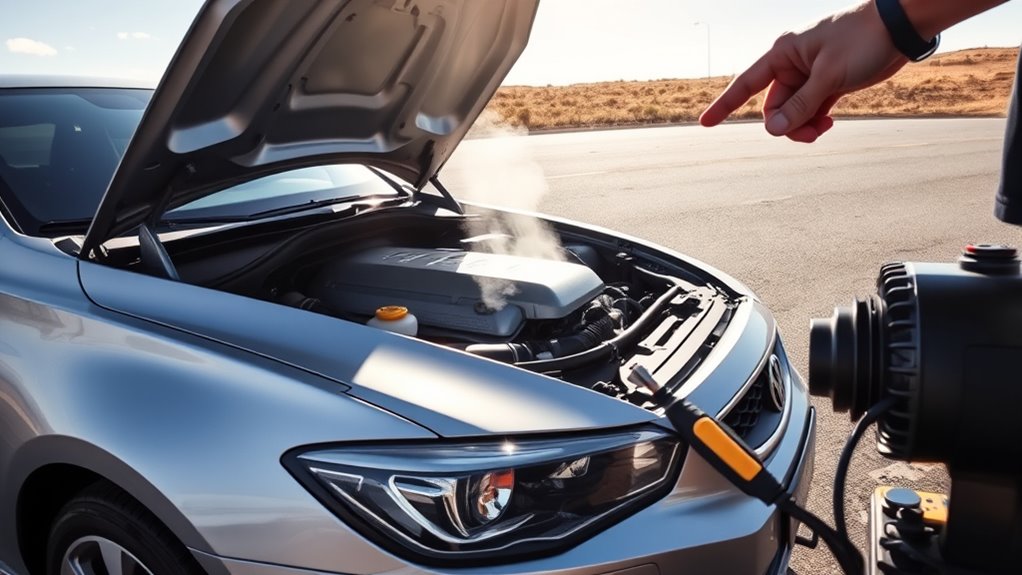
Car Overheats When AC Is Off? Try These Solutions
Are you tired of your car overheating even when the A/C is off? You’re not alone—many drivers struggle with this frustrating issue. It can be stressful, especially when you’re just trying to get somewhere comfortably.
If your car overheats even with the A/C off, start by checking your coolant levels and topping them up if needed. Inspect your radiator for blockages and guarantee the cooling fan spins freely.
Make sure your thermostat isn’t stuck and your water pump is functioning properly. Regular maintenance like flushing the cooling system helps prevent issues.
To uncover some hidden causes and keep your engine cool, keep exploring these common solutions.
Key Takeaways
- Check the coolant levels and make sure they are topped up with clean, properly mixed coolant when the engine is cool.
- Inspect the radiator for any debris or blockages, and clean the fins to improve airflow and cooling efficiency.
- Test the thermostat to see if it’s working properly; replace it if it’s stuck closed or open.
- Verify that the cooling fan activates correctly and isn’t obstructed, so it can provide proper airflow when the engine heats up.
- Examine the water pump for leaks, unusual noises, or signs of failure that could be affecting coolant circulation.
Why Does My Car Overheat When I Turn Off the Air Conditioning?
Have you ever noticed your car overheating right after you turn off the air conditioning? When you do, the engine temperature can climb unexpectedly. This happens because the air conditioning system puts extra load on the engine, especially when it’s working hard to cool the cabin.
When you turn off the A/C, the engine still needs to dissipate the heat that built up during operation. If your cooling system isn’t working properly, this excess heat can cause the engine temperature to spike.
Some vehicles have components like radiator fans or cooling fans that might not turn on quickly enough once the A/C stops. This can lead to higher engine temperatures.
It’s important to remember that even with the A/C off, the engine continues to work and generate heat. If your engine overheats after turning off the A/C, it could be a sign of issues with your cooling system or other engine parts that need attention.
Check Your Coolant Levels and Top Them Up Properly
First things first, find your coolant reservoir and take a look at the fluid level. You want to make sure the coolant is at the right level, so if it’s low, you’ll want to top it up.
Also, check the color of the coolant—usually it’s bright green, orange, or pink. Make sure it looks clean and isn’t rusty or dirty. If everything looks good, carefully add coolant until it reaches the recommended level. Doing this helps prevent your engine from overheating and keeps everything running smoothly.
Locate Coolant Reservoir
Locating the coolant reservoir is important for keeping your vehicle’s cooling system in good shape. It’s usually a translucent plastic tank near the radiator, marked with minimum and maximum level lines. If you’re not sure, check your owner’s manual.
Once you find it, take a look at the coolant levels to make sure they’re between the marks. If the levels are low, top them up with the right coolant mixture. Regular checks help prevent issues like coolant leaks that can cause overheating.
Be careful when opening the reservoir cap. Wait until the engine is cool to avoid burns from hot coolant or pressure. Keeping an eye on the coolant reservoir helps catch problems early and keeps your cooling system running smoothly, reducing the risk of overheating when the AC is off.
Check Coolant Color
Checking the color of your coolant is a quick way to see how it’s doing and make sure your cooling system is working right. Coolant colors can tell you a lot about its age and effectiveness.
For example, green usually means it’s conventional coolant, while orange or pink suggests long-life formulas. Here’s a simple guide:
| Coolant Color | Significance | Recommended Action |
|---|---|---|
| Green | Older, needs replacement | Replace if contaminated or old |
| Orange/Pink | Long-life, effective, clean | Check for contamination |
| Yellow/Blue | Specialized coolant types | Confirm compatibility before topping |
Knowing your coolant color helps catch issues early and can prevent overheating, especially when the AC isn’t running.
Properly Top Off Coolant
Verifying your coolant levels are correct is essential for preventing your engine from overheating, especially when the AC is off. Start by checking your coolant reservoir and radiator to see if levels are below the recommended mark.
When topping off, use the appropriate coolant types, such as glycol-based or extended-life formulas, specified for your vehicle. Follow proper topping techniques by carefully opening the reservoir cap when the engine is cool to avoid burns.
Then, slowly add coolant until it reaches the proper level. Always mix concentrates with distilled water if needed, and avoid overfilling.
Properly topped-off coolant helps maintain the ideal engine temperature, prevents overheating, and keeps your cooling system operating efficiently.
Inspect Your Radiator and Cooling Fan for Blockages or Damage
To keep your radiator and cooling fan working well, it’s important to inspect them for any blockages or damage.
Blocked radiators or a malfunctioning cooling fan can cause your engine to overheat, especially when the AC is off. Make sure to check for debris, dirt, or bugs that might clog the fins and reduce airflow.
Also, examine the cooling fan for signs of damage or wear, like broken blades or electrical problems. Proper radiator maintenance includes these simple checks to keep everything running smoothly.
Here are three key steps to ensure your radiator and cooling fan stay in top shape:
- Remove any debris or dirt from the radiator fins using a soft brush or compressed air.
- Check that the cooling fan spins freely and turns on when the engine heats up.
- Look for cracks, corrosion, or broken parts in the radiator and fan assembly.
Regularly maintaining your radiator and cooling fan can prevent overheating and help your engine run smoothly.
How the Thermostat Keeps Your Engine From Overheating
Think of your thermostat as a gatekeeper for your engine’s cooling system. Its job is to control how the coolant moves between the engine and the radiator. When things start to heat up, it opens up to let the coolant flow through and help cool everything down.
If your thermostat isn’t working right, your engine could overheat pretty fast. So, it’s a small part, but it plays a big role in keeping your engine running smoothly and preventing damage.
Thermostat Regulation Function
The thermostat acts as a gatekeeper for your engine’s cooling system, controlling when coolant flows through the radiator. Its main job is to keep your engine running at the right temperature.
When your engine hits a set temperature, the thermostat opens, letting coolant circulate and preventing overheating. If it fails, you might notice your engine overheating even if the AC is off.
To keep it working properly, check for thermostat issues regularly and replace it if needed. Keep an eye on your engine temperature to catch any early signs of trouble.
Make sure the thermostat opens and closes correctly so it can maintain a consistent temperature. A faulty thermostat can cause your engine to overheat, so timely replacement helps keep your cooling system running smoothly.
Prevents Engine Overheat
When the engine reaches its ideal temperature, the thermostat quickly opens to let coolant flow through the radiator. This helps keep the engine from getting too hot.
The thermostat acts like a gatekeeper, responding to temperature changes and controlling coolant flow. It makes sure the engine stays at the right temperature and prevents overheating.
Without a working thermostat, coolant circulation becomes less effective, which raises the risk of overheating—especially when the AC is off and less cooling happens.
Proper thermostat operation keeps your engine within a safe temperature range, helping you avoid overheating and keeping your vehicle running smoothly.
Signs Your Water Pump Might Be Failing
A failing water pump can quietly cause serious engine problems, so it’s important to recognize the warning signs early. If you notice unusual behavior, you might be dealing with symptoms that show it’s time for a pump replacement.
Here are three key signs:
- Overheating Engine: Your car’s temperature gauge suddenly rises, especially when the AC isn’t on.
- Coolant Leaks: Puddles under your vehicle suggest a failing water pump seal.
- Unusual Noises: Squealing or grinding sounds near the pump point to bearing failure.
If you see any of these signs, don’t wait. Addressing water pump issues early can prevent serious engine damage, saving you money and hassle.
Recognizing these indicators helps you know when it’s time for a pump replacement before overheating gets worse.
How Air Gets Trapped in Your Cooling System and Causes Overheating
Even if your water pump is working fine, air can still get into your cooling system during maintenance or repair. This can cause overheating problems.
When air gets trapped inside, it forms pockets that block coolant flow. These pockets stop heat from moving efficiently from the engine to the radiator, making temperatures climb.
The trapped air can also create hot spots, which increases the chance of engine damage. During coolant refills or repairs, air often enters through open hoses or loose fittings.
Without proper bleeding, these air pockets stay in the system and disrupt circulation. Over time, this leads to overheating, especially when the AC is off and the coolant isn’t circulating to remove heat.
Knowing how air gets trapped helps you take steps to eliminate these pockets and keep your cooling system working smoothly.
Maintain Your Cooling System: Flushing and Regular Checks
Regularly maintaining your cooling system through flushing and inspections is essential to prevent overheating issues. Proper coolant maintenance keeps the system running smoothly and helps it last longer.
Stick to a consistent flushing schedule to clear out debris, rust, and old coolant that can block heat transfer. This keeps everything working efficiently and protects your engine.
Here are three key steps to keep your cooling system in top shape:
- Check coolant levels often and top off when needed.
- Follow a recommended flushing schedule, usually every 30,000 miles or every 2-3 years.
- During routine checks, inspect hoses, clamps, and the radiator for leaks or damage.
When to Replace Your Radiator or Cooling Components
Over time, wear and tear on your cooling system components can lead to decreased performance, even if you stay on top of regular maintenance. Knowing when to replace your radiator or cooling parts depends on signs like persistent overheating, leaks, rust, or corrosion.
The radiator’s lifespan varies, but most last around 8-10 years with proper care. If your radiator shows damage or corrosion, it’s better to replace it rather than try to repair, as repairs might not last long.
Also, think about replacing parts like thermostats, hoses, or water pumps if they’re showing signs of wear. Regular inspections help catch issues early before they become bigger problems.
When these components reach the end of their lifespan or are damaged beyond repair, replacing them ensures your cooling system stays effective. This helps prevent overheating, especially when the AC isn’t running.
Staying proactive with cooling system maintenance is key to avoiding costly engine damage down the road.
Troubleshooting Other Causes of Engine Overheating
If your engine is overheating even when the AC isn’t on, the first thing you want to do is check your coolant level. Make sure it’s at the right level and that the fluid is clean — dirty or low coolant can cause hot spots and lead to overheating.
Then, you should take a look at your thermostat. Sometimes it gets stuck or doesn’t open and close properly, which can mess with the cooling process. Also, don’t forget to inspect the radiator and fan. If they’re blocked, damaged, or not working right, your engine won’t get the cooling it needs.
Fixing these common issues can really help prevent your engine from overheating and keep everything running smoothly.
Coolant Level and Quality
A low or contaminated coolant level is a common cause of engine overheating when your AC is off. If your coolant is low, you might have leaks or need a coolant flush to keep things running smoothly.
Check the coolant level regularly, making sure it’s between the minimum and maximum marks. Also, inspect hoses and the radiator for any visible leaks, which can cause low coolant levels.
If your coolant looks dirty or rusty, it’s time for a coolant flush. This helps remove old, contaminated fluid and replaces it with fresh coolant to keep your engine cool.
Ignoring these signs can lead to your engine overheating, especially if the cooling system isn’t working properly. Proper maintenance helps your engine stay cool no matter what.
Thermostat Functionality Check
Even when your coolant levels are good, a stuck or malfunctioning thermostat can cause your engine to overheat.
To diagnose this, perform thermostat testing by removing the thermostat and checking if it opens at the proper temperature, usually around 195°F (90°C).
If it remains closed or opens too late, it’s faulty. A thermostat stuck in the closed position restricts coolant flow, leading to overheating.
If testing confirms a problem, thermostat replacement is necessary. Choose a compatible part and install it correctly, ensuring it opens at the right temperature.
Regularly checking your thermostat helps prevent overheating issues caused by its failure. This simple step can save you from more costly repairs down the line.
Radiator and Fan Issues
When your engine overheats despite the AC being off, the radiator or cooling fan might be the problem. First, check your radiator for leaks, clogs, or dirt buildup, which can block heat dissipation. Regular radiator maintenance helps keep your cooling system working well.
Next, look at the fan operation: make sure the fan turns on when the engine heats up. If the fan isn’t working right, it can cause your engine to overheat. Also, listen for strange noises or see if the fan runs constantly or not at all.
To troubleshoot effectively, try these steps: clean or flush the radiator to remove debris or corrosion; test the fan motor and wiring for faults; and verify the fan clutch and relay are functioning properly. Fixing radiator and fan issues quickly can prevent engine damage and keep your car running smoothly.
Tips to Keep Your Engine Cool During Hot Weather
During hot weather, keeping your engine cool is crucial to prevent overheating, especially when the AC is off. Proper cooling starts with regular summer maintenance, like checking coolant levels and inspecting hoses for leaks or cracks.
Make sure your radiator is clean and free of debris because blocked airflow reduces cooling efficiency. You might also want to upgrade your radiator cap to ensure proper pressure and prevent coolant loss.
Drive smoothly and avoid heavy acceleration on hot days, as aggressive driving makes the engine work harder and get hotter. Parking in shaded areas helps keep the engine cooler when idling or parked.
Keep an eye on your temperature gauge regularly. If it starts to overheat, turn off the engine right away. Using a high-quality coolant mixture also helps improve heat transfer.
These tips, along with routine summer maintenance, will help keep your engine cooler and prevent overheating when your car’s AC is off.
Frequently Asked Questions
Can a Faulty Coolant Temperature Sensor Cause Engine Overheating?
Yes, a faulty coolant temperature sensor can cause engine overheating. When it malfunctions, it gives incorrect readings to your car’s computer, which can lead to improper coolant flow or cooling fan operation.
You might notice the temperature gauge climbing or see inconsistent readings. Coolant leaks could also happen if sensor issues interfere with the cooling system.
Addressing sensor problems quickly helps prevent overheating and keeps your engine running smoothly.
How Does a Clogged Radiator Cap Affect Engine Temperature?
A clogged radiator cap disrupts radiator maintenance and coolant flow, causing your engine to overheat. When the cap isn’t sealing properly, pressure can’t build up correctly, leading to reduced coolant circulation.
This impairs heat transfer from the engine, increasing its temperature. Regularly inspecting and replacing the radiator cap guarantees proper pressure and coolant flow, preventing overheating and keeping your engine running smoothly.
Can a Broken Radiator Fan Relay Lead to Overheating When AC Is Off?
Think of your radiator fan as the unsung hero in your engine’s cooling story. A broken radiator fan relay can definitely cause overheating when the AC is off because the fan won’t turn on to cool the radiator.
This failure is one of the common reasons for overheating, especially when the engine gets hot without the fan helping out. So, if your car is overheating, it’s a good idea to check the radiator fan relay — it’s often the culprit.
What Role Does Engine Oil Play in Preventing Engine Overheating?
Engine oil plays an essential role in preventing engine overheating by providing proper lubrication efficiency. You need the right oil viscosity to guarantee smooth engine operation, reducing friction and heat buildup.
When oil is thick or old, it doesn’t lubricate effectively, leading to increased temperature. Regularly checking and changing your oil helps maintain ideal viscosity, keeping your engine cool and preventing overheating, especially when the AC is off.
Could a Worn Serpentine Belt Impact the Cooling System’s Performance?
Yes, a worn serpentine belt can affect how well your cooling system works. The belt drives important parts like the water pump, which moves coolant through your engine.
If the belt slips or breaks, the water pump might not work right. This can cause poor coolant flow and lead to overheating.
It’s a good idea to regularly check your serpentine belt for signs of wear. Keeping it in good shape helps your cooling system stay efficient and prevents overheating issues.
Conclusion
Think of your car’s cooling system as a delicate symphony. When one instrument, like your radiator or water pump, falters, the entire harmony suffers, causing your engine to overheat even when the AC is off.
Regular maintenance keeps this symphony in tune. It helps prevent small issues from turning into bigger, costly breakdowns.
By tending to each part of your cooling system, you can keep your engine running smoothly. This is especially important when your car overheats when the AC is off.