What Causes Spark Plugs to Foul? Top Reasons Explained
Are you tired of dealing with rough starts, sluggish acceleration, or engine misfires? You’re not alone—many car owners struggle with spark plug fouling, which can lead to costly repairs and frustrating drives.
Fortunately, understanding what causes spark plugs to foul can help you prevent these issues before they happen.
Spark plugs foul due to several common issues. Oil leaks from worn seals or piston rings cause residue buildup on the plugs. Incomplete combustion caused by poor fuel quality, clogged filters, or incorrect air-fuel mixtures also leads to fouling.
Cold engines, engine overheating, and poor maintenance practices like neglecting air filter checks can worsen the problem.
If you’re curious about how to stop this from happening, keep exploring for more detailed solutions and tips.
Key Takeaways
- Oil leaks from worn piston rings or valve seals contaminate the spark plugs, causing fouling. This buildup can lead to misfires and poor engine performance.
- Incomplete combustion due to clogged filters or faulty injectors results in carbon deposits on the plugs. These deposits can make starting and running your engine rough.
- Poor fuel quality or using the wrong air-fuel mixture leads to incomplete burning, which causes fouling on the spark plugs. Using good quality fuel helps prevent this.
- Cold engines and improper maintenance practices can hinder complete combustion. This increases deposit buildup and affects the overall efficiency of your engine.
- Driving habits like frequent idling or short trips prevent the engine from warming up fully, promoting spark plug fouling. Longer trips help keep everything clean and functioning well.
What Are Spark Plugs and How Do They Work?
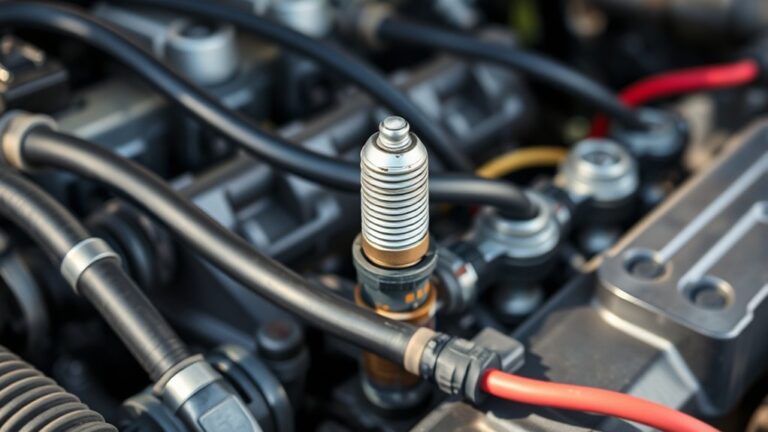
Spark plugs are small but essential components in your engine’s ignition system. They create the spark needed to ignite the air-fuel mixture in your engine’s cylinders. Without them, your engine wouldn’t run smoothly or efficiently.
There are various spark plug types, including copper, platinum, and iridium. Each offers different durability and performance levels. The ignition system relies on these plugs to produce a high-voltage spark at exactly the right moment.
When you turn the key or press the start button, the ignition system sends electrical current to the spark plugs. This current jumps across the gap between the center and ground electrodes, creating a spark.
That spark ignites the fuel mixture, powering your engine. Understanding how spark plugs work helps you see their importance in keeping your engine running well.
Properly functioning spark plugs guarantee reliable starts, smooth acceleration, and peak fuel efficiency.
How Can You Tell if Your Spark Plugs Are Fouled?
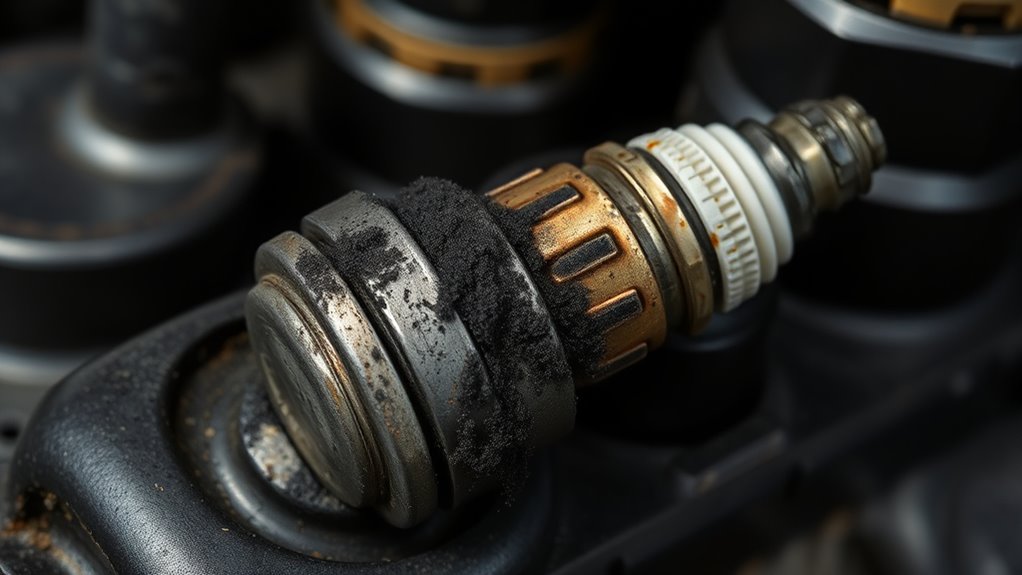
Want to know if your spark plugs are fouled? Well, one way to tell is by taking a look at them. If you see black soot or any kind of deposits on the plugs, that’s usually a sign they’re not in the best shape.
Also, pay attention to how your car’s running. If it starts to run rough, stalls out, or has a hard time speeding up, those are clues something’s up with the spark plugs. And if you’re having trouble starting your car, it might be time to check those plugs out—they could be fouled and in need of some cleaning or replacement.
Visual Inspection Signs
A visual inspection of your spark plugs can reveal clear signs of fouling, helping you diagnose the issue early. Different spark plug types, like copper, iridium, or platinum, may show distinct fouling patterns.
When inspecting, look for carbon deposits—black, oily, or sooty grime—on the insulator and electrodes. These indicate incomplete combustion or oil leaks. Wet or greasy plugs suggest oil fouling, while white ash deposits point to fuel additives or wrong fuel blends.
Use proper inspection techniques like removing the plugs carefully and examining them in good light. Check for cracked insulators, worn electrodes, or excessive buildup. Recognizing these signs helps you determine if fouling is present and plan corrective action before engine trouble worsens.
Engine Performance Changes
When spark plugs get fouled, your engine performance can drop noticeably, making it easier to spot issues while you’re driving. You might feel a rough idle, hesitation, or less power during acceleration.
Fouled plugs mess up proper combustion, which can cause misfires and throw off your engine tuning. Poor-quality fuel makes things worse since contaminated or cheap fuel burns incompletely and causes fouling.
You might also see higher fuel consumption and less responsiveness from your engine. If these signs stick around, it’s a clear sign that your spark plugs aren’t firing right.
Dealing with fouling early can bring your engine back to smooth running. Pay attention to how your car feels and runs—these clues can point to spark plug problems.
Difficulty Starting Engine
Fouled spark plugs can make starting your engine noticeably more difficult, especially in cold weather or after the vehicle has been sitting for a while. You might notice slow engine cranking, sputtering, or even failure to start altogether. These issues often come from engine cranking problems caused by fouled plugs disrupting the ignition system.
You may also see the engine misfiring or running rough once it starts, which points to ignition system failures. Keep an eye out for signs like longer-than-usual cranking times, rough idling or hesitation, and trouble restarting after stopping.
If you notice these symptoms, your spark plugs could be fouled, which blocks proper ignition and makes starting the engine a challenge. Fixing fouling quickly can help restore smooth engine operation.
What Causes Spark Plug Fouling?
Fouling usually happens when oil sneaks into the combustion chamber and coats your spark plugs with unwanted residue. This can happen for a variety of reasons, like worn piston rings or valve seals. When oil gets in, it makes it harder for the spark plugs to do their job.
Another common cause is issues with the fuel mixture. If the mixture isn’t just right, it can lead to incomplete combustion. That means carbon and other deposits start building up on your spark plugs over time. Also, if the air and fuel aren’t balanced properly, the engine won’t burn fuel efficiently, which can increase the chances of fouling.
Oil Contamination Risks
Oil contamination happens when oil leaks into the combustion chamber, coating the spark plug with a greasy layer. This can be caused by worn piston rings, valve seals, or turbochargers.
When oil gets into the chamber, it fouls the spark plug and makes it harder to perform properly. Using oil with the wrong viscosity can make things worse—oil that’s too thick or too thin won’t burn cleanly.
Regular maintenance like oil changes and seal inspections can help prevent this issue. Keep an eye out for signs like blue smoke or decreased engine performance.
To avoid fouling, make sure you’re using the right oil viscosity and stay on top of routine upkeep, especially as your engine ages. Taking these steps keeps your spark plugs cleaner and your engine running smoothly.
Fuel Mixture Imbalances
Fuel mixture imbalances can really lead to spark plug fouling because they cause incomplete combustion. When the fuel-to-air ratio is off, your engine has a hard time burning fuel properly, which builds up carbon on the spark plugs.
Poor fuel quality or a clogged air intake can make this worse, leading to too much fuel or not enough air. Think of the combustion chamber as a small table:
| Fuel Quality | Air Intake | Combustion Efficiency |
|---|---|---|
| Low-quality fuel | Blocked filter | Incomplete burning |
| High-quality fuel | Dirty sensor | Proper burning |
| Contaminated fuel | Restricted airflow | Rough engine operation |
| Water in fuel | Faulty air filter | Misfiring |
| Old fuel | Clogged intake | Fouled spark plugs |
Keeping your fuel good and your air intake clean helps prevent fouling caused by these mixture issues.
Incomplete Combustion Effects
Incomplete combustion happens when your engine doesn’t burn fuel all the way, leaving carbon deposits on your spark plugs. This misfire can lower fuel efficiency and cause fouling over time.
When combustion isn’t thorough, unburned fuel and carbon build up on the spark plug electrodes, making it harder for them to ignite the air-fuel mixture properly. This can lead to rough idling, poor acceleration, and higher emissions.
Factors like a clogged air filter, faulty fuel injectors, or incorrect ignition timing can cause incomplete combustion. To avoid fouling, it’s important to keep your engine properly tuned.
Other issues that contribute include fuel mixture imbalances, worn spark plugs, and engine misfires. Addressing these can help ensure your engine runs smoothly and efficiently.
How Fuel Mixtures Lead to Spark Plug Fouling
When the mixture of fuel and air in your engine isn’t properly balanced, it can cause spark plugs to foul more quickly. Poor fuel quality can lead to incomplete combustion, leaving behind carbon deposits that foul your plugs. Using low-quality fuel often results in inconsistent burning, creating more residue on the spark plugs.
Issues with air intake can also disrupt the correct air-fuel ratio. A clogged or dirty air filter restricts airflow, causing a rich mixture with too much fuel and not enough air. This excess fuel doesn’t burn completely, leaving behind a carbon build-up that fouls the spark plug.
Conversely, too little fuel can cause misfires and unburned fuel deposits. Maintaining good fuel quality and ensuring your air intake system is clean helps keep the mixture balanced. Properly tuned engines that deliver the right air-fuel ratio reduce the chances of spark plug fouling caused by improper fuel mixtures.
How Oil Leaks and Contamination Foul Spark Plugs
Oil leaks from worn valve seals or piston rings can sneak into the combustion chamber, and when they do, they often foul up your spark plugs. It’s pretty common for oil to seep in this way, especially if those seals or rings are past their prime.
On top of that, contaminants can get in through damaged seals or cracked gaskets, making things even worse for your spark plugs. When dirt or oil reach the plug, they form a coating that messes with the spark, which isn’t good for your engine’s performance.
Oil Leak Sources
Oil leaks can find their way into your engine’s combustion chamber through various worn or damaged components, leading to foul spark plugs. Identifying the source of an oil leak is essential for prevention and proper detection.
Common causes include:
- Worn valve cover gaskets that allow oil to seep into the cylinders
- Cracked or damaged oil pan seals letting oil escape
- Faulty piston rings causing oil to enter the combustion chamber
Regularly inspecting these areas helps catch leaks early. Addressing leaks promptly prevents oil contamination of spark plugs, which can cause fouling.
Maintaining good sealing and replacing worn components guarantees your engine runs smoothly. It reduces the risk of fouling caused by oil leaks. Proper maintenance and vigilant leak detection are key to avoiding costly repairs and ensuring peak engine performance.
Contaminant Ingress Points
Contaminants can enter your engine’s combustion chamber through several critical ingress points, especially when leaks or exposure occur. Common sources include oil leaks from valve cover gaskets or piston rings, which can seep into the chamber and foul your spark plugs.
Cracked or damaged intake seals also let dirt, oil, or debris bypass filters and reach the spark plug area. To prevent this, regularly inspect seals, gaskets, and hoses for leaks or damage.
Keeping engine ventilation proper and ensuring all connections are tight helps prevent ingress. Proper prevention reduces the risk of contaminants entering your engine, which minimizes fouling of your spark plugs and helps your engine run smoothly.
Staying vigilant about potential ingress points keeps contaminants out and maintains peak performance.
Impact on Spark Efficiency
When contaminants like oil and dirt get into the combustion chamber, they interfere with the spark plug’s ability to ignite the fuel mixture efficiently. This contamination weakens spark efficiency and reduces ignition performance, which can cause misfires and lower engine power.
Oil leaks coat the spark plug’s electrodes, creating a barrier that prevents a strong, consistent spark. Dirt and debris can insulate the spark gap, making the spark less intense. As a result, your engine struggles to fire properly, leading to poor fuel economy and increased emissions.
Reduced spark strength from oil coating the electrodes and dirt blocking the spark gap both make ignition less effective. This can cause delayed ignition timing and misfires, making it harder for your engine to run smoothly.
Why Carbon Deposits Form and How They Affect Spark Plugs
Carbon deposits form on spark plugs mainly because of incomplete combustion. This causes unburned carbon particles from the fuel mixture to build up on the electrode.
This buildup can mess with the spark’s ability to ignite the air-fuel mixture effectively. When combustion isn’t efficient, more carbon escapes and settles on the spark plug.
Over time, these deposits get thick and act like an insulator, making it harder for the spark to jump across the gap. This can lead to misfires, rough idling, or poor acceleration.
The buildup also makes the spark plug run hotter, which increases the chance of fouling. To prevent too much carbon, keep your engine properly tuned, use good quality fuel, and ensure your combustion process stays efficient.
Taking care of these factors helps keep your spark plugs clean and working right, so your engine performs at its best.
How Engine Temperature Impacts Spark Plug Fouling
Engine temperature plays a crucial role in spark plug fouling, as running too hot or too cold can speed up deposit buildup. When your engine isn’t within its ideal temperature range, it causes uneven heat and temperature swings, which can lead to fouling.
A cold engine doesn’t burn fuel completely, leaving unburned fuel behind. This unburned fuel forms carbon deposits on the spark plug. On the other hand, an overheated engine can vaporize oil and combustion byproducts, which then stick to the spark plug and create fouling layers.
Keeping your engine at the right temperature helps ensure complete combustion and reduces deposit buildup. Factors that influence fouling include inconsistent engine heat control, excessive temperature fluctuations, and operating at too cold or too hot conditions.
Why Incorrect Spark Plug Gaps Can Cause Problems
Incorrect spark plug gaps can cause a bunch of performance problems, like misfires, rough idling, and lower fuel efficiency. When your spark plugs don’t match the gap specs, combustion isn’t as efficient, which affects how smoothly your engine runs.
Keeping your spark plugs properly gapped involves checking and adjusting the gap sizes to ensure your engine performs at its best. If the gaps are too wide or too narrow, your engine might have trouble igniting the fuel-air mixture right, leading to issues like misfiring or sluggish acceleration.
| Issue | Cause |
|---|---|
| Engine misfires | Incorrect gap size preventing proper spark |
| Rough idling | Spark inconsistencies due to gap mismatch |
| Reduced fuel efficiency | Inefficient combustion from improper gaps |
Always follow the manufacturer’s recommended gap specs to avoid these problems and keep your engine running smoothly. Properly gapped spark plugs make sure ignition is reliable, fuel economy is better, and your engine runs more smoothly.
How Poor Maintenance Leads to Spark Plug Fouling
Poor maintenance habits can greatly increase the chances of spark plug fouling. When you neglect regular upkeep, deposits start to build up on the plugs over time.
Skipping essential maintenance allows dirt, oil, and carbon residues to accumulate, which can coat the spark plugs and mess with their performance.
Inadequate engine care also plays a role. Dirty air filters, stale fuel, or incorrect ignition timing create conditions that encourage deposit formation.
To prevent fouling, make sure to regularly change air filters and use clean fuel.
It’s also important to check and adjust spark plug gaps and ignition timing as needed.
Perform scheduled engine tune-ups to remove buildup and keep everything running smoothly.
Tips to Prevent Spark Plug Fouling and Keep Your Engine Running Smoothly
To keep your spark plugs clean and your engine running smoothly, regular maintenance is key. Make sure to schedule routine inspections and engine diagnostics so you can catch any issues early.
Proper engine tuning, including adjusting the ignition system, can boost combustion efficiency and help reduce fouling risks. Using high-quality fuel is also important because poor fuel can leave deposits that foul your spark plugs.
Your driving habits matter too—try to avoid frequent short trips and idling, which tend to promote fouling. Don’t forget to replace air filters regularly to ensure good airflow and proper combustion.
Choosing the right spark plug types for your engine can make a big difference in preventing fouling issues. Following these tips will keep your engine running smoothly and help your spark plugs stay cleaner longer.
Frequently Asked Questions
Can Using the Wrong Type of Spark Plug Cause Fouling?
Yes, using the wrong type of spark plug can cause fouling because it affects spark plug compatibility and the ignition system’s performance. If the spark plug isn’t designed for your engine, it might not fire correctly, which can lead to carbon buildup and fouling.
Always make sure you choose the right spark plug for your vehicle to keep the ignition system working at its best. This helps prevent fouling issues and extends the lifespan of your spark plugs.
How Does High Altitude Affect Spark Plug Fouling?
At high altitudes, lower air density affects your vehicle’s fuel mixture, making it richer. This extra fuel can cause spark plug fouling because the mixture doesn’t burn cleanly.
You might notice more fouling because the spark plugs have a harder time igniting the overly rich mixture. To fix this, you can adjust your fuel mixture or use altitude-specific tuning.
These tweaks help keep your spark plugs cleaner and improve their performance in high-altitude conditions.
Do Modern Fuel Additives Impact Spark Plug Longevity?
Think of modern fuel additives as guardians that improve fuel quality and boost combustion efficiency, helping your spark plugs stay cleaner longer. They prevent buildup by ensuring a more complete burn, reducing fouling.
When you use high-quality additives, you’re effectively shielding your spark plugs from harsh residues that cause fouling, which means better performance and longer-lasting spark plugs. So, yes, these additives positively impact spark plug longevity.
Can Engine Misfires Lead to Spark Plug Fouling?
Yes, engine misfires can lead to spark plug fouling. When misfires happen, unburned fuel and carbon deposits build up on the spark plugs, which hurts ignition performance.
Poor ignition timing makes this worse by causing incomplete combustion and increasing fouling risks. Over time, these fouled plugs weaken engine performance, reduce fuel efficiency, and can cause more misfires.
Regular maintenance and proper ignition timing are key to preventing spark plug fouling caused by misfires.
What Role Does Driving Style Play in Spark Plug Fouling?
Your driving style greatly impacts spark plug fouling. Aggressive driving under harsh conditions can cause the engine temperature to rise, leading to incomplete combustion. This, in turn, causes carbon deposits to build up on the spark plugs.
Conversely, frequent short trips don’t allow the engine to reach the ideal temperature, increasing the risk of fouling. Smooth, consistent driving helps maintain proper engine temperature and reduces fouling risks.
Conclusion
Regularly checking and maintaining your spark plugs can significantly extend their lifespan and keep your engine running smoothly.
Did you know that fouled spark plugs can reduce fuel efficiency by up to 30%? That’s a big loss in savings each time your engine struggles with bad sparks.
Understanding the causes—like oil leaks or poor maintenance—can help you prevent fouling before it starts.
Stay proactive, and your engine will thank you with reliable, efficient performance. Paying attention to spark plug health is key to avoiding engine issues caused by fouled spark plugs.