10W30 Vs. 5W30: Head to Head Comparison to Choose the Better Oil
Finding the right motor oil can be confusing, especially with so many options out there. Many drivers struggle to choose between 10W30 and 5W30, unsure which one will give their engine the best protection.
If you’re choosing between 10W30 and 5W30, consider your climate and vehicle. 5W30 flows better in cold weather, making it ideal for cold starts and winter conditions, while 10W30 offers better protection at higher temperatures and for older engines.
Both oils protect your engine, but your choice impacts performance based on driving habits and climate.
To find out which option suits your needs best, investigate more about their differences and benefits.
Key Takeaways
- 5W30 flows better in cold temperatures, helping with cold starts. In contrast, 10W30 is thicker and offers more protection in hot climates and heavy-duty conditions.
- The age of your vehicle and engine type matter. Newer engines usually prefer 5W30, while older engines might benefit from 10W30.
- Typically, 5W30 costs more but performs better in cold weather. On the other hand, 10W30 tends to be more budget-friendly for warmer conditions.
- Both oils generally last between 5,000 and 7,500 miles, but your climate and driving style can influence the best choice.
- Always check your vehicle manufacturer’s recommendations for oil viscosity to keep your engine running smoothly and lasting longer.
What Are 10W30 and 5W30 Engine Oils?
10W30 and 5W30 are two common types of engine oils used in vehicles. Both are designed to protect your engine and improve performance, but they differ in their properties, especially viscosity.
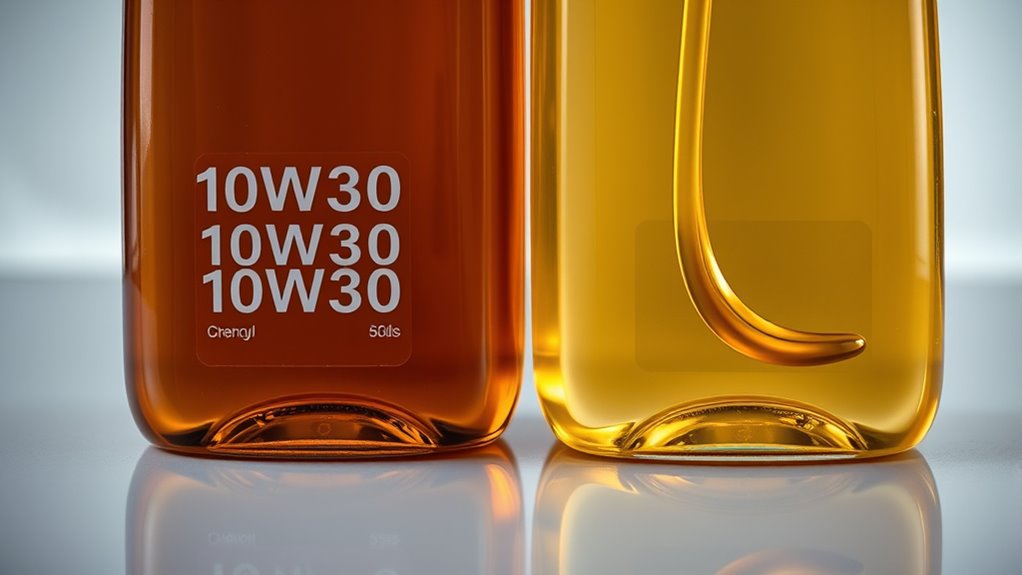
Viscosity differences determine how the oil flows at different temperatures. The “W” in the labels stands for winter, showing how well the oil pours in cold weather.
You’ll notice that 5W30 flows more easily in cold weather than 10W30, making it better for colder climates. Both oils maintain their viscosity at operating temperature, providing a protective film to reduce engine wear.
Understanding these differences helps you choose the right oil for your climate and driving conditions. While both oils serve similar functions, their properties influence startup performance, lubrication, and engine longevity.
How Do Viscosity Ratings Like 10W30 and 5W30 Work?
Viscosity ratings like 10W30 and 5W30 tell you how well engine oil flows at different temperatures. This is called viscosity, and it helps you understand how the oil performs in various climates.
The numbers indicate the oil’s thickness at different temperatures. The higher the number, the thicker the oil is when hot, which impacts how it protects your engine.
Picture cold mornings when the oil needs to flow easily to lubricate your engine quickly. Or hot summer days, where the oil has to stay thick enough to form a protective film but not thin out too much.
During winter starts, low-viscosity oils like 5W30 flow more rapidly than thicker options, making cold starts smoother.
These ratings help you pick the right oil for your engine’s needs, so it performs well across temperature changes. The key is understanding how the oil flows in different conditions to keep your engine healthy and efficient.
Is Your Vehicle Compatible With 10W30 or 5W30 Oil?
Wondering if your vehicle can handle 10W30 or 5W30 oil? Well, it really depends on a few things like how old your car is, what kind of engine it has, and the climate where you usually drive. For example, older engines might need a different type of oil, and if you’re in really hot or cold weather, that can also make a difference.
The best thing to do is to check your owner’s manual. That’ll give you the most accurate info to ensure you’re using the right oil for your car’s specific needs. It’s a small step that can make a big difference in keeping your engine running smoothly!
Vehicle Age Compatibility
When figuring out if your vehicle can safely use 10W30 or 5W30 oil, it’s important to look at its age and condition. Older vehicles often have different oil needs compared to newer models, which affects oil compatibility.
Think of a vintage car with worn seals, where thicker oil like 10W30 might give better lubrication. On the other hand, newer engines with tighter clearances could run better on 5W30 for improved flow.
Keep these points in mind:
- Vehicle age influences the oil viscosity that will protect engine parts.
- Older engines may benefit from thicker oil to prevent leaks and reduce wear.
- Newer engines usually prefer lighter oils for better efficiency and performance.
Matching your vehicle’s age with the right oil helps ensure it runs smoothly and lasts longer.
Climate Considerations
Climate plays a big role in deciding whether you should go with 10W30 or 5W30 oil. In cold weather, 5W30 helps your engine start more easily and flows better at low temperatures.
In hot climates or during seasonal changes with big temperature swings, 10W30 offers better protection thanks to its higher viscosity. Think about your climate when choosing oil—pick the one that keeps things running smoothly.
Here’s a quick comparison:
| Climate Condition | Recommended Oil | Why |
|---|---|---|
| Cold weather | 5W30 | Flows better, easier starts |
| Hot climates | 10W30 | Maintains viscosity, offers better protection |
| Seasonal extremes | Depends on needs | Choose based on temperature fluctuations |
Engine Type Suitability
Not all engines are compatible with the same type of oil, so it’s important to check your vehicle’s specs before choosing between 10W30 and 5W30. Your engine’s requirements determine the best lubrication for performance and protection.
Some engines are built for thicker oils that form a stronger film at higher temperatures, making 10W30 a good choice. Others, especially newer engines with tighter tolerances, need thinner oils like 5W30 for faster circulation and better cold starts.
Think about these factors:
- An older engine with higher mileage might need thicker oil to protect seals.
- A high-performance engine demands specific lubrication for maximum power.
- Modern vehicles with advanced tech often prefer thinner, flow-enhancing oils.
Which Climates Are Best for 10W30 or 5W30 Oil?
Are you wondering which type of oil suits your driving conditions best? If you live in cold climates, 5W30 is usually the better choice because it flows more easily in low temperatures, helping reduce cold start engine wear.
In hot weather, both oils perform well, but 10W30 can provide a slightly thicker film. This offers extra protection during high temperatures and heavy engine loads.
Your driving conditions and seasonal changes really impact oil performance. So, consider your climate’s temperature range when choosing oil.
For areas with big temperature swings, 5W30 offers versatility, adapting well to both cold and hot weather. Using the right oil can boost fuel efficiency and help extend the time between oil changes.
How Do 10W30 and 5W30 Affect Engine Performance and Fuel Economy?
Choosing the right oil can directly impact how well your engine performs and how efficiently it uses fuel. Both 10W30 and 5W30 oils influence engine performance and fuel efficiency, but their effects vary based on temperature and driving conditions.
5W30 flows more easily at cold starts, ensuring smoother operation and quicker lubrication. This boosts engine responsiveness and helps start your vehicle comfortably on chilly mornings.
Meanwhile, 10W30 provides a thicker film at higher temperatures, supporting engine longevity by reducing wear during demanding driving. It’s especially good for hotter climates or heavier loads.
Think of a cold morning start with minimal engine noise or smooth highway acceleration—both oils help reduce wear and tear over time.
Both oils help optimize fuel efficiency by minimizing internal friction. Choosing the right one can improve engine performance, cut fuel consumption, and extend your engine’s life.
In the end, the best oil keeps your vehicle running smoothly for years to come.
How Long Do 10W30 and 5W30 Oils Last, and What Maintenance Do They Require?
You’ll want to keep an eye on how often you change your oil to keep your engine in good shape. For both 10W30 and 5W30 oils, it’s usually recommended to get an oil change every 5,000 to 7,500 miles. Regular oil changes are key to preventing engine wear and making sure your vehicle runs smoothly.
And don’t forget, it’s always a good idea to follow your vehicle manufacturer’s recommendations for maintenance. That way, you can be sure your oil is doing its job at its best and your engine stays happy for the long haul.
Oil Change Intervals
Oil change intervals for 10W30 and 5W30 oils typically range from 5,000 to 7,500 miles, depending on driving conditions and what your vehicle manufacturer recommends.
To get the most out of your oil change, keep an eye on your vehicle’s performance and oil condition. Regular maintenance tips include checking oil levels often, listening for unusual engine noises, and paying attention to dashboard alerts.
Picture yourself on a long highway drive, with the engine running smoothly, or parked in a garage inspecting the oil cap. These small steps help ensure your engine stays healthy.
Maintenance Requirements
Both 10W30 and 5W30 oils usually last between 5,000 and 7,500 miles before you need to change them. This depends on your driving habits and conditions.
To keep your engine running smoothly, check your oil levels regularly and follow the recommended oil change schedule. Using the right oil helps protect your engine and keeps it operating efficiently.
Here’s a quick guide:
| Oil Type | Recommended Change Interval | Special Maintenance Tips |
|---|---|---|
| 10W30 | 5,000–7,500 miles | Suitable for hot climates |
| 5W30 | 5,000–7,500 miles | Better for cold starts |
Regular oil checks and timely changes are key to keeping your engine in top shape and extending its lifespan.
What Are the Cost Differences Between 10W30 and 5W30 Oils?
Are there noticeable cost differences between 10W30 and 5W30 oils? Generally, 5W30 oils tend to be a bit more expensive than 10W30 variants.
This is because 5W30 oils often use higher-quality base stocks and extra additives to ensure better cold-start performance. The price difference isn’t huge but can add up over multiple oil changes.
Think of it like a small jar of premium ingredients versus a basic one. Or a higher-end bottle with a sleek label and advanced formula.
It’s a slightly bigger investment for better engine protection, especially in colder climates. Overall, choosing 5W30 might cost a little more upfront but could deliver better performance.
When Should You Use 10W30 Versus 5W30 in Your Driving?
Choosing between 10W30 and 5W30 depends a lot on your driving conditions and the climate you live in. If you’re driving in hot weather or hauling heavy loads, 10W30 might be the better pick because it provides thicker protection when the engine heats up.
If your driving involves lots of short trips, cold starts, or you’re in a colder climate, 5W30 is usually preferred. Its lower cold viscosity helps your engine start easier and improves fuel efficiency.
When choosing oil, think about your driving habits, climate, and engine demands. For cold environments, 5W30 offers quicker lubrication at startup. For hotter or tougher conditions, 10W30 helps keep things stable under stress.
Always match your oil choice to your driving needs for the best engine protection and performance.
What Are the Pros and Cons of 10W30 and 5W30 for Different Engines?
Understanding the pros and cons of 10W30 and 5W30 oils for different engines helps you make informed choices to optimize performance and longevity.
10W30 offers thicker viscosity at operating temperature, providing better engine protection in high-mileage or older engines. However, it may reduce fuel efficiency and flow more slowly in cold starts.
Conversely, 5W30 excels in cold weather, ensuring easier starts and smoother oil performance, which helps protect engine longevity during winter months. But in hot climates or heavy-duty use, it might not provide enough lubrication for older or high-stress engines.
Imagine a cold winter morning, where 5W30 flows quickly to protect your engine from cold start wear.
Visualize a high-mileage engine benefiting from the thicker 10W30, which cushions components better over time.
Envision a hot summer drive, where oil performance directly influences engine longevity and smooth operation.
How Do You Decide Which Oil Is Right for Your Vehicle?
Deciding which oil is right for your vehicle depends on several key factors, including your driving conditions, climate, and the age of your engine.
To make the right choice, consider engine compatibility factors like the manufacturer’s recommendations and your vehicle’s specific needs.
Your driving habits also matter—if you often drive in cold weather, a lower winter viscosity like 5W30 may be better, while 10W30 might suit hotter climates.
Check your owner’s manual for oil selection tips, as it provides guidance tailored to your engine’s design.
Think about your vehicle’s age; older engines might benefit from thicker oils, whereas newer engines often perform best with lighter oils.
Always opt for oils that meet the right specifications and certifications.
Frequently Asked Questions
Can Using the Wrong Oil Void My Vehicle’s Warranty?
Using the wrong oil can affect your vehicle’s warranty implications, especially if it doesn’t meet the recommended oil specifications. Manufacturers specify certain oil types for optimal performance, so using an incompatible oil might be seen as neglecting proper maintenance.
To avoid warranty issues, always follow your vehicle’s owner’s manual and choose oil that matches the manufacturer’s specifications. This way, your warranty stays valid, and your engine stays protected.
Are Synthetic Versions of 10W30 and 5W30 Better Than Conventional?
They say “you get what you pay for,” and synthetic oils like 10W30 and 5W30 often prove better than conventional ones. Synthetic benefits include improved performance, better engine protection, and easier cold starts.
In a performance comparison, synthetics tend to last longer and withstand extreme temperatures better. If you want reliable protection and smoother operation, synthetic versions are a smarter choice, especially for high-mileage or demanding engines.
How Often Should I Change 10W30 or 5W30 Oil?
You should change your 10W30 or 5W30 oil every 5,000 to 7,500 miles, depending on your driving habits and your vehicle’s manual.
Regular oil changes are key to keeping your engine healthy, so make sure to check your oil levels monthly and look for any contaminants.
If you often drive in tough conditions like extreme heat, cold, or stop-and-go traffic, consider changing your oil more frequently to keep your engine running smoothly.
Do 10W30 and 5W30 Oils Have Different Environmental Impacts?
Both 10W30 and 5W30 oils have similar environmental impacts, but their oil viscosity affects efficiency, which in turn influences emissions.
Lower viscosity oils like 5W30 can help improve fuel economy, leading to reduced emissions and helping you meet environmental regulations.
However, how the oil is manufactured and disposed of also impacts its overall environmental footprint.
Choosing high-quality oils and recycling properly can minimize ecological effects, no matter the viscosity.
Can Switching Between 10W30 and 5W30 Harm My Engine?
Switching between 10W30 and 5W30 generally won’t harm your engine if you pay attention to oil viscosity, engine performance, weather conditions, and oil compatibility.
However, abrupt changes might cause temporary issues, especially in extreme temperatures. Make sure your oil meets your vehicle’s specifications.
If you follow the manufacturer’s recommendations and switch gradually, you shouldn’t have any problems. Always check your owner’s manual or ask a professional mechanic for guidance.
Conclusion
Choosing between 10W30 and 5W30 really depends on your vehicle’s needs and the climate you’re in. Think of it as “a stitch in time saves nine”—picking the right oil now can help you avoid engine problems down the road.
Consider your driving habits, the weather, and what your manufacturer recommends. These factors can help you decide which oil is best for your car.
Remember, the best oil is the one that keeps your engine running smoothly and efficiently for miles to come. So, selecting the right oil, like 10W30 or 5W30, is key to long-term engine health.