Unveiling the Purpose of Internal Combustion Engines
Are you curious about how your car’s engine actually works? Many people struggle to understand the complex inner workings of internal combustion engines, yet they’re essential for powering vehicles and machinery every day. If you’ve ever wondered what makes your engine tick, you’re not alone.
Internal combustion engines convert fuel into mechanical energy that powers vehicles and machinery efficiently. They work by drawing in air and fuel, compressing the mixture, igniting it, and using the resulting explosion to move pistons. This movement turns the crankshaft to generate power.
Understanding how these engines function and their components helps you see their essential role today.
If you keep exploring, you’ll uncover more about how they impact our environment and future innovations.
Key Takeaways
- Convert fuel into mechanical energy to power vehicles and machinery.
- Help vehicles move efficiently while also optimizing fuel use and extending engine life.
- Use combustion cycles like Otto or Diesel to create power through controlled explosions.
- Power everything from small engines to large commercial and industrial machinery.
- Play a big role in transportation and industry, with ongoing improvements for better efficiency and environmental friendliness.
What Is the Core Purpose of Internal Combustion Engines?
Internal combustion engines are designed primarily to convert fuel into mechanical energy, powering vehicles and machinery. Their core purpose is to create efficient movement while maximizing fuel efficiency.
When you operate an engine that is well-maintained, it helps improve fuel economy, saving you money and reducing emissions. A key goal is balancing power output with fuel consumption, so you get the most performance without wasting fuel.
Engine longevity is also essential; a durable engine lasts longer, requiring fewer repairs and replacement parts. Proper maintenance, like regular oil changes and timely repairs, supports this goal.
How Do Internal Combustion Engines Convert Fuel Into Motion?
Have you ever wondered how fuel actually turns into motion inside an engine? Well, it all begins with something called the combustion process. Basically, the fuel mixes with air and then gets ignited, which creates a sort of controlled explosion.
This explosion produces what’s called a power stroke, and that’s what pushes the piston down. And that movement of the piston is what ultimately powers your car or motorcycle. Pretty fascinating how it all works, right?
Combustion Process Mechanics
The combustion process in an internal combustion engine turns fuel into motion through quick chemical reactions. It depends on combustion chemistry to convert fuel into energy efficiently. Here’s how it works:
- Intake: Air and fuel mix inside the cylinder.
- Compression: The piston compresses this mixture, raising its temperature.
- Ignition: A spark ignites the compressed fuel-air mix, starting combustion.
- Expansion: The combustion releases energy, pushing the piston down and creating motion.
This cycle is key to getting the most out of fuel and making sure energy is converted effectively. Precise control of combustion chemistry helps engines produce power while using less fuel and producing fewer emissions.
Understanding these mechanics helps you see how internal combustion engines keep vehicles running efficiently.
Power Stroke Generation
Once the fuel-air mixture ignites during the combustion process, a rapid release of energy happens, which is used to generate power. This is called the power stroke and is a key part of how the engine works.
During this stroke, the expanding gases push the piston down with force, turning thermal energy into mechanical motion. As the piston moves, it rotates the crankshaft, creating power that eventually drives your vehicle’s wheels.
The strength of the power stroke depends on how well the combustion happens and the timing of the ignition. This cycle repeats quickly, with each power stroke helping keep the engine running smoothly.
Understanding how this stroke works helps you see how internal combustion engines turn fuel into the motion that powers your vehicle.
How Do Combustion Cycles Affect Engine Efficiency?
Have you ever wondered how different combustion cycles influence engine efficiency? The design of the cycle directly impacts how well the engine performs and how efficiently it burns fuel.
Here’s how it works:
- Air-Fuel Mixture Control: Getting the mixture ratio just right helps the engine burn fuel completely, which means more power and less waste.
- Ignition Timing: Timing the spark correctly ensures the fuel burns at the perfect moment, boosting overall efficiency.
- Compression Ratio: Higher compression usually means better fuel efficiency, but it needs to be carefully managed to prevent knocking.
- Cycle Type: Different cycles like Otto or Diesel have their own efficiencies because of how they process heat and fuel requirements.
What Are the Main Components of Internal Combustion Engines?
Sure! To get a good handle on how internal combustion engines work, it’s helpful to know their main parts. The cylinder block is like the engine’s backbone—it holds all the moving parts together. Inside it, you’ll find the pistons, which move up and down, and the valves that open and close to let air and fuel in or exhaust out.
Then there’s the spark plug, which is pretty important because it ignites the fuel-air mixture. That tiny spark is what powers the engine by creating the explosion that moves the pistons. So, these parts all work together to keep the engine running smoothly.
Cylinder Block Structure
The cylinder block forms the core structure of an internal combustion engine, providing the housing for key components that convert fuel into motion. Its design depends heavily on cylinder design and material selection to guarantee durability and efficiency.
The main components include:
- Cylinders: The chambers where combustion occurs, shaped for ideal fuel and air mixture.
- Cooling passages: Channels that regulate temperature and prevent overheating.
- Main bearings: Support the crankshaft and allow smooth rotation.
- Mating surfaces: Ensure proper sealing and alignment with other engine parts.
Choosing the right materials, like cast iron or aluminum alloys, impacts heat dissipation and strength. The cylinder design influences engine performance, making it essential for overall efficiency and longevity.
Valves and Pistons
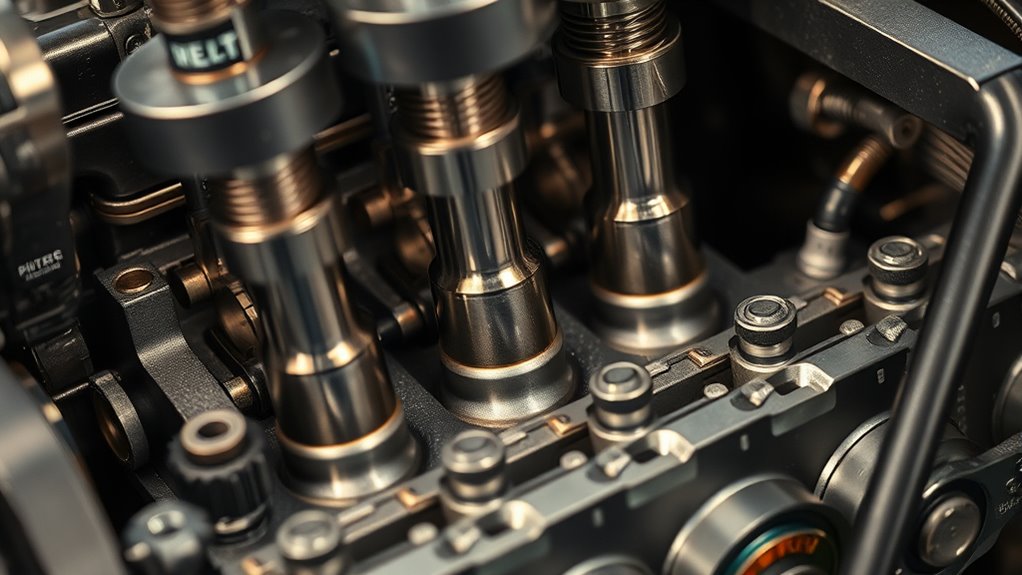
Valves and pistons are key parts that control the flow of air and fuel, helping the engine run smoothly. Valves manage the intake and exhaust gases, with different types like poppet, rotary, and sleeve valves.
Pistons are designed differently depending on the engine, which impacts compression and efficiency. They move up and down inside cylinders, turning combustion energy into useful mechanical work.
Here’s a quick overview:
| Valve Types | Piston Design | Functionality |
|---|---|---|
| Poppet valves | Flat-top, domed | Control intake and exhaust gases |
| Rotary valves | Hollow, cup-shaped | Improve airflow and durability |
| Sleeve valves | Sliding sleeves | Reduce emissions and noise |
Spark Plug Function
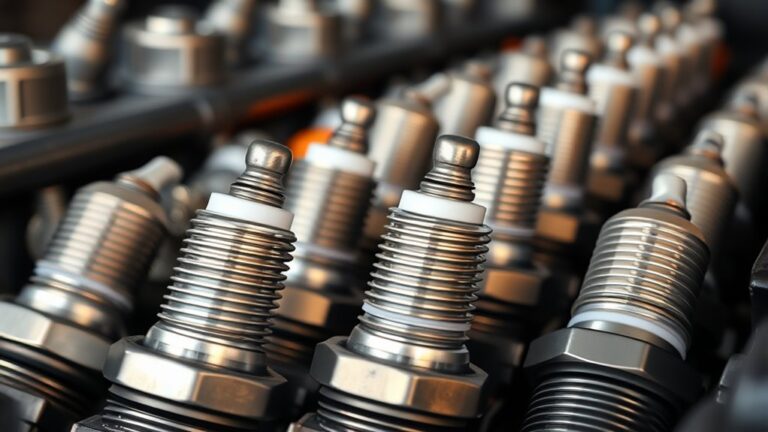
A spark plug plays an essential role in igniting the fuel-air mixture inside an engine’s cylinders, enabling combustion to occur efficiently. Its main job is to produce a spark at the right moment, based on ignition timing, to ignite the mixture precisely.
Different spark plug types, like copper, platinum, or iridium, are designed for durability and performance. Choosing the right one depends on your engine’s needs for longevity or power.
Ignition timing controls when the spark fires, which is vital for getting the best power and fuel efficiency. Proper timing ensures smooth engine operation and better performance.
The electrode design affects how consistent the spark is and how durable the spark plug will be over time. A well-designed electrode helps maintain reliable ignition.
Gap size impacts the strength of the spark and how reliably the engine ignites the fuel-air mixture. Getting the right gap is key for optimal engine performance.
Understanding these components can help you improve your engine’s performance and keep the ignition working smoothly.
How Do Internal Combustion Engines Impact the Environment?
Internal combustion engines significantly impact the environment by releasing pollutants that contribute to air quality issues and climate change. They emit greenhouse gases like carbon dioxide, which trap heat and accelerate global warming.
They also produce nitrogen oxides and particulate matter that worsen air pollution and harm respiratory health. Because of this, reducing emissions is crucial to lessen the environmental impact of transportation.
Efforts to improve emission reduction methods, such as better fuel combustion and cleaner exhaust systems, can help minimize damage. Still, internal combustion engines continue to produce substantial pollutants, making their environmental footprint hard to avoid without technological advances.
Improving emission control methods can reduce pollution, but internal combustion engines still pose significant environmental challenges.
Your role in understanding this impact highlights the importance of supporting cleaner alternatives and advocating for policies that limit emissions. While these engines have powered transportation for decades, their environmental influence urges us to find more sustainable solutions for the future.
What Technologies Are Improving Internal Combustion Engine Performance?
Advancements in technology have led to significant improvements in internal combustion engine performance, making them more efficient and environmentally friendly. You can see this in several key innovations:
- Turbocharging advancements boost power without increasing engine size, allowing more air into cylinders for better combustion.
- Fuel injection systems replace carburetors, providing precise fuel delivery that enhances efficiency and reduces emissions.
- Variable valve timing optimizes engine breathing at different speeds, improving performance and fuel economy.
- Cylinder deactivation temporarily shuts off some cylinders during light loads, saving fuel and reducing emissions.
Together, these technologies help engines generate more power while consuming less fuel and producing fewer pollutants. Turbocharging and refined fuel injection systems are especially influential, making your driving smoother, more efficient, and eco-friendly.
These innovations show how technology continues to push internal combustion engines toward better performance and sustainability.
How Have Internal Combustion Engines Evolved Over Time?
Over the years, internal combustion engines have undergone significant changes that have transformed their design, efficiency, and environmental impact. Technological advancements have driven innovations in engine design, leading to more compact, lightweight, and powerful models.
Historical milestones, such as the development of the four-stroke cycle and fuel injection systems, have improved performance metrics like power output and fuel economy. Fuel types have expanded from traditional gasoline and diesel to alternatives like ethanol and biodiesel.
Milestones like the four-stroke cycle and fuel injection have boosted engine performance and expanded fuel options.
These changes have been influenced by regulatory efforts to reduce emissions. Market trends and shifting consumer preferences have pushed manufacturers to adopt cleaner, more efficient engines while streamlining manufacturing processes.
The global impact of these evolutions is clear in the widespread adoption of internal combustion engines across various industries and transportation sectors. Today, engines are more sophisticated, environmentally conscious, and aligned with evolving standards.
This ongoing evolution reflects a continuous pursuit of better performance and sustainability in engine technology.
How Do Engines Power Different Vehicles and Machinery?
The way engines power different vehicles and machinery depends on their design and what each application needs. Different engine types are suited for various vehicles, helping to optimize performance and efficiency.
Small engines like single-cylinder or compact four-cylinder engines power lawnmowers, chainsaws, and motorcycles. They are lightweight and offer good fuel economy.
V-type engines are common in cars and trucks, providing higher power output and better torque for heavier loads.
Diesel engines excel in commercial vehicles, ships, and heavy machinery. They are known for their durability and fuel efficiency under load.
Hybrid engines combine internal combustion with electric motors, making them ideal for modern passenger cars that aim for lower emissions and better efficiency.
Each engine type is designed for specific vehicle applications, ensuring the right mix of power, efficiency, and durability.
What Are Emissions Control Systems, and Why Do They Matter?
Emissions control systems are key parts of modern vehicles that help cut down harmful pollutants released into the environment. They’re crucial for reducing emissions and making sure vehicles meet strict regulations.
By filtering and converting pollutants like nitrogen oxides, carbon monoxide, and unburned hydrocarbons, these systems improve air quality and protect community health. Thanks to technological advances, they’re now more efficient, helping you save fuel while lowering your vehicle’s environmental impact.
Without emissions control systems, internal combustion engines would release much more pollution, contributing to smog, respiratory problems, and climate change. They’re not just about legal compliance—they’re about safeguarding public health and supporting sustainable transportation.
As worldwide regulations become stricter, understanding and maintaining these systems is essential for responsible driving and protecting the environment. Their role is more important than ever as we work toward cleaner, healthier air for everyone.
Will Internal Combustion Engines Still Be Relevant in the Future?
Will internal combustion engines (ICEs) remain relevant as the world shifts toward cleaner transportation options? While electric vehicles are gaining popularity, ICEs still hold significance for several reasons. Here are four of them:
- Alternative fuels: Many manufacturers are exploring biofuels and hydrogen, which makes ICEs adaptable to new energy sources.
- Market trends: In regions with limited charging infrastructure, traditional engines are still essential.
- Hybrid systems: Combining ICEs with electric power leads to better efficiency and lower emissions.
- Regulatory impacts and consumer preferences: Stricter emissions standards and people’s desire for affordable vehicles keep ICEs relevant, even as new technologies emerge.
Although sustainability concerns are pushing for a shift to electric vehicles, ICEs will likely stay relevant in certain markets and applications, especially where infrastructure and technology adoption are slower.
Frequently Asked Questions
What Are the Common Types of Internal Combustion Engines?
You’ll find several common types of internal combustion engines. Spark ignition engines, like gasoline engines, use a spark to ignite the fuel-air mixture. Diesel engines rely on compression for ignition.
Rotary engines, or Wankel engines, feature a rotating chamber instead of pistons. Two-stroke engines complete a cycle in just two strokes, making them lightweight and powerful.
Each type serves different purposes based on their efficiency, power, and application.
How Does Fuel Quality Affect Engine Performance?
Think of fuel quality as the fuel’s soul, guiding your engine’s performance. High-octane fuel with proper additives boosts combustion efficiency, preventing engine knock and ensuring smooth operation.
Low-quality fuel, lacking in additives or with a poor octane rating, can cause knocking and reduce power. When you choose quality fuel, you’re fueling your engine’s potential, keeping it running efficiently and prolonging its life.
What Maintenance Is Necessary for Internal Combustion Engines?
You need to regularly perform oil changes to keep the engine lubricated. Check and replace spark plugs for smooth ignition, and make sure coolant levels are adequate to prevent overheating.
Change air filters to improve airflow and fuel injectors for efficient fuel delivery. Don’t forget to inspect and replace timing belts to avoid engine damage.
Regular maintenance like this keeps your internal combustion engine running efficiently and helps it last longer.
How Do Turbochargers Improve Engine Efficiency?
They say, “Good things come in small packages,” and turbochargers prove this true by boosting engine efficiency. Turbocharger benefits include increasing engine power without adding weight, which makes your vehicle more responsive.
What Are the Safety Concerns Related to Internal Combustion Engines?
You should be aware of safety concerns with internal combustion engines, including engine emissions that can harm health, and fire hazards from fuel leaks or overheating.
Noise pollution from engine operation might disturb your surroundings, and fuel spills pose environmental risks and fire dangers.
Regular maintenance, proper handling, and adherence to safety guidelines help minimize these risks and keep you and others safe while using these engines.
Conclusion
Now that you understand how internal combustion engines work and their impact, you might wonder if they’ll still have a place in our future.
With advancements in electric technology and growing environmental concerns, their relevance could diminish. But isn’t it true that understanding their purpose helps us make more informed choices?
As you consider the role of these engines, ask yourself: will innovation guide us toward cleaner, more sustainable solutions or will we cling to what’s familiar?