Exploring Automotive Steering System Components: From Rack and Pinion to Advanced Technologies
Feeling overwhelmed trying to understand how your car turns smoothly or wondering if your steering system is up to date? You’re not alone—many drivers find automotive steering systems confusing and worry about safety and reliability.
Automotive steering systems include key components like the steering wheel, column, tie rods, and linkages, which work together to control your vehicle’s direction.
A popular mechanism is rack and pinion, offering precise, reliable steering. Modern systems also feature power assist, either hydraulic or electric, to make turning easier.
Advances like drive-by-wire and advanced steering assist technologies are shaping future vehicles. Keep exploring to uncover how these innovations improve safety and driving comfort.
Key Takeaways
- The rack and pinion system turns steering wheel rotation into lateral wheel movement, giving you precise control.
- Power steering options include hydraulic and electronic systems, making driving smoother and more responsive.
- Regularly maintaining linkages and alignment is key to keeping your steering working at its best.
- Newer technologies like drive-by-wire replace mechanical linkages with electronic controls, boosting accuracy.
- The type of vehicle matters; compact cars often use rack and pinion, while luxury models may feature adaptive steering systems.
Core Components of Automotive Steering Systems
The core components of automotive steering systems work together to turn your steering input into precise wheel movement. Over time, steering systems have evolved to improve safety, responsiveness, and comfort.
Automotive steering components collaborate to convert your input into accurate wheel movement, enhancing safety and driving comfort.
Key parts include the steering wheel, which you turn, connected to the steering column that transmits your input. Attached to this is the steering gear, which changes rotary motion into lateral movement.
Modern systems also include power steering mechanisms—hydraulic or electric—that make steering easier. As automotive technology advances, future steering tech will focus on automation, sensor integration, and electronic controls.
These innovations aim for more accurate, adaptive responses that make driving safer and more comfortable. Whether traditional or high-tech, each component plays a vital role in smooth, reliable vehicle control.
Understanding these core elements helps you see how steering systems have improved and what to expect from future developments.
How Rack and Pinion Steering Works and Why It Remains Popular
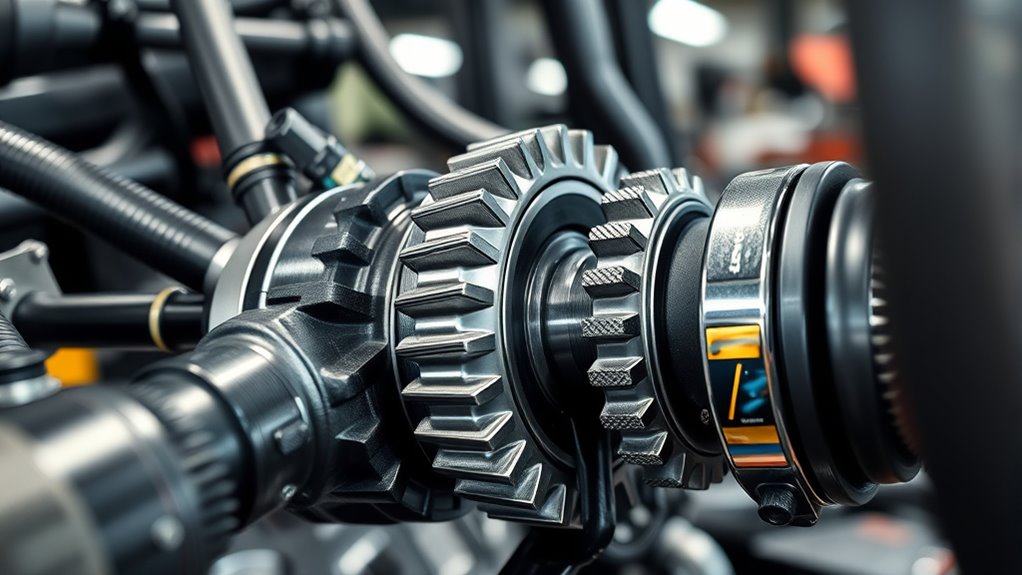
Rack and pinion steering systems turn your steering wheel directly into side-to-side movement of the wheels, giving you a simple and responsive way to control your vehicle. This setup uses a gear set— the rack and pinion— where turning the wheel spins the pinion gear, which then moves the rack left or right. The mechanics of the pinion change rotational motion into linear motion, making steering precise.
Key benefits include:
- *Simplicity and reliability*, which lowers the chance of mechanical issues
- *Better steering accuracy*, so handling feels natural
- *Lightweight design*, helping improve vehicle efficiency
Because the rack uses fewer parts, it’s easier to maintain and lighter. Its mechanical efficiency allows for quick, direct control of the wheels. That’s why it’s still popular among drivers and car makers. Even with newer tech, rack and pinion systems stay favored for their durability, cost, and great feedback.
Hydraulic Power Steering: Benefits and Drawbacks
Hydraulic power steering has been a popular way to make steering easier, especially in bigger or heavier vehicles. It uses steering fluid to give you extra help, so turning the wheel takes less effort. This system makes the steering feel more responsive, giving you a smoother and more controlled drive.
But there are some drawbacks too. Installing hydraulic power steering is more complicated and needs careful setup of the hydraulic parts. It can also be noisy; the pump often makes a whining sound while running, which might bother you.
Maintenance can be costly because fixing or replacing parts like the pump or hoses adds up over time. Plus, hydraulic systems use more energy, which can lead to lower fuel efficiency.
Despite these issues, many drivers like the strong steering feel and the reliability of hydraulic power steering. Knowing the pros and cons helps you decide if it’s the right option for your vehicle.
What Is Electronic Power Steering and Why It Matters
Electronic Power Steering (EPS) is changing how vehicles handle by replacing traditional hydraulic systems with electronic controls. This innovation makes steering more efficient and easier to integrate with other vehicle systems.
EPS adjusts assistance based on your speed and driving conditions, making your drive smoother and more responsive. You’ll notice improved steering efficiency, which helps save energy and boosts fuel economy.
It also provides better driver feedback, giving you more precise and natural responses. Plus, it seamlessly works with advanced safety features and driver aids to improve overall driving safety.
Since EPS uses sensors and electric motors, it offers quicker, more adaptable assistance than hydraulic systems. This gives you more control and confidence behind the wheel.
The system can fine-tune steering effort, helping to optimize feedback so every turn feels natural and predictable. Overall, EPS isn’t just about easier steering—it’s about smarter, more efficient vehicle handling that enhances your driving experience.
Mechanical vs. Electronic Steering: Key Differences
While both mechanical and electronic steering systems help you control your vehicle’s direction, they work very differently. Mechanical steering relies on a direct, physical connection between the steering wheel and the wheels, giving you a more tactile feel. This setup offers consistent responsiveness and predictable driving, especially at higher speeds.
Electronic steering uses sensors and motors to assist your input. It adapts quickly to road conditions and driving modes, making your ride more responsive and comfortable. These systems can adjust steering effort based on speed, improving maneuverability and stability.
Mechanical steering provides a traditional, straightforward feel, while electronic steering offers more customization and integrates better with advanced driver-assistance features. The main difference is how each system communicates your input to the wheels, which impacts your overall driving experience.
Your choice depends on whether you prefer direct feedback or a more adaptable, high-tech driving experience.
How Steering Columns and Shafts Connect and Function
The steering column and shaft work together to transmit your turning input from the steering wheel to the steering mechanism, helping you control the vehicle’s direction effectively. The design of the steering column varies, but it usually includes a collapsible structure for safety and features like tilt or telescoping adjustments for comfort.
Proper shaft alignment is key to ensuring smooth, responsive steering and preventing vibrations. Precise alignment reduces wear and makes steering feel better. Flexible joints or universal joints in the shaft allow for changes in steering angles.
The connection between the steering column and shaft often uses a spline or coupling, which lets it rotate smoothly and makes assembly easier. Together, these parts work seamlessly to translate your input into accurate movements, keeping driving safe and comfortable.
Tie Rods and Linkages: Ensuring Precise Steering Control
Tie rods and linkages are really important when it comes to keeping your steering precise. They connect the steering gear to your wheels, making sure everything turns smoothly. There are different types out there, like adjustable and non-adjustable rods, each designed for specific purposes.
It’s a good idea to check them regularly and keep up with maintenance. That way, you can catch any wear or damage early on, which helps prevent steering issues and keeps your driving experience safe and smooth.
Role in Steering Accuracy
Among the critical components ensuring steering accuracy, tie rods and linkages connect the steering gear directly to the wheels. They transmit your steering inputs, influencing feedback and overall control.
When these parts work properly, your steering feels smooth and responsive with minimal play. But worn or damaged tie rods can lead to vague steering, uneven tire wear, or misalignment issues.
To keep your steering precise, regularly check for tight, secure connections, proper alignment angles, and any excessive play or looseness.
Keeping these elements in good shape helps you enjoy confident handling and better control on the road.
Types of Tie Rods
Different types of tie rods are designed to meet various vehicle specifications and driving conditions, making sure you get the right fit for excellent steering performance. Common types include adjustable and non-adjustable tie rods, each serving specific functions.
Adjustable tie rods allow for precise adjustments and better alignment, which can improve overall tie rod performance. Non-adjustable ones are usually simpler and often come in steel or composite materials.
The material of the tie rod, like steel or aluminum, affects how long it lasts and how durable it is. This impacts the ease of installation and upgrades. Proper alignment is key for smooth steering, so choosing the right tie rod supports optimal function.
When you’re thinking about upgrading your tie rod, pick one based on the performance and durability you need. Here’s a quick comparison:
| Feature | Type A (Adjustable) | Type B (Non-Adjustable) |
|---|---|---|
| Ease of adjustments | Yes | No |
| Material options | Steel, Aluminum | Steel or composite |
Wear and Maintenance
Regularly inspecting and maintaining your steering linkages is key to keeping your vehicle steering precise and responsive. Worn or damaged tie rods and linkages can cause loose steering, uneven tire wear, and poor alignment.
Look for signs of wear like excessive play, cracked rubber boots, or leaking steering fluid. Check for torn boots or leaks that indicate damage.
Perform alignment checks periodically to ensure your tires wear evenly and your steering stays accurate. Lubricate moving parts as needed and replace worn components promptly.
Keep an eye on steering fluid levels because low fluid can impair steering performance and hide underlying issues. Maintain proper steering fluid levels for smooth operation and a safer drive.
Latest Innovations in Steering Assist Technologies
Recent advancements in steering assist technologies have significantly enhanced vehicle safety and driver convenience. Modern systems use adaptive technology to respond dynamically to driving conditions, improving safety and making driving smoother.
These systems analyze driver feedback in real-time and adjust steering input for better handling and stability. As a result, you experience less fatigue and more control, especially on challenging roads.
Integration challenges still exist, particularly in balancing responsiveness with performance. However, manufacturers are making great progress in overcoming these hurdles.
Innovations like electric power steering with advanced sensors and algorithms are paving the way for smarter, more intuitive systems. These advances also lay the groundwork for future developments, including more autonomous features.
Staying on top of these trends helps ensure your vehicle remains safe, efficient, and aligned with what drivers expect. Expect ongoing improvements that turn steering assist from a convenience into a vital safety feature on the road.
How Drive-by-Wire and Advanced Tech Are Changing Steering
Drive-by-wire systems are changing how steering works by replacing traditional mechanical linkages with electronic controls. This gives you more precise and adaptable handling, making your driving experience smoother and more intuitive.
This technology improves steering responsiveness, leading to quicker reactions and easier integration with advanced driver-assist systems. As a result, safety gets a boost because sensors can detect and respond to road conditions faster.
Consider these key points:
- Seamless technology integration for smarter vehicle control
- Upgraded user experience with customizable steering feel
- Future trends pointing toward fully autonomous, driverless vehicles
Choosing the Right Steering System for Your Vehicle
When you’re picking out a steering system, it’s important to consider what kind of vehicle you have and how you usually drive. Think about your daily driving habits, your budget, and how much maintenance you’re comfortable handling.
Choosing the right steering system can really make a difference in how your vehicle performs, how safe you feel on the road, and how much you’ll spend in the long run. So, take your time and pick the one that best fits your needs!
Vehicle Type Compatibility
Choosing the right steering system really depends on your vehicle’s type and what you plan to do with it. For compact cars, a rack and pinion setup gives you quick, precise handling. Off-road vehicles need tough systems like heavy-duty steering for durability.
Luxury models often come with adaptive steering that adjusts responsiveness for comfort or sportiness. Sports cars benefit from high-performance steering for sharp, responsive control. Electric and hybrid vehicles might use advanced, energy-efficient steering mechanisms.
Heavy-duty trucks require steering systems built to handle heavy loads and provide stability. Think about these options based on your vehicle type: compact, off-road, luxury, sports, or heavy-duty.
Driving Preferences Consideration
Your driving preferences are key when choosing the right steering system for your vehicle. If you like more precise driver feedback, you might want a system that provides a more connected steering feel, which can improve your vehicle handling.
Personal comfort levels also matter. Some drivers prefer lighter steering for city driving, while others go for heavier feedback for a sporty feel. Think about your driving style and what you expect from your vehicle—whether you want smoothness or responsiveness.
An ergonomic design can boost comfort and help reduce fatigue during long drives. Ultimately, selecting a steering system that matches your feedback preferences and steering feel will make your driving experience more enjoyable and confident, tailored just for you.
Maintenance and Cost Factors
Understanding the maintenance needs and costs associated with different steering systems is key to making a good choice. Doing a thorough cost analysis helps you compare long-term expenses and see what fits your budget. Maintenance schedules can vary; some systems need regular fluid checks, while others require less attention.
Think about these factors:
- Rack and pinion systems usually cost less to maintain but might need parts replaced sooner.
- More advanced electronic or hydraulic systems could have higher initial costs and be trickier to repair.
- Regular inspections can help prevent expensive repairs and make the system last longer.
Frequently Asked Questions
How Do Steering Systems Impact Vehicle Safety and Handling?
Your steering system plays a big role in vehicle safety and handling by giving you good responsiveness and feedback. A well-designed system makes it easier to make precise turns and react quickly to road conditions, helping prevent accidents.
It also boosts control and stability, especially during sharp turns or sudden stops. When your steering responds accurately and provides clear feedback, you’ll feel more confident and in control.
That makes every drive safer and more predictable. A good steering system is key to ensuring you can handle your vehicle comfortably in all situations.
What Maintenance Is Required for Different Steering Components?
In a bygone era, regular maintenance keeps your steering system in top shape. You should check and replace steering fluid regularly, inspect bushings for wear, and examine the tie rod for damage.
Alignment checks are essential to guarantee proper handling. If your vehicle has power assist, verify the system’s functioning correctly.
Don’t forget to inspect the steering rack for leaks or wear, as these can affect safety and performance. Regular maintenance is key to keeping your steering responsive and safe.
How Do Steering Systems Differ Across Vehicle Types?
You’ll find that steering systems differ based on vehicle type. Passenger cars often have power steering, making turns easier with hydraulic or electric help.
Sports cars may have manual steering for better driver feedback and control. Larger vehicles, like trucks, usually rely on power steering to handle heavier loads.
Your choice depends on the vehicle’s size and purpose, which affects how much effort and precision you experience while steering.
What Are Common Signs of Steering System Failure?
When your steering starts making loud noises, feels loose, or pulls unexpectedly, it’s a sign of trouble. You might notice strange steering noises, alignment issues, fluid leaks, worn components, or loose connections that can affect steering performance.
These signs mean your system is struggling. Ignoring them can lead to dangerous failures. Pay attention to any odd sensations or sounds, and get your vehicle checked before it turns into a steering catastrophe.
How Do Future Technologies Influence Steering System Development?
Future technologies, like steering automation and electric steering, greatly influence steering system development. You’ll notice more advanced systems offering greater precision, responsiveness, and safety.
Electric steering reduces energy consumption and allows for seamless integration with driver-assist features. Steering automation enables semi- or fully autonomous driving, making your driving experience safer and more efficient.
These innovations push the industry toward smarter, more adaptable steering solutions, transforming how you control your vehicle.
Conclusion
Understanding your vehicle’s steering system helps you appreciate the blend of tradition and innovation behind smooth, responsive control. Did you know that electric power steering now accounts for over 70% of new cars worldwide?
This shift highlights the industry’s move toward smarter, more efficient driving experiences. As technology advances, staying informed ensures you choose the right setup for safety and comfort.
Ultimately, understanding automotive steering systems keeps you confidently in control, mile after mile.