Can Spark Plugs Break Windows? Debunking the Myth Explained
Many people have heard the rumor that spark plugs can break windows, and it’s easy to wonder if there’s any truth to it. If you’ve ever been curious or maybe even a little worried, you’re not alone.
It’s a common myth that sparks from a spark plug can shatter glass, but let’s clear that up. Spark plugs cannot break windows because they produce only small electrical sparks, not the focused force needed to shatter glass.
Despite myths, there’s no scientific evidence showing spark plugs can cause glass to break. They generate minimal impact, and glass, especially tempered or laminated types, resists such force easily.
If you want to understand why this myth persists and the true science behind glass strength, keep exploring how impact, material, and impact resistance play a role.
Key Takeaways
- Spark plugs create a low-energy electrical arc that’s not strong enough to break glass.
- To break glass, you need focused force or a high-energy impact, which spark plugs don’t produce.
- Cases of spark plugs breaking glass are pretty rare and usually involve pre-existing cracks or a direct hit.
- This myth probably started from stories and media exaggerations, not scientific facts.
- Keep in mind, different types of glass resist breaking differently, and most sturdy windows can handle spark plug impacts.
Do Spark Plugs Really Break Glass? The Truth Explained
Ever wondered if spark plugs can actually break glass? Many myths suggest they’re powerful enough to cause glass fractures, but that’s not true. Spark plugs are designed to ignite fuel in engines, not to shatter windows.
The idea that they emit enough energy to break glass is a common misconception. In reality, a spark plug produces a tiny electrical arc, which isn’t enough to cause glass to fracture.
This myth probably comes from the visible spark and the idea of electrical power. But the truth is, glass needs a specific amount of force or a high-energy impact to break, which a spark plug doesn’t provide.
What Are Spark Plugs and How Do They Work?
Spark plugs are key parts of your vehicle’s ignition system, responsible for creating the spark that ignites the air-fuel mixture in your engine. They’re essential for starting your engine and keeping it running smoothly.
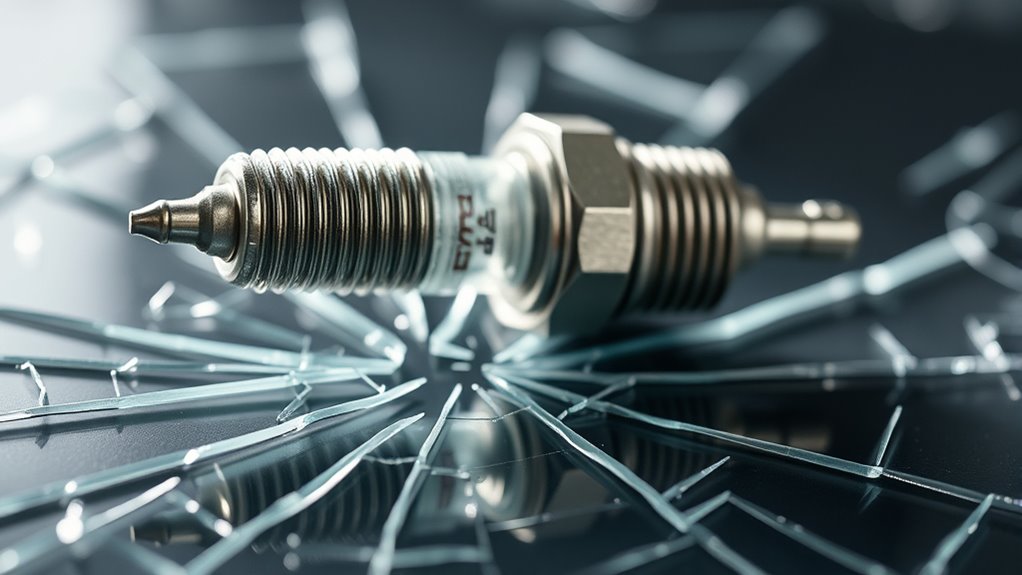
Knowing how a spark plug is built helps you understand how it does its job. The main parts include the center electrode, ground electrode, ceramic insulator, shell, and terminal. When you turn on the ignition, a high-voltage current runs through the spark plug, creating a spark across the gap between the electrodes.
Understanding spark plug construction reveals how it generates sparks to ignite your engine.
That tiny but powerful spark ignites the fuel and air mixture, leading to combustion that powers your engine. Well-functioning spark plugs help improve engine efficiency, save fuel, and cut down emissions.
Regularly inspecting and replacing spark plugs keeps your ignition system in good shape and prevents misfires. Understanding how these small parts work is key to keeping your engine running smoothly.
Can a Spark Plug Physically Break Glass? Here’s the Science
Can a spark plug actually break glass? It’s unlikely that spark plug physics alone can shatter glass in a typical scenario. Spark plugs generate a powerful electrical spark to ignite fuel, but this energy disperses quickly and isn’t focused enough to cause physical damage to glass.
Glass durability varies depending on thickness, composition, and how it’s mounted. Thinner or weaker glass may crack under stress, but a spark plug’s electrical arc doesn’t produce enough force to break it outright.
Instead, the energy causes rapid heating or localized stress. This can lead to cracking if the glass is already fragile, but the physics of a spark plug simply aren’t capable of delivering the concentrated force needed to physically break glass.
Where Did the Myth of Spark Plug Window-Shattering Come From?
The idea that spark plugs can shatter windows probably came from old automotive stories and some pretty exaggerated claims. You know how stories like that tend to get passed around, right? Media coverage and urban legends really helped spread this myth, making it seem like it was more common or believable than it actually is.
Once a story like that takes hold, it’s hard to shake, even if it’s not true. Understanding where this myth started can actually help you see how misconceptions can stick around for a long time.
Origin of the Myth
Many believe that the myth of spark plugs shattering windows came from early automotive accidents or stories mechanic garages shared. These stories turned into urban legends, fueling misconceptions about ignition system power.
Often, loud engine noises or sudden backfires seemed to produce a big bang, which people mistook for a window shattering. Over time, these stories got bigger and more exaggerated.
Media and word-of-mouth played big roles in making this false idea popular. People’s curiosity and fear of powerful engine parts helped keep the myth alive.
Understanding where this myth started shows it’s more about misunderstanding than scientific fact. It’s a story that grew from misinterpretation and community legends.
Early Automotive Myths
Early stories about automotive accidents helped shape the myth that spark plugs could shatter windows. These early misconceptions spread through automotive folklore, often based on isolated incidents or misinterpreted events.
As cars became more common, people started linking loud noises or sudden engine sounds to spark plug failures. This fueled the misconception that a misfiring spark plug could cause a window to break.
Media reports, exaggerated stories, and word of mouth reinforced this idea. Over time, it took hold in popular culture, even though there’s no scientific basis for it.
It’s important to recognize how early automotive misconceptions can stick around, often rooted in misunderstandings or misinterpretations. This folklore became part of automotive legend, shaping beliefs that still linger today.
Media Influence on Beliefs
Media outlets and sensational stories have played a big role in spreading the myth that spark plugs can shatter windows. Through media portrayal, this myth gained traction, shaping public perception and fueling further misconceptions. Cultural beliefs about automotive power and explosive sounds helped reinforce the idea that spark plugs could cause such damage.
Stories of dramatic accidents often exaggerated the effects of spark plugs. Films and TV shows dramatized engine noises, making it seem like they could shatter glass. This myth fits with popular ideas of automotive strength and power.
There’s no scientific evidence to support these claims, but the myth stayed alive. The media’s tendency to sensationalize only fueled these ongoing misconceptions. All these factors helped the myth persist, making it seem like a common truth.
Even though it’s far from reality, the media’s influence cemented this belief in many people’s minds. Despite scientific facts to the contrary, the myth continues to be believed by many.
Why Spark Plugs Can’t Generate Enough Force to Break Windows
Although spark plugs generate a small amount of force, it’s nowhere near enough to break a window. The force from a spark plug’s ignition process is tiny, designed to ignite fuel, not shatter glass.
Spark plug durability guarantees they withstand extreme heat and voltage, but this doesn’t mean they have high-impact power. When you think about breaking glass, it takes a lot of force focused on a small area, something spark plugs just can’t produce.
The tiny explosion inside an engine isn’t comparable to the force needed to crack a window. Instead, the energy disperses as heat and pressure within the engine, not as a focused strike that can damage glass.
What Would Need to Happen for a Spark Plug to Damage Glass?
For a spark plug to actually damage glass, it would need to produce a highly focused and intense energy burst—something far beyond its normal operation. Spark plug properties like heat, voltage, and spark intensity are designed for combustion, not breaking glass.
To harm glass, you’d need an extremely concentrated energy source, like a laser or high-impact force. Different glass types respond differently—some are more resistant, while others are more fragile and easier to crack.
Consider these factors:
- The energy must be precisely focused on a tiny spot.
- The spark’s voltage and current need to be extraordinarily high.
- The spark must be sustained long enough to transfer significant heat.
- The glass type’s strength and durability play a vital role.
- External conditions, like temperature and existing flaws, influence breakage potential.
In essence, typical spark plug properties just aren’t suited for glass damage, especially given the resilience of most glass types.
How Do Impact and Material Properties Affect Glass Breakage?
Have you ever wondered why some glasses shatter easily while others resist cracking under impact? It all comes down to impact dynamics and material properties. Different glass types, like tempered or laminated glass, respond differently when force is applied.
Tempered glass disperses impact energy, making it more resistant to breaking. Laminated glass, on the other hand, absorbs shocks through its layered structure. Material properties such as strength, elasticity, and fracture toughness play a big role in how a glass reacts.
| Glass Type | Impact Response | Typical Use |
|---|---|---|
| Tempered Glass | Breaks into small, less dangerous pieces | Car windows, shower doors |
| Laminated Glass | Holds together longer, resists shattering | Windshields, security glass |
| Standard Glass | Cracks easily under impact | Picture frames, windows |
Understanding impact dynamics and material properties helps explain why some glasses break with ease while others withstand force.
How Does Glass Resistance Affect Its Likelihood to Break?
So, how resistant your glass is really depends on what it’s made of and how strong it is overall. Basically, these factors decide how much force it can take before it ends up breaking.
Now, if the impact force is spread out over a bigger area, then your chances of cracking the glass drop quite a bit. But if a lot of pressure is concentrated in a tiny spot, then the glass is much more likely to shatter quickly.
Glass Composition and Strength
Glass composition plays an essential role in determining its strength and resistance to breaking. Different glass types, like tempered or laminated glass, are designed to improve impact resistance and durability.
The materials used and how the glass is made influence how well it can handle force without shattering. Thicker glass generally resists impact better, reducing the likelihood of breakage.
Additives such as metal oxides or boron can also boost strength and resilience. Understanding the composition helps you judge how likely a glass is to crack or shatter under stress.
Variations in glass types affect impact resistance. Thicker glass tends to resist breaking better. Tempered glass shatters into small, less dangerous pieces, while laminated glass provides extra protection. Material additives can also enhance overall strength.
Impact Force and Distribution
When impact force hits glass, its resistance determines how well it absorbs and spreads out that force. Impact dynamics are crucial in deciding whether the glass breaks or holds up.
A sudden, concentrated force is more likely to cause failure, especially if the glass’s internal structure isn’t designed to disperse energy well. Thinner or weaker spots focus the force, raising the chances of breakage.
On the other hand, thicker or reinforced areas spread the impact over a larger region, which helps reduce stress. Understanding how force distributes across the glass can help predict how it will respond to hits.
This shows that breaking a window isn’t just about applying enough force; it’s also about how that force is spread out. A small, localized hit like a spark plug strike often isn’t enough because the force isn’t properly distributed.
Surface Area and Stress
The likelihood of glass breaking depends a lot on how much surface area is exposed to the impact. When impact happens, the way stress is spread across the glass determines if it will crack or not.
Larger surface areas spread out the impact force over a wider zone, which reduces stress concentration. On the other hand, a smaller impact point causes higher stress in a localized area, making breakage more likely.
Surface tension also helps keep the glass intact by resisting crack growth. If stress isn’t evenly spread out, cracks can quickly form and spread.
Understanding how surface area affects stress helps explain why some impacts shatter glass while others don’t. Larger impact areas lessen stress concentration, while focal impacts create high local stress that can cause breaking.
Have Anyone Actually Broken Windows With a Spark Plug? Real-World Evidence
Has anyone actually managed to break a window with a spark plug? While it’s rare, there are some real incidents and eyewitness accounts that suggest it’s possible under certain conditions.
Some reports mention people throwing or striking windows with a spark plug, claiming it caused cracks or shattering. But these cases are usually isolated and involve specific situations, like a direct, forceful hit or pre-existing weaknesses in the glass.
Most eyewitnesses agree that a spark plug alone doesn’t have enough force to break a sturdy window, especially one built to withstand impacts. The few documented incidents tend to involve extra factors, like hitting the glass with a lot of force or focusing the impact.
What Happens When a Spark Plug Hits Glass Instead of Spark Ignition?
When a spark plug hits glass instead of creating that usual spark, the impact can actually cause the glass to break. It all depends on how strong the glass is and how much force is involved. Sometimes, you might hear a cracking sound or see tiny shards flying, but other times, it might just leave a mark.
The way the glass reacts really changes based on what kind it is and how hard the spark plug hits. So, understanding these factors can help you get a clearer picture of what’s actually happening when such an unlikely collision occurs.
Impact Force and Glass Breakage
If a spark plug accidentally hits glass instead of igniting the fuel mixture, what happens really depends on the impact force. How the impact occurs determines if the glass holds or breaks.
Glass durability varies with thickness, composition, and stress points. These factors influence how resistant the glass is to sudden hits. A gentle tap might leave just surface marks or small cracks.
Moderate impacts can cause surface cracks, while more force might create spiderweb fractures. If the force is high enough, the glass can shatter completely. The impact angle and the glass’s structure also matter.
Different types and thicknesses of glass can change the outcome significantly. Understanding these impact dynamics helps explain why some hits break glass and others don’t.
Material Strength and Resistance
The outcome of a spark plug hitting glass depends on the material’s strength and its ability to resist impact. Glass usually has high tensile strength, but how durable it is can vary depending on its type and thickness.
Tempered or laminated glass is designed to resist shattering during sudden impacts, making it more resistant to breaking. Regular window glass has lower durability, so it’s more likely to crack or break if hit forcefully.
The spark plug itself is made from materials like ceramic and metal, chosen for their strength and heat resistance. But these materials aren’t built to handle impacts.
The glass’s tensile strength is key. If it’s high enough, it can absorb some of the impact without breaking.
In the end, the glass’s resistance determines whether it will hold up or break when struck.
Sound and Visual Effects
Hitting glass with a spark plug creates a dramatic burst of sound and a striking visual display. As the spark touches the glass, sound waves ripple outward, making a sharp, cracking noise that echoes loudly.
Visually, tiny shards scatter quickly, accompanied by flashes of light from the electrical discharge. The impact produces vivid cues like the sudden burst of glass fragments and a brief spark of electricity.
This spectacle is driven by rapid energy transfer, not just the glass’s breaking strength. You might notice sudden, loud cracking sounds and quick scattering of debris.
Bright sparks or flashes of light are common, along with an audible pop or bang. These effects highlight the power of sound waves and visual cues during such impacts.
Frequently Asked Questions
Can a Spark Plug Cause Damage to Vehicle Windshields?
A spark plug can’t cause damage to your vehicle windshield because of how it works. Spark plugs generate sparks inside the engine, and they aren’t designed to impact or break glass.
Windshield vulnerability is mainly caused by impact from debris or stress cracks, not electrical parts like spark plugs.
Are There Specific Types of Glass More Susceptible to Breaking?
Certain glass types are more susceptible to breaking because of their impact resistance. For example, standard window glass isn’t as resistant as tempered or laminated glass, which are designed to handle impacts better.
If you’re worried about damage, opt for glass with higher impact resistance, like laminated glass, which can absorb shocks more effectively. Knowing the different types of glass helps you better protect your property and understand how durable they are against accidental or intentional impacts.
How Does the Size of a Spark Plug Influence Its Impact?
The size of a spark plug really affects how much impact it can have, mainly because of its design and weight. Larger spark plugs tend to be heavier, which means they can deliver a stronger impact if swung or thrown.
The design details, like length and weight, play a big role in how much force is transferred when it hits something. So, a bigger spark plug can hit harder, but it still needs the right conditions to break a window.
What Safety Precautions Should Be Taken Around Spark Plugs?
You should always follow spark plug safety and handling precautions to prevent accidents. Wear gloves and eye protection when installing or removing spark plugs, and disconnect the vehicle’s battery to avoid sparks.
Work in a well-ventilated area and keep flammable materials away. Handle spark plugs carefully to prevent damage, and make sure your tools are insulated.
These safety measures protect you from injury and ensure proper spark plug installation or replacement.
Are There Any Documented Incidents of Spark Plugs Breaking Windows?
You might imagine a spark plug as a tiny lightning bolt, yet no documented spark plug incidents have caused window breakage.
While it’s a vivid myth, no evidence shows sparks flying to shatter glass. In reality, spark plugs are designed to ignite fuel, not to deliver forceful impacts.
Conclusion
You now see that spark plugs aren’t knights wielding glass-breaking swords. They symbolize myths we cling to, fueled by curiosity and exaggeration.
Just like a spark ignites a fire, myths ignite our imagination. But understanding the truth puts out those false flames.
Remember, real power lies in knowledge, not in misconceptions.
When it comes to spark plugs breaking windows, the myth is just that—a myth.
Stay informed and let the truth be the light guiding you through the shadows of myth and mystery.