How to Clean a Car Seat: Easy Steps for Every Material
Everyone wants their car seats to look fresh and clean, but figuring out how to do it without causing damage can feel overwhelming. If you’re like many people, you’ve probably struggled to find the right cleaning methods for different materials. Don’t worry—you’re not alone in this!
To clean your car seats effectively, first identify their material—leather, cloth, or vinyl—by checking texture and tags. Gather supplies like vacuums, microfiber cloths, and appropriate cleaners.
Use gentle methods: vacuum and spot-treat fabric seats, clean and condition leather, and wipe vinyl surfaces carefully.
Regular maintenance helps keep seats fresh, but avoid harsh chemicals or abrasive tools.
Want to learn more tips for each material? Keep going for detailed steps and expert advice.
Key Takeaways
- First, figure out what your car seat is made of—leather, cloth, or vinyl—so you can pick the right cleaning method.
- Vacuum the seats thoroughly to get rid of loose dirt and debris before you start cleaning.
- Use the right cleaners: leather cleaner and conditioner for leather, fabric cleaner for cloth, and mild soap for vinyl.
- Always test your cleaning products on hidden areas first to avoid any damage or discoloration.
- Keep your seats fresh and protected by regularly vacuuming, spot cleaning, and using seat covers.
How Do You Identify Your Car Seat Material?
How do you determine what material your car seat is made of? The key is understanding different material types and how to identify them.
First, examine the seat’s surface closely. Leather seats usually feel soft, smooth, and cool, with visible grain patterns. Cloth seats tend to have a textured, fabric-like feel that’s softer and more flexible.
Leather feels soft, smooth, and cool with visible grain, while cloth has a textured, flexible, fabric-like feel.
Vinyl seats look similar to leather but are thinner, slightly plasticky, and may have a shiny finish. To confirm, check for tags or labels—many vehicles include seat info that details the material used.
You can also perform a simple test: gently scratch the surface with your fingernail. Leather and vinyl resist scratches better than cloth.
Knowing your seat’s material helps you choose the right cleaning techniques and products. This ensures proper care and maintenance for your vehicle’s interior.
What Supplies Do You Need to Clean Your Car Seats?
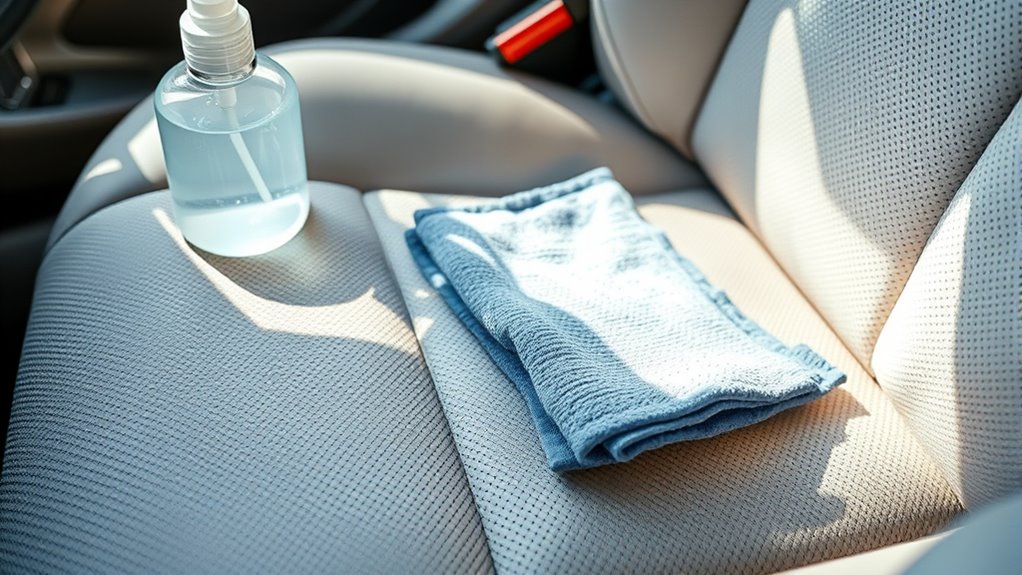
To effectively clean your car seats, gather a few essential supplies that match your seat material. Start with basic cleaning tools like microfiber cloths, soft brushes, and a vacuum cleaner with attachments to remove loose dirt and debris.
For fabric seats, you’ll need a gentle upholstery cleaner or a mixture of mild soap and water. Leather seats require a leather cleaner and a conditioner to keep the material supple.
If you’re cleaning for spills or stains, have a stain remover suitable for your seat type. To protect your car’s interior during cleaning, use seat protectors or covers to prevent accidental damage or messes.
These protectors also make future cleaning easier. Depending on your seat material, you might need specific cleaning tools like soft-bristled brushes or foam cleaners.
Having these supplies ready guarantees a thorough, safe, and efficient cleaning process for your car seats.
How Can You Clean Fabric Car Seats Effectively?
Want to get your fabric car seats looking fresh and clean? First things first, give them a good vacuuming. Make sure to get into all the nooks and crannies to lift out any loose dirt and debris. It’s a simple step, but it makes a big difference!
Once that’s done, it’s time to tackle any stains or spots. Use a suitable fabric cleaner and gently scrub the seats. Be careful not to use too much pressure—you don’t want to damage the fabric. After that, grab a clean cloth and wipe down the seats to remove any leftover dirt and cleaner residue.
Finally, make sure to dry the seats completely. You can leave the windows open or use a fan to help speed up the drying process. This step is super important because it helps prevent mold and keeps your car smelling fresh. And there you go—clean, comfy fabric seats in no time!
Vacuum Before Deep Cleaning
Start by thoroughly vacuuming your fabric car seats to remove loose dirt, crumbs, and debris. Proper vacuum techniques ensure you reach all the nooks and crannies, preventing dirt from settling deeper into the fabric.
Pay special attention to seams, crevices, and under the seats, where debris tends to gather. Regular vacuuming helps keep dirt from embedding into the fibers and makes deep cleaning easier.
Use a brush attachment to loosen stubborn dirt and lift hair or fibers. Take your time and avoid rushing to make sure you cover every surface.
Vacuuming before applying any cleaning solutions is key to a thorough clean and helps extend the life of your fabric seats.
Use Appropriate Cleaning Solutions
Using the right cleaning solutions is key to effectively removing stains and dirt from fabric car seats. Choosing cleaners that match your seat material helps prevent damage and makes cleaning easier. Always check the label to ensure the product is safe for your fabric before using it.
For most cloth seats, a gentle fabric cleaner or soap solution works well. If you have delicate fabrics like suede, a specialized upholstery cleaner is the way to go. For stubborn stains, an enzyme-based stain remover can be very effective.
Using the correct solutions guarantees a thorough clean without harming your seats. This makes your cleaning safer and more efficient. Keep this quick reference handy to help you choose the right cleaner every time.
Dry Thoroughly After Cleaning
After applying the right cleaning solutions, make sure to dry your fabric car seats thoroughly. This helps prevent mold, mildew, and lingering odors.
Use air circulation methods like opening windows, turning on a fan, or using a portable fan to speed things up. The drying time is crucial; rushing can leave moisture behind, which might cause stains or damage later.
If you can, park your car in a sunny, well-ventilated spot to improve airflow. For quicker drying, blot excess moisture with a clean towel before turning on fans or opening windows.
Before sitting again, ensure the seats are completely dry. This prevents new dirt from settling in and keeps your seats fresh, clean, and odor-free.
How Do You Clean Leather Car Seats Without Damaging Them?
Cleaning leather car seats without causing damage requires a gentle approach and the right products. Start by vacuuming the seats to remove loose dirt and debris. Then, use a soft microfiber cloth dampened with a leather-specific cleaner—avoid harsh chemicals that can dry out or crack the leather. Regular cleaning helps keep the leather looking good and lasting longer.
Here are three key tips. First, use a leather conditioner to keep the material supple and protected. It helps prevent cracking and keeps moisture in. Second, follow recommended cleaning frequency—every 3 to 6 months depending on use and sunlight exposure. Lastly, always test cleaning products on a small, hidden spot to check for compatibility before full cleaning.
How Can You Safely Remove Dirt and Stains From Vinyl Seats?
Want to get your vinyl seats looking fresh and clean without causing any damage? The key is to start with gentle cleaning solutions that won’t harm the material. Think mild soap mixed with water or a specially formulated vinyl cleaner—they’re usually safe and effective.
When it comes to stubborn stains, use stain removers sparingly. Just dab a little on the spot and gently work it in—no need to go overboard. Patience is your friend here. With the right approach, you’ll keep your seats looking great and avoid any accidental damage.
Gentle Cleaning Solutions
In removing dirt and stains from vinyl car seats, using gentle cleaning solutions is key to avoid damage. Choose gentle cleaners or natural options that are safe for vinyl. These methods clean well without causing cracking or fading.
Here are three safe options to consider:
- A mix of warm water and mild dish soap.
- White vinegar diluted with water for a natural clean.
- A gentle commercial vinyl cleaner labeled as eco-friendly or non-abrasive.
Always test your chosen solution on a small, hidden area first. Use a soft cloth or sponge to prevent scratching the surface. This way, your vinyl seats stay clean and undamaged.
Effective Stain Removal
Removing dirt and stains from vinyl seats requires targeted techniques to prevent damage while restoring their appearance. Start by blotting excess stains with a clean cloth, avoiding scrubbing that can damage the vinyl surface.
Use a mixture of mild soap and water or a vinyl-safe cleaner to treat stains gently. For stubborn spots, apply a small amount of white vinegar or a specialized upholstery protection product to lift the stain without harming the material.
Always test cleaning solutions in an inconspicuous area first. Practicing stain prevention like regular cleaning and avoiding harsh chemicals helps maintain your seats’ condition.
Properly protecting vinyl upholstery reduces the likelihood of deep stains and keeps your car’s interior looking fresh longer.
What Are the Best Tips for Removing Stubborn Spots and Odors?
Stubborn stains and lingering odors can be frustrating to eliminate, but tackling them effectively requires the right approach. For tough spots, start with a targeted spot treatment. Use a fabric-safe cleaner or a mixture of mild detergent and water, applying it directly to the stain. Let it sit for a few minutes before gently scrubbing with a soft brush or cloth.
For odors, odor elimination is key. Consider using baking soda—sprinkle it over the seat and let it sit overnight to absorb smells. Then, vacuum it up to remove the residue.
Here are some top tips:
- Apply a specialized stain remover for stubborn spots, and always test in an inconspicuous area first.
- Use a steam cleaner for deep odor elimination, especially in fabric seats.
- Follow up with a fabric deodorizer to leave your car smelling fresh.
These steps will help you conquer tough stains and odors efficiently.
How Often Should You Clean Your Car Seats for Maintenance?
How often you should clean your car seats depends on your driving habits and lifestyle, but a good rule of thumb is to do a light cleaning every one to three months. Regular cleaning helps keep your seats looking good and prevents dirt from building up.
If you often transport pets, kids, or have a busy commute, you might want to clean more frequently. For lighter use, every three months could be enough. Simple maintenance like vacuuming regularly and wiping down surfaces can help keep your car clean between deep cleans.
Spots and spills should be cleaned immediately. This reduces the need for intensive cleaning later. Staying on top of these small tasks keeps your car fresh and prevents stains from setting.
Consistent maintenance also helps preserve the fabric or material over time. Adjust your cleaning schedule based on how quickly your seats get dirty or stained.
Keeping up with cleaning ensures your vehicle stays comfortable, hygienic, and visually appealing.
What Common Mistakes Should You Avoid When Cleaning Your Car Seats?
Cleaning your car seats improperly can do more harm than good, so it’s important to avoid common mistakes that might damage the fabric or upholstery.
One big mistake is falling for cleaning myths that suggest using harsh chemicals or over-bleaching. These can weaken fibers or cause discoloration, so it’s best to steer clear of them.
Another error is using improper tools, like a stiff brush or abrasive scrubber, which can tear or scratch delicate surfaces.
Finally, neglecting to test cleaning products on a small, hidden area first can lead to unexpected damage or color bleeding.
To avoid these issues, stick to gentle cleaning methods and use tools designed for your seat material. Always read labels carefully and skip shortcuts that promise quick fixes—they often cause more harm than good.
Being mindful of these common mistakes will help keep your car seats clean and in great shape without risking damage.
How Can You Keep Your Car Seats Fresh Between Deep Cleans?
Want to keep your car seats smelling fresh and feeling clean between deep cleans? Start by using seat covers, which protect your seats from daily wear, food spills, and pet hair.
Regular maintenance is key, so vacuum your seats often to remove loose debris and pet hair. Use upholstery sprays or odor eliminators to tackle any lingering smells and keep your interior smelling inviting.
Keep a stash of air fresheners for quick refreshes when needed. Incorporate cleaning schedules into your routine, addressing spills immediately to prevent stains and odors from setting in.
For added freshness, consider using fabric-safe odor eliminators or sprays designed specifically for car interiors. These small steps, combined with quick attention to messes, help maintain a clean, fresh car seat environment between deep cleans.
Making these habits part of your routine will keep your car feeling and smelling great all the time.
When Is It Time to Seek Professional Car Seat Cleaning Help?
If you’ve tried everything you can think of and those stubborn stains or lingering odors just won’t budge, it might be time to call in the pros. Sometimes, no matter how much you scrub or spray, those tricky spots need a little extra help to get completely clean.
And if you notice signs of severe mold or mildew on your car seats, don’t delay. That’s definitely a situation where professional cleaning is the way to go. It’s not just about making your car look and smell better — it’s about making sure it’s safe and healthy for you and your family.
Waiting too long can lead to more damage or health issues down the road, so it’s best to act sooner rather than later.
Persistent Stains or Odors
Persistent stains or lingering odors can be signs that your car seat needs more than just routine cleaning. If stain removal or odor neutralization becomes tough despite your efforts, it’s time to get professional help.
Think about consulting a specialist if:
- The stain keeps resisting multiple cleaning attempts and stays visible.
- The odor sticks around even after thorough cleaning, which might mean deeper issues.
- You notice a musty smell or moldy scent, indicating hidden problems that need expert treatment.
Professional cleaning uses advanced techniques to effectively get rid of stubborn stains and neutralize odors. This helps keep your car seat fresh and hygienic. Knowing when to call in the pros can protect your seat’s material and help it last longer.
Severe Mold or Mildew
Severe mold or mildew growth on your car seat is a serious issue best left to professionals. If you see extensive mold or mildew, trying DIY treatments might spread spores or make things worse.
Professional cleaning services have the right equipment and expertise to remove mold safely and thoroughly, which helps reduce health risks. Persistent mold growth can also damage your seat’s fabric or material, leading to costly repairs.
If your seat still smells musty after cleaning or if mold covers a large area, it’s time to call in the pros. They can also find out what’s causing the moisture that’s letting mold and mildew grow in the first place.
Don’t wait too long—getting professional car seat cleaning ensures safe, effective removal of severe mold or mildew, protecting your health and your vehicle.
Frequently Asked Questions
Can I Use Household Cleaning Products on My Car Seats?
You shouldn’t use household cleaners on your car seats because they can damage different fabric types. Many household cleaners contain chemicals that may stain, discolor, or weaken the material.
Instead, opt for products specifically designed for car upholstery or gentle cleaners suitable for your seat’s fabric type. Always test a small, hidden area first to make sure it won’t cause any damage before cleaning the entire seat.
How Long Does It Take for Car Seats to Dry After Cleaning?
It usually takes about 4 to 6 hours for your car seats to dry completely, but this can vary depending on the material and drying conditions.
Keep in mind, moisture retention can extend drying time, especially in humid environments. To speed things up, leave windows open or park in the sun.
Are There Eco-Friendly Cleaning Options for Car Seats?
Yes, there are eco-friendly cleaning options for your car seats. You can choose natural methods using simple ingredients like vinegar, baking soda, or eco-friendly upholstery products.
These solutions clean effectively without harsh chemicals, making them safer for the environment and your family. Regular use of natural cleaners helps keep your car seats fresh and extends their lifespan.
This way, your vehicle stays eco-friendly and comfortable for everyone.
Is It Safe to Use a Steam Cleaner on My Car Seats?
Using a steam cleaner on your car seats can be safe if you follow proper guidelines. The steam cleaner benefits include deep cleaning and sanitizing without harsh chemicals.
However, you should be cautious of the steam cleaner risks, like potential water damage or fabric deterioration if used improperly. Always test a small area first, keep the steam at a safe distance, and avoid overly saturated spots to protect your seats.
How Do I Prevent Future Stains on My Car Seats?
To prevent future stains on your car seats, focus on stain prevention strategies. Regularly vacuum and clean spills promptly.
Use protective covers to shield your seats from dirt, spills, and wear. Avoid eating or drinking in the car if possible.
Consider applying fabric or leather protectants that repel stains. These steps help keep your seats looking new longer and make future cleaning easier.
Conclusion
Keeping your car seats pristine is like tending a delicate garden—you nurture them regularly, and they reward you with vitality and comfort.
By knowing your material, using the right supplies, and avoiding common pitfalls, you’ll keep your seats inviting and vibrant.
Remember, a gentle touch often yields the most beautiful results. When in doubt, don’t hesitate to call in a professional.
Think of it as giving your car’s interior a revitalizing breeze, ready to welcome every journey anew.
And if you want to keep your seats looking their best, start with the right cleaning methods for your material.